A Hardcover Is Not “Expensive.” It Is a Revenue Strategy.
Walk into any bookstore and watch how shoppers behave around hardcovers. They pick them up differently — two hands instead of one, a pause to feel the weight, a thumb tracing the spine before they even open to the first page. The book hasn’t proven itself yet. There are no reviews on the cover. The author might be unknown. But the physical object is already doing work that marketing copy cannot do: signaling permanence.
This is not a theory. Publishers have priced hardcovers 2–3× higher than softcover editions of the same title for decades, and readers pay the premium without hesitation. The binding communicates value before the content has a chance to. For self-publishers, independent presses, and brands publishing corporate books, choosing a hardcover book binding service is not just a production decision — it is a positioning decision. The binding method you select determines how readers perceive your book, how long it lasts, and how much you can charge for it.
But “hardcover” is not one thing. There is case binding and there is PUR hardcover. There is cloth-bound and there is printed paper case laminate. There is Smyth-sewn and there is notch-bound. Each combination produces a different book at a different price point for a different purpose. And if you walk into a printer’s quoting system without knowing which combination you need, you will either overpay for features you do not need or under-spec a book meant to last.
This guide walks through every variable in the hardcover book binding service decision: binding types, production processes, cover materials, dust jacket versus case laminate tradeoffs, and real cost data at 500, 1,000, and 2,000 copies. Enough context to walk into any printing conversation knowing exactly what you are asking for and why.
The Four Types of Hardcover Binding That Actually Matter
To most readers, a hardcover is a hardcover. But the binding method underneath the cover determines whether the book opens flat, stays open on a table, survives fifty readings, or splits at the spine after two. Here are the four binding types that dominate hardcover book binding service production today.
Case Binding (Smyth-Sewn). This is the gold standard. Printed sheets are folded into signatures — groups of 8, 16, or 32 pages — and sewn together through the fold with thread. The sewn book block is then glued into a rigid cover case made from greyboard wrapped in cloth, printed paper, or leather. The result is the most durable hardcover construction available. Smyth-sewn case binding lets the book open completely flat without cracking the spine, which makes it the only choice for reference books, cookbooks, art books, and any book expected to survive heavy use. If you walk into a library and pull a random hardcover off the shelf, you are almost certainly holding a Smyth-sewn case bound book. For a comparison of case binding against other methods with structural diagrams and application recommendations, see our complete hardcover binding guide .
PUR Hardcover (Perfect-Bound Hardcase). PUR adhesive binding takes a different approach. Instead of sewing signatures, the pages are gathered as single sheets, the spine edge is roughened, and polyurethane reactive (PUR) adhesive bonds the book block to a hardcover case. PUR glue is significantly stronger and more flexible than standard hot-melt EVA adhesive — it holds up to heavy books and resists page pull-out far better. The finished book looks identical to a case bound hardcover from the outside. Inside, the difference shows up over years: a PUR hardcover will eventually develop spine creasing that a Smyth-sewn book resists. For most trade hardcovers, the difference is academic — the book will outlast the reader’s interest either way. For books meant to be archival, stay with Smyth-sewn.
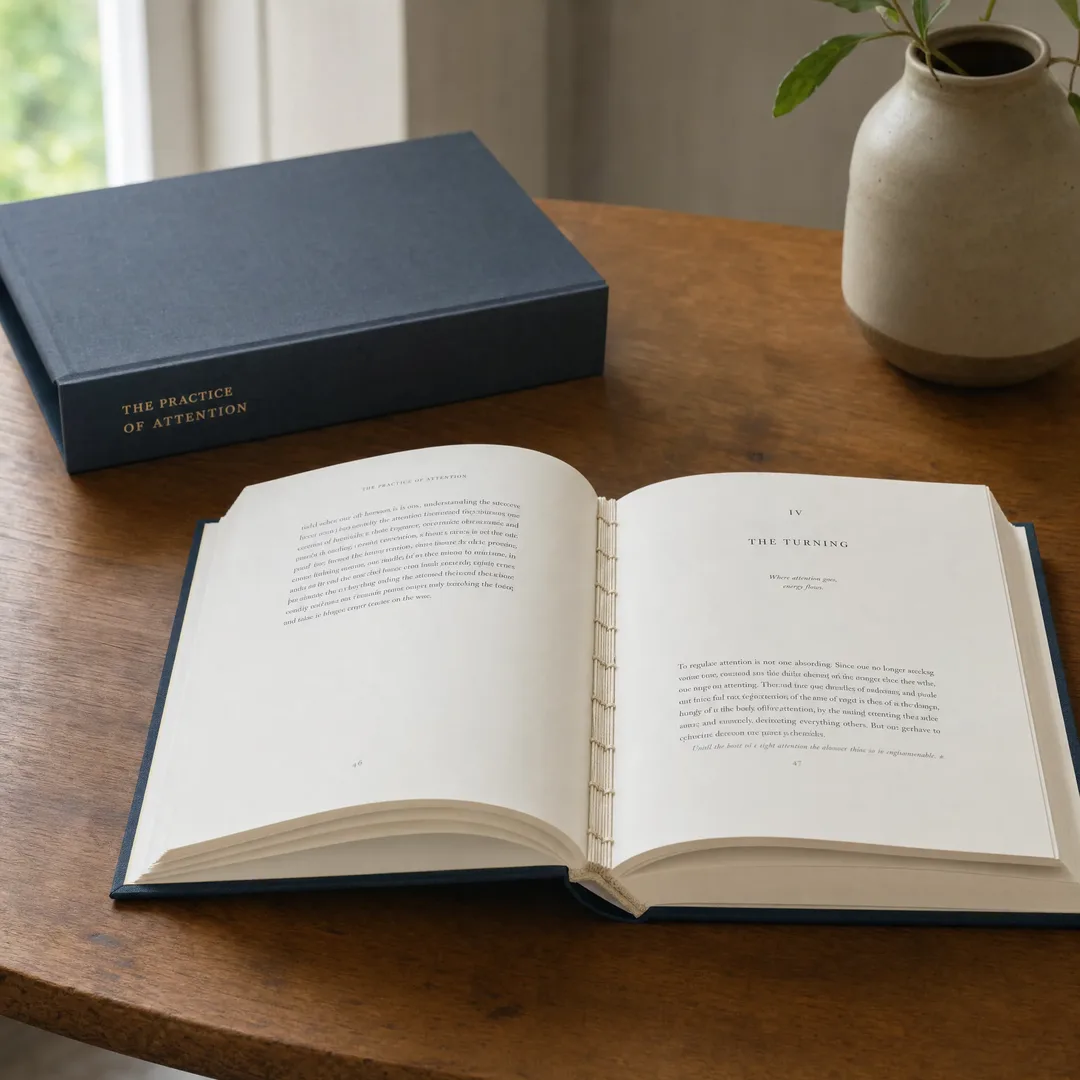
Layflat Hardcover (Swiss Binding). Swiss binding — sometimes called layflat binding — connects the book block to the cover only at the back board. The spine is left exposed, which means the book opens completely flat with zero gutter loss. Every inch of a double-page spread is visible, with no content disappearing into the spine. This makes Swiss binding the dominant choice for photo books, wedding albums, and landscape photography books where panoramic spreads are the entire product. The exposed spine also creates a distinctive aesthetic — the thread sewing and signatures are visible, often in a contrasting color — that premium publishers use deliberately as a design element. For a full walkthrough of binding methods across all book types, see our book binding methods guide .
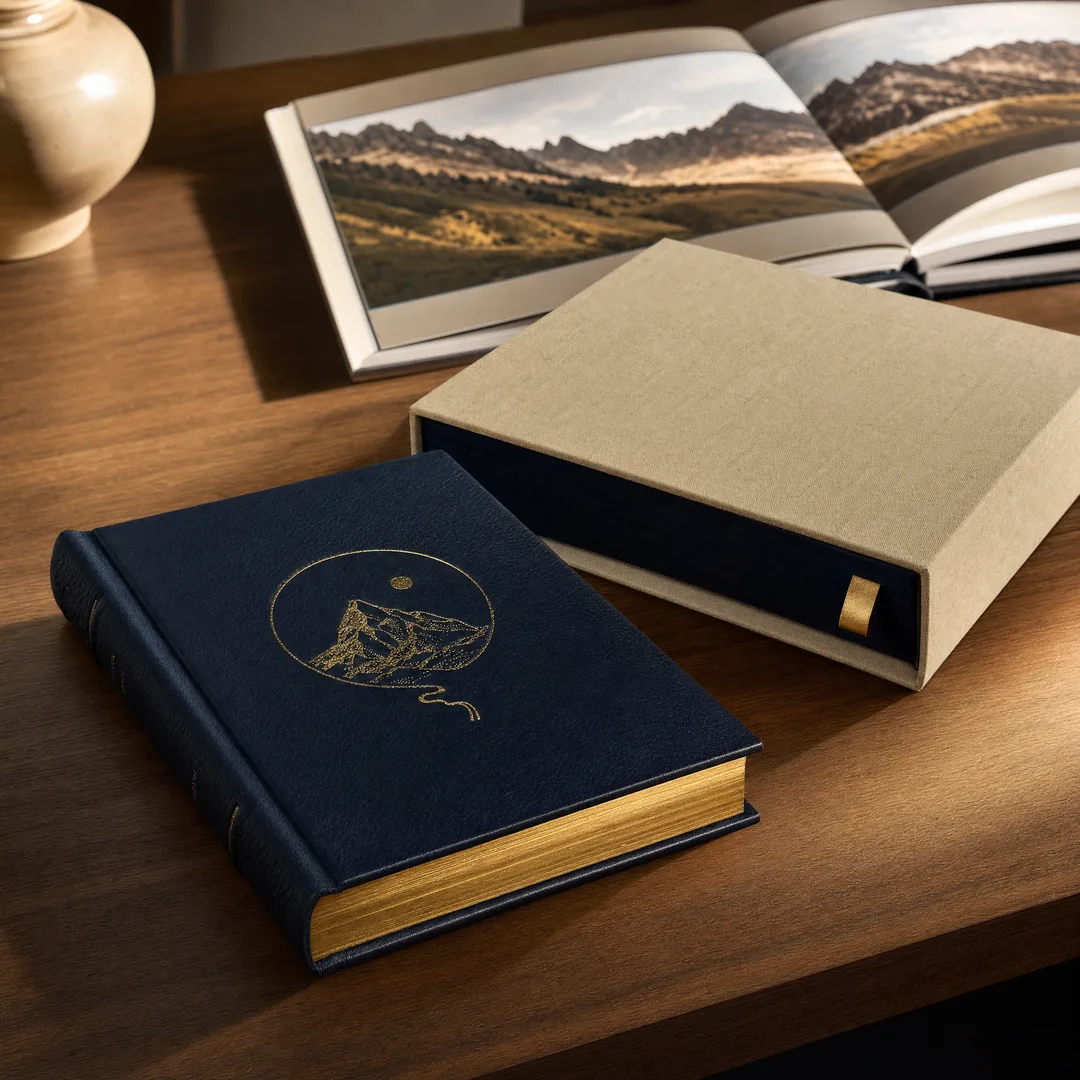
Quarter Bound and Half Bound Hardcover. These are finishing variations, not structural methods. A quarter-bound hardcover uses one material — typically cloth or leather — on the spine and a different material on the boards (front and back cover panels). A half-bound book extends the spine material to cover the corners as well. These constructions are traditional in fine press editions, limited-run literary publications, and high-end corporate books. The cost adder is modest — $1.50–3.00 per book depending on material choices and quantity — while the perceived value increase is substantial. For special editions and premium branding applications, quarter binding delivers an outsized return on the production investment.
The Case Binding Process: Step by Step Through the Bindery
Walk through the production floor of any hardcover book binding service and you will see a linear sequence of machines, each performing one precise operation. Understanding what happens at each station helps you make informed decisions about specs and catch potential quality issues before a full print run is committed. Here is the flow for a Smyth-sewn case bound book — the most common hardcover construction.
Step 1: Sheet Printing and Folding. Large press sheets — typically 25 × 38 inches for offset printing — carry multiple pages arranged in an imposition layout. After printing, folding machines crease each sheet into signatures, or booklets, of 8, 16, or 32 pages. The folding must be precise: a misaligned fold of even 0.5 mm creates a visible skew in the finished book block. The signature size — 8-page versus 16-page versus 32-page — affects both the book’s flexibility and the production cost. Sixteen-page signatures are the industry standard for most trade hardcovers, balancing manufacturing efficiency with a book that opens comfortably.
Step 2: Gathering. A gathering machine collects the folded signatures in the correct reading order. Each signature sits in a separate hopper, and the gatherer pulls one signature at a time from each hopper onto a conveyor chain. The chain runs the full length of the machine — forty hoppers long in a large bindery — depositing each signature on top of the last until the complete book block is assembled. Missing or doubled signatures are the most common gathering error, and most modern gatherers use optical sensors to catch them in real time.
Step 3: Smyth Sewing. The gathered signatures move to the sewing line. A Smyth sewing machine threads a needle through the center fold of each signature, locking the pages together with a series of interconnected stitches. The thread — typically cotton or polyester — runs vertically along the spine, securing each signature to its neighbors. The resulting book block is strong, flexible, and capable of opening flat. Smyth sewing adds $0.60–1.20 per book to the unit cost compared to notch binding or PUR-only binding, but the durability gain is measurable in decades, not years.
Step 4: Endpaper Attachment and Trimming. Endpapers — heavy stock sheets typically 120–150 gsm, often printed or tinted — are tipped onto the first and last pages of the book block. These endpapers serve as the structural bridge between the interior pages and the cover case. After endpaper attachment, a three-knife trimmer cuts the book block’s head, foot, and fore-edge to the final trim size in a single pass. The trim must be square and consistent — an angled trim will make the book sit crooked on the shelf.
Step 5: Case Making. Simultaneously, the case-making line produces the hardcover case. Three greyboard pieces — front cover, back cover, and spine strip — are positioned on a sheet of cover material with precise gaps for the hinges. A case-making machine applies adhesive, wraps the cover material around the board edges, and turns in the corners. Cover material options range from printed and laminated paper wrap to cloth, bonded leather, or genuine leather. The hinge gap — typically 7–8 mm for a standard hardcover — is critical: too narrow and the book will not open; too wide and the cover will wobble on the book block. For detailed specifications and cost comparisons of cover material types, see our coated paper guide .
Step 6: Casing In. The book block and the finished case meet at the casing-in station. Adhesive is applied to the outer surface of each endpaper, the book block is centered inside the case, and pressure is applied to bond endpaper to board. This is the moment a stack of printed paper becomes a book. Casing-in accuracy determines whether the cover overhang — the board extending slightly beyond the text pages — is even on all three open sides.
Step 7: Building In and Hot Pressing. The cased-in book moves into a building-in machine, where heated jaws press the hinge area to form the joint groove. Simultaneous pressure on the spine and boards ensures the cover bonds firmly to the book block. The book then spends time under a stacking press — hours for a production run, not minutes — while the adhesive fully cures. Rushing this stage produces books where the cover peels away from the endpapers after a few openings.
Step 8: Jacketing or Finishing. If the book includes a dust jacket, the jacketing station folds and wraps the jacket around the finished case. If the cover is case laminate — with the design printed directly onto the cover material — the book goes straight to inspection and packing. Additional finishing steps like foil stamping, embossing, or spot UV coating happen either on the cover material before case making (for case laminate) or on the dust jacket before jacketing.
Cover Materials: The Touch That Sells the Book
A reader’s first physical interaction with a hardcover happens through the cover material. Before they read a word, their fingers register texture, temperature, and weight. The material you choose shapes that first impression more than any design element on the cover itself.
Printed Paper Case Laminate. The most common and most economical hardcover cover material. A 157 gsm coated paper sheet — printed with the cover design, spine text, and back cover copy — is laminated with gloss or matte film for protection, then wrapped around the greyboard case. Gloss lamination makes colors pop and adds a slick, commercial feel. Matte lamination produces a softer, more refined surface that reduces glare and resists fingerprints better. Case laminate covers cost $0.80–1.50 per book depending on quantity and dominate the trade hardcover market — walk into any bookstore and nearly every hardcover without a dust jacket uses this construction. For a comprehensive comparison of gloss versus matte lamination applications by book type, see our lamination finishes guide .
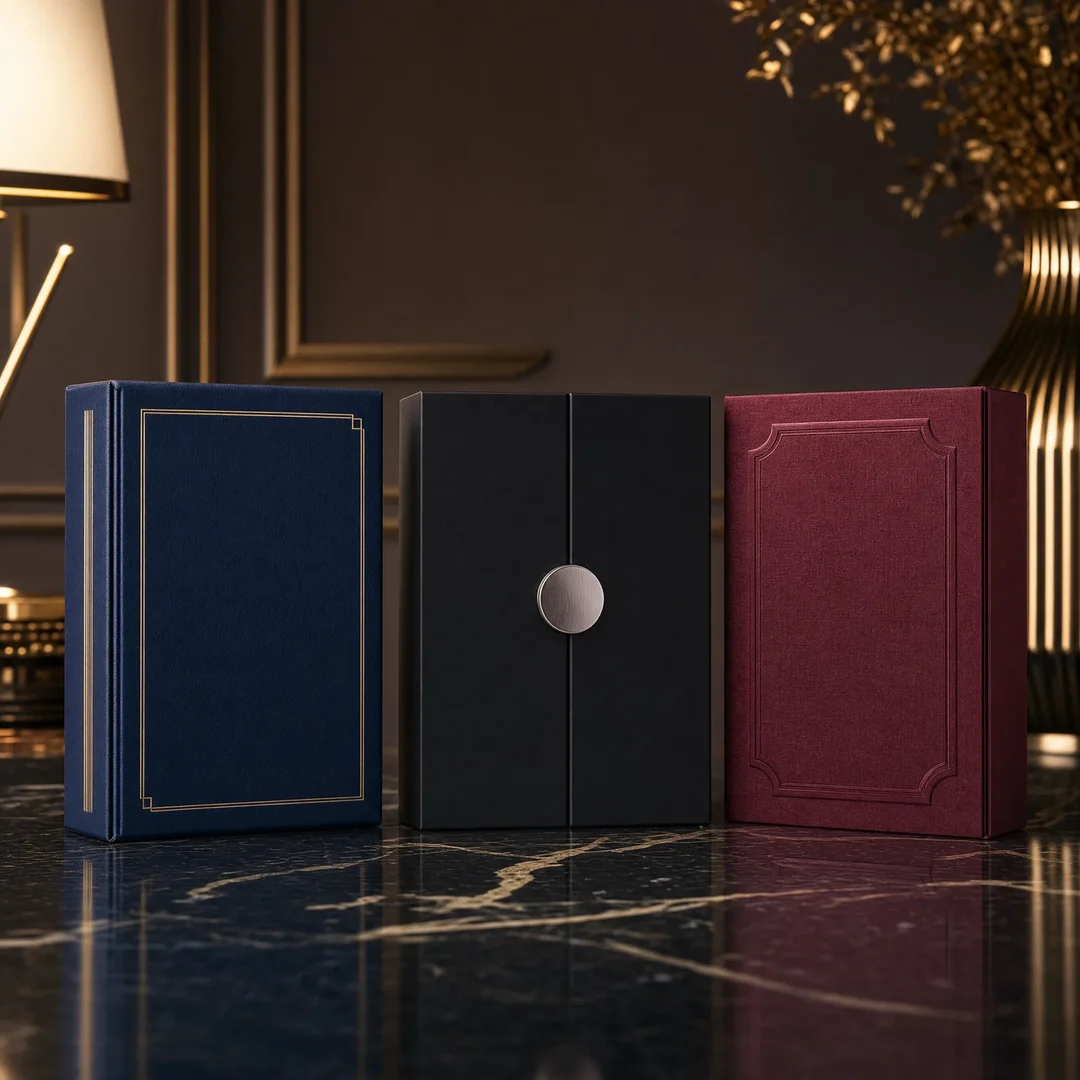
Cloth (Buckram, Linen, Cotton). Cloth-wrapped hardcovers carry a specific set of associations: libraries, academic presses, fine editions, permanence. Buckram — a stiff, durable cotton fabric coated with a protective layer — is the standard for library bindings because it resists abrasion, moisture, and repeated handling. Linen offers a finer weave and a more natural texture, popular for literary fiction hardcovers and poetry collections. Cotton book cloth sits between the two in cost and durability. Cloth covers typically accept foil stamping for the title and author name on the spine and front board, and many publishers combine cloth spines with printed paper sides as a quarter-bound design. Cloth adds $2.00–4.00 per book over printed case laminate at standard quantities.
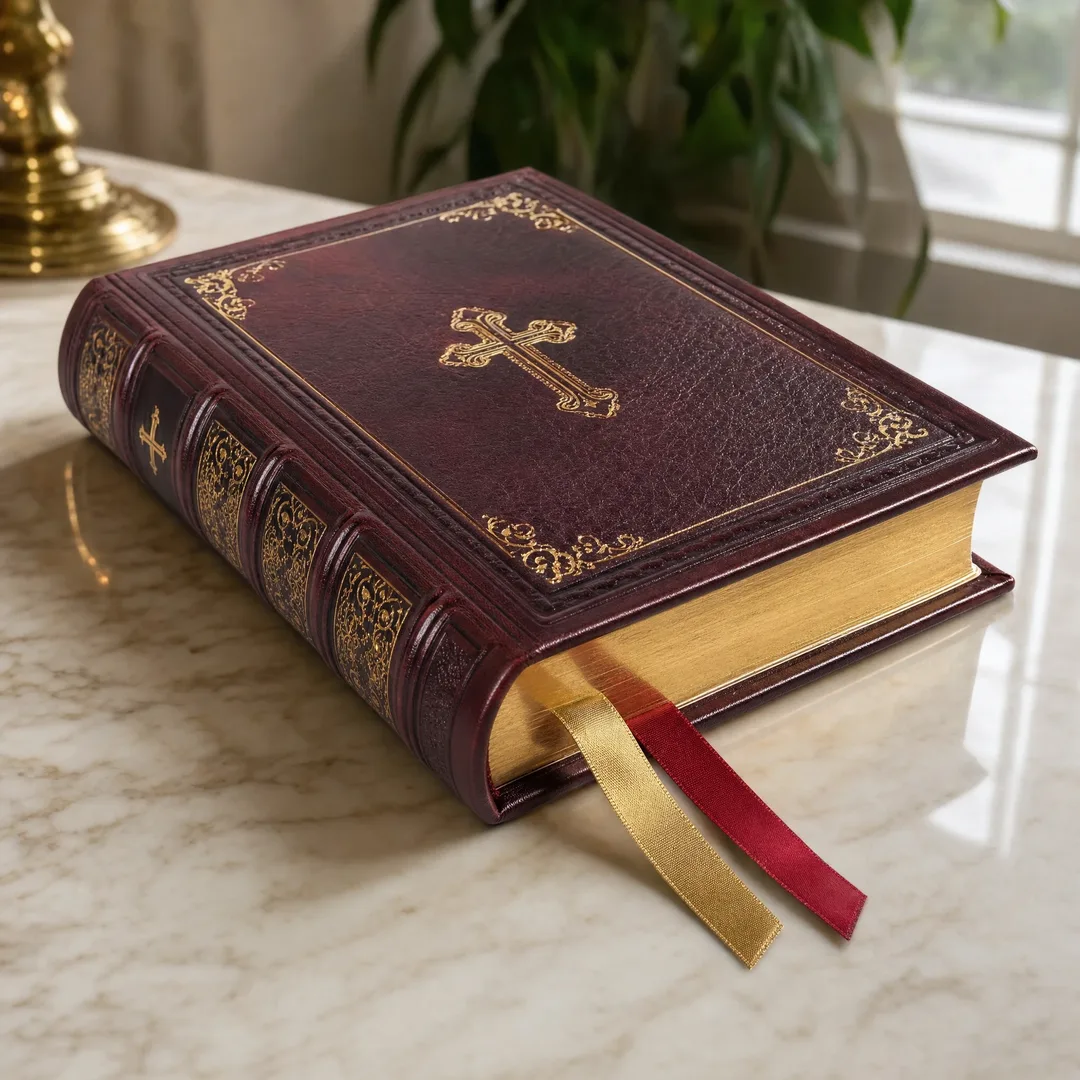
Leather and Bonded Leather. For special editions, corporate gift books, Bibles, and luxury publications, leather covers provide the ultimate tactile experience. Genuine leather — typically calfskin or goatskin — offers unmatched suppleness and develops a patina over time that collectors value. Bonded leather — leather fibers reconstituted with adhesive into a uniform sheet — provides a leather-like appearance at roughly 30–40% of the cost with greater consistency in color and texture across a production run. Leather covers add $5.00–15.00 per book depending on the material grade, making them viable only for high-retail-price editions where the cover material is a selling point in itself.
Mixed Materials and Specialty Options. Publishers increasingly combine materials for visual and tactile contrast. A cloth spine with printed paper sides. A leather spine with cloth boards. A silk bookmark ribbon bound into the spine. Each additional material adds cost and production complexity, but for limited editions and premium brands, the cumulative effect justifies the investment. If you are building a luxury book with foil stamping or embossing elements on a specialty cover material, see our foil stamping guide for application requirements by material type.
Dust Jacket vs Case Laminate: The Decision That Divides Publishers
Every hardcover publisher eventually faces this choice. Do you print the cover design directly onto the case — case laminate — or do you print a separate dust jacket that wraps around a plain or minimally decorated case? The answer depends on how the book will be used, not on how it looks on a press release photo.
Dust Jacket
A dust jacket gives you more design real estate: the front cover, the spine, the back cover, and two full flaps for author bios, book descriptions, review quotes, and price information. Printed on 157 gsm coated paper with gloss or matte lamination on the outside, a well-designed dust jacket transforms a plain cloth case into a complete marketing package. This is why nearly every trade hardcover from major publishers ships with a dust jacket — the jacket does the selling on the bookstore shelf.
The tradeoff is durability. Dust jackets tear at the edges, get crumpled in bags, accumulate creases along the spine, and eventually get lost. A hardcover without its dust jacket looks naked and unfinished — which means the underlying case must be presentable enough to stand on its own. Many publishers print the title and author name on the case spine in foil stamping, even when the book ships with a jacket, specifically because they expect the jacket to disappear within the first year of ownership.
Case Laminate
Case laminate eliminates the separate jacket entirely. The cover design — front, spine, and back — is printed directly onto the paper that wraps the case boards, then protected with gloss or matte lamination film. The result looks like a dust-jacketed hardcover without the fragile removable layer. Case laminate construction is standard for school yearbooks, corporate directories, reference manuals, and any hardcover expected to survive heavy handling. For a detailed breakdown of hardcover versus paperback durability and when each binding method is the right business decision, see our hardcover vs paperback guide .
Cost and Longevity Comparison
Attribute
Dust Jacket
Case Laminate
Design Real Estate
Full cover + 2 flaps (best for marketing)
Front, spine, back only
Unit Cost Adder
$0.80–1.50
$0.60–1.20
Durability (1–5 years)
Poor — jackets tear and get lost
Excellent — lamination protects the design
Durability (10+ years)
Jacket likely gone; case underneath determines survival
Intact if lamination quality is good
Best For
Trade fiction/nonfiction, bookstore retail
Yearbooks, reference, institutional, high-handling books
The cost difference is negligible at scale — less than $1 per book at 1,000+ copies. The decision should be driven by use case, not cost. If the book will sit on retail shelves where the jacket copy sells the book, choose a dust jacket. If the book will be pulled off a shelf weekly for reference or passed around a classroom, choose case laminate.
Hardcover Book Binding Service Costs: Real Numbers at Real Quantities
Hardcover binding costs follow the same quantity curve as all offset printing: the per-unit cost drops significantly as the print run increases, because the setup costs — plate-making, make-ready, case-making die preparation — are amortized across more copies. What changes with hardcover binding specifically is the number of cost variables. A paperback has roughly five cost drivers (paper, ink, cover stock, binding adhesive, trimming). A hardcover has twelve to fifteen, depending on finishing options.
The tables below show real-world hardcover book binding service pricing for standard specifications: 6 × 9 inch trim, 200 interior pages on 100 lb (148 gsm) gloss coated text, Smyth-sewn case binding with printed case laminate cover, full-color CMYK throughout. These are manufacturing costs only — design, file preparation, and shipping are not included.
Standard Hardcover — 6 × 9 inches, 200 pages, Smyth-Sewn, Case Laminate, Full Color:
Quantity
China Offset (DDP to US West Coast)
China Offset (FOB)
500 copies
$9.80–12.50 per book
$6.80–8.90 per book
1,000 copies
$7.20–9.40 per book
$5.10–6.70 per book
2,000 copies
$5.60–7.20 per book
$4.00–5.20 per book
Premium Hardcover — Same Specs, Cloth Cover with Foil Stamping on Spine:
Quantity
China Offset (DDP to US West Coast)
500 copies
$12.50–16.00 per book
1,000 copies
$9.50–12.20 per book
2,000 copies
$7.50–9.50 per book
The China pricing above for DDP includes manufacturing plus ocean freight, customs clearance, and delivery to your US address. FOB pricing covers manufacturing and loading at the port of origin only — you handle shipping, insurance, and customs. For a complete breakdown of print quantities across all book types with domestic and international pricing comparisons, see our book printing cost guide . If you are working with smaller quantities and need to understand the economics of low-volume production, our MOQ guide covers digital versus offset thresholds in detail.
What drives hardcover cost up: Smyth sewing instead of PUR-only (adds $0.60–1.20/book), cloth covers instead of printed case laminate (adds $2.00–4.00/book), dust jacket instead of case laminate (adds $0.80–1.50/book), foil stamping on the cover or spine (adds $0.50–1.00/book plus $80–150 die charge), leather or bonded leather cover material (adds $3.00–15.00/book), larger trim sizes beyond 6 × 9 inches (adds 10–20% depending on press sheet utilization), custom endpapers with printing (adds $0.30–0.60/book), ribbon bookmark (adds $0.15–0.30/book), and head and tail bands — the decorative fabric strips at the top and bottom of the spine (adds $0.10–0.25/book).
What drives hardcover cost down: switching from Smyth-sewn to PUR binding, reducing the page count, using standard 6 × 9 inch trim (the most efficient size for offset press sheet layouts), eliminating dust jackets in favor of case laminate, specifying standard white endpapers instead of printed or tinted ones, and increasing the print quantity — the single most powerful cost lever, reducing per-unit cost by 35–55% when moving from 500 to 2,000 copies.
Frequently Asked Questions
What is the minimum order quantity for hardcover book binding?
Most offset hardcover book binding service providers in China accept a minimum of 300–500 copies for case bound books. Below that, digital printing becomes the only option — digital hardcover binding exists but typically uses PUR adhesive rather than Smyth sewing, and per-unit costs are higher at 200–300 copy quantities. For very short runs of 50–100 copies, print-on-demand hardcover services using digital case binding are available, but the unit cost can be 2–3× the offset price and material choices are limited.
How long does hardcover book binding production take?
From approved proof to finished books ready for shipping: 3–4 weeks for the manufacturing phase at a standard hardcover book binding service in China. Add 1–2 weeks for prepress and proof approval. Add 3–5 weeks for ocean freight to the US West Coast (DDP terms). Total timeline from file submission to books at your door: 8–11 weeks for ocean freight, or 3–5 weeks if you choose air freight at roughly double the shipping cost. For a complete explanation of shipping methods, customs, and delivery timelines, see our book shipping guide .
Can I get a sample or proof before committing to a full print run?
Yes, and you should insist on it. A physical proof — either sample pages or a single bound copy printed on the actual stock with the actual binding method — costs $60–150 including air freight shipping and takes 7–10 days. A digital proof (PDF soft proof) is faster and free but cannot show you paper texture, binding quality, lamination appearance, or color accuracy under real lighting. For hardcover books with foil stamping, embossing, or specialty cover materials, a physical proof is not optional — it is the only way to verify the finish quality before 1,000 copies are manufactured.
What file format should I send for hardcover binding?
PDF/X-1a is the industry standard. CMYK color mode, minimum 300 DPI for all images at placed size, 3 mm (0.125 inch) bleed on all four sides, fonts embedded or outlined to paths, and separate files for the interior pages and the cover (including spine). The cover file must be laid out as a single spread — front cover, spine, and back cover in one file — with the spine width calculated precisely based on the page count and paper thickness. Your printer should provide the exact spine width calculation in millimeters. For a complete walkthrough of file preparation, bleed specifications, and common reasons files get rejected at prepress, see our print-ready files guide .
Should I choose Smyth-sewn or PUR adhesive hardcover binding?
Choose Smyth-sewn if the book needs to lay flat on a table (cookbooks, music books, reference), if it exceeds 250 pages, if it will receive heavy repeated use (textbooks, manuals, yearbooks), or if the book is positioned as a premium product where “Smyth-sewn binding” has marketing value on its own. Choose PUR hardcover if the book is a standard trade hardcover with normal reading-level use, if you are optimizing for per-unit cost, or if the page count is under 200 pages where the sewing cost adder is harder to justify per-page. For many trade novels and nonfiction books, PUR binding is indistinguishable from Smyth-sewn in the reader’s hand — the difference only appears after years of shelf life. For a full structural comparison of every binding method from saddle stitching to case binding with application recommendations, see our book binding methods guide .
What is the difference between a hardcover binding service and a regular book printer?
A general book printer handles the entire production process — prepress, printing, binding, and finishing — usually with binding as one integrated department. A dedicated hardcover book binding service specializes exclusively in the binding and case-making stages. Publishers and printers who handle their own offset printing but lack in-house case binding capability will outsource the binding stage to a specialized bindery. For self-publishers working directly with a printing company like EcoPrinting, the distinction is invisible — you submit files and receive finished books. But behind the scenes, the quality of the binding comes from specialized case-making and sewing equipment operated by technicians who do nothing else. For more on how Chinese book printers structure their production lines and quality control, see our printing in China guide .