Why Binding Choice Makes or Breaks Your Book
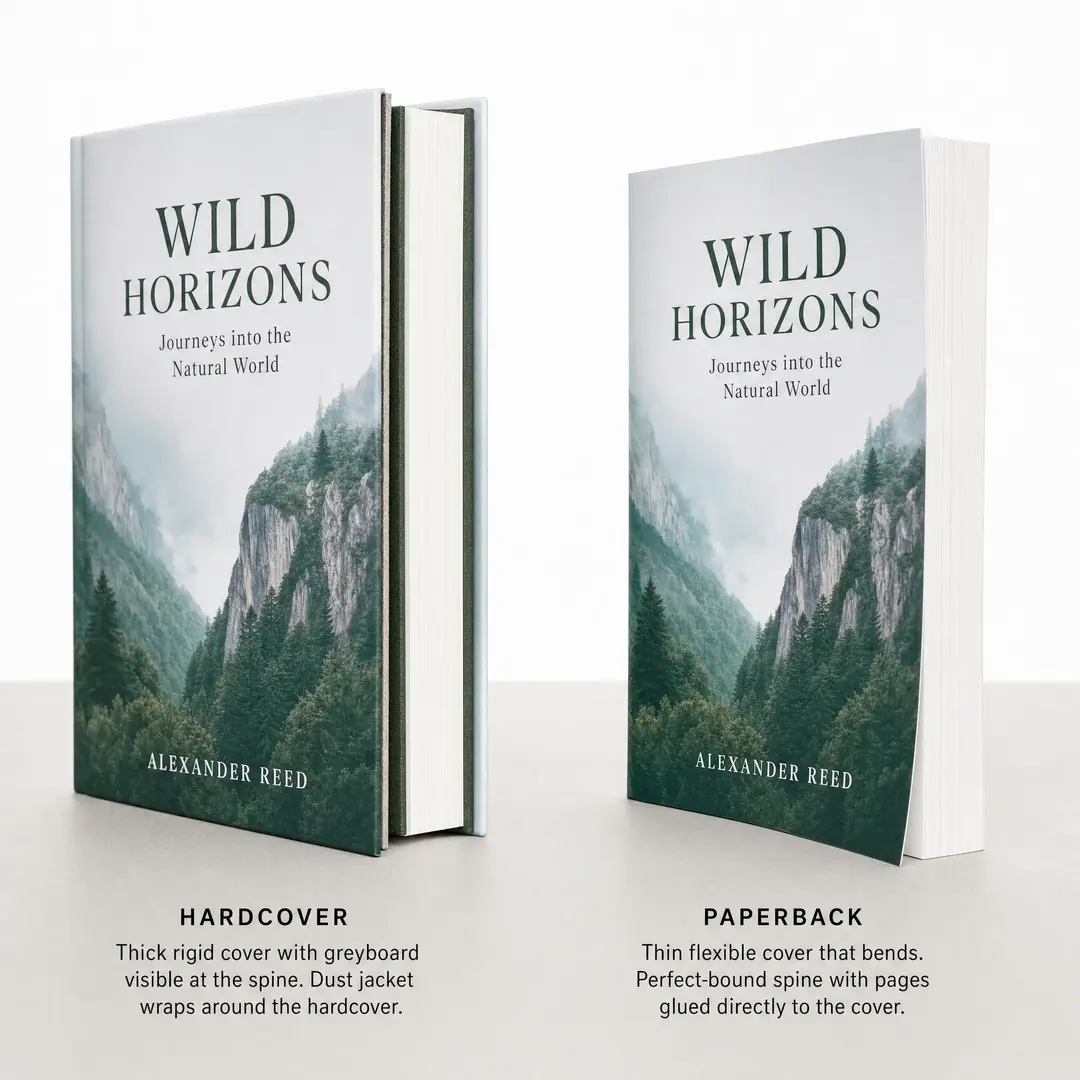
Pick up a hardcover and a paperback side by side. The difference feels obvious — one is stiff, the other bends. But the real gap between these two book binding types runs much deeper than cover flexibility. It changes your per-unit printing cost by 200-400%. It dictates whether your book survives five readings or fifty. It shapes how readers perceive your work before they read a single word.
I’ve walked through our bindery line hundreds of times. A hardcover book moves through three separate stations — case making, casing in, and joint forming — each with its own operator checking alignment and glue coverage. A paperback runs through the perfect binder in about four seconds. Same paper, same ink, same press. Completely different product at the end.
This guide breaks down the hardcover vs paperback decision with real shop-floor perspective. Not textbook definitions. What actually matters when you’re ordering a print run: construction, cost at real quantities, durability over years, and which binding fits which kind of book.
What Is Hardcover Binding?
A hardcover book — also called a hardback or case-bound book — gets its name from the rigid board inside the cover. The most common construction is case binding : the interior pages (the “book block”) get sewn or glued together, then “cased in” — attached to a pre-made cover shell — with endpapers bridging the gap between block and cover.
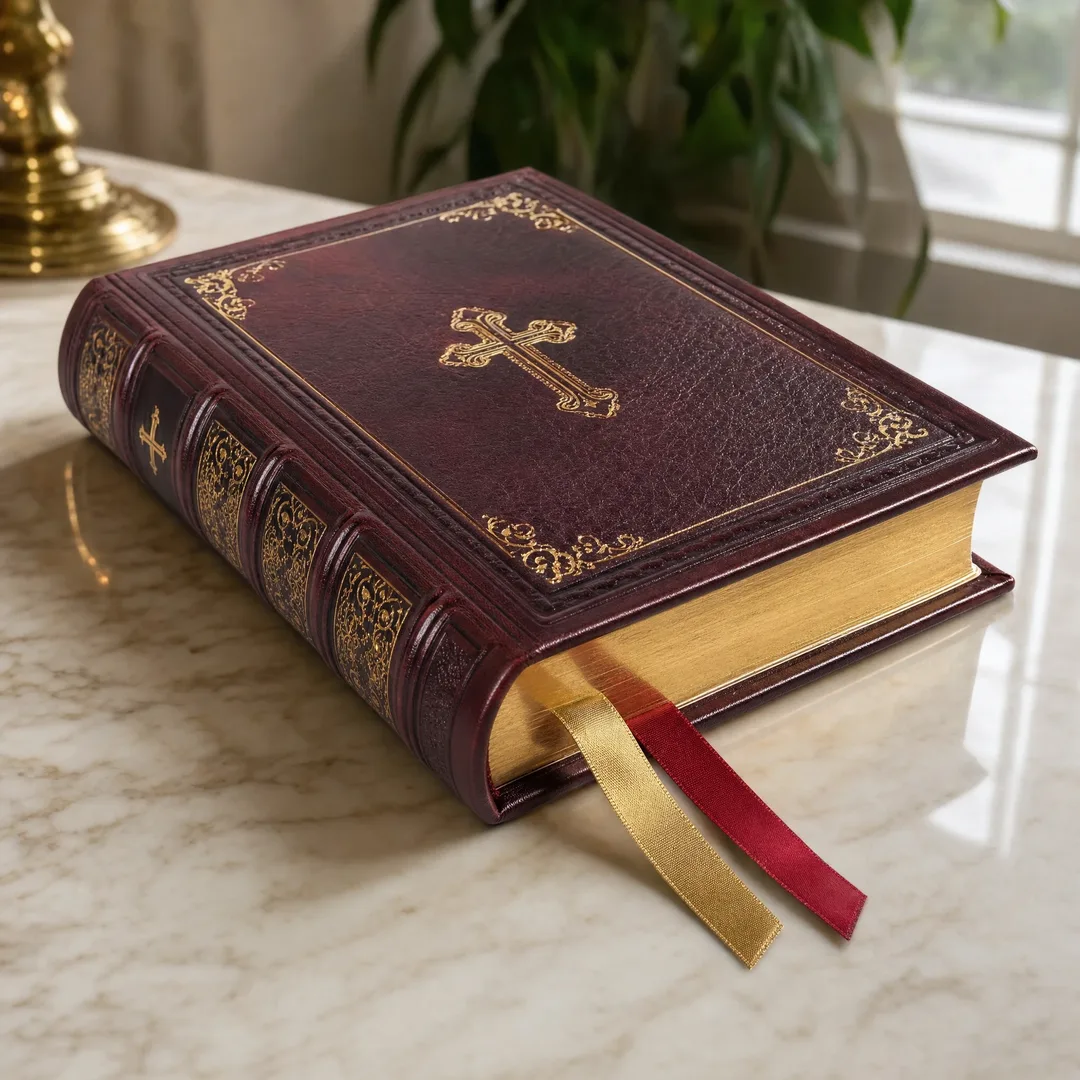
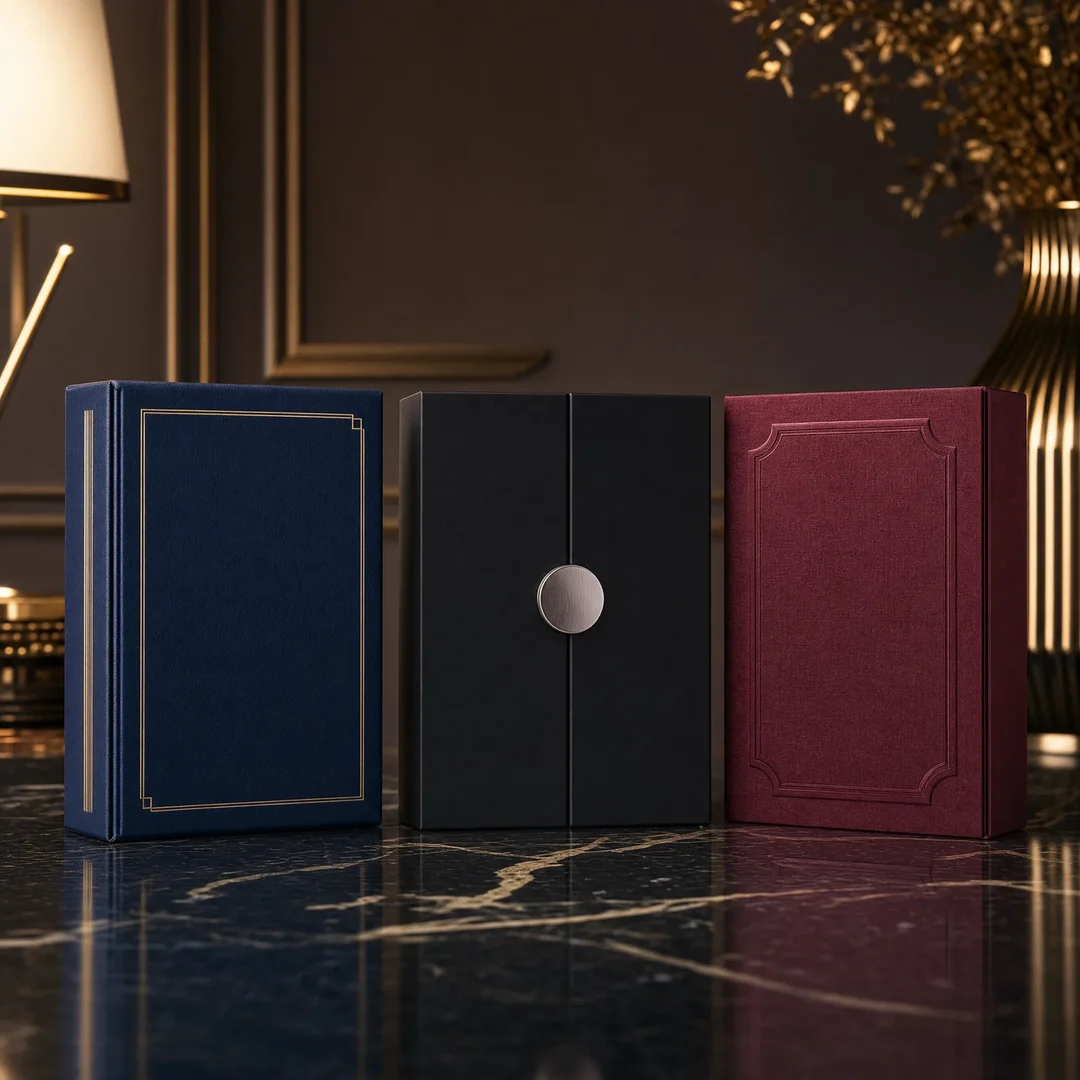
The cover shell itself has three pieces: two sheets of greyboard (typically 2.0-3.5mm thick) for the front and back, connected by a spine board, all wrapped in a covering material. That covering material determines the look and feel. Case laminate uses printed paper wrapped directly over the boards and sealed with a laminate film — the most common option for trade hardcovers, children’s picture books, and self-published titles. Dust jacket hardcovers use a cloth or paper-wrapped case with a separate printed jacket that slides over the outside. Cloth hardcovers wrap the board in book cloth (linen or rayon) and usually include foil stamping on the spine — the traditional library edition look.
Inside the cover, the book block can be assembled two ways. Smyth sewn: printed sheets get folded into signatures (groups of 16 or 32 pages), then sewn together with high-tensile thread through the fold. The spine gets reinforced with a strip of mesh fabric and a light glue layer before casing in. This is what gives a hardcover that satisfying “crack” when you open it for the first time — the glue bond at the endpapers releasing slightly. Perfect-bound hardcover: the pages get gathered, the spine edge gets roughened, adhesive gets applied, and the cover gets wrapped around. It’s faster and cheaper but skips the thread reinforcement. You’ll see this in budget hardcovers, corporate reports, and some photobooks.
The key thing to understand about case binding from a cost perspective: case making and casing in are separate operations with separate setup. If you’re printing 500 copies, you pay a case-making die setup fee that gets spread across those 500 units. At 5,000 copies, that same setup fee is negligible per book. This is why hardcover unit costs drop so steeply between 500 and 2,000 copies — it’s not the materials, it’s amortizing the bindery setup.
What Is Paperback Binding?
Paperback books — also called softcover or perfect-bound books — use a flexible cover (typically 10pt to 14pt C1S stock with lamination) glued directly to the spine of the book block. No boards. No endpapers. No case-making station. The pages get gathered into a block, the spine edge gets milled to expose paper fibers, hot EVA or PUR adhesive gets applied, and the cover wraps around in one continuous pass through the binder.
There are three main variations that matter for ordering:
Standard perfect binding (EVA glue): the workhorse of trade paperbacks. Ethylene-vinyl acetate hot melt glue gets applied at 160-180°C and sets within seconds as the book exits the binder and goes through a cooling tower. It is cost-effective, fast, and adequate for most softcover books. The trade-off: EVA glue gets brittle over time, especially in cold storage. After 3-5 years of regular use, the spine can crack if the book gets forced open repeatedly.
PUR perfect binding: polyurethane reactive adhesive is a step up. It is stronger and more flexible than EVA — pages stay in place even when the book gets opened wide. PUR also works better with coated paper stocks, which EVA struggles to grip because of the clay coating on the paper surface. The catch: PUR requires dedicated glue pots, takes 24 hours to fully cure, and adds $0.15-0.30 per book. But if your paperback needs to last, it is the best upgrade you will not see.
Sewn perfect binding: pages get sewn into signatures first (Smyth sewn), then the sewn block gets perfect bound with a cover. You get the durability of sewing with the flexibility and lower cost of a soft cover. This is what quality trade paperbacks, textbooks, and reference manuals use. The spine stays intact, the book opens flat, and you can drop it without pages flying out. It adds $0.30-0.80 per unit versus standard perfect binding but extends the book’s usable life by a decade or more.
Saddle stitching — two or three staples through the spine fold — is the other paperback option, but it is only suitable for booklets under 64 pages. Think zines, event programs, and thin manuals. Anything thicker than a quarter inch simply will not fold properly.
Cost Comparison: Hardcover vs Paperback
Let’s talk real numbers. These are based on a standard 6×9-inch format, 200 pages, B&W interior, 70lb uncoated offset paper, full-color cover — the most common spec we quote at EcoPrinting.
Quantity
Paperback (Perfect Bound, EVA)
Paperback (Sewn Perfect)
Hardcover (Perfect Bound Block)
Hardcover (Smyth Sewn Block)
500 copies
$3.50/book
$4.00/book
$6.80/book
$8.20/book
1,000 copies
$2.80/book
$3.30/book
$5.20/book
$6.40/book
3,000 copies
$2.10/book
$2.55/book
$3.90/book
$4.80/book
Prices are China offset, DDP to a US address, including case laminate hardcover. Add $0.50-1.00/book for dust jacket construction. Add $0.15-0.30/book for PUR instead of EVA.
At 500 copies, a Smyth sewn hardcover costs roughly 2.3× what a basic paperback costs. At 3,000 copies, that multiple narrows to 2.3× as well — the ratio stays fairly consistent because both binding types benefit from volume. What really shifts is the absolute dollar gap: at 500 copies, you pay $4.70 more per book for sewn hardcover. At 3,000 copies, that premium drops to $2.70 per book. Volume helps, but hardcover is always the premium option.
The hidden cost variable is endpapers . Standard white endpapers are included in most hardcover quotes. Printed endpapers — with a design, color, or pattern — add $0.15-0.30 per book plus a one-time plate fee. A ribbon bookmark adds $0.12-0.25. These small line items add up quickly on a 2,000-copy run: $600 extra for printed endpapers alone.
Durability & Lifespan
This is where the hardcover vs paperback conversation gets practical. I have seen 20-year-old Smyth sewn hardcovers that look nearly new. I have also seen 2-year-old EVA perfect-bound paperbacks with cracked spines and loose pages. The binding method — not the cover type — primarily determines how long your book survives.
What Actually Kills a Book
Three failure modes show up in every bindery’s returns analysis:
Spine cracking (paperback, EVA glue): the reader forces the book open to 180 degrees. The adhesive spine cannot flex that far. It cracks along the glue line. Pages start separating from the spine, first at the top and bottom, then in the middle. Once the crack runs through, the cover detaches entirely. This is the #1 reason paperbacks fail.
Page fallout (perfect binding, both hardcover and paperback): single pages — not whole signatures — pull loose from the glue. This happens faster with coated paper (the clay coating resists adhesive penetration) and in dry climates where paper fibers shrink away from the glue bond. Smyth sewn books don’t have this problem because each signature is physically sewn through the fold. You literally have to tear the paper to remove a page.
Cover warping (hardcover): the greyboard inside the hardcover case absorbs humidity and bows outward. This is a material issue, not a construction issue — it happens when the board’s moisture content is too high at the point of casing in or when books are stored in damp conditions. A slight warp (under 3mm) is considered acceptable in trade publishing; anything more is a quality defect.
Real-World Lifespan Comparison
Binding Type
Expected Lifespan (Regular Use)
Best For
Weak Point
Saddle Stitch
1-3 years
Booklets, zines, programs
Staples rust; cover tears at fold
Paperback (EVA Perfect)
3-8 years
Trade paperbacks, novels
Spine cracking; page fallout
Paperback (PUR Perfect)
5-12 years
Quality paperbacks, manuals
Still glue-dependent; coated stock holds better
Paperback (Sewn Perfect)
15-30 years
Textbooks, reference, premium fiction
Cover can still wear; block stays intact
Hardcover (Perfect-Bound Block)
10-20 years
Photo books, corporate publications
Case protects pages; glue still the limiting factor
Hardcover (Smyth Sewn Block)
30-50+ years
Library editions, heirloom books
Cover board warping in humid conditions
PUR glue is the middle-ground upgrade that does not get enough attention. It costs 15-30 cents more per book than EVA but triples the adhesive bond’s flexibility. If you are printing a paperback that readers will reference repeatedly — a cookbook, a study guide, a technical manual — PUR is the cheapest durability upgrade you can spec. Most readers will never notice it. They will just notice that the book still works after two years of hard use.
Best Use Cases: Which Binding for What Book?
Your binding decision should match what the book actually does in the reader’s hands. A novel gets read once, maybe twice, then sits on a shelf. A cookbook gets opened, propped up, splattered, and wiped down. Different job. Different binding.
Book Type
Recommended Binding
Why
Novel / Fiction
Paperback (EVA Perfect)
Read-once economics; paperback reads as accessible pricing to readers; standard 5.5×8.5″ or 6×9″ trim
Children’s Picture Book
Hardcover (Case Laminate)
Kids destroy things. Rigid boards survive drops, spills, and being sat on. Case laminate wipes clean without tearing.
Cookbook
Hardcover (Smyth Sewn) or Paperback (PUR + Sewn)
Must lay flat on a counter. Sewn binding allows 180-degree opening. PUR resists moisture from kitchen steam.
Textbook / Academic
Hardcover (Smyth Sewn)
Daily use for years by students who highlight and dog-ear. Library editions require sewn construction for circulation durability.
Photography / Art Book
Hardcover (Smyth Sewn, Dust Jacket)
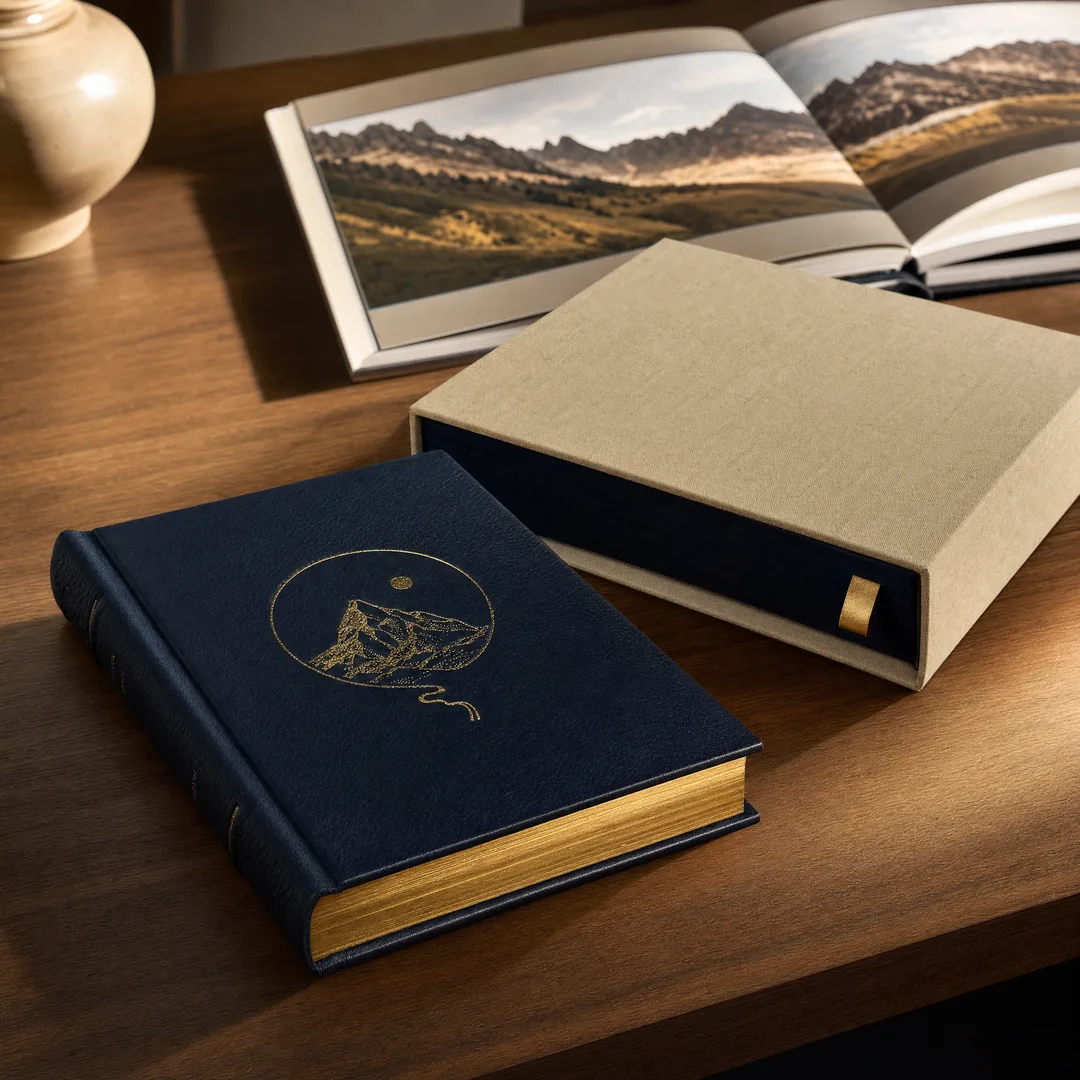
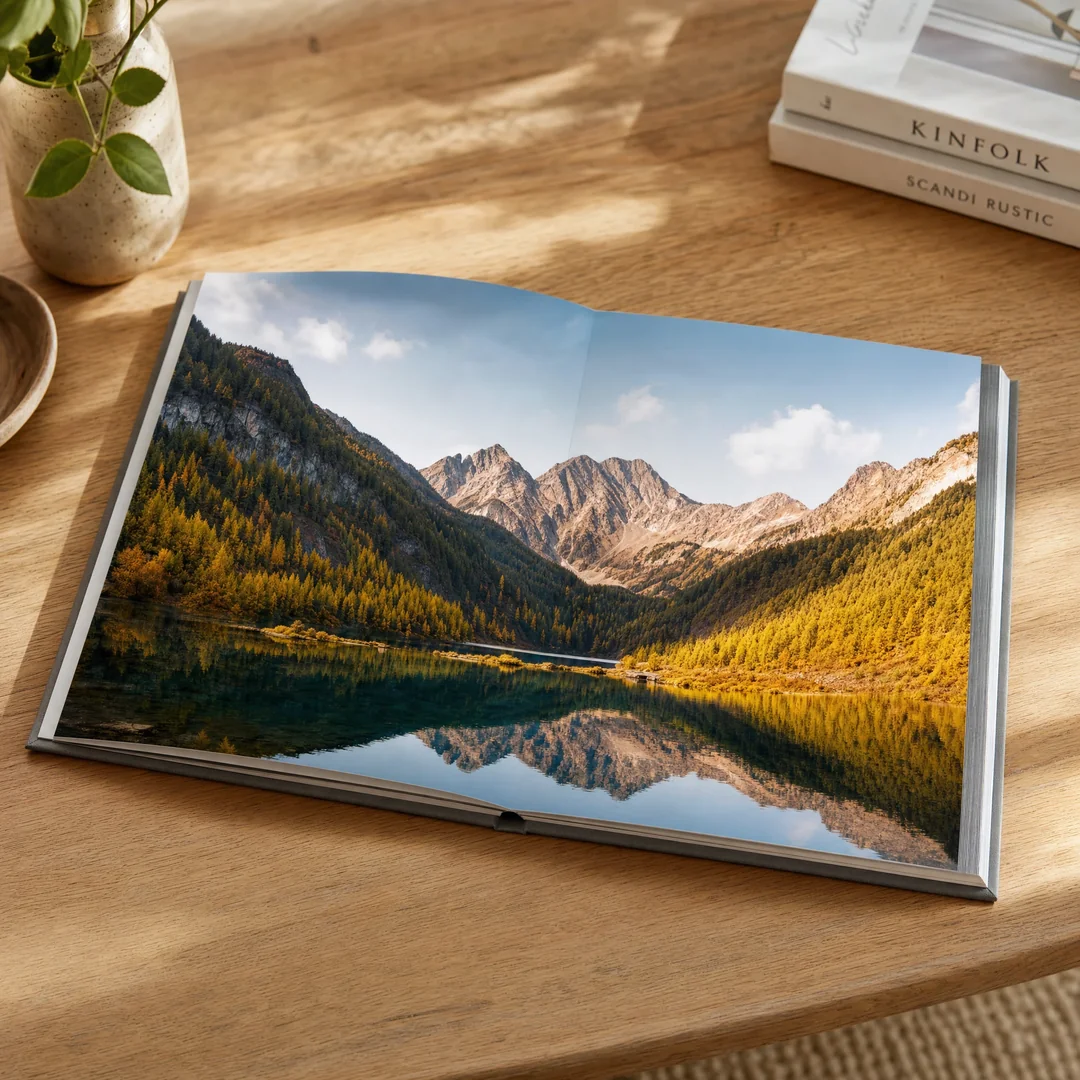
Image spreads across the gutter demand sewn binding. Dust jacket adds gallery-level presentation.
Corporate Lookbook / Portfolio
Hardcover (Case Laminate)
Perceived quality matters. A perfect-bound softcover lookbook feels flimsy next to a board-bound case laminate.
Poetry Collection
Paperback (PUR Perfect)
Lower page count (40-120 pages typical), thin spine. Hardcover on a thin book looks awkward; paperback with French flaps adds elegance.
Workbook / Journal
Paperback (Wire-O or Spiral)
Must lay flat, fold back on itself, and accept writing. Neither perfect binding nor hardcover handles this well. Wire-O is the functional choice.
Memoir / Self-Help
Paperback (PUR Perfect), Hardcover if premium positioning
Market expectation drives this. Most self-help debuts as paperback. Hardcover signals premium positioning for established authors.
Board Book (0-3 years)
Board Book Binding
Each page is a rigid board (typically 1.5-2.0mm thick). No paper tearing possible. Entirely different manufacturing process from both hardcover and paperback.
One under-discussed factor: spine width. A 100-page novel in hardcover looks awkwardly thin on a bookstore shelf — maybe 8-10mm spine width including boards, barely enough for a readable title. That same book in paperback has a 6-7mm spine and looks proportional. Conversely, a 400-page paperback’s spine shows heavy creasing after one reading, while the same book in Smyth sewn hardcover opens cleanly. Book thickness should inform your binding choice as much as budget does.
Paper & Finish Options for Each Binding
Paper and binding interact in ways that are not obvious until you hold the book. Coated paper in a perfect-bound paperback means the glue has less fiber to grip — page fallout accelerates. Heavy uncoated stock in a thick hardcover sewn block opens beautifully but adds weight and shipping cost. Every material choice has a downstream effect.
Interior Paper
For text-heavy books printed B&W, uncoated offset paper (50-70 lb text / 75-105 gsm) is standard. It absorbs ink well, reduces glare, and costs less than coated alternatives. It also takes glue better — those exposed paper fibers at the spine give EVA and PUR adhesive something to grip.
For color image books — children’s titles, photography, art books — coated paper (80-100 lb gloss or matte / 128-157 gsm) reproduces images with far better color saturation and sharpness. But coated stock in a perfect-bound paperback is a known problem: the clay coating reduces glue penetration by 40-60% compared to uncoated. If your book uses coated interior paper and perfect binding, you need PUR glue. Period. EVA will fail within 1-2 years on coated stock. This is not a preference — it is chemistry.
For hardcovers with heavy coated paper, Smyth sewn binding is strongly preferred. The sewing handles the weight and coating that glue alone struggles with. Your printer should flag this during file review, but knowing it upfront saves you from a disappointing sample.
Cover Finishing
Both paperback and hardcover covers accept finishing treatments, but what makes sense differs:
Finish
Paperback
Hardcover (Case Laminate)
Hardcover (Dust Jacket)
Gloss Laminate
Standard — included in base price
Standard — included
Applied to jacket; included
Matte Laminate
Available; same price as gloss
Available; same price
Applied to jacket
Soft-Touch Laminate
Adds $0.20-0.40/book
Adds $0.20-0.40/book
Rare on jackets (too delicate)
Spot UV
Adds $0.10-0.25/book + $50-80 setup
Not recommended — board stiffness causes UV coating to crack at joints
Applied to jacket; adds $0.10-0.25/book
Foil Stamping
Rare; adds $0.25-0.60/book + die fee
Standard for cloth covers; possible on laminate but expensive
Applied to jacket or directly to cloth case underneath
Emboss / Deboss
Not practical — thin cover stock won’t hold depth
Ideal for case laminate; adds $0.15-0.40/book + die fee
Applied to case; jacket covers it
Soft-touch laminate on a paperback cover is one of the cheapest ways to make a book feel premium. It costs pennies more than standard matte but changes how readers perceive the product the instant they pick it up. For authors launching a first book, I recommend spending the small premium on soft-touch rather than upgrading to hardcover — the tactile impression at a $14.99 paperback price point converts more browsers than a $24.99 hardcover sitting on the same shelf.
FAQ: Common Hardcover vs Paperback Binding Questions
Which is more durable — hardcover or paperback?
Hardcover wins on durability, no contest. The rigid board cover absorbs impact that would crease or tear a paperback cover. But the real durability question is what is inside: a Smyth sewn paperback will outlast a glue-only budget hardcover. Thread beats glue every time. If durability is your only concern, get Smyth sewn hardcover. If budget constrains you, get Smyth sewn perfect-bound paperback with PUR glue — it gives you 80% of the durability at 60% of the cost.
What’s the difference between case laminate and dust jacket hardcover?
Case laminate prints the cover design directly on paper that gets wrapped around the greyboard and sealed with a laminate film. The cover art is permanent. Dust jacket construction wraps the board in cloth or plain paper, then a separate printed jacket (with flaps) slides over the outside. Case laminate is simpler, cheaper, and more durable for handling — no jacket to tear. Dust jacket looks more traditional and allows you to use the jacket flaps for author bio and synopsis. At EcoPrinting, dust jacket construction adds about $0.60-1.00 per book versus case laminate at most quantities.
Can a paperback be sewn instead of glued?
Yes — it is called sewn perfect binding (or sometimes “sewn paperback”). The pages are sewn into signatures with thread, then the sewn block gets glued into a soft cover. This is the binding used for higher-end trade paperbacks, many textbooks, and any softcover that needs to last. It opens flat, pages do not fall out, and the spine stays intact for decades. It costs more than standard perfect binding (add $0.30-0.80/book) but dramatically less than a full hardcover.
What paper works best for hardcover books?
For B&W text hardcovers, 80-100 gsm uncoated offset paper is the sweet spot — thick enough to feel substantial in a heavy book, thin enough to keep page count manageable. For full-color hardcovers (children’s books, photography, art), use 128-157 gsm coated matte or gloss paper. Coated paper in a hardcover should always be paired with Smyth sewn binding; the weight and coating stress glue-only binding too much. The endpapers — the sheets that connect the book block to the case — should be 120-150 gsm stock minimum. Anything lighter will tear at the hinge within months of regular opening.
How many pages do I need for hardcover to make sense?
At least 60 pages. Below that, the spine is too thin for readable text on the spine and the book feels insubstantial — like a greeting card with ambitions. Between 60 and 100 pages, hardcover works but looks better with a dust jacket (the added jacket thickness gives the spine more presence). Above 100 pages, the book has enough visual weight to justify hardcover regardless of jacket choice. For books under 48 pages — picture books for very young children — ignore page count concerns: the board binding protects the content and that is the entire point.
Which binding method is better for self-publishers?
Most self-published fiction does best as paperback with standard perfect binding. The economics work: you can price at $9.99-14.99 and still clear decent margin, and readers expect paperbacks for fiction. If your book sells well and you want a premium edition, commission a small hardcover run (300-500 copies) for direct sales, book signings, and superfans. For non-fiction — especially how-to, reference, or business books — go with sewn perfect paperback or hardcover from the start. Those books sell at higher price points ($19.99-34.99) and need to withstand repeated use. A self-help book that falls apart after six months generates returns, not referrals.