Why Book Printing Costs Vary So Much
Ask ten printers for a book printing quote, and you’ll get ten different numbers. One quotes $2.80 per copy; another asks for $9.50. Same specs, wildly different prices. What’s going on?
Six variables control the bulk of your book printing cost. Quantity (your print run size) usually swings the needle most. Trim size matters because non-standard dimensions waste paper. Page count directly scales material and machine time. Paper type can double your cost if you go from uncoated offset to premium coated stock. Binding method separates a $2 saddle-stitch booklet from a $12 case-bound hardcover. And finishing — things like foil stamping, spot UV, or embossing — adds layers of labor and setup fees.
Then there’s geography. Printing in China vs the US can mean a 40-60% difference in your landed cost, even after shipping and tariffs. And the printing method itself — offset vs print-on-demand — determines whether your unit price drops with volume or stays flat.
This guide walks through every factor with real numbers from 2026. No vague “it depends.” Just actual cost ranges, comparison tables, and three project budgets you can benchmark against.
The 6 Factors That Determine Book Printing Cost
1. Print Run Volume
This is the single biggest cost lever you control. Offset printing has high setup costs — plates, make-ready, press calibration — that stay fixed whether you print 100 copies or 10,000. Spread those costs across more books, and your per-unit price plummets.
A 200-page paperback at 100 copies might cost $7.50 each. At 1,000 copies, the same book drops to about $3.00. At 5,000, you’re looking at $1.80-2.20. The math isn’t linear — the steepest savings happen between 100 and 1,000 copies, after which the curve flattens.
Print-on-demand flips this logic. There are no volume discounts because there’s no press setup to amortize. Every copy costs the same whether you order one or one hundred. That’s great for testing a title, but brutal on margins once you’re selling in volume.
2. Trim Size
Standard sizes save money. In the US, 6×9″ and 5.5×8.5″ are the trade paperback defaults — presses are calibrated for them, paper is cut to minimize waste, and bindery equipment is set up already. Go custom — say, 7×10″ or a square 8×8″ — and you’re paying for extra paper waste plus machine adjustment time.
The cost difference? Usually 5-15% for non-standard trims. Not deal-breaking on a large run, but noticeable under 500 copies where every dollar counts.
3. Page Count
More pages = more paper, more ink, more machine time, heavier books, higher shipping. Simple math. But the hidden cost is in the signature structure — offset presses print in signatures of 8, 16, or 32 pages. If your book is 200 pages, that’s clean. If it’s 203 pages, you’re paying for 208 (or wasting 5 pages of paper). Rounding up to the nearest signature size matters.
A 100-page paperback might cost $1.80/unit at 1,000 copies. A 300-page version of the same trim and binding? Roughly $3.50-4.00. Paper is typically 30-50% of the total printing cost for a B&W interior book.
4. Paper Stock
Paper choice affects both cost and perceived quality. Uncoated offset paper (50-70 lb / 75-105 gsm) is the workhorse for novels and text-heavy books — cheapest option, good readability. Coated paper (80-100 lb gloss or matte / 128-157 gsm) is standard for color image books, children’s titles, and photography — roughly 30-60% more expensive than uncoated.
Premium specialty papers — textured, colored, or ultra-heavy stocks — can double or triple your paper cost. Cover stock weight also matters: 10pt C1S (coated one side) is standard for paperback covers; upgrading to 12pt or 14pt adds 10-20% to cover costs.
5. Binding Method
Your binding choice sets a cost floor. Here’s the rough hierarchy, from cheapest to most expensive per unit at 1,000 copies:
Saddle stitching (stapled spine): $0.50-1.00 — suited for booklets, zines, and magazines under 64 pagesPerfect binding (glued spine, paperback): $1.50-3.50 — the standard for trade paperbacks and most self-published booksSpiral / Wire-O binding : $2.00-5.00 — popular for workbooks, cookbooks, and manuals that need to lay flatHardcover case binding : $4.00-9.00 — sewn signatures with rigid board covers, cloth or printed case wrap, the premium optionBoard book binding : $2.50-6.00 — thick rigid pages for children’s books, each page is essentially a board
Perfect binding and hardcover also have sub-options that shift cost. Sewn perfect binding (pages sewn into signatures before gluing) adds $0.30-0.80/unit but dramatically improves durability. For hardcovers, a dust jacket vs printed case wrap vs cloth cover each have different price points.
6. Finishing and Special Processes
Finishing is where “cheap” and “premium” visually diverge. Matte or gloss lamination on covers is nearly standard now — most printers include basic lamination in the base price. But everything beyond that carries a per-unit or setup charge:
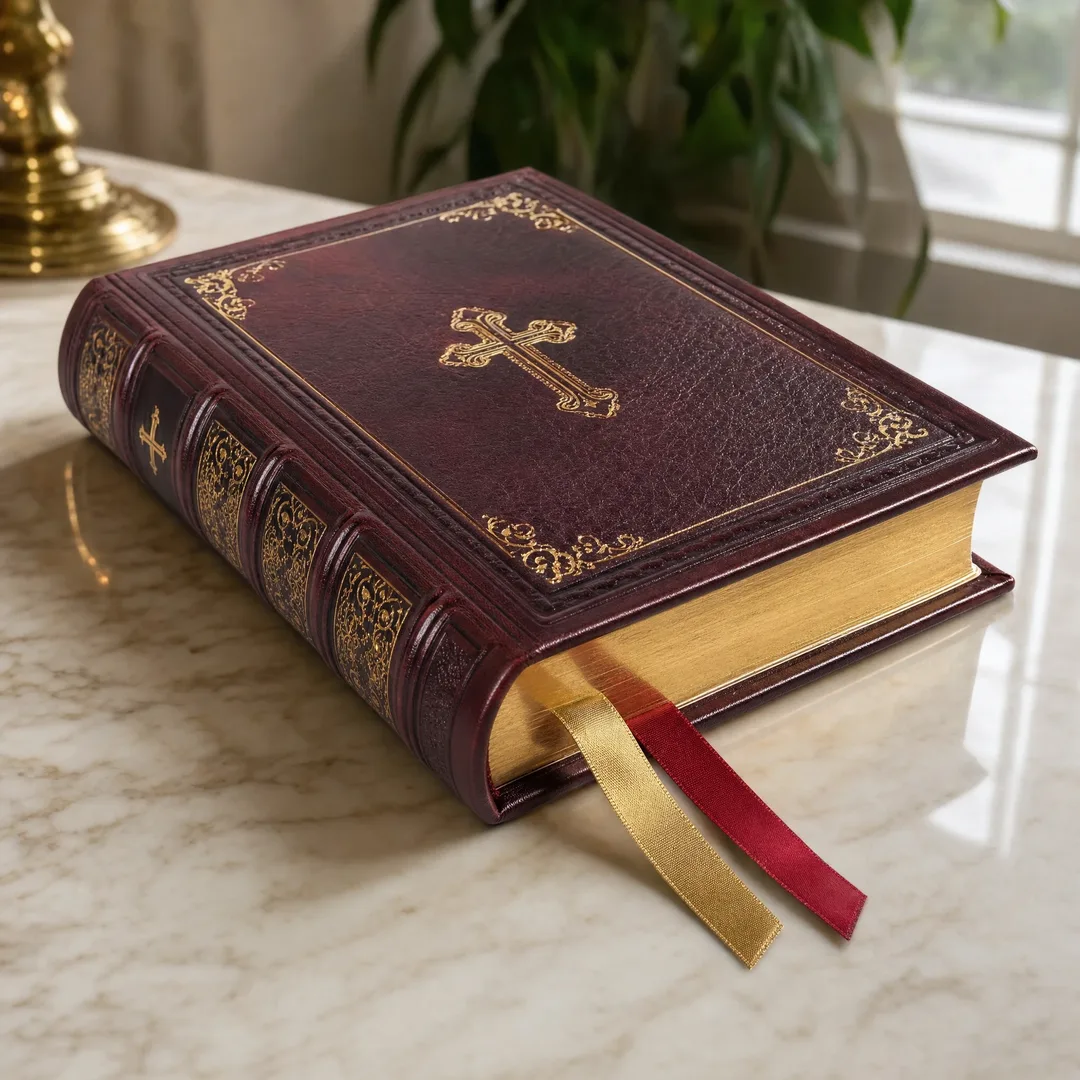
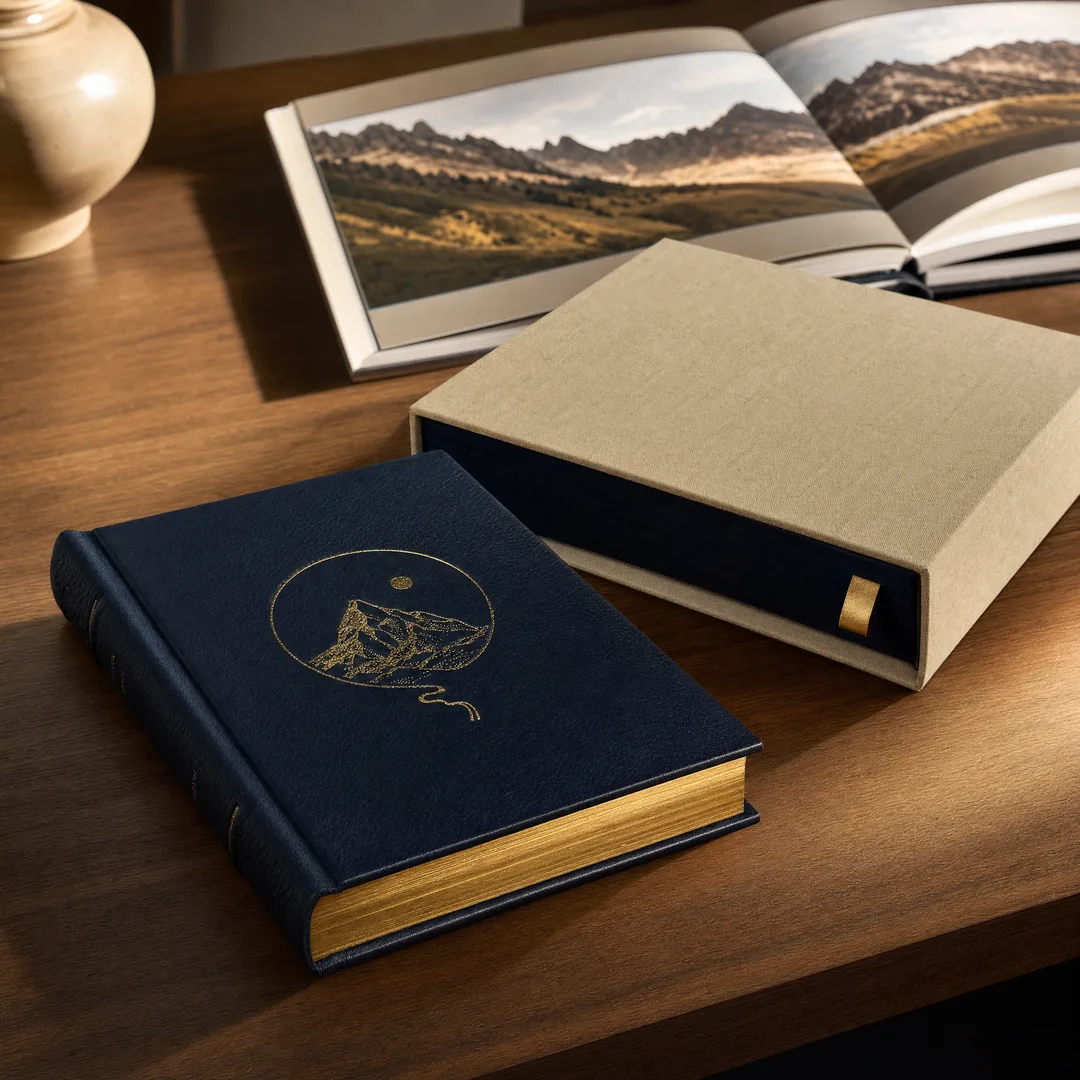
Spot UV : $0.10-0.30/unit — a glossy raised coating on specific design elements, popular for highlighting the title on a matte backgroundFoil stamping : $0.20-0.60/unit plus a die fee ($50-150 one-time) — metallic foil pressed into the cover, gold and silver being the most commonEmbossing/Debossing : $0.15-0.40/unit plus die fee — raised or recessed design elements, adds tactile dimensionEndpapers (for hardcovers): $0.20-0.50/unit — printed or colored paper inside the front and back coversRibbon bookmark : $0.15-0.30/unit — sewn-in fabric bookmark, a small detail that signals quality
These processes also extend lead time by 3-10 days each, so plan accordingly if you’re on a tight schedule.
Offset Printing vs Print-on-Demand: Cost Comparison
Pick the wrong printing method for your volume, and you’ll leave thousands on the table. Here’s how the numbers shake out for a standard 6×9″ paperback, 200 pages, B&W interior, full-color cover with gloss lamination :
Quantity
POD (per unit)
POD (total)
Offset (per unit)
Offset (total)
Savings with Offset
50 copies
$6.50
$325
$9.00
$450
POD wins (-$125)
100 copies
$6.50
$650
$7.50
$750
POD wins (-$100)
250 copies
$6.50
$1,625
$5.00
$1,250
Offset wins (+$375)
500 copies
$6.50
$3,250
$3.50
$1,750
Offset wins (+$1,500)
1,000 copies
$6.50
$6,500
$2.80
$2,800
Offset wins (+$3,700)
2,000 copies
$6.50
$13,000
$2.20
$4,400
Offset wins (+$8,600)
5,000 copies
$6.50
$32,500
$1.80
$9,000
Offset wins (+$23,500)
The break-even point for this spec sits around 200-250 copies. Below that, POD makes financial sense — no upfront commitment, no warehouse space, no risk. Above 300 copies, the offset setup cost gets fully absorbed, and every additional book drops your unit price further.
One caveat: the POD cost above ($6.50) is what you’d pay per author copy through a service like KDP or IngramSpark. If you’re selling through those platforms, the printing cost is deducted from your royalty — you never pay it upfront. But if you’re ordering 500 copies for a book launch or conference, that $6.50 × 500 = $3,250 comes out of your pocket immediately. Offset at 500 copies costs $1,750 total, and you keep all $3,250 worth of books — net saving of $1,500 on the same number of copies.
For books with color interiors, the gap widens further. A full-color 32-page children’s picture book at 1,000 copies runs roughly $3.50-5.00/unit offset vs $7.00-10.00/unit POD. That’s thousands in savings on a single print run.
Book Printing in China vs US: Real Price Breakdown
Printing in China isn’t just “cheaper” — it’s a fundamentally different economic model. Chinese printers operate at massive scale, pay lower labor and material costs, and specialize in export book manufacturing. The savings are real, but you need to account for freight, customs, and time.
Here’s a real landed-cost comparison for the same 6×9″ paperback, 200 pages, B&W interior, perfect bound , delivered to a US address:
Cost Item
China Offset (1,000 copies)
China Offset (3,000 copies)
US Offset (1,000 copies)
US Offset (3,000 copies)
Printing (EXW)
$1.80/book
$1.35/book
$3.80/book
$3.20/book
Ocean Freight
$0.45/book
$0.30/book
$0.15/book
$0.10/book
US Customs & Tariff (est. 7.5%)
$0.14/book
$0.10/book
$0.00
$0.00
Customs Brokerage
$0.08/book
$0.03/book
$0.00
$0.00
Inland Trucking (port to door)
$0.25/book
$0.15/book
$0.20/book
$0.12/book
Total Landed Cost $2.72/book $1.93/book $4.15/book $3.42/book
Savings vs US
35% cheaper
44% cheaper
—
—
A few important notes on these numbers. Ocean freight from Shanghai to Los Angeles runs 15-20 days; to New York, budget 30-35 days. Air freight cuts that to 5-10 days but costs 3-5× more per kg, erasing most of the China price advantage for all but the most urgent projects. And tariffs on printed books remain at 7.5% under Section 301 — books are exempt from the broader IEEPA-based tariffs that hit other Chinese goods at higher rates.
Many China-based printers also offer DDP (Delivered Duty Paid) pricing, which bundles printing, freight, customs, and last-mile delivery into one per-unit price. This simplifies budgeting and eliminates surprise fees. For the spec above, a typical DDP quote would be $2.50-3.00/book at 1,000 copies — still well below US offset pricing.
Minimum Order Quantity (MOQ) Guide
MOQ is the gatekeeper in book printing and binding. US offset printers often require 500-1,000 minimum copies. China-based printers are more flexible — many accept 100-300 copies for digital or short-run offset, though the per-unit price at those volumes won’t impress anyone.
Here’s how per-unit cost scales across common MOQ tiers for a 6×9″ perfect-bound paperback, 200 pages B&W :
Quantity
China Offset (per unit)
China Digital (per unit)
US POD Equivalent
Best Choice
100 copies
$6.00-8.00
$5.50-7.00
$6.50
US POD or China Digital
300 copies
$4.50-5.50
$4.80-6.00
$6.50
China Offset
500 copies
$3.00-4.00
$4.50-5.50
$6.50
China Offset
1,000 copies
$2.40-3.00
$4.00-5.00
$6.50
China Offset
2,000 copies
$1.80-2.30
$3.80-4.50
$6.50
China Offset
5,000 copies
$1.40-1.80
$3.50-4.20
$6.50
China Offset
The sweet spot for China offset printing lands around 500-2,000 copies. Below 300, the setup cost per book is still high enough that digital or POD makes sense. Above 2,000, you’re in volume pricing territory and should negotiate aggressively — most printers will sharpen their pencil at 3,000+.
One underrated strategy: split your first run . Print 100-200 copies via POD or China digital to validate demand and collect early reviews. If the book moves, commission a 2,000-copy offset run and pocket the margin difference. The initial test costs you a few hundred dollars in higher per-unit pricing but protects against a garage full of unsold inventory.
What’s Included in a Book Printing Quote?
Not all quotes are apples-to-apples. When you request a book printing quote, here’s what should appear — and what sometimes gets buried in the fine print.
Standard Line Items
Prepress / File Review : $25-75 if your files need correction. Send print-ready PDFs with bleed and proper color profile (CMYK, not RGB) and this fee often goes to zero.Plate Fees (offset only): $50-200 total. One set of aluminum plates per color — so a B&W interior plus full-color cover uses 5 plates (1 black interior, 4 CMYK cover). Plate fees are one-time; reuse them for reprints and you skip this cost.Proofs : Digital proofs are usually free. A physical printed proof runs $30-80 including shipping and takes about a week. For runs over 200 copies, always get the physical proof — fixing a file error before 2,000 copies roll off the press is $80 well spent.Printing : The actual per-unit manufacturing cost, usually the largest line item.Binding : Sometimes bundled with printing, sometimes separate. Clarify this.Finishing : Lamination, UV coating, foil stamping — each listed individually with setup and per-unit fees.Packing : Standard export cartons (usually 24-48 books per carton, depending on size). Palletization adds $10-25 per pallet.
Hidden Costs That Surprise First-Timers
Shipping and freight : The biggest gotcha. 1,000 paperback books weigh roughly 600-800 lbs (270-360 kg). Domestic US freight: $150-400. Ocean freight from China: $200-500. Air freight from China for the same load: $2,000-4,000. Always confirm whether the quote is EXW (factory gate, you arrange pickup), FOB (loaded on vessel), or DDP (delivered to your door, all costs included).Customs duties : 7.5% on printed books from China to the US, calculated on the declared value of the goods (usually the printing invoice, not retail value). Budget an additional $100-200 for customs brokerage fees.Warehousing / storage : If you’re printing 2,000 books and don’t have a fulfillment plan, you’re paying for storage or tripping over boxes in your garage. FBA prep centers charge $0.50-1.50 per unit for receiving and labeling; 3PL warehouses bill by pallet per month.Overruns / Underruns : Industry standard allows ±10% variance from the ordered quantity. If you order 1,000 copies, you might receive 900 or 1,100. Clarify whether you’re billed for the actual count or the ordered count.Rush fees : Standard lead time for offset books from China is 4-6 weeks production plus 3-5 weeks ocean freight. Need it faster? Rush production adds 15-30%; air freight adds 3-5× the shipping cost.
A clean quote breaks all of this out transparently. If a quote lumps “printing + binding + finishing” into one number with no detail, ask for a line-item breakdown — that’s where the hidden costs live.
3 Real-World Budget Examples
Let’s move from theory to practice. Here are three real project budgets — the kind of scenarios our customers bring to us every week — with actual numbers.
Scenario A: Self-Published Paperback Novel
Specs : 5.5×8.5″, 280 pages, B&W interior, perfect bound, gloss laminate cover, 70lb uncoated offset paperQuantity : 1,000 copiesPrinting cost (China offset, DDP to US): $2.85/book × 1,000 = $2,850 Per-unit landed cost : $2.85Selling at $14.99 on Amazon : After KDP fees, roughly $6.00 royalty per sale via POD. With offset copies? $14.99 retail minus $2.85 print cost minus ~$3.00 Amazon referral fee = ~$9.14 gross margin per direct sale. That’s a 3× margin improvement on every copy you sell yourself.
Scenario B: Children’s Picture Book
Specs : 8.5×8.5″ square, 32 pages, full-color interior on 157gsm coated paper, hardcover case bound with matte laminationQuantity : 2,000 copiesPrinting cost (China offset, DDP to US): $3.20/book × 2,000 = $6,400 Per-unit landed cost : $3.20Context : The same book printed via KDP’s hardcover POD costs roughly $8.50 per author copy. At 2,000 copies, that’s $17,000 vs $6,400 — a $10,600 difference. For a children’s author selling at fairs, school visits, and their own website, offset pays for itself on the first print run.
Scenario C: Company Portfolio / Lookbook
Specs : 8.5×11″, 96 pages, full-color interior on 128gsm coated matte paper, perfect bound with soft-touch matte lamination cover, spot UV on logoQuantity : 500 copiesPrinting cost (China offset, DDP to US): $4.80/book × 500 = $2,400 Per-unit landed cost : $4.80Context : US-based offset printers quoted $8.00-11.00/book for this spec at 500 copies. The China route saves $1,600-3,100 on a modest 500-copy run — and the quality is indistinguishable from domestic output. Spot UV adds roughly $60 setup + $0.15/book.
Notice the pattern: all three scenarios use China offset. That’s not bias — it’s math. At quantities above 300 copies, the cost-to-print-a-book equation tilts decisively toward overseas manufacturing, even after freight and tariffs.
FAQ: Common Book Printing Cost Questions
How much does it cost to print a book in 2026?
For a standard 200-page B&W paperback, expect $5.50-9.00/book for 50-100 copies (digital/POD), $3.00-5.00/book for 500 copies (offset), and $1.80-3.00/book for 1,000-5,000 copies (offset). Color interiors, hardcover binding, and premium finishing add significantly to these baselines. The cheapest way to print a book at any meaningful volume is offset manufacturing in China, where landed costs to the US start around $2.50-3.00/book at 1,000 copies.
Is cheap book printing China reliable compared to US options?
Yes — if you work with established manufacturers who specialize in export book printing. The term “cheap book printing China” gets thrown around a lot in self-publishing forums, often with skepticism. The reality: China-based book printing isn’t “cheap” in the low-quality sense — it’s cost-competitive because of scale, material supply chains, and labor economics. The key is verifying their track record: ask for physical samples of books similar to yours, check their client list, and confirm they use ISO-certified processes. Most reputable Chinese book printers have been serving US and European publishers for 15-25 years. The quality difference between a well-run Chinese factory and a US printer is negligible. What separates good from bad is communication, quality control, and shipping reliability — not geography.
What’s the difference between book printing and binding?
Book printing is the process of transferring ink onto paper — the actual page production. Book binding is the separate process of assembling those printed pages into a finished book: folding signatures, sewing or gluing the spine, attaching the cover, and trimming edges. They’re two distinct manufacturing steps, often done in different departments or even different facilities. Most quotes bundle them, but understanding the separation helps if you ever need to troubleshoot a quality issue — a printing defect (blurry text, color shift) is different from a binding defect (loose pages, cracked spine).
Why do book printing quotes vary so much from printer to printer?
Five reasons: (1) Some printers quote EXW (factory gate), others DDP (all-in delivered). Always confirm what’s included. (2) Paper stock: one printer’s “standard” might be 60lb uncoated; another’s might be 70lb offset. (3) Plate and setup fees: some wrap them into the unit price, others list them separately. (4) Overrun policies: being billed for ±10% vs exact count changes your total. (5) Margin: printers serving high-volume trade publishers price differently than those serving individual self-publishers. The solution: always send the exact same spec to 3-4 printers and ask them to quote it line-by-line.
Should I use POD first, then switch to offset later?
This is the most common path for self-publishers and it works well. Launch with POD (KDP, IngramSpark) to test the market and gather reviews. Once you’ve sold 200-300 copies and confirmed demand exists, commission a 1,000-2,000 copy offset run. Key tip: design your cover and interior to the same spec from day one, so the offset version uses the exact same files. Nothing’s worse than redesigning for offset after your POD cover template crops awkwardly on a different trim size.
Can I get a book printing quote without committing?
Absolutely — any reputable printer provides free, no-obligation quotes. You’ll need to provide: trim size, page count, paper type (interior and cover), binding method, color requirements (B&W or full color interior), quantity, and delivery destination. Most printers respond within 24-48 hours. At EcoPrinting, we turn quotes around in under 24 hours and include a line-item breakdown by default, not a lump sum.