Book Printing FAQ: Your Questions Answered
Printing books in China gives you access to world-class manufacturing at prices that make your project viable—whether you are an independent author printing 500 copies of a paperback or a publisher running 20,000 hardcovers. EcoPrinting has handled thousands of book orders for clients across North America, Europe, and Australia, and we hear the same questions from almost every first-time buyer. This FAQ pulls together the answers you actually need: how the ordering process works, what files to prepare, which paper and binding suit your book, how shipping and packaging keep your cargo safe, and what happens if something goes wrong. No fluff, no sales pitch—just the information that helps you make a confident decision.
Ordering & File Preparation
What Is the Ordering Process?
Most first-time buyers expect the process to be tangled—it is not. Here is the exact workflow we follow on every order.
Step 1 — Inquiry. You send us your book specifications: trim size, page count, paper preference, binding type, quantity, and any special finishes. The more detail you provide up front, the faster you get an accurate quote.
Step 2 — Quotation. We return a formal quote within 24 hours on business days. It breaks down unit cost, tooling charges, sample fees (if applicable), and estimated shipping.
Step 3 — Confirmation. You approve the quote and sign off on the proforma invoice.
Step 4 — 50% Deposit. On orders above $2,000, a 50% deposit kicks off production of your pre-production sample. Smaller orders go to full advance payment.
Step 5 — Sample Production. We print one physical copy of your book exactly as it will appear in the full run. This step catches color shifts, binding quirks, and paper feel issues before mass production starts.
Step 6 — Sample Confirmation. You inspect the sample. If anything needs tweaking—ink density, spine width, lamination—we adjust and re-sample before proceeding.
Step 7 — Mass Production. Once you sign off on the sample, the full print run begins. Softcover orders typically take about 12 working days; hardcover orders run closer to 15.
Step 8 — Final Payment. You settle the remaining 50% balance after production wraps and before we release the shipment.
Step 9 — Shipment. Books are packed, palletized, and dispatched via your chosen shipping method. You receive tracking details the same day the cargo leaves our facility.
The entire timeline from deposit to dispatch averages three to four weeks for softcover and four to five weeks for hardcover, plus transit time.
What Are the Artwork and File Requirements?
Getting your files right before submission saves you a round of revisions—and keeps your production schedule on track. EcoPrinting accepts artwork as print-ready PDF files. Every page must be set at 300 DPI minimum; anything lower will print soft or pixelated, especially on image-heavy pages. The color space should be CMYK , not RGB—sending RGB files will cause a color shift at press that no amount of post-production can fully correct.
For text, use 100% pure black (K=100, C=0, M=0, Y=0). Rich black blends can look muddy on body copy, particularly at smaller point sizes. Every page needs a 3 mm bleed on all four edges—this is the extra image area that gets trimmed off after binding, and skipping it leaves white slivers at the page edge. Convert all fonts to outlines before exporting; this prevents font substitution issues when files move between systems. If your layout application supports it, embed a CMYK output intent profile (we recommend FOGRA39 or GRACoL). Send one combined PDF with all pages in reading order—individual page files slow down prepress and introduce sequencing errors. If you are unsure about any of these specs, our prepress team checks every file before it hits the press and flags problems within one business day.
Can I Get Free Samples Before Placing a Bulk Order?
We offer two sample paths, and which one fits depends on where you are in your project.
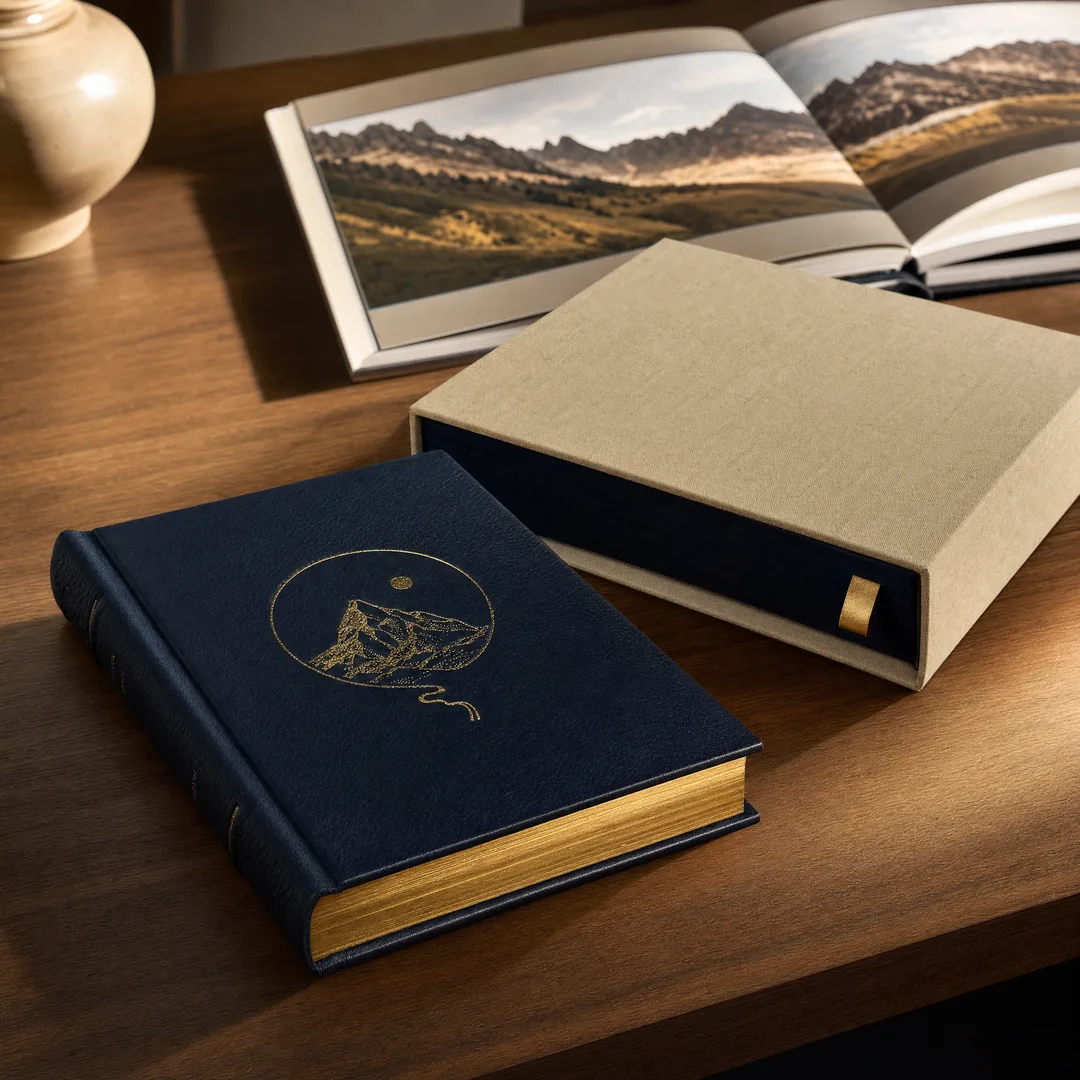
Option A — Stock Sample (Pre-Manuscript). If you want to evaluate our print and binding quality before committing to a full manuscript, we ship a stock sample from our sample library. This is a previously printed book that matches your target specs—same paper stock, cover finish, and binding method. The flat fee for this service is $35 , which covers international courier shipping via DHL. It arrives at your door in five to seven business days and gives you a hands-on feel for our workmanship—ink saturation, registration accuracy, spine squareness, and cover lamination quality.
Option B — Custom Pre-Production Sample (Post-Deposit). Once you place an order and pay the 50% deposit, we print and ship one copy of your actual book at no extra sample charge. This sample travels by DHL Express and reaches most destinations within a week. It is the same copy you inspect and sign off on before mass production begins. You get exactly what your readers will hold—no surprises.
Paper & Binding Options
What Printing Paper Types Are Available?
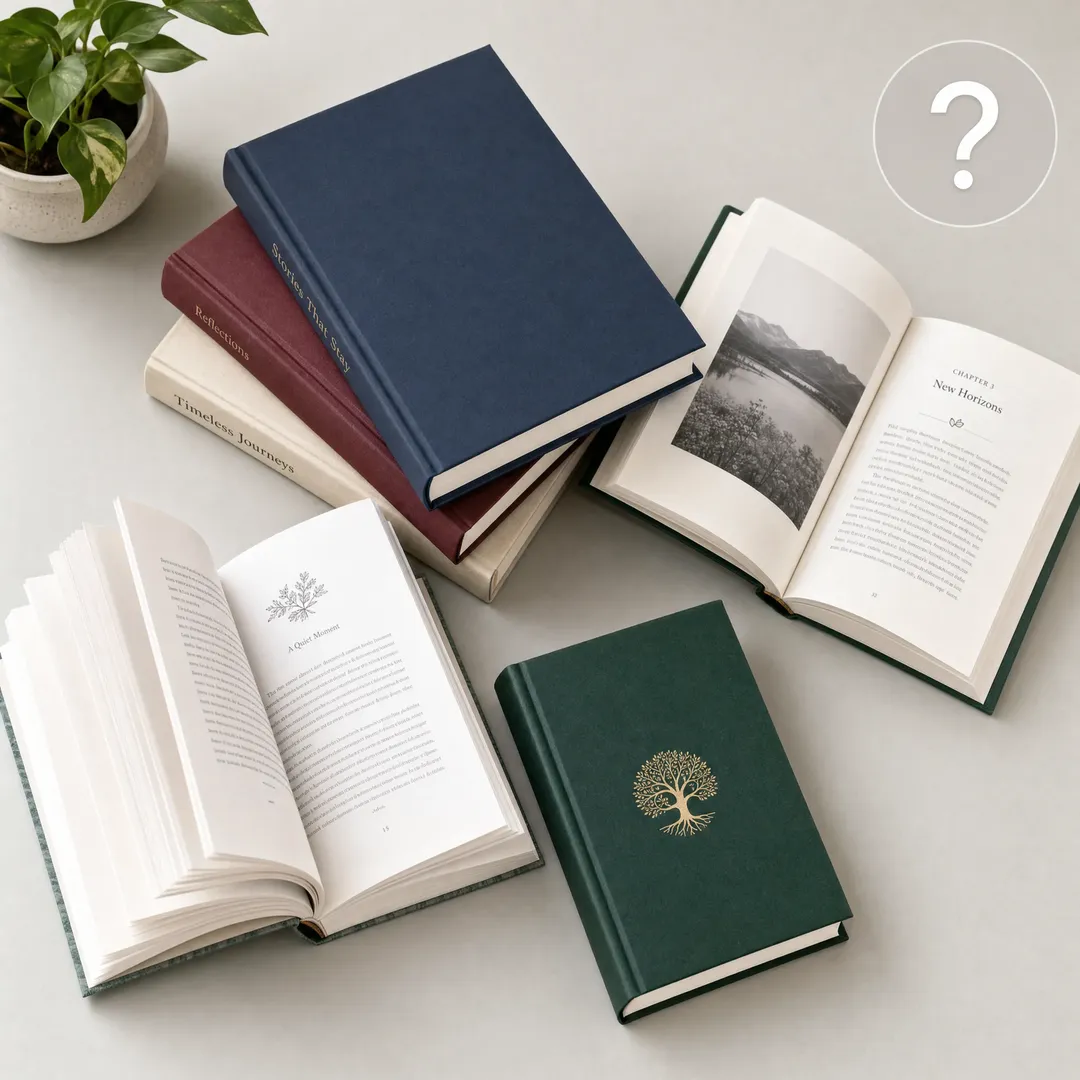
The paper you choose changes how your book feels in the hand, how readable the pages are, and what the final unit cost looks like. EcoPrinting stocks five paper categories that cover the vast majority of trade, educational, and specialty book projects.
Paper Type
Weight Range (gsm)
Best For
Offset / Uncoated
70 – 120
Novels, memoirs, text-heavy books. Cream or white shade available.
Matte Coated
100 – 157
Art books, photography collections, cookbooks. Reduces glare under ambient light.
Glossy Coated
100 – 200
Magazines, catalogs, children’s picture books. Makes colors pop.
Recycled
80 – 100
Eco-conscious projects, corporate reports. Natural off-white tone.
Kraft
90 – 120
Journals, notebooks, rustic-look publications.
Offset paper is the workhorse for most trade books—it is affordable, easy to read, and available in bulk. Matte coated gives you rich image reproduction without the glare that makes glossy pages hard to read under a reading lamp. Glossy coated pulls the maximum saturation out of photographs but picks up fingerprints easily, so we usually recommend it for short-run premium products. Recycled stock carries FSC certification if your project calls for it, and kraft paper has a tactile, artisan quality that works beautifully for guided journals and stationery-style books. Not sure which grade fits your project? Tell us what your book is about and we will recommend a paper that matches both your budget and your reader’s expectations.
What Book Binding Options Do You Offer?
Binding choice affects durability, lay-flat behavior, spine printing opportunities, and cost. EcoPrinting runs five binding methods in-house, so you are not paying a middleman markup on any of them.
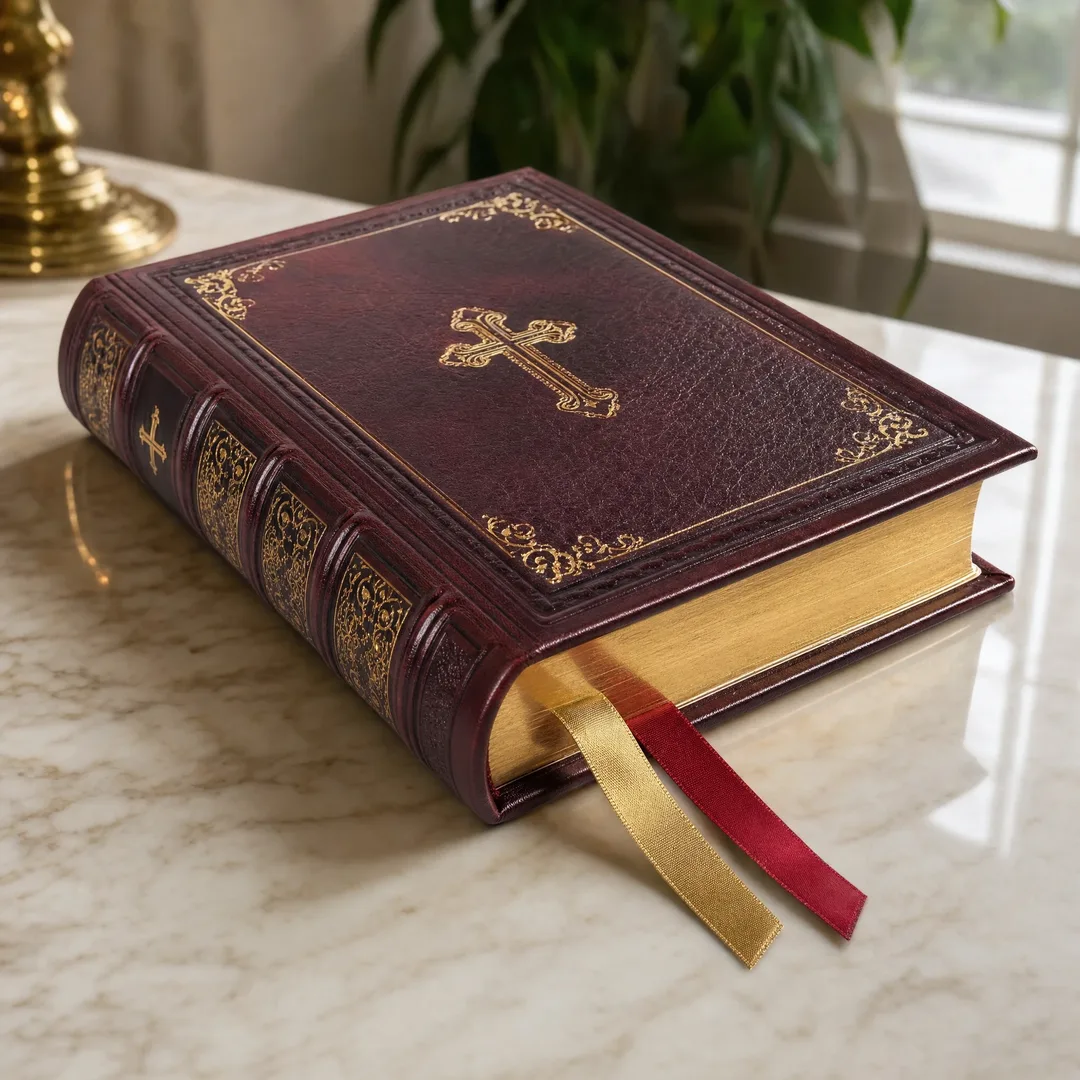
Perfect Binding is the standard for trade paperbacks. Pages are gathered, the spine edge is roughened, and hot-melt PUR adhesive bonds the cover to the text block. PUR glue holds up far better than standard EVA in humid environments and with repeated opening—your book stays intact after years on a shelf. Case Binding (Hardcover) wraps a rigid board case around the text block, with endpapers connecting the two. This is the go-to for library editions, premium non-fiction, coffee table books, and anything meant to last decades. Spiral Binding uses a continuous plastic or metal coil threaded through punched holes; pages rotate 360° and the book lies perfectly flat—ideal for cookbooks, workbooks, and manuals. Saddle Stitching staples folded signatures through the spine fold. It works only for thin books (typically under 64 pages) and is the most economical option for zines, event programs, and short booklets. Smyth Sewn Binding sews signatures together with thread before the cover is attached. This is the strongest binding method available and the only one we recommend for books exceeding 400 pages or for any project where archival longevity matters. Production timelines: softcover orders average 12 working days; hardcover orders take about 15 working days from sample approval.
Shipping & Logistics
How Long Does Shipping from China Take?
Transit time depends entirely on which shipping method you pick, and your choice usually comes down to a trade-off between speed and cost.
Sea Freight takes one to six weeks depending on the destination port. West Coast U.S. ports like Los Angeles or Long Beach land at the fast end of that range—typically two to three weeks. East Coast and European ports run four to six weeks. Sea freight is dramatically cheaper per kilogram than air, so for orders over a few hundred kilograms it is almost always the right call. Air Freight and DHL Express deliver in five to seven business days door-to-door virtually anywhere in North America, Europe, or Australia. The per-kilogram cost is higher, but for tight launch dates or small runs it is worth every dollar. Every EcoPrinting shipment is fully insured at invoice value. If a pallet gets lost or damaged in transit—rare, but it happens—you are compensated for the declared commercial value, not some arbitrary weight-based formula. We handle the claims paperwork on our end so you do not have to chase foreign carriers. For time-sensitive projects, we recommend building a two-week buffer into your schedule regardless of the shipping method you choose; customs clearance can add a few days that no carrier can predict with certainty.
How Are Books Packaged for International Shipping?
Books are heavy, fragile at the corners, and vulnerable to moisture. Ocean containers sweat. Forklifts knock pallets around. If your packaging is not solid, you open boxes full of scuffed covers and dog-eared pages. EcoPrinting uses a three-layer packaging system that has proven itself across thousands of international shipments.
Layer 1 — Individual Protection. Every book goes into a sealed waterproof polyethylene bag. This is the moisture barrier that stops condensation, rain, and humidity from reaching the paper. For hardcover books with dust jackets, we add a protective sleeve before bagging to prevent jacket scratches during transit.
Layer 2 — Reinforced Carton. Books are packed into five-layer corrugated export-grade cartons. These are not standard shipping boxes—the extra wall thickness and flute density absorb impact far better. Carton weight is capped so no single box exceeds what one person can safely lift, typically around 15 to 20 kg.
Layer 3 — Palletization. Cartons are stacked on heat-treated ISPM-15 wooden pallets, secured with heavy-duty binding straps, and wrapped in multiple layers of stretch film. The pallet becomes a single solid unit that gets moved by forklift rather than tossed around by hand. Corner protectors prevent strap damage to the outer cartons. For sea freight, we add a desiccant pack inside each carton as an extra moisture safeguard. The result: your books arrive in the same condition they left the factory.
Payment & Quality Assurance
What Are the Payment Terms?
EcoPrinting keeps payment terms straightforward so you can plan your cash flow without guessing.
For orders above $2,000 , we split the payment into two equal installments: 50% deposit to start production and 50% balance before shipment. The deposit covers your pre-production sample and locks in material allocation at current prices. The balance payment is due after mass production is complete and we send you final production photos—you see your finished books before you pay the remainder. For orders below $2,000 , full advance payment applies. These smaller runs move through production quickly, and the administrative overhead of split invoicing does not make sense at this scale.
We accept three payment methods. Bank transfer (T/T) is the most common and carries the lowest processing fees for both sides. Credit card payments work through a secure payment gateway and are convenient for first-time buyers who want the chargeback protection that cards provide. Western Union is available for buyers who prefer it, though transfer limits and fees vary by country. All payments are invoiced in USD. If your bank charges intermediary fees on international wires, make sure to select “OUR” (sender covers all charges) when initiating the transfer so the net amount we receive matches your invoice total. A mismatch here is the number one cause of delayed production starts.
What Is Your Quality Assurance Policy?
Printing is a mechanical process performed by humans operating machinery—mistakes can happen, and pretending they never do helps nobody. What matters is what happens when an error is caught.
EcoPrinting’s quality assurance policy is simple: if a production error occurs on our side—misregistered color plates, incorrect trim, binding failure, wrong paper stock, or any defect that deviates from your approved sample—we reprint the affected quantity at our expense or issue a full refund for the defective portion, at your choice. This is not a pro-rated partial credit or a discount on your next order. It is a real replacement or your money back.
How we catch errors before they reach you: every production batch undergoes inline inspection during printing and a manual spot-check at the binding line. Our QC team pulls random copies from each pallet and checks registration, color consistency, binding adhesion, trim accuracy, and packaging integrity. You also have the sample approval gate before mass production—the signed-off pre-production sample becomes the quality benchmark the entire run is measured against. If the final books do not match what you approved, the responsibility is ours. In 12 years of operation, fewer than 0.3% of orders have required a reprint. But if yours is one of them, we fix it without making you fight for it.