The Book That Won’t Fit on a Standard Shelf — and Why That’s the Point
Standard books follow standard rules. A5 or 6×9 trim. Paperback or casebound. Maybe a spot UV title on the cover if the publisher is feeling fancy. For most books, this works. But if you’re a photographer whose images demand a 12×12-inch spread, an independent author funding a leather-bound Kickstarter deluxe edition, or a gift brand designing something small enough to slip into a stocking, the standard playbook stops being useful.
That’s where custom-format and special-edition printing enters the picture — and where China’s print industry has built a quiet but significant advantage. The same factories that produce deluxe collector editions for European art publishers and large-format photography monographs for US imprints also work with independent creators running Kickstarter campaigns of 200 copies. They stock the materials, own the finishing equipment, and understand that a book printed at 297 × 297 mm square needs different handling than a mass-market paperback.
This guide covers three lanes of non-standard book production — special editions, large format, and mini books — with real numbers on costs, MOQs, and what to expect when you go off-script on trim size.
Special Edition Book Printing: When the Object Tells Half the Story
What Makes a Book a Special Edition
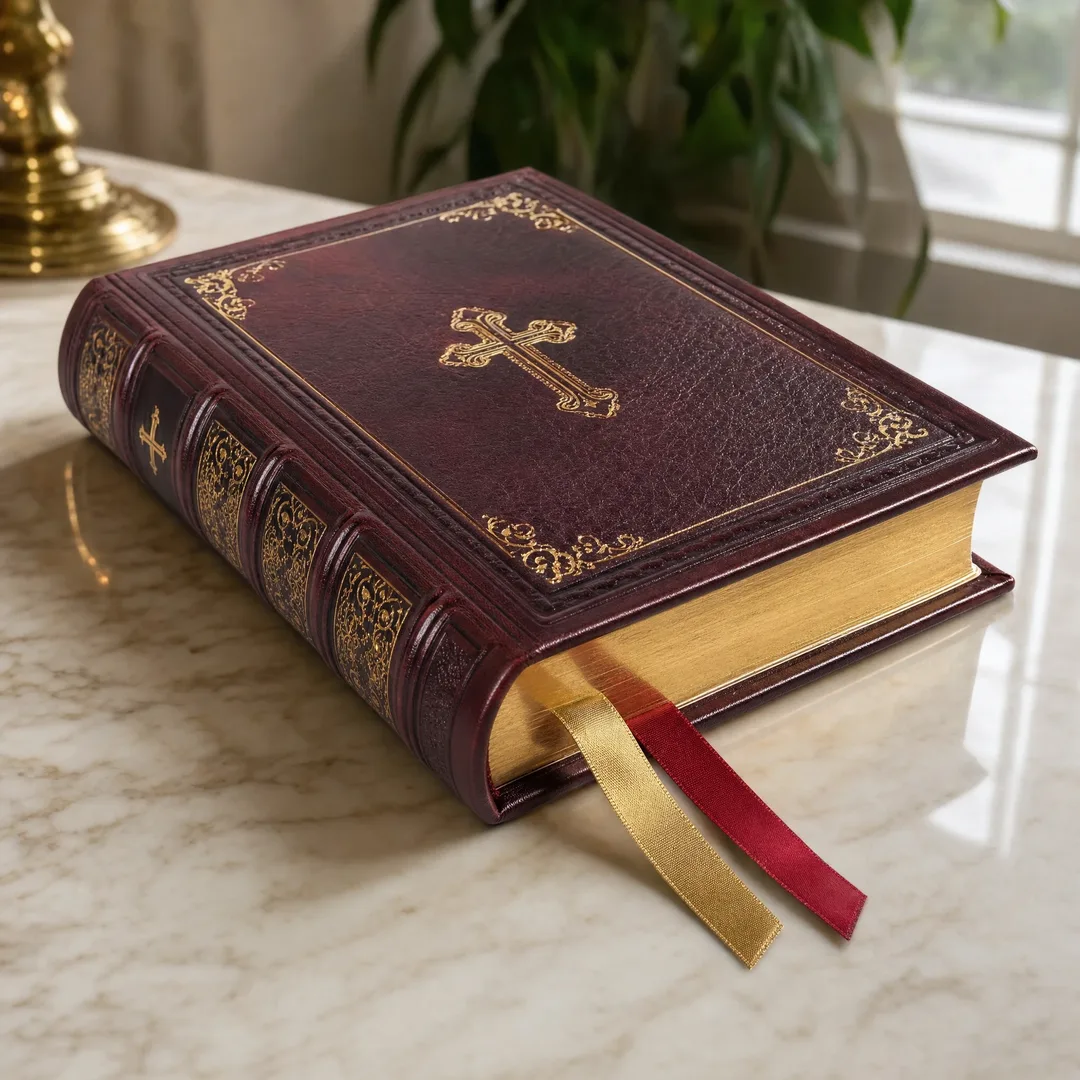
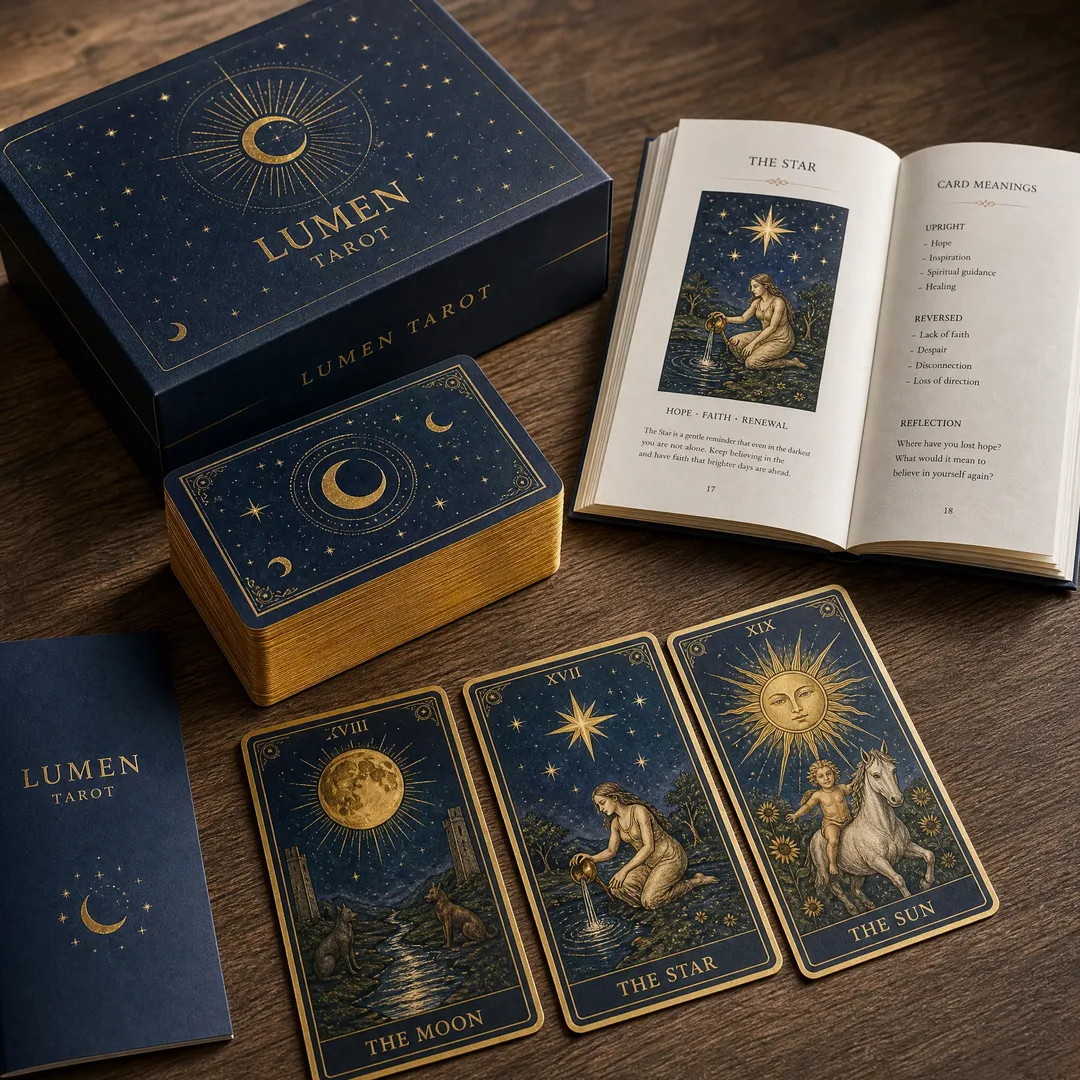
A special edition isn’t a standard book wearing a nicer jacket. It’s a deliberate upgrade across cover material, binding technique, edge treatment, and packaging — chosen to make the object feel worth keeping, displaying, and paying more for. Special editions sell at 2× to 5× the standard edition price, and buyers at that tier inspect every detail. A foil stamp slightly off-register, a slipcase fitting too loose, a ribbon fraying at the edge — these are the things that turn a premium product into a return request.
Chinese printers specializing in special editions typically handle everything in-house: foil stamping, embossing/debossing, edge gilding, cloth wrapping, leather binding, slipcase construction, and solander box fabrication. Most domestic printers outsource several of these processes to separate finishing shops — each with its own queue and quality control. When one factory owns the entire chain, you get a single accountable partner.
The three most common special-edition scenarios are publisher anniversary editions, Kickstarter deluxe tiers, and collector-focused independent editions — each with its own logic around print runs, materials, and timelines.
Publisher Anniversary & Commemorative Editions
When a traditional publisher celebrates a bestseller’s 10th anniversary, they often produce a special edition that shares interior files with the standard edition — a smart cost-control move. The premium treatment goes into cover, binding, and packaging. Typical specs: 500 to 10,000 copies, cloth or PU leather over greyboard, foil-stamped titles, dust jacket, gilded edges, ribbon marker, and sometimes a tuck-end box or slipcase.
The cost win: run interior pages for both standard and special editions in the same production batch, then split at the binding stage. Printers estimate this hybrid approach cuts special-edition costs by 25–40% versus printing them as entirely separate jobs. If you’re working with a publisher mindset, mention this early in the quoting process.
Kickstarter Deluxe Tier Editions
Crowdfunding changed special-edition economics. A creator offers a standard pledge at $30–$50 and a deluxe tier at $100–$250, funding the premium production run through backer pledges before printing a single page. The catch: backers who paid 5× the standard price need to feel that difference. They expect foil stamping, sprayed or painted edges — sometimes with a custom pattern wrapping around all three edge faces — bound-in ribbon markers, numbered edition pages, and a slipcase or clamshell box.
Print runs land between 100 and 1,500 copies, limited to pledge count plus a small overrun for replacements. Chinese printers familiar with Kickstarter workflows understand the hard deadline pressure and can provide a physical dummy book for your campaign preview — a blank-paged mockup using your actual materials and binding that converts browsers into backers better than any 3D render. It costs roughly $80–$150 to produce and courier, but answers every question about feel, weight, and presence before you commit to production.
Collector-Focused Independent Editions
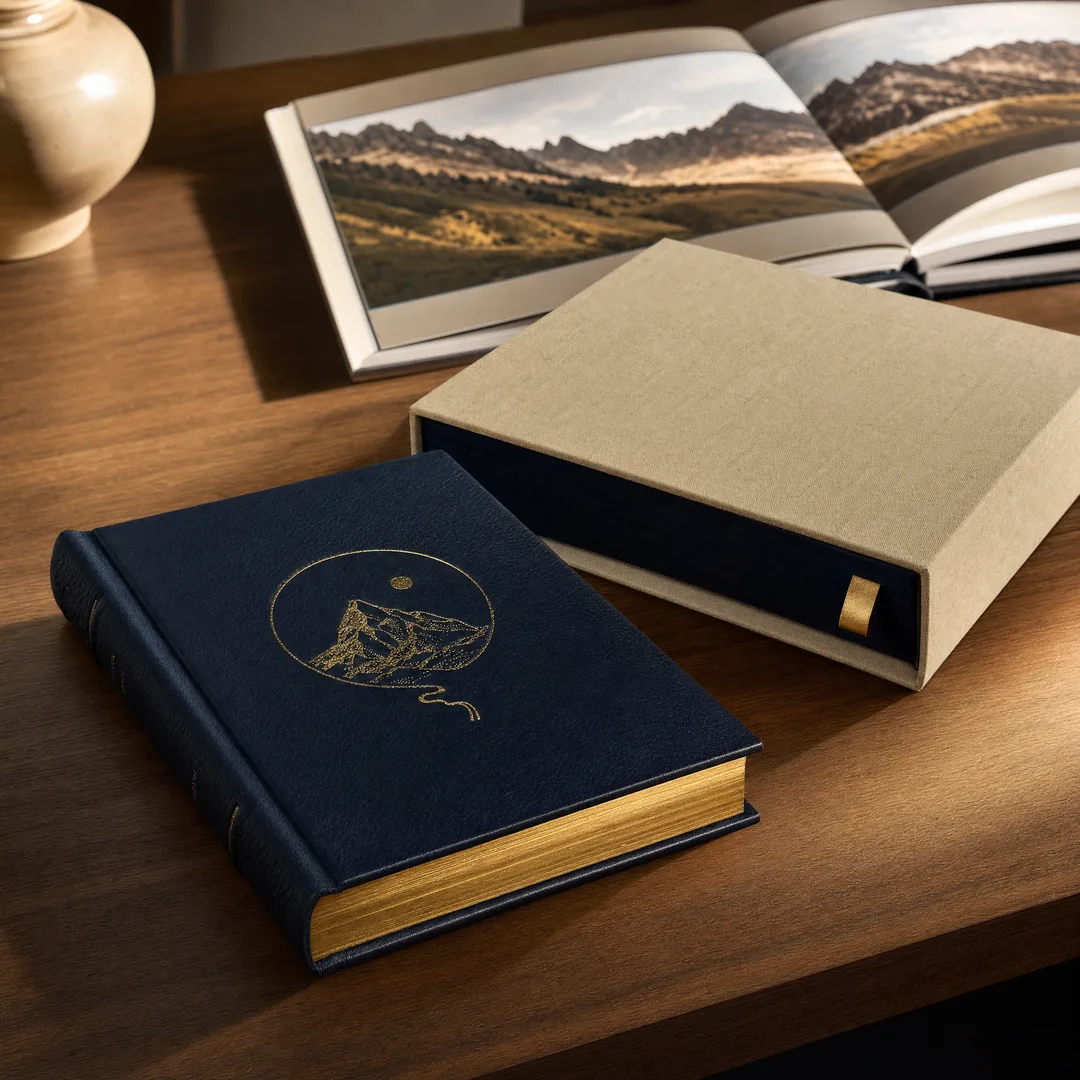
At the far end of customization: very small runs (100–500 copies, individually numbered), maximum material quality, and sometimes hand-signed edition pages bound in. These use leather or specialty cloth covers with combined foil and blind embossing, gilded or painted edges, multiple ribbon markers, silk endpapers, and presentation-grade slipcases or solander boxes.
This is where China’s labor advantage shows most clearly. Edge gilding — applying gold or metallic foil to page edges — is a slow, manual process. In high-wage markets, it adds prohibitive per-unit cost. In China, experienced finishers handle the same work for roughly $0.30–$0.80 per book, depending on edge treatment complexity. Numbering each copy by hand adds another modest increment. These line items that break budgets domestically become manageable, which is why so many independent fine-press publishers print through Chinese partners.
The Finishing Techniques That Define a Special Edition
Foil stamping is the most common premium finish. A heated die presses metallic or pigment foil onto the cover under pressure. Gold and silver are standards, but Chinese printers typically stock 6–10 foil colors — copper, holographic, matte black, rose gold, pearl white — without custom foil sourcing fees. Cost: a one-time die fabrication fee ($30–$80 per die), then a small per-unit stamping charge.
Embossing and debossing — raising or recessing the cover surface — often pairs with foil for a dimensional effect. Blind embossing (no foil, just the raised impression) creates subtler elegance on cloth covers with minimalist design. Same die economics: one-time setup, minimal per-unit cost after that.
Edge treatments have surged in collector interest. Gilded edges (traditional gold leaf or metallic foil on all three exposed page edges) remain the classic. Painted edges — a solid color or sprayed gradient — offer a contemporary look. The most advanced option, fore-edge painting or printed edge design, shows a full illustration on the page edges visible when the book is closed. It’s the most expensive ($0.80–$2.00 per copy, requiring precise registration) but also the detail that makes collectors post unboxing videos.
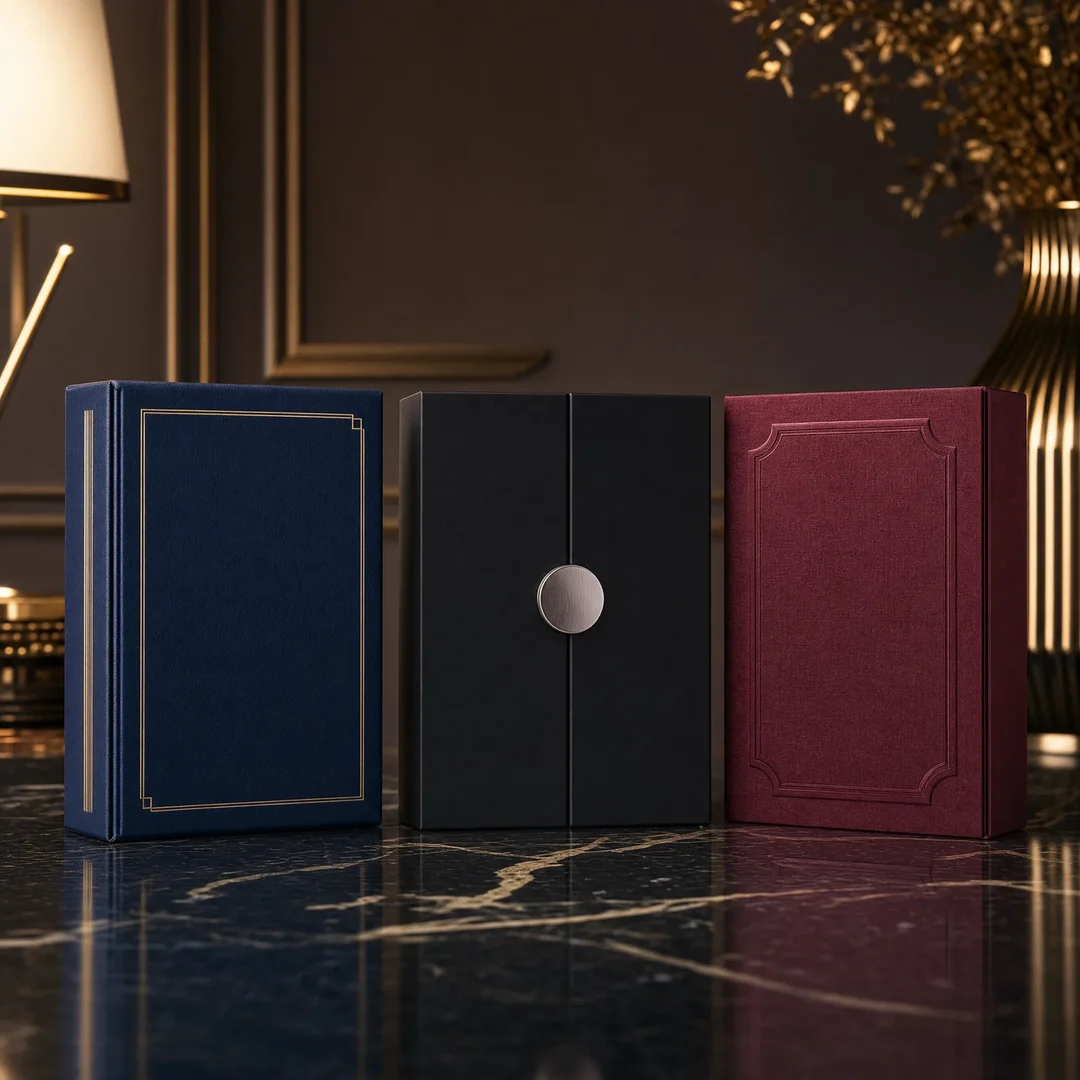
Slipcases and solander boxes complete the object. A slipcase is an open-ended box (bookboard wrapped in paper or cloth) that the book slides into, leaving the spine visible. A solander box — also called a clamshell box — is a fully enclosed protective case with a hinged lid, lined with velvet or acid-free paper. Slipcases add roughly $2–$5 per unit; solander boxes run $8–$25 per unit because they’re largely handmade. For a 200-copy limited edition, a cloth-covered slipcase with a small foil-stamped title elevates perceived value by far more than its $3-per-unit cost.
Large Format Book Printing: When Size Carries the Message
What Counts as Large Format
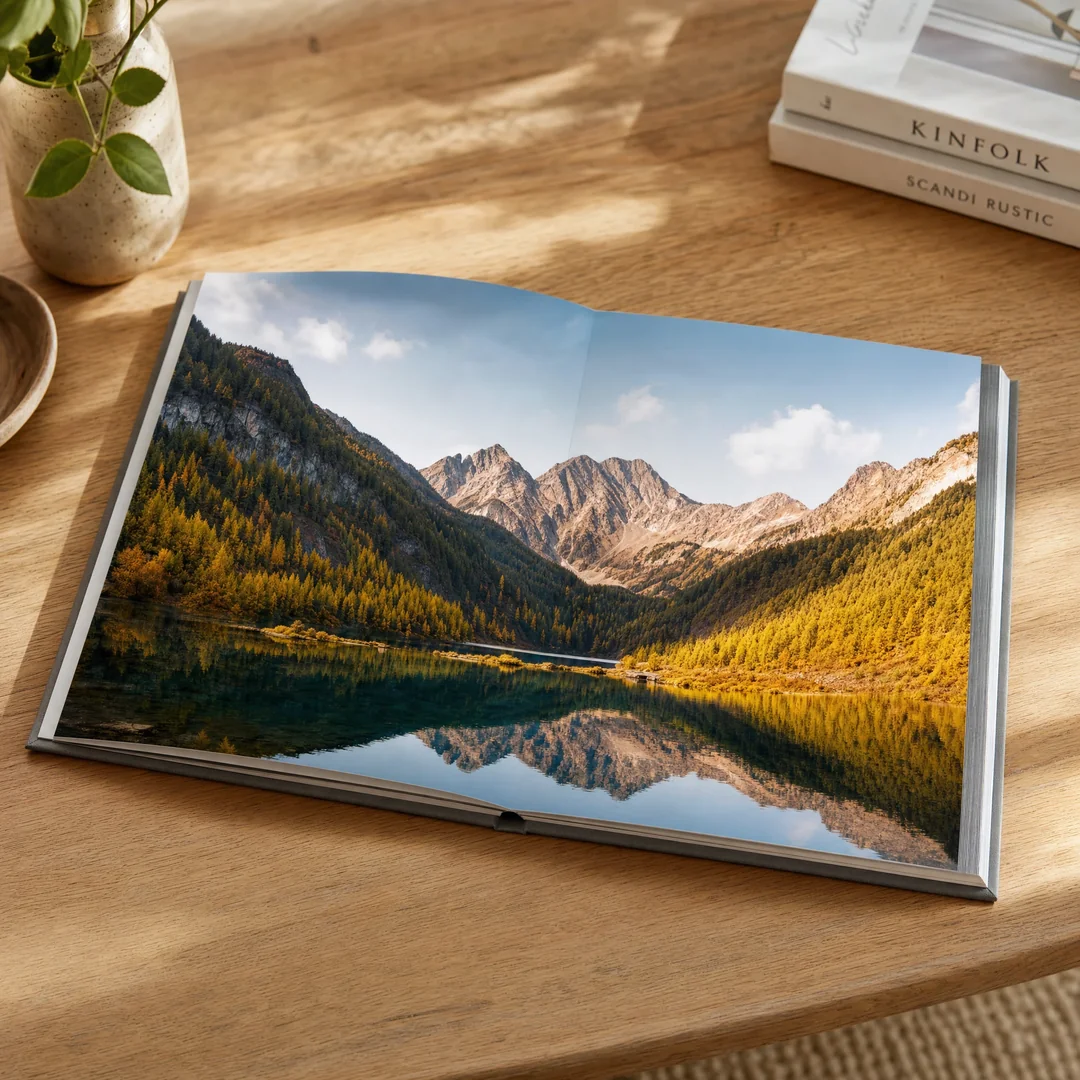
In printing, “large format” means any book significantly larger than standard trade dimensions. The most common categories: coffee table books (typically 10×10 to 12×12 inches, or 250×250 to 305×305 mm), photography monographs (often 11×13 inches or 280×330 mm), art catalogs, architectural portfolios, and oversized children’s picture books.
These books live or die on image quality. A coffee table book with flat blacks, muddy colors, or visible halftone patterns fails its core purpose. Chinese offset printers handling large-format work typically run Heidelberg or Komori presses at 200–300 LPI (lines per inch) rather than the 150–175 LPI common in standard book work. The higher line screen means finer dot patterns and smoother gradients — the difference between an image that looks “printed” and one that could be a gallery print.
Paper, Binding, and the Engineering Challenge
Large-format books create structural challenges. A 12×12-inch, 200-page hardcover weighs considerably more than a standard hardcover, and that weight stresses the binding and hinge. Paper choice, binding method, and cover construction must account for this.
For interiors, coated art paper at 157–200 gsm is standard for photography and art books — heavy enough to minimize show-through, smooth enough for fine detail. Uncoated papers work for a more editorial or archival aesthetic, but image reproduction will be softer and less saturated. The trade-off is deliberate: an architecture monograph on uncoated matte stock feels more serious than the same book on glossy paper.
Binding for large format requires case binding (hardcover) almost exclusively. Paperback large-format books exist but develop curled covers, cracked spines, and a cheap feel that undermines premium messaging. Within hardcover, Smyth-sewn binding is the gold standard: pages are stitched together in signatures using thread, then glued into the case. The sewn binding opens flatter, survives repeated handling, and avoids the cracked-spine problem of perfect-bound hardcovers.
Lay-flat binding is the specialized option for photography books with panoramic double-page spreads. Unlike a standard case-bound book — where pages curve into the spine and lose part of the image in the gutter — a lay-flat book opens completely flat with no image loss. The technique mounts the book block on a flexible spine rather than gluing directly to the case. Per-unit cost premium: roughly 15–25% over standard case binding, well worth it when full-bleed spreads are central to the design.
MOQ and Costs for Large-Format Books
Large-format printing in China usually carries a higher MOQ — 300 to 500 copies for offset — because press sheets are larger, paper costs more per sheet, and fewer titles share the same trim dimensions for efficient gang-run printing. Some printers now accept digital large-format runs as low as 50 copies using HP Indigo presses capable of oversized sheets. Per-unit cost on digital runs higher: roughly $18–$35 for a 200-page, 12×12-inch hardcover at 50 copies. At 300+ copies on offset, the same book drops to roughly $8–$15 per unit.
Shipping adds weight. Sea freight from Shanghai to a US West Coast port for 500 copies of 12×12-inch hardcovers might run $400–$700; air freight could hit $1,500–$2,500. Many creators split the difference: sea freight for bulk plus a small air-shipped batch for launch events and review copies.
Mini & Pocket Book Printing: Tiny Books, Serious Production
The Mini Book Landscape
A miniature book is generally defined as any book measuring no more than 3 inches (76 mm) in height, width, or thickness — though in practice, the commercial “mini book” category covers anything significantly smaller than a standard paperback, from A6 (105 × 148 mm) down to roughly 2 × 2 inches (50 × 50 mm).
The market spans several uses: gift books (tiny hardcover collections of quotes, poetry, or inspirational text) for bookstore impulse-buy displays; pocket reference guides (bird identification, cocktail recipes, plant care) trading on portability; promotional mini books as memorable brand giveaways; and genuine miniature collector editions at near-microscopic scale, produced in editions of 50–500 copies for collectors who display them in custom miniature bookshelves.
China has become a primary production hub for mini books not because they’re cheap — they’re surprisingly complex — but because the binding skills required (precision folding on tiny sheets, miniature case-making, thread-sewing at small scale) align with the hand-assembly capabilities Chinese binderies have developed over decades of diversified book production. A hardcover mini book at 65 × 80 mm with cloth cover, ribbon marker, and gilded edges requires roughly the same number of manual finishing steps as a full-sized special edition — but each step happens at a scale where tolerances are tighter.
Content That Works at Mini Scale
Not everything translates to miniature format. Poetry collections thrive — the brevity naturally suits small pages, and a compact volume feels intimate. Short stories work similarly. Gift and inspirational books — daily meditations, gratitude journals, quote collections — arguably work better at mini scale, where the format reinforces the idea of a concentrated, special object.
Non-fiction reference guides benefit from portability: a 4×3-inch laminated mushroom guide, a pocket cocktail recipe book, a mini field guide to local birds. Children’s mini board books — tiny chunky-page editions sold in sets of 4–6 books with a small slipcase — perform well in the gift and novelty markets.
What doesn’t work: novels, long-form non-fiction, anything requiring sustained attention across hundreds of pages of dense text. Small pages force tiny type, and tiny type across 300 pages leads to abandoned books. Mini books succeed when content is either short-form by nature or designed for short, repeated reading sessions.
Production Practicalities: Paper, Binding, and Type Size
The paper decision for mini books pulls in two directions. You need paper thin enough that the book doesn’t become a chunky brick, but opaque enough that text doesn’t ghost through. Uncoated offset at 80–100 gsm works for text-heavy minis; 105–128 gsm coated art paper for color-illustrated minis. At the truly tiny end (below 60 mm), 157 gsm may be needed just to give pages enough structural integrity to turn without tearing.
Saddle stitching works for mini books under roughly 48 pages with paper light enough to fold cleanly at small scale. Perfect binding is usable but unreliable on very small books — the spine surface area is so small the glue bond can fail under repeated opening. Smyth-sewn case binding is the premium option: durable, opens comfortably, communicates quality — but requires a minimum page count (usually 32–48 pages) and adds cost.
The type-size problem is real. For a mini book at 80 × 110 mm with standard margins, you’re working with a text block roughly 55 × 85 mm. At 8-point type, you might fit 16–18 lines per page at 25–30 characters per line. At 6-point, you fit more text but risk legibility complaints. The design tip: treat each page as a self-contained unit of meaning — a single poem, quote, or recipe — rather than flowing continuous text. This makes the small format feel deliberate rather than cramped.
Custom Trim Sizes: Off the Standard Grid
The Standard Sizes and What Deviating Costs
Every print shop has a standard trim size list — A5 (148 × 210 mm), A4 (210 × 297 mm), 6×9 inches, 8.5×11 inches, and a handful of others. Printing at a non-standard size — say, 180 × 230 mm or 9.5×7.25 inches — triggers several cost impacts worth understanding before you commit.
First, paper waste increases. Standard sizes tile efficiently onto press sheets with minimal offcut. A non-standard size breaks that efficiency, potentially adding 5–15% to the paper cost component. For a large print run this matters; for 200 copies, it may be negligible.
Second, custom trim dies may be required if your dimensions don’t match any existing cutting setup, adding a one-time $50–$150 setup fee. Modest in context of a full production run, but worth confirming upfront.
Third, bindery equipment has dimension limits. Books smaller than roughly 60 × 90 mm may not feed through automated casing-in machines, forcing hand-work that adds labor cost. Books larger than roughly 350 mm on any dimension may exceed standard case-making equipment capacity, requiring specialized large-format binderies. Before committing to an unusual size, ask your printer: “Can your casing-in and trimming equipment handle this dimension, or does it require hand work?” The answer directly affects both cost and timeline.
Square Formats and Going Horizontal
Square books — 210 × 210 mm, 250 × 250 mm, 300 × 300 mm — have become popular for art books, photography monographs, and design publications. A square page creates a different reading rhythm: images can be composed symmetrically, and the object feels distinct before you open it. Square formats also photograph well for social media, reading as intentional and premium in flat-lay shots.
The production downside: square formats are inherently non-standard for most press sheet configurations, so they carry the custom-size premium. They also require square greyboard pieces for case binding, which most binderies cut specially. For a 210 × 210 mm hardcover, production cost might run 10–20% higher than a comparable A4 hardcover at the same page count and quantity. Whether that premium is worth it depends on whether the square format is central to your book’s identity or just a preference.
MOQ, Timelines, and Real Cost Ranges
Minimum Order Quantities by Project Type
Digital printing (standard paper, standard binding): 1–50 copies. Digital presses don’t need plates or makeready, so per-unit cost stays roughly flat. Viable for prototypes, review copies, or ultra-limited editions. A 200-page A4 hardcover might run $25–$40 at 10 copies — expensive per unit, but the total outlay is manageable.
Offset printing, standard trim: 300–500 copies is the typical floor. Below this, plate-making and makeready costs don’t spread thin enough to beat digital on per-unit pricing.
Offset printing, special edition with multiple finishing processes: 100–500 copies. Counterintuitively, highly customized editions can sometimes run at lower quantities than standard books because per-unit finishing costs (foil, gilding, slipcase construction) dominate the cost structure — offset plate cost becomes a smaller fraction, so the digital-offset crossover point shifts lower.
Mini books, case-bound: 300–1,000 copies is typical because hand-assembly labor sets a practical floor. At 100 copies, possible but expensive per unit; at 500+ copies, unit economics improve substantially.
Production Timelines
A standard-format offset print run takes roughly 3–4 weeks from file approval to ready-to-ship. Special editions with multiple finishing processes — foil, embossing, edge treatment, slipcase fabrication — add 1–2 weeks. Large-format books add time for larger press scheduling and binding. Mini books add time for hand-assembly steps.
A realistic timeline for a special-edition project with foil stamping, gilded edges, and a cloth slipcase at 300 copies: 5–6 weeks production, plus shipping. Sea freight to the US or Europe adds 3–5 weeks; air freight adds 5–10 days. Plan backward from the date you need books in hand, add a 2-week buffer for customs delays or rework, and you’ll have a realistic production calendar.
What to Budget: Cost Ranges by Format
These are working ranges based on current market conditions — your specific paper choice, page count, and finishing complexity will shift the numbers:
Standard special edition (cloth cover, foil stamp, gilded edges, ribbon, dust jacket, 200 pages, 500 copies): $6–$12 per unit FOB. Add $2–$5 per unit for a cloth slipcase. At 500 copies, roughly $4,000–$8,500 total, with $600–$1,200 additional for sea freight to a US port.
Kickstarter deluxe edition (leather cover, foil + emboss, painted edges, numbered, slipcase, 200 pages, 300 copies): $10–$18 per unit FOB, or $3,000–$5,400 total. Per-unit cost stays higher because the print run is smaller, but total outlay remains manageable within a crowdfunding budget.
Large-format photography book (12×12 inches, 160 pages, Smyth-sewn case binding, dust jacket, 500 copies): $8–$15 per unit FOB. Larger dimensions mean more paper per book, and sewn binding adds to binding cost. Lay-flat binding adds roughly $2–$4 per unit.
Mini hardcover book (80 × 110 mm, 64 pages, case-bound, cloth cover, 500 copies): $2.50–$5.00 per unit FOB. Despite the small size, hand-assembly labor keeps the price higher than expected. At 200 copies, per-unit cost climbs toward $5–$8 as setup costs spread across fewer units.
One universal rule: get a physical hard-copy proof. For any project with custom materials, unusual dimensions, or multiple finishing techniques, a printed proof using your actual production files and materials is worth its $50–$100 cost. DHL or FedEx courier from China adds 3–5 days and roughly $30–$50. This step catches color shift, binding quality, and material feel issues that soft proofs can’t reveal — and it’s dramatically cheaper than discovering a problem after 500 copies are already bound and boxed.
File Preparation for Non-Standard Formats
File preparation for custom-format books follows the same fundamentals as standard production — print-ready PDF, CMYK color space, 300 DPI images, 3 mm bleed — with format-specific additions.
For special editions with foil stamping , provide a separate vector file showing only the areas to be foil-stamped. This file drives die fabrication — any error becomes a metal die stamping the wrong impression onto every copy. Name layers clearly (FOIL_GOLD, FOIL_SILVER, EMBOSS, DEBOSS) and confirm the naming convention your printer prefers.
For large-format books with full-bleed double-page spreads , ask for a spread proof — a physical proof showing two facing pages as they’ll appear when the book is open — not just individual page proofs. This catches cross-gutter alignment issues that single-page proofs miss. A face or a building spire sitting directly on the gutter line will be partially lost unless the layout accounts for it.
For mini books , the critical prep step is legibility testing. Print your layout at 100% scale on a desktop printer, cut to actual trim size, and hand it to someone unfamiliar with the content. If they squint or move the page closer, your type is too small. Adjust and re-test. The most common failure mode for first-time mini-book projects: the designer works at 200% zoom on screen, and 7-point type that looked perfectly readable becomes a smudge at actual size.
Is Specialty Printing From China Right for Your Project?
The decision comes down to whether your per-unit saving on printing exceeds the added shipping cost and extended timeline, while meeting your quality requirements. For independent creators and small publishers producing special editions, large-format art books, or mini books at 200–2,000 copies, the math usually works — sometimes by a wide margin.
Chinese printers specializing in these categories have invested in the specific equipment and skills: multiple foil stamping stations under one roof, edge-gilding teams, slipcase fabrication workshops, large-format Heidelberg presses, and mini-book case-making capabilities. They stock the materials — 20+ cloth options, 15+ leather and PU leather options, 8+ foil colors, multiple ribbon and endpaper choices — so you’re not waiting on external material sourcing. And they’ve built experience with workflows that matter to independent creators: Kickstarter prototypes, dummy books, international hard-copy proofs, and shipment splitting between air and sea freight.
The trade-off is distance. You won’t visit the factory floor. You’ll communicate over email and WeChat, often across time zones. The proof cycle takes days rather than hours. If something goes wrong, resolution takes longer. These are real costs. But for a project where the numbers tilt decisively in China’s favor — and for most special-edition, large-format, and mini-book projects at 200–2,000 copies, they do — the distance is a manageable inconvenience rather than a dealbreaker. Thousands of independent publishers, photographers, and Kickstarter creators already run their production this way. The infrastructure exists. The quality is there. The question is whether your project is ready for it.