What Is Coated Paper?
Coated paper is a high-quality paper stock whose surface has been treated with a layer of coating compound — typically a mixture of clay, calcium carbonate, latex binders, and other pigments. This coating fills the microscopic gaps between paper fibers and creates a smooth, sealed surface that controls how ink sits on the page during printing. The result is sharper image reproduction, more vibrant colors, and cleaner text than uncoated paper can deliver.
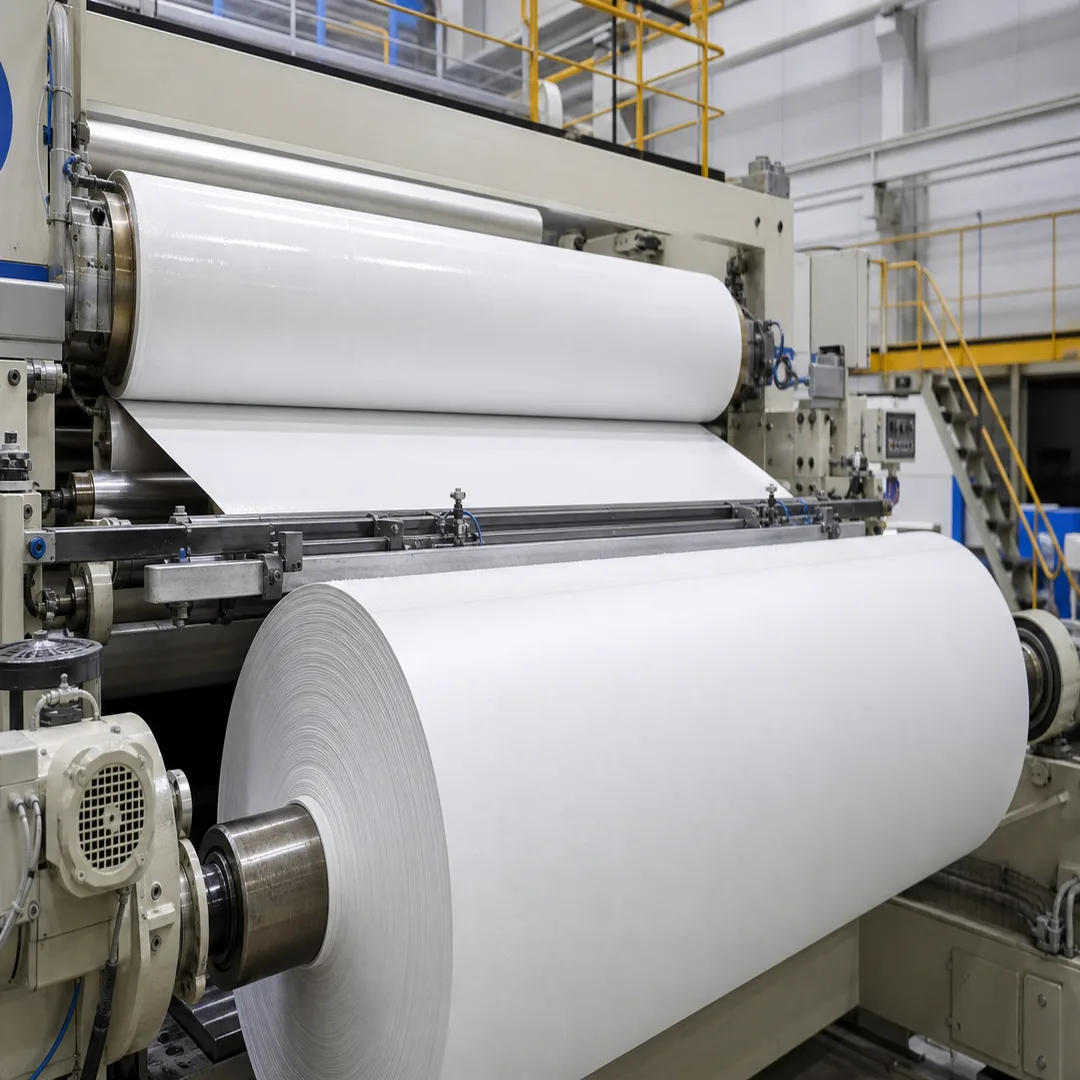
The manufacturing process involves two critical stages. First, the base paper runs through a coating station where the compound is applied by blade, roll, or air-knife methods. Blade coating produces the smoothest surface because a flexible steel blade meters the coating to precise thickness. Second, the coated sheet passes through a supercalender — a stack of alternating hard steel and soft cotton (or polymer) rollers under intense heat and pressure. This calendering step compresses the paper, polishes the surface, and determines whether the final sheet emerges glossy, satin, or matte.
Coated paper sits at the heart of commercial printing. Magazines, art books, luxury catalogs, packaging boxes, postcards, and premium brochures all rely on coated paper because it delivers photographic print quality. In fact, when you flip through a high-end fashion magazine and notice how the images seem to leap off the page, you are experiencing coated paper at work. The coating prevents ink from soaking deep into the fibers. Instead, the ink dries on top of the coating layer, preserving dot sharpness and maximizing color density.
Coated paper grades span a wide spectrum. You can choose glossy coated for maximum visual punch, matte coated for an elegant, glare-free reading experience, coated-one-side (C1S) for packaging and labels, or coated-two-sides (C2S) for double-sided print projects. Each variant serves a distinct purpose, and choosing the right one determines whether your printed product looks professional or falls flat.
Types of Coated Paper
The coated paper family divides into four main categories. Understanding the differences between them will help you specify the right stock for every print project — from a 200-page coffee table book to a simple product hang tag.
Glossy Coated Paper (Gloss Art Paper)
Glossy coated paper — also called gloss art paper in the printing trade — features a highly reflective, polished surface created through intense supercalendering. The coating fills every fiber gap, then the calender presses and polishes the surface to a mirror-like finish. This high-smoothness surface reflects light directly back at the viewer, which makes printed colors look richer, blacks deeper, and fine details crisper than on any other paper type.
Glossy paper typically ranges from 80 gsm to 300 gsm. The lighter weights (80–105 gsm) serve magazine interiors and catalog pages where low bulk matters for mailing costs. Mid-weight gloss (128–157 gsm) handles brochures, flyers, and promotional leaflets. Heavyweight gloss (200–300 gsm) works for book covers, premium postcards, and presentation folders.
The primary benefit of glossy coated paper is its color pop. Because light reflects cleanly off the sealed surface, ink sits on top rather than absorbing into fibers — this is called “ink holdout.” High ink holdout produces a wider color gamut and sharper halftone dots than uncoated or matte papers. However, the reflective surface also causes glare under direct light. This makes glossy paper less comfortable for long reading sessions. Readers of a 400-page novel printed on gloss stock would struggle with constant reflections. For this reason, glossy paper works best for image-driven materials: photo books, fashion catalogs, product brochures, and luxury packaging.
Matte Coated Paper (Matte Art Paper / Silk Paper)
Matte coated paper — also known as matte art paper or silk paper — receives the same coating treatment as glossy stock, but the calendering process is dialed down or followed by a light matte finish application. The surface roughness is intentionally preserved at a micro level, scattering incoming light instead of reflecting it directly. The result is a non-glare, velvety surface that feels premium to the touch.
Matte art paper usually spans 90 gsm to 350 gsm. The slightly heavier minimum weight reflects the fact that matte paper needs more bulk to maintain opacity without the reflective coating surface. Lightweight matte (90–130 gsm) works for art book interiors, premium magazine pages, and annual reports. Mid-weight matte (150–200 gsm) handles corporate brochures, lookbooks, and restaurant menus. Heavyweight matte (250–350 gsm) serves hardcover book jackets, art prints, and luxury stationery.
The primary advantage of matte paper is readability. Without glare, readers can spend hours with a book without eye strain. This makes matte paper the default choice for text-heavy publications — novels, textbooks, coffee table books with long essays, and premium comic books. In addition, matte paper conveys a sophisticated, understated aesthetic that many luxury brands prefer. The trade-off is slightly muted color intensity compared to glossy paper. Because light scatters on the matte surface, the maximum black density is lower, and some fine shadow detail can compress. However, for most applications, designers consider this a fair exchange for the reading comfort and elegant texture that matte provides.
Coated One Side Paper (C1S)
C1S stands for Coated One Side. As the name suggests, only one face of the paper receives the coating treatment, while the reverse side remains uncoated — rough or lightly sized, similar to offset paper. This asymmetric construction solves a specific set of printing problems where you need a high-quality print surface on one side and a writable, gluable, or plain surface on the other.
C1S paper is typically heavier than double-sided coated grades, starting around 200 gsm and going up to 450 gsm or higher. The heavier weight provides the stiffness that packaging and cover applications demand. Common C1S uses include paperback book covers (where the coated side carries the full-color cover design and the uncoated inside stays blank or carries black-only text), greeting cards, hang tags, folding cartons, and labels. In packaging, the coated outside surface receives the brand graphics while the uncoated inside can be glued to form the box structure.
The cost factor is worth noting. C1S paper is generally less expensive than C2S of comparable weight because only one coating pass is required. For single-sided print projects, specifying C2S wastes money on a coated back surface that nobody will see. Print buyers who understand this distinction can save 10–20% on paper costs for the right project types.
Coated Two Sides Paper (C2S)
C2S — Coated Two Sides — is the standard coated paper that most people picture when they think of “coated paper.” Both faces receive an identical coating layer and calendering treatment. Every glossy magazine page you have ever handled was printed on C2S stock. The double-sided coating ensures consistent print quality on both sides of the sheet, which is essential for any publication where the reader turns pages and expects the same visual experience front and back.
C2S paper covers the full coated spectrum — from lightweight 80 gsm magazine text stock to heavyweight 350 gsm cover stock. Because both sides are coated, C2S paper delivers the maximum ink holdout advantage on every printed surface. This makes C2S the default choice for magazines, catalogs, brochures, flyers, posters, and any print product where both sides carry full-color imagery. In book printing, C2S paper frequently serves as the interior stock for image-heavy books like photography monographs, art catalogs, and illustrated children’s books.
The trade-off is cost and weight. C2S costs more than C1S at equivalent weight because it requires two coating passes. It is also less suitable for applications that need a writable surface — trying to sign a C2S-coated greeting card with a ballpoint pen results in smeared ink and frustration.
Glossy vs Matte: How to Choose
Choosing between glossy and matte coated paper is the most frequent decision print buyers face. The table below summarizes the key comparison points across all the dimensions that matter for real-world projects.
Feature
Glossy Coated Paper
Matte Coated Paper
Surface Appearance Highly reflective, mirror-like finish
Non-reflective, smooth velvety texture
Color Vibrancy Maximum — wide color gamut, deep blacks
Slightly muted — colors appear softer and warmer
Readability Can cause glare under direct light
Excellent — no glare, comfortable for long reading
Ink Absorption Very low — ink sits on coating surface
Low to moderate — slight ink spread
Detail Sharpness Extremely sharp halftone dots
Very good, but slightly softer than glossy
Fingerprint Resistance Shows fingerprints and smudges easily
Resists fingerprints well
Common GSM Range 80–300 gsm
90–350 gsm
Cost Standard — widely available
Slightly higher — matte finish adds premium
Best For Photo books, luxury catalogs, fashion magazines, product brochures, postcards
Art books, coffee table books, corporate reports, restaurant menus, premium novels
Use glossy paper when your project is image-first and you want maximum visual impact. Product photography, fashion editorials, and high-contrast graphic design all benefit from glossy paper’s color intensity. For example, a jewelry catalog printed on gloss stock makes gemstones sparkle in a way that matte paper cannot replicate.
Use matte paper when reading comfort matters or when your brand aesthetic calls for understated elegance. A photography monograph with accompanying essays works better on matte stock — the photos still look beautiful, and the text remains comfortable to read. Similarly, corporate annual reports printed on matte paper project seriousness and quality without being flashy.
C1S vs C2S: When Single-Sided Coating Matters
The C1S versus C2S decision is straightforward once you understand the functional difference. The table below breaks down when each type makes sense.
Feature
C1S (Coated One Side)
C2S (Coated Two Sides)
Coated Surface One side only — reverse side is uncoated
Both sides — identical coating on front and back
Print Quality High on coated side, basic on uncoated side
Consistently high on both sides
Common GSM Range 200–450 gsm
80–350 gsm
Writable Back Yes — uncoated side accepts pen, pencil, or glue easily
No — both sides resist writing instruments
Cost Lower — single coating pass saves 10–20%
Higher — double coating pass required
Best For Book covers, greeting cards, hang tags, folding cartons, labels, paperback covers
Magazines, catalogs, brochures, flyers, posters, double-sided photo books
The golden rule for C1S versus C2S: if both sides of the sheet will carry full-color printing, choose C2S. If only one side needs high-quality reproduction and the other side needs to be written on, glued, or left blank, choose C1S. Mis-specifying C2S for a single-sided project wastes money. Conversely, using C1S for a double-sided brochure produces an unprofessional result with one sharp, vibrant side and one dull, washed-out side.
Common GSM Ranges and Applications
GSM — grams per square meter — is the universal metric for paper weight. Understanding GSM helps you match paper to function. A 300 gsm sheet is roughly three times heavier per square meter than a 100 gsm sheet. The table below maps coated paper types to their practical GSM ranges and the projects each weight suits.
Coated Paper Type
GSM Range
Typical Applications
Glossy C2S (lightweight)
80–105 gsm
Magazine interior pages, catalog text pages, direct mail inserts
Glossy C2S (midweight)
128–170 gsm
Brochures, flyers, promotional leaflets, posters
Glossy C2S (heavyweight)
200–300 gsm
Book covers, premium postcards, presentation folders, luxury packaging
Matte C2S (lightweight)
90–130 gsm
Art book interiors, photography books, annual reports, premium magazine pages
Matte C2S (midweight)
150–200 gsm
Corporate brochures, lookbooks, restaurant menus, invitations
Matte C2S (heavyweight)
250–350 gsm
Hardcover dust jackets, art prints, luxury stationery, wedding albums
C1S (lightweight)
200–250 gsm
Paperback book covers, greeting cards, postcards
C1S (midweight)
270–350 gsm
Hang tags, product labels, folding cartons for cosmetics
C1S (heavyweight)
350–450+ gsm
Rigid packaging boxes, board book pages, structural cartons
When selecting GSM, think about both function and feel. A 100-page art catalog printed on 80 gsm stock will feel flimsy and may suffer from show-through — where images on the reverse side ghost through the paper. Bumping up to 128 gsm or 150 gsm dramatically improves opacity and perceived quality. On the other hand, a 400-page novel printed on 150 gsm paper would be unnecessarily heavy and expensive to ship. Most trade novels use 70–90 gsm uncoated paper for exactly this reason. Coated paper in the 100–130 gsm range offers a good middle ground for book projects where image quality matters but weight and cost must stay reasonable.
How to Choose the Right Coated Paper for Your Project
Selecting coated paper involves balancing four factors: visual intent, reading experience, budget, and production requirements. Follow this decision framework to narrow down your options quickly.
Step 1: Determine the primary visual goal. Is your project image-driven or text-driven? Image-driven projects — photography books, fashion catalogs, product lookbooks — lean toward glossy paper for maximum color pop. Text-driven projects — art books with essays, corporate reports, high-end novels — lean toward matte paper for reading comfort.
Step 2: Check whether both sides need coating. If your project prints full color on both sides, choose C2S. If only one side carries the main design, choose C1S and save on paper cost. For example, a paperback book cover is a classic C1S application — the outside shows the full-color cover design, and the inside flap remains uncoated.
Step 3: Select the GSM based on project type and page count. Below 100 pages, you can afford heavier stock without creating an uncomfortably thick book. Above 300 pages, lighter GSM keeps the book manageable in weight and spine thickness. Use the GSM table in the previous section as your reference guide.
Step 4: Factor in finishing requirements. Glossy paper laminated with gloss film can become almost mirror-like — striking for covers but potentially overwhelming. Matte paper with soft-touch lamination creates a luxurious tactile experience that luxury brands love. If your project requires foil stamping or spot UV coating, matte paper provides better contrast because the shiny foil or spot varnish stands out dramatically against the matte background.
Step 5: Request printed samples. Paper specifications on a screen only tell half the story. A 150 gsm gloss sheet from one mill can feel completely different from a 150 gsm gloss sheet from another mill. Always ask your printer for a paper dummy — a blank mockup bound in the actual stock you intend to use. This is the only way to know how the finished product will feel in your reader’s hands.
FAQ
What is the difference between coated paper and art paper?
In commercial printing, “art paper” and “coated paper” are often used interchangeably. Both terms refer to paper whose surface has been treated with a coating compound and then calendered. The term “art paper” historically referred to high-quality coated paper used for art reproductions. Today, the distinction is more regional — European and Asian printers commonly say “art paper,” while North American printers prefer “coated paper.” Functionally, they describe the same product family: paper with a sealed, smooth surface designed for high-quality printing.
Can I write on coated paper with a pen?
Writing on coated paper is difficult and generally not recommended. The sealed coating prevents ink from absorbing into the paper fibers, so ballpoint pen ink smears and takes a long time to dry. Gel pens and fountain pens are even worse — the ink pools on the surface. If your project requires a writable surface, choose C1S paper and use the uncoated side for writing, or specify an uncoated paper stock instead. For greeting cards, this is why C1S is the industry standard — the coated side carries the printed design, and the uncoated inside accepts handwritten messages.
What GSM is best for a magazine?
Most commercial magazines use glossy C2S paper between 60 gsm and 90 gsm for interior pages and 200–250 gsm for the cover. High-end fashion and art magazines may upgrade interior pages to 100–128 gsm for better opacity and a more premium feel. The lighter the GSM, the lower the mailing weight and distribution cost — a critical factor for mass-circulation titles. If your magazine has fewer than 50 pages, you can afford heavier interior stock without the issue becoming unwieldy.
Does matte paper cost more than glossy paper?
Generally, yes — matte coated paper carries a small premium over glossy paper of the same weight and grade. The matte finish requires additional processing steps or specialized calendering that adds to production cost. The price difference is typically 5–15%, depending on the mill and quantity. However, the premium is often worth it for projects where the matte texture and glare-free reading experience create a higher perceived value.
Is coated paper recyclable?
Yes, coated paper is fully recyclable. The coating compounds — primarily clay and calcium carbonate — separate from the paper fibers during the de-inking stage of the recycling process. Both the recovered fiber and the coating residue can be repurposed. Modern recycling facilities handle coated paper routinely, so you do not need to exclude coated stock from your sustainability considerations.
What is silk paper, and how does it differ from matte?
Silk paper sits between glossy and matte in terms of surface finish. It has a subtle sheen — smoother and slightly more reflective than matte, but far less shiny than full glossy. Some printers call it “satin” or “semi-matte” paper. Silk paper offers a compromise: better color intensity than matte, but less glare than glossy. It works well for corporate brochures and premium magazines where you want visual quality without the high reflectivity of gloss stock.
Can I use coated paper for digital printing?
Yes, but you must use coated paper specifically designed for digital presses. Digital printing uses toner or liquid ink that behaves differently from traditional offset ink. Some coated papers designed for offset printing can cause toner adhesion problems or fusing issues on digital presses. Look for “digital guaranteed” or “digital-optimized” coated paper when printing on HP Indigo, Xerox iGen, or similar digital production presses. Many mills now produce coated paper grades that work on both offset and digital equipment.
Conclusion
Coated paper is not one product — it is a family of engineered surfaces, each designed to solve specific printing challenges. Choosing the right type means understanding how coating, finish, GSM, and construction work together to produce the final printed result.
Glossy coated paper delivers unmatched color impact for image-driven projects. Matte coated paper offers a premium, glare-free reading experience ideal for text-heavy publications and luxury branding. C1S paper solves single-sided printing needs economically, while C2S paper provides consistent double-sided quality for magazines, catalogs, and brochures. GSM selection determines the weight, opacity, and tactile feel of your finished product — from lightweight 80 gsm magazine pages to rigid 450 gsm packaging board.
The smartest print buyers do not guess. They request printed samples, compare the paper in their hands, and match the stock to the project’s functional and aesthetic goals. A well-chosen coated paper elevates a printed piece from ordinary to exceptional. Use the comparisons, tables, and decision framework in this guide to make confident paper choices for every project.