Why Leather Book Printing in China Deserves Your Attention
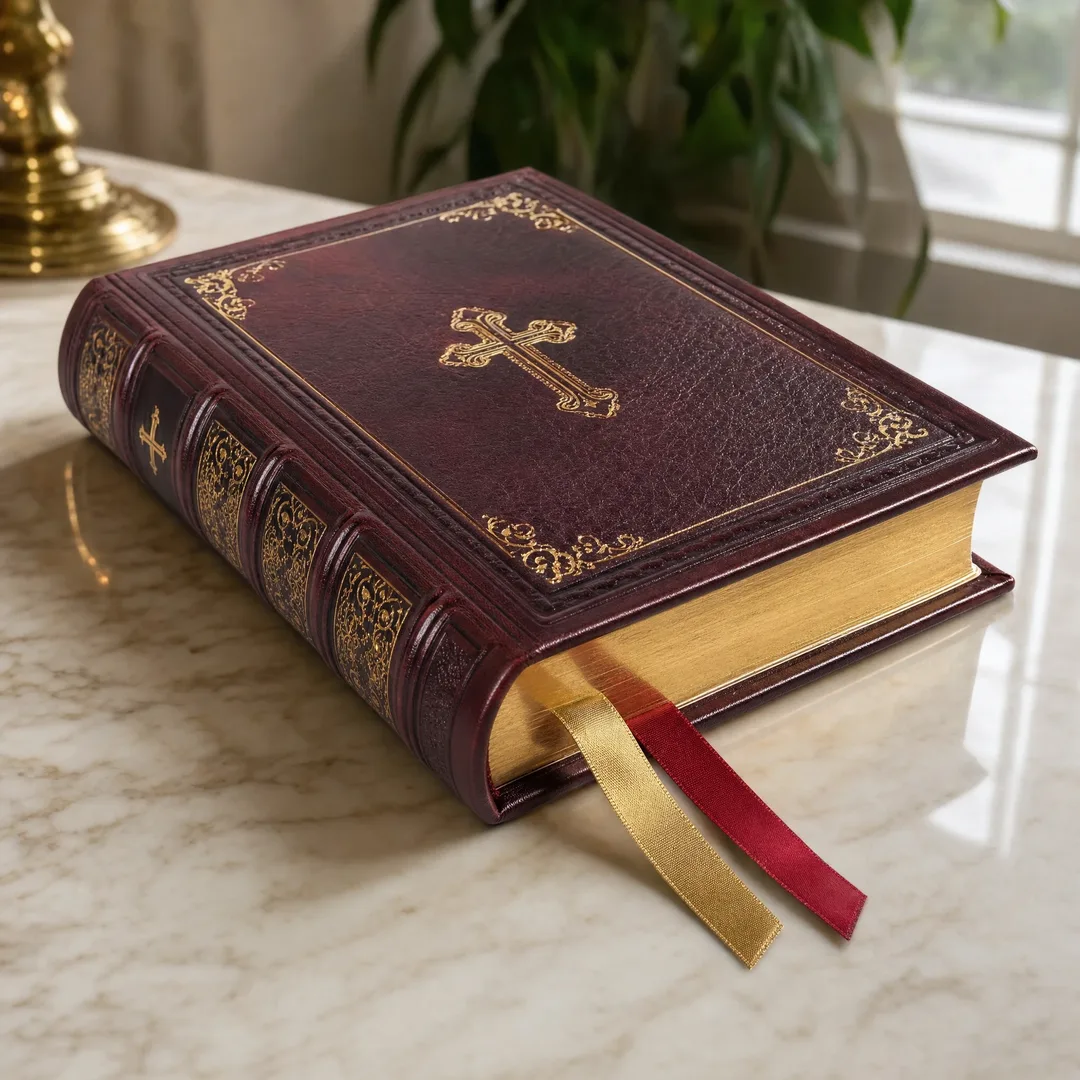
I’ve been in and out of book printing factories across southern China for the better part of a decade, and I can tell you this: the moment you hold a properly bound leather book in your hands, you understand why people pay extra for it. There is something about the weight, the smell, the way the cover yields just slightly under your fingers, that no paperback or cloth hardcover can replicate.
If you are a publisher planning a limited edition, a church printing leather-bound Bibles, a corporate client ordering commemorative volumes, or an author who wants to self-publish something genuinely special, you have probably already realized that leather book printing in China is where the math works. The quality is there. The craftsmanship is there. And the price, compared to Western binders, is honestly hard to believe.
But here is the thing: leather book manufacturing is not like regular offset printing. You cannot just email a PDF and expect an exact quote back in 10 minutes. There are material decisions, handwork steps, tooling fees, and art-file requirements that will make or break your project. This guide walks through all of it — what the options are, what they cost, why the MOQ is higher, and how to avoid the mistakes I have seen buyers make again and again.
Genuine Leather vs PU Leather: The Decision That Shapes Everything
Your first and most consequential decision is the cover material. It affects your price, your production timeline, your tactile experience, and how your customer perceives the book. Let me break both options down honestly, without the marketing fluff.
What Is Genuine Leather in Book Binding?
In book manufacturing, “genuine leather” typically means one of four animal hides: cowhide (cattle leather), goatskin, sheepskin, or pigskin. Each behaves differently during binding.
Cowhide is the workhorse. It is thick, durable, and takes tooling beautifully. Most premium Bibles and library editions use cowhide. It develops a natural patina over years of handling — the more you use it, the better it looks. Downside: it is the most expensive option, and color consistency between batches can vary because, well, it is a natural material.
Goatskin , often called Morocco leather in the binding trade, is finer-grained and more supple than cowhide. It is what you will find on genuine high-end Bibles from publishers like Schuyler or Allan. Goatskin is lighter and more flexible, which matters if your book needs to open completely flat. It is also the most forgiving leather to work with during hand-binding because it stretches nicely around corners without wrinkling.
Sheepskin is softer and lighter still, but less durable. It works well for smaller formats — pocket prayer books, gift editions — where the book will not undergo heavy daily use.
Pigskin has a distinctive visible pore pattern and is extremely tough. Historically it was used for library bindings that needed to survive centuries. Today it is less common but still specified for archival or museum-quality projects.
What About PU Leather?
PU leather (polyurethane synthetic leather) is a man-made material consisting of a fabric backing coated with polyurethane. Modern PU leather has come a long way. Twenty years ago it felt like a plastic tablecloth. Today, high-end PU leathers are genuinely hard to distinguish from real leather by sight alone — they have grain patterns stamped into the surface, they have a soft hand feel, and they come in colors that real leather cannot achieve.
The practical advantages of PU leather are real: it is consistent from batch to batch (no natural hide variation to explain to your client), it is about 40-60% cheaper per cover than genuine cowhide, it does not absorb moisture the way real leather does, and it can be manufactured in virtually any color including metallic finishes. For a corporate gift book or a promotional journal, PU leather is often the smarter business decision.
The trade-off is longevity. PU leather does not develop a patina; it wears out. After 5-10 years of regular handling, the coating can begin to crack or peel at the hinge points. For a Bible that someone will read daily for 30 years, real leather is the only answer. For a conference giveaway that will sit on a shelf, PU leather is perfectly appropriate.
A Quick Comparison Table
Factor
Genuine Leather
PU Leather
Cost per cover
High (3-5× PU)
Low to moderate
Lifespan
30+ years, improves with age
5-10 years, degrades over time
Texture consistency
Variable (natural hide)
Uniform (manufactured)
Color options
Limited (natural dyes)
Virtually unlimited
Patina development
Yes, desirable
No
Best for
Bibles, heirlooms, library editions
Corporate gifts, journals, promotional books
Cover Decoration: What You Can Actually Do to Leather
Once you have chosen your cover material, the next question is how you want to decorate it. Leather and PU leather accept decoration differently, so your material choice and your decoration plan need to be made together.
Foil Stamping: The Gold Standard
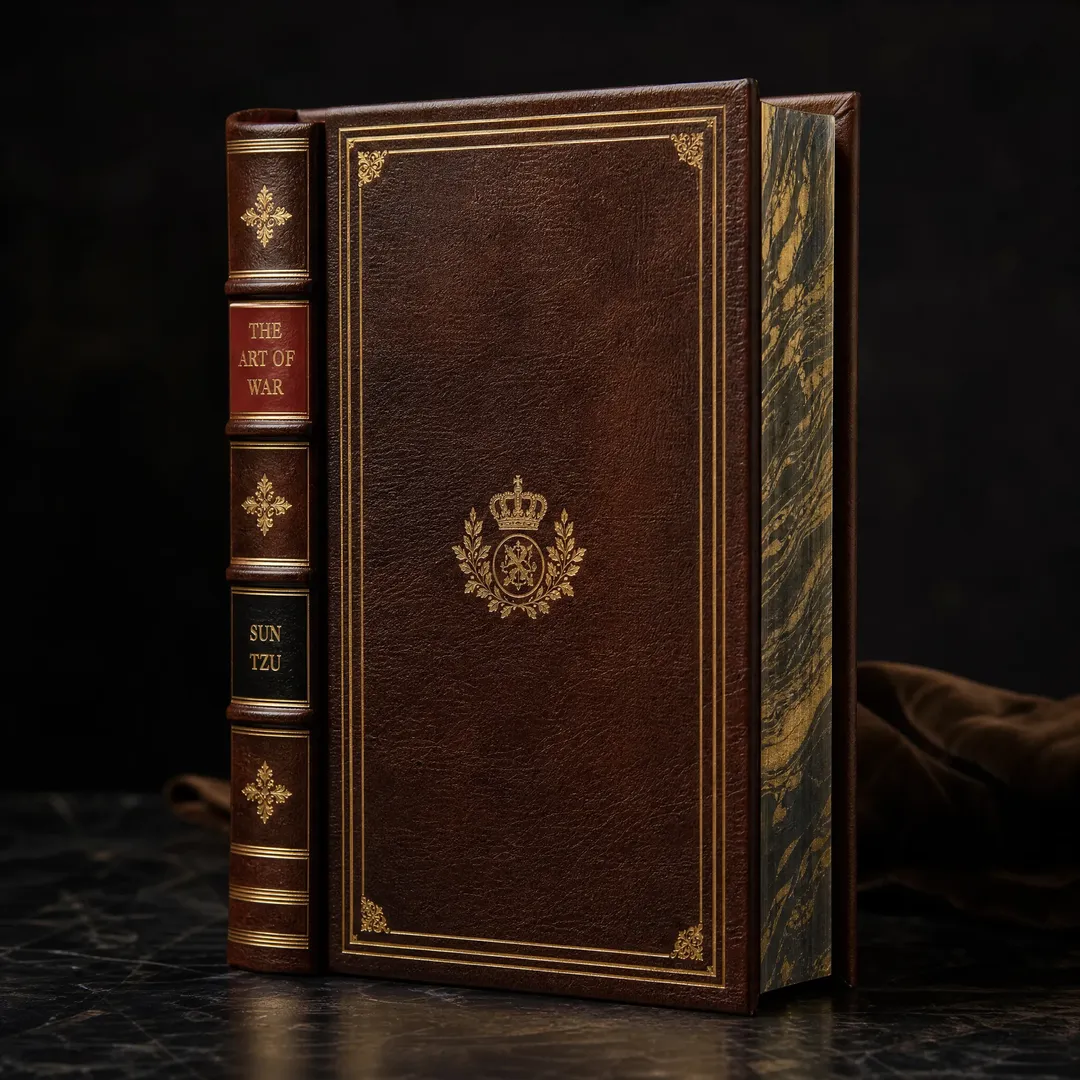
Foil stamping — sometimes called hot foil stamping or hot stamping — is the most common way to add text, logos, or decorative borders to a leather cover. A heated metal die presses a thin layer of metallic or pigmented foil into the cover material under high pressure, transferring the foil onto the surface and leaving a slight debossed impression.
Gold foil is the classic choice, and on dark leather — black, burgundy, deep blue — the contrast is stunning. Silver foil works beautifully on lighter leathers. But you are not limited to metallics: matte black foil on black leather creates a subtle, sophisticated “blind-on-dark” effect, and colored foils (red, green, blue) are available for brand-specific applications.
The main cost driver here is the die — the custom metal stamp that carries your design. A single brass die for a book cover typically costs between $60 and $150 depending on size and complexity. This is a one-time tooling fee; the die is reusable for reprints. If you are doing a run of 500 books, that is $0.12-0.30 per book — negligible. If you are doing 50 books, that is $1.20-3.00 per book — something to factor in.
Blind Debossing: No Foil, All Impression
Blind debossing uses the same heated die but without any foil. The result is a recessed impression pressed directly into the leather. On genuine leather, this creates a beautiful, understated effect — the compressed grain catches light differently from the surrounding surface. It is particularly effective for monograms, publisher logos, or geometric border patterns where you want the texture to do the talking.
Blind debossing works well on both genuine and PU leather. On PU, the impression tends to be sharper because the material compresses uniformly; on real leather, the result is softer and more organic. Neither is “better” — it is about the aesthetic you are aiming for.
Multi-Level Embossing: Depth and Dimension
Multi-level embossing takes the concept further by using a die with varying depths to create a sculptural, three-dimensional effect. Think of a coat of arms with raised shields, a tree design with textured bark, or a title that literally stands proud of the cover surface. This technique requires significantly more expensive tooling (often $200-400 for the die alone) and is almost always reserved for genuine leather, which holds the complex impression better than PU.
UV Printing on Leather: A Modern Alternative
Relatively new to leather book decoration, UV printing uses ultraviolet-cured inks printed directly onto the cover surface. It opens up possibilities that foil stamping cannot touch: full-color artwork, photographic images, gradients, and fine typography. The print sits on top of the leather rather than being pressed into it, so the texture is different — smooth rather than debossed.
UV printing on leather works best on PU leather, where the surface is uniform enough for consistent ink adhesion. On genuine leather, results can be unpredictable because of the natural grain and oil content of the hide. For projects where visual complexity matters more than tactile luxury, UV printing on PU leather is an excellent, cost-effective choice.
Yapp Edges: The Overlooked Detail That Defines a Leather Book
If you have ever held a premium leather Bible, you have probably noticed that the cover extends slightly beyond the page block and curves inward, forming a protective lip around the edges. That is called a Yapp edge, and it is one of those small details that separates a generic leather-bound book from one that feels carefully considered.
The style is named after William Yapp, a London bookseller in the late 19th century. His customers were complaining that their pocket Bibles were getting trashed — coal dust from the London air was settling into the page edges, and the gilt was wearing off from rubbing against pockets and bags. Yapp asked his binder to extend the leather cover beyond the text block so it would shield the pages. It worked. The Yapp edge was born, and it has been a hallmark of quality leather binding ever since.
Today, Yapp edges come in three degrees:
Standard Yapp : A subtle extension of about 3/8 inch (10mm) beyond the page block. The leather curves gently inward. This is the classic look — protective without being dramatic.Semi Yapp : A more pronounced overhang, typically covering about half the thickness of the page block when folded inward. It offers more protection and a more traditional appearance.Full Yapp : The leather extends far enough that the front and back cover edges can actually touch each other when folded over the pages. This gives maximum page-edge protection and a distinctly old-world aesthetic. It is commonly seen on high-end Bibles and leather-bound prayer books.
Yapp edges add labor cost because they require the binder to cut the leather with extra margin, fold it, and form it precisely around the book block. On a production run, this might add 10-15% to the binding labor. But for religious books, commemorative editions, or any project where the book is meant to feel like an heirloom, Yapp edges are worth every penny.
Binding Methods: How the Book Stays Together
The cover gets all the attention, but the binding is what determines whether the book actually holds up. Different binding methods suit different use cases, and picking the wrong one is an expensive mistake to fix.
Smyth Sewn: The Gold Standard for Durability
Smyth sewing is named after the Smyth sewing machine, which stitches individual signatures (folded groups of pages) together with thread through the spine fold. The result is a book block that is physically locked together — pages cannot fall out because they are literally sewn in place. Smyth-sewn books also open flat naturally, which matters enormously for Bibles, cookbooks, sheet music, and reference books that people need to use hands-free.
For any leather-bound book intended to last decades or be used daily, Smyth sewing is non-negotiable. It is the most expensive binding method because it requires a dedicated sewing machine and skilled operators, but for leather covers specifically, the cost difference becomes marginal relative to the overall project budget.
Case Binding: The Hardcover Standard
Case binding is what most people picture when they think of a hardcover book. The book block (which may be Smyth-sewn or perfect-bound) is attached to a rigid cover case made of grey board wrapped in leather. Endpapers — the decorative sheets glued to the inside front and back covers — bridge the book block to the case.
Case-bound leather books are the standard for library editions, academic publications, and high-end trade books. The rigid cover protects the pages and gives the book its characteristic weight and presence on a shelf.
Perfect Binding: When Budget Matters
Perfect binding uses hot-melt glue to adhere the pages to the spine. It is the standard for paperback books and more affordable hardcovers. For leather books, perfect binding is sometimes used in combination with a flexible PU leather cover to create what is called a “flexibound” book — a hybrid between paperback and hardcover that is lighter and cheaper to produce.
The limitation is durability: glued spines can crack over time, especially if the book is opened flat repeatedly. For a premium leather-bound edition, this is rarely the right call. But for a corporate journal or a promotional notebook that will be written in and discarded within a year, perfect binding with a PU leather cover is a perfectly pragmatic choice.
Spiral and Wire-O: Practical, Not Prestigious
Spiral and Wire-O binding with leather covers serves a specific niche: planners, journals, and notebooks where the user needs the book to lie completely flat on a desk and fold back on itself. A leather cover on a spiral-bound book is typically made of a single piece of leather (or PU) wrapped around board, with the spiral punched through the cover and pages together.
This is a functional binding, not a luxury one. It does not belong on a Bible or a commemorative edition. But for a high-end corporate planner or a leather-bound recipe journal, it is exactly the right tool for the job.
Common Sizes for Leather Books
Leather books follow standard book sizes, but there are a few formats that come up more often than others. Here is what I see most frequently in production:
A5 (148 × 210 mm / 5.8 × 8.3 in) : The most popular size for leather-bound journals, Bibles, and personal devotionals. Portable, comfortable to hold, and cost-efficient on leather usage because the cover dimensions are modest.A4 (210 × 297 mm / 8.3 × 11.7 in) : Common for corporate presentation books, photo albums, and commemorative editions. The larger format makes foil stamping and embossing more visually impactful, but leather consumption per cover roughly doubles compared to A5.6 × 9 inches (152 × 229 mm) : A standard US trade size that works well for leather-bound memoirs, family histories, and self-published special editions.Custom sizes : Most Chinese leather book factories can accommodate custom dimensions. The constraint is usually the leather hide size, not the binding equipment. Cowhide comes in hides of roughly 20-25 square feet, so as long as your cover fits within that with some margin for wrapping around boards, you are fine.
One practical note: if your book is very thick (over 1.5 inches / 38mm spine), you will need to factor in additional leather for the spine area and possibly reinforced hinges. Very thick books also make Yapp edges harder to form cleanly.
Paper Selection for Leather Books
The paper inside a leather-bound book should match the quality of the cover. You would not put newsprint inside a goatskin binding. Here are the paper types commonly specified:
Bible paper : Also called India paper or dictionary paper, this is an extremely thin (28-40 gsm) opaque paper designed to keep thick books manageable. A 1,500-page Bible on 30 gsm Bible paper might be only 1 inch thick. Bible paper is more expensive per sheet than standard offset paper, but it is essential for any thick religious or reference book bound in leather.Offset paper (uncoated woodfree) : The standard choice for text-heavy books. Smooth enough for comfortable reading, absorbent enough for crisp black-and-white printing, and economical. 80-100 gsm is typical. For a leather-bound memoir, family history, or literary work, offset paper is the natural choice.Coated paper : Gloss or matte coated paper is used when the book contains color images, photographs, or illustrations. The coating prevents ink from soaking into the paper fibers, resulting in sharper image reproduction. Leather-bound photo books and art monographs typically use 128-157 gsm coated paper.Art paper : A premium category of coated paper with a smoother finish and heavier weight (157-200 gsm). Used for high-end coffee table books and fine art editions where image quality is paramount.
The paper choice affects not just the reading experience but also the binding structure. Thicker paper makes the book block heavier, which puts more stress on the hinges. If you are using 200 gsm art paper for a 300-page book, your binder needs to reinforce the hinge area to prevent the cover from pulling away over time.
MOQ: Why Leather Books Have Higher Minimums
If you have quoted regular paperback or hardcover printing, you may be surprised when the MOQ for leather book printing comes back at 300 or 500 copies instead of 100. There is a reason for this, and it is mostly about setup costs.
Leather book production involves steps that do not exist in standard book manufacturing. The leather has to be cut to size, skived (thinned at the edges for clean folding), glued to the cover boards, and wrapped around corners. Each of these steps requires either machine setup time or skilled handwork. The foil-stamping die needs to be mounted, heated, and tested. The binder needs to adjust the forming jig for the specific cover thickness.
All of that setup time is fixed: it takes roughly the same effort to set up for 50 books as for 500. So at 50 copies, the setup cost per book is enormous. At 500 copies, it is spread thin enough to make the unit economics work.
Typical MOQs from Chinese leather book printers:
100-300 copies : Some factories will accept this for simpler PU leather projects with minimal decoration300-500 copies : The industry sweet spot. Most reputable leather book printers in China quote at this level500+ copies : Required by some factories for genuine leather with foil stamping and Yapp edgesBelow 100 copies : Generally not viable for factory production. At this quantity, you are looking at hand-bookbinding workshops, which produce beautiful work but at a much higher per-unit cost
Cost Factors: Where Your Money Goes
Understanding the cost structure of leather book printing will help you make informed trade-offs. Here is where the money actually goes:
Leather material cost (25-35% of unit cost) : The single largest variable. Genuine cowhide costs roughly 3-5 times what high-end PU leather costs per square meter. Goatskin is more expensive still. The cover dimensions and the total quantity determine total leather consumption — larger books and smaller runs both drive up the per-unit material cost.
Handwork labor (20-30%) : Unlike a standard hardcover, which can be almost entirely machine-made, leather books require significant handwork. Wrapping leather around cover corners, forming Yapp edges, attaching endpapers by hand — these are skilled manual operations that cannot be fully automated. China’s advantage here is real: skilled binding labor in Guangzhou or Wenzhou costs a fraction of what it costs in the US or Europe, and the workers have been doing this for decades.
Tooling and die fees (one-time, $60-400) : The brass dies for foil stamping and embossing are custom-made per design and charged separately from the per-unit printing cost. More complex dies (multi-level embossing, large surface areas) cost more. If your project requires multiple dies — for example, a spine die, a front cover die, and a back cover die — these fees add up.
Printing and binding (20-30%) : The interior pages still need to be printed and bound, just like any other book. Smyth sewing costs more than perfect binding. Color interior pages cost more than black-and-white. More pages cost more.
Shipping (variable) : Leather books are heavier than standard books of the same page count, which affects freight costs. A single leather-bound Bible might weigh 2-3 pounds depending on size and paper. By sea freight to the US or Europe, this typically adds $0.80-2.00 per book depending on quantity and destination.
Why China for Leather Book Printing?
I get asked this a lot, usually by first-time buyers who are nervous about offshore manufacturing. Let me be direct about what China’s leather book printing industry actually offers.
First, the leather supply chain . China is the world’s largest leather producer, and the manufacturing clusters around Guangzhou (specifically the Sanyuanli and Shiling leather goods districts in Guangdong province) and Wenzhou (Zhejiang province) have been processing leather for generations. The tanneries, the material wholesalers, the die-makers, the foil suppliers — they are all within a few hours’ drive of the binding factories. That dense supply chain means shorter lead times for materials and lower costs at every step.
Second, skilled handwork labor at scale . Leather book binding requires a level of manual dexterity that machines still cannot fully replicate — especially for wrapping corners, forming Yapp edges, and attaching leather to cover boards. China’s printing factories employ large teams of experienced binders who have spent years perfecting these skills. A medium-sized factory in Guangzhou might have 30-50 dedicated leather-binding workers on the floor, each producing 20-40 books per day. That kind of skilled capacity simply does not exist at the same price point in North America or Europe.
Third, price competitiveness . The math is straightforward. For a typical Smyth-sewn, genuine leather-bound book with gold foil stamping, Chinese factories quote roughly 30-50% less than comparable US or European binders for the same specification. At 500 copies, the difference can be $5-10 per book. Multiply that by your print run and the savings are meaningful.
Fourth, range of capabilities under one roof . A good Chinese leather book printer does everything in-house: offset or digital interior printing, Smyth sewing, case-making, leather cutting and wrapping, foil stamping, embossing, and often even edge gilding. When all of these processes happen in one facility, the logistics are simpler, the quality control is tighter, and problems get caught earlier.
Is there a learning curve to working with Chinese factories? Yes. Clear communication, detailed specifications, and physical samples are essential. Do not expect a factory to interpret vague instructions like “make it look premium.” Send reference photos. Specify exact leather color codes (Pantone). Request a pre-production sample before the full run begins. The factories that do this well are used to working with international clients and have English-speaking project managers. The factories that do not are easy to spot because they cannot answer detailed questions about grain direction or hinge reinforcement.
How to Get a Reliable Quote
If you are ready to move forward, here is what a factory needs from you to give a meaningful quote:
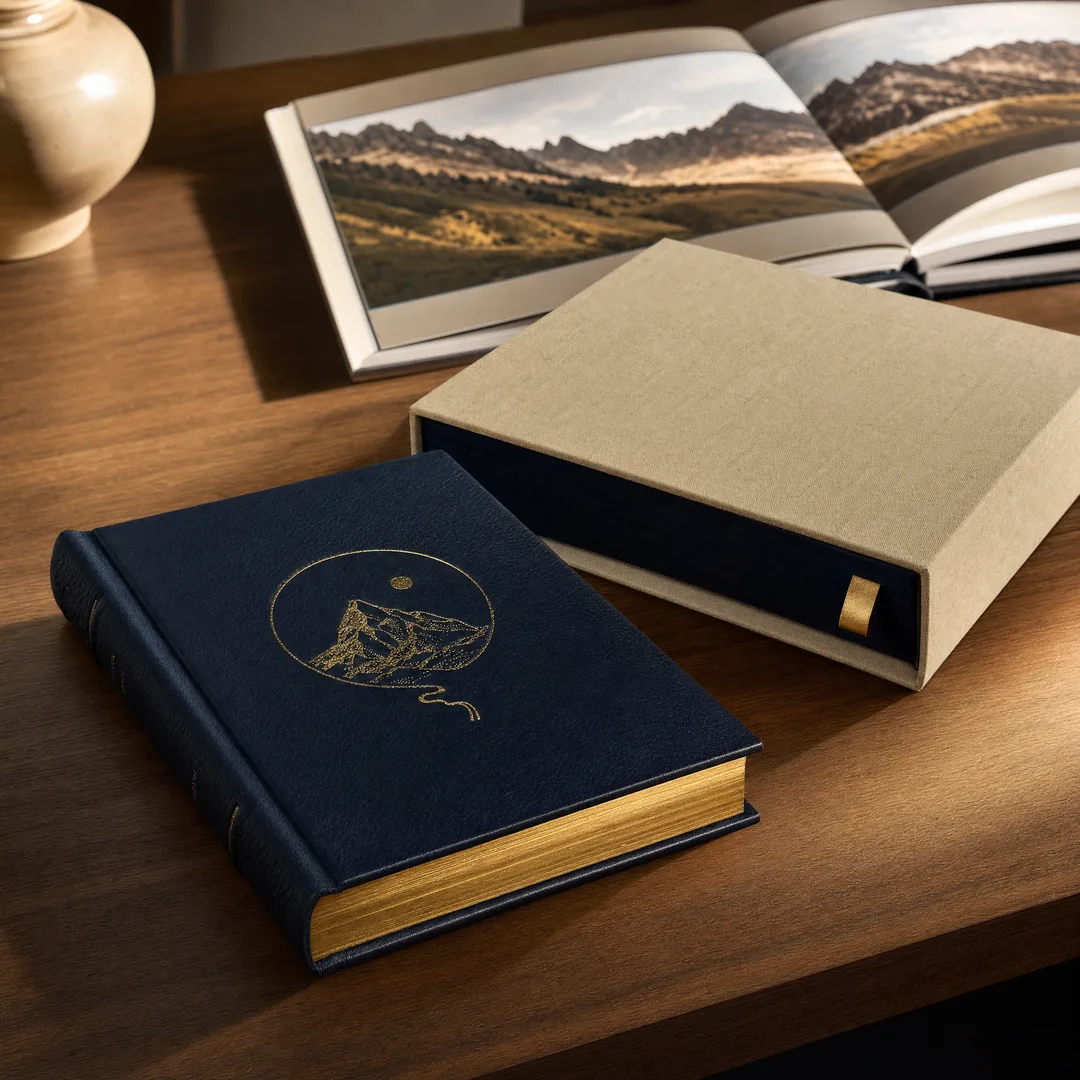
Trim size : Width × height in millimeters or inchesPage count : Total interior pages (not sheets)Interior printing : Black-and-white or color, and on what paper typeCover material : Genuine leather (specify type) or PU leather (specify color/finish)Cover decoration : Foil stamping, blind debossing, embossing, or UV printing — and how many colors/areasBinding method : Smyth sewn, case bound, flexibound, etc.Yapp edges : Standard, semi, full, or noneQuantity : Exact or estimated print runSpecial features : Gilt edges, ribbon markers, headbands, slipcases, presentation boxes
Send this information to 3-4 factories and compare not just the prices but the quality of their responses. A factory that asks clarifying questions before quoting is a factory that pays attention to detail. A factory that sends a price back in 10 minutes with no questions is one to be cautious about.