Not Just Another Box — Why Rigid Packaging Changes Everything
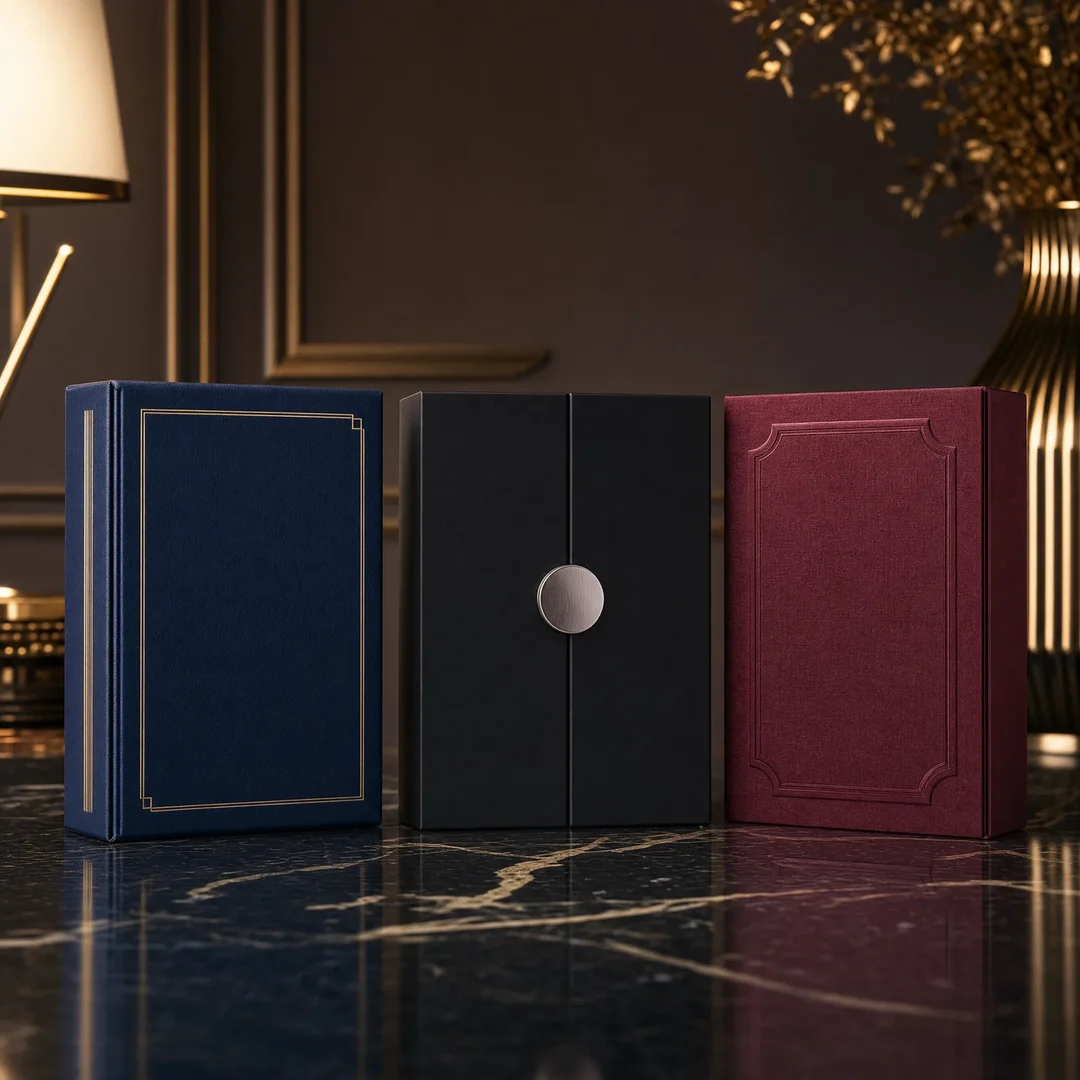
Pick up a rigid box and you’ll notice it immediately. There’s weight. There’s substance. The corners don’t flex when you squeeze them, and the lid drops into place with a quiet, deliberate thud. It feels expensive — because it is.
That’s the whole point. A rigid box — sometimes called a set-up box or a presentation box — is built differently from the folding cartons you see on supermarket shelves. Instead of a single sheet of paperboard folded and glued at a few points, a rigid box starts with thick greyboard panels (anywhere from 1.2mm to 3mm) that are cut, scored, and wrapped in printed or specialty paper. The result is a box that holds its shape permanently. It doesn’t collapse. It doesn’t bow under weight. And it communicates something before your customer even opens it: what’s inside is worth protecting .
This is the packaging format that luxury brands count on. Walk through the beauty aisle at a department store and nearly every fragrance set, skincare gift box, and premium cosmetic kit comes in a rigid box. The same holds for high-end electronics, jewelry, watches, premium spirits, corporate gifts, and boutique apparel. If your product retails above a certain price point, a folding carton can actually work against you — it signals “commodity” before the customer sees your product.
In this guide, we’ll walk through everything you need to know about custom rigid box printing. You’ll learn how these boxes are actually made, what structural styles exist, how to choose the right paper wrap and interior insert, what drives cost, and why so many global brands source their rigid boxes from China. Whether you’re a first-time buyer or someone who’s ordered rigid packaging before and wants to go deeper, this covers the ground.
Rigid Box vs. Folding Carton
What actually makes a rigid box different from a folding carton?
The difference starts with the materials and never really stops. A folding carton is produced from a single sheet of paperboard — typically 12pt to 24pt (roughly 0.3mm to 0.6mm) — that gets printed flat, die-cut, creased, and folded into shape. It ships flat, and someone has to pop it open before use. It’s lightweight, cost-effective, and perfectly adequate for products where packaging is a container, not a statement.
A rigid box is a different animal altogether. The core structure is built from greyboard (also called chipboard), a dense, compressed paperboard that ranges from 1.5mm to 3mm in thickness. These panels are cut to size, the edges are grooved and folded, and the corners are reinforced with adhesive tape on a machine called a quad stayer. A printed wrap — typically art paper or specialty paper — is then glued around the entire exterior. The box arrives fully assembled, ready to use. It doesn’t fold. It doesn’t collapse. It holds its shape forever.
Here’s the practical difference: a folding carton protects your product during shipping. A rigid box protects it and presents it. When a customer opens a rigid box, they’re having an experience — the resistance of a magnet, the reveal of a satin-lined interior, the slow lift of a hinged lid. That’s not something you get from a folding carton at any price.
Which option fits your product and budget?
The short answer: if your product retails under $30, a rigid box will eat your margin. If it retails above $75, a folding carton will probably underwhelm your customer. There’s a grey zone in the middle — products in the $30–$75 range — where the decision depends on your brand positioning. A DTC skincare brand selling a $45 serum might use a rigid box to signal premium quality; a mass-market brand at the same price might stick with a well-finished folding carton.
Cost is the biggest differentiator. Rigid boxes typically cost 3 to 5 times more per unit than folding cartons at comparable volumes. The manufacturing process involves more manual steps, heavier materials, and longer production lead times. But the per-box cost drops significantly as quantities increase, which is why rigid boxes make economic sense for brands that order in volume and sell at premium price points.
Paper Wrapping
How does the paper wrapping process work?
Paper wrapping is what makes a rigid box look finished. The greyboard skeleton by itself is plain, brown, and industrial-looking — nobody wants that facing their customer. So after the structural panels are cut, grooved, folded, and taped, a separate sheet of printed or specialty paper is glued onto every visible surface. This is called the wrap.
The process is more art than machine. The wrap paper is printed first — usually through offset lithography for crisp detail and accurate color reproduction — and then precisely cut, with the corners mitered so the paper folds cleanly around the box’s edges without bunching or overlapping. A skilled worker applies adhesive to the non-printed side and smooths the paper onto the greyboard, working from one edge to the next. The quality of this hand-wrapping step directly determines whether the final box looks flawless or sloppy. Corners that bubble or peel are a dead giveaway of rushed work.
This separate-wrap approach also has a major quality advantage over printing directly on the box. Since the wrap is printed while flat, you get higher resolution, better color consistency, and none of the cracking or registration issues that happen when you try to print on thick board. That’s why rigid boxes almost always look sharper than printed folding cartons.
What customization options do I have for the wrap material?
Art paper — coated on one side, uncoated on the glue side — is the workhorse material. It takes offset printing beautifully and comes in a range of finishes: glossy, matte, soft-touch, or uncoated for a natural feel. You can also specify textured specialty papers (linen, laid, felt-marked), metallic papers with a pearlescent sheen, or even fabric wraps like leatherette, linen, and velvet for ultra-premium applications.
Finishing techniques layer on top of the wrap. Foil stamping adds metallic logos in gold, silver, copper, or holographic foil. Embossing and debossing create raised or recessed textures that invite touch. Spot UV creates a high-gloss contrast against a matte background. Soft-touch lamination gives the entire surface a velvety, almost rubbery feel that customers can’t help but run their fingers over. Each of these adds cost, but they also add perceived value — and in rigid packaging, perceived value is the whole game.
Structural Styles
What is a two-piece telescope box?
The two-piece telescope box — also called a lid-and-base box or lift-off lid box — is the most common rigid box format. It consists of a separate lid and a base tray, with the lid slightly larger than the base so it slides down over the top. There’s also a shoulder-neck variation that adds a third internal piece, creating a recessed platform that gives the box a more architectural, multi-layered look. Telescope boxes feel classic and substantial. You see them everywhere in perfume packaging, premium chocolate sets, and corporate gift boxes. They’re straightforward to manufacture and offer a clean, uncluttered presentation.
What makes a book-style box a popular go-to?
A book-style rigid box opens on a hinge — just like a hardcover book — with the lid attached to the base along one edge. The closure is almost always magnetic, which gives the opening a satisfying snap and a controlled, deliberate feel. This format dominates in electronics packaging (think smartphones, headphones, premium accessories), luxury cosmetic kits, and high-end invitation boxes. It creates a dramatic reveal: you open it like you’re starting a story. For brands that sell an experience as much as a product, the book-style box is hard to beat.
When should I consider a drawer-style slide box?
A drawer box — sometimes called a slide box or matchbox — consists of an outer sleeve and an inner tray that slides out horizontally. A ribbon pull or a thumb notch provides the grip point. This format works exceptionally well when you want the product to emerge gradually: a watch sliding into view, a piece of jewelry revealed one inch at a time. It also makes sense for multi-piece sets where items are arranged in sequence. Drawer boxes take more labor to produce because both the sleeve and the tray need to be precisely fitted — too loose and the tray rattles, too tight and it binds. Done right, though, the sliding action reads as deliberate and premium.
What is a collapsible rigid box and is it worth it?
A collapsible rigid box is a clever hybrid. It looks and feels like a rigid box when assembled, but it ships flat — the side panels fold down, reducing the shipping volume by 60% to 80% compared to a non-collapsible equivalent. The cost savings on freight can be enormous, especially for brands shipping finished boxes internationally. The trade-off is that collapsible boxes are slightly less rigid at the corner joints — they have to fold, after all — and they require someone at the destination to assemble them. For e-commerce brands shipping directly to customers, that assembly step can be a logistical headache. For brands that handle fulfillment in-house or use a 3PL that offers kitting services, collapsible rigid boxes are a practical way to get the rigid-box look at a more manageable landed cost.
How does a magnetic flip-top box work?
The magnetic flip-top box is a variation of the book-style format, but with the hinge on the short side rather than the long side, creating a top-opening motion. Magnets embedded in the front panel and the lid rim snap together when closed. It’s a compact, self-contained format that works especially well for jewelry, watches, and small electronics. The flip-top opening is quick and one-handed — practical enough for everyday use but elegant enough for display.
Interior Trays and Inserts
What insert options are available for rigid boxes?
The interior of a rigid box is where function meets theater. An insert — also called a tray, fitment, or cradle — holds your product in place and determines what the customer sees when they open the lid. A product rattling around loose inside a beautiful box ruins the effect. A well-fitted insert, on the other hand, makes the product feel like it belongs there.
The most common insert materials break down like this:
EVA foam — Ethylene-vinyl acetate foam is dense, shock-absorbent, and can be CNC-routed or die-cut into precise cavities that grip your product perfectly. It’s the go-to choice for electronics, precision instruments, and anything fragile. EVA can be finished in black, white, or custom colors, and it can be flocked or fabric-wrapped for a softer presentation.
Velvet and flocked trays — A vacuum-formed or rigid-board tray covered in velvet or flocking delivers a jewelry-box feel. The soft nap of the fabric catches light differently at different angles, which creates depth and richness. This is standard for fine jewelry, luxury watches, and high-end gift presentations.
Satin-lined interiors — Satin offers a smoother, shinier alternative to velvet. It’s lighter in weight and often used in bridal packaging, lingerie boxes, and premium apparel. Satin pulls tight over a board substrate and gives the interior a clean, tailored appearance.
Cardboard and paperboard inserts — Die-cut cardboard trays, often wrapped in the same paper as the exterior, provide structure at a lower cost point. They’re fully recyclable and work well for products that don’t need heavy cushioning — candles, stationery sets, tea collections, confectionery. Molded pulp inserts are a newer, eco-forward alternative that offers decent protection with a distinctly natural texture.
How do I pick the right insert material for my product?
Start with protection. If your product is fragile, spend on EVA foam or fabric-wrapped foam — it’s cheaper than replacing damaged units. Next, consider your brand language. Velvet says “luxury jeweler.” Molded pulp says “sustainable, modern, design-conscious.” Satin says “elegant, personal, intimate.” The insert should reinforce the same story your brand is telling everywhere else. Finally, account for weight. Heavier products — glass bottles, dense metal objects — need inserts with structural rigidity. A flimsy cardboard tray won’t hold a full-sized fragrance bottle through international shipping.
Magnetic Closure Systems
How are magnets embedded into rigid boxes?
Magnetic closures in rigid boxes use small but powerful neodymium disc magnets — typically 6mm to 12mm in diameter and 1mm to 3mm thick. During assembly, cavities are routed or punched into the greyboard panels, the magnets are seated inside, and the paper wrap is glued over them, hiding them completely from view. A corresponding magnet or a steel plate is embedded in the opposing panel with opposite polarity, creating the snap-shut closure.
The trick is alignment. If the magnets are off-center by even half a millimeter, the lid will sit crooked or the closure will feel weak. Good manufacturers use jigs and templates to position magnets consistently across a production run. The number of magnets depends on the box size: a small jewelry box might use two, while a large presentation box might use four or six spaced along the edge.
What makes magnetic closures worth the extra cost?
First, the obvious: they feel great. That crisp snap when the lid closes, the resistance when you pull it open — it’s a tiny moment of mechanical satisfaction that adds up across thousands of customer interactions. Second, they’re functional. A magnetic closure keeps the lid shut during shipping without needing a sleeve, a band, or any external fastener. That’s cleaner for the brand and simpler for the customer. Third, they’re durable. Unlike ribbon ties that fray or elastic bands that stretch out, magnets work the same way on the thousandth open as they did on the first. For boxes that customers keep and reuse — jewelry boxes, keepsake boxes, premium gift packaging — that longevity matters.
Size, MOQ, and Cost
What size ranges are available for rigid boxes?
There’s no fixed standard size for rigid boxes because they’re almost always made to order. That said, you’ll commonly see rigid boxes produced anywhere from 50mm × 50mm × 20mm (think ring boxes) up to 500mm × 400mm × 150mm (larger gift sets and apparel packaging). Beyond those dimensions, production becomes more challenging — the greyboard panels get heavier, the wrap paper needs to be larger, and the manual assembly steps take longer. Most Chinese manufacturers can handle custom dimensions comfortably, and many will produce sample boxes at your exact specs before committing to a production run. If you have an unusual size requirement, ask about it early — the factory can usually tell you within a day whether it’s feasible.
What is the typical MOQ for custom rigid box printing?
MOQs for rigid boxes range widely depending on the factory and the complexity of your design. The industry norm falls between 300 and 1,000 units per SKU for standard custom designs. Some manufacturers with digital printing capabilities can go as low as 100 units, making rigid boxes accessible for limited editions, seasonal launches, and small-batch DTC brands. On the other end, boxes with complex structures, specialty materials, or multiple finishing techniques (foil stamping plus embossing plus spot UV, for example) may push the minimum to 2,000 units or more.
These numbers aren’t arbitrary. Every SKU requires its own die, its own setup time, and its own quality-control run. The factory absorbs those fixed costs across the total order quantity, so the per-unit cost curve drops sharply as order volume increases.
Why are MOQs higher than folding cartons?
Rigid box production is significantly more manual than folding carton production. A folding carton line can run at high speed with minimal human intervention — print, die-cut, fold, glue, done. A rigid box, by contrast, involves hand-wrapping, hand-assembly, magnet insertion, insert fitting, and multiple quality checks at each stage. Setting up a rigid box line for a new SKU takes hours, not minutes. The factory needs to train workers on the specific wrapping sequence, create assembly jigs, and produce enough units to amortize that setup cost. That’s the fundamental reason rigid box MOQs are higher: the setup cost per SKU is fixed, and it only makes economic sense above a certain volume threshold.
What drives the cost of a custom rigid box?
Six factors tell you most of what you need to know about rigid box pricing:
Box dimensions. Larger boxes use more greyboard, more wrap paper, and more labor. Material consumption scales roughly with surface area, so a box that’s twice as large in each dimension uses roughly four times as much material.
Order quantity. This is the biggest lever most buyers have. Moving from 500 units to 5,000 can cut the per-unit cost by 30% to 50% because setup charges get spread thinner and material costs drop with volume purchasing.
Paper and wrap material. Standard coated art paper is the most affordable option. Textured specialty papers add 10% to 20%. Fabric wraps — leatherette, linen, velvet — can double or triple the wrap cost. Metallic and holographic papers sit somewhere in between.
Insert type. A simple cardboard divider is the cheapest option. EVA foam inserts, especially CNC-routed ones with tight tolerances, are significantly more expensive because of the material cost and the machining time. Velvet-wrapped foam trays are the most expensive category — you’re paying for the foam, the fabric, and the labor to wrap each cavity precisely.
Surface finishing. Every finishing technique you add — foil stamping, embossing, debossing, spot UV, soft-touch lamination — adds a separate production step with its own setup cost. A box with foil stamping plus embossing plus spot UV has three additional passes through different machines, and each pass adds labor and potential for defects.
Structure complexity. A simple two-piece telescope box costs less than a drawer box, which costs less than a collapsible box with magnetic closure, which costs less than a multi-compartment box with a hinged lid, ribbon pulls, and interior platforms. Every structural feature adds assembly time.
Why Source Rigid Boxes from China
What makes Chinese packaging factories the global go-to for rigid boxes?
Rigid box manufacturing is unusually labor-intensive for the packaging industry. Unlike folding cartons — where automated lines handle most of the work — rigid boxes require skilled hands at nearly every stage: scoring and folding the greyboard, mitering wrap corners, smoothing paper onto panels, inserting magnets, fitting interior trays, and performing final quality checks. China’s packaging industry has spent decades building a workforce that does this work at a level of precision that’s hard to match elsewhere, and at labor costs that make the economics work even for mid-sized brands.
But it’s not just labor. China’s packaging ecosystem is vertically integrated in a way that few other countries can replicate. A rigid box factory in Shenzhen, Dongguan, or Yiwu sits within a few hours’ drive of greyboard mills, paper coaters, magnet suppliers, foam fabricators, ribbon weavers, and finishing houses. When you order a rigid box with a velvet insert, magnetic closure, foil-stamped logo, and satin ribbon pull, you’re tapping into a supply chain where each component comes from a specialist factory that has optimized for exactly that one thing. That density of specialization drives quality up and lead times down.
The scale matters too. A mid-sized rigid box factory in China might produce several hundred thousand units per month across dozens of SKUs. That volume supports investments in equipment — CNC routers for insert fabrication, automated quad stayers for corner taping, precision die-cutting lines — that smaller factories in higher-cost countries can’t justify. The result is better consistency at a lower price, delivered on shorter timelines.
Is it practical for a small brand to source rigid boxes from China?
It depends on your order volume, but the bar has dropped significantly. Ten years ago, if you wanted custom rigid boxes from China, you needed to order 5,000 to 10,000 units minimum. Today, many factories accept orders of 300 to 500 units, and some with digital printing capability will take 100 units for simpler designs. The logistics have improved too — air freight for small orders, sea freight for large ones, and freight forwarders who specialize in packaging shipments can handle the entire process door-to-door.
The key for small brands is to find a factory that’s genuinely comfortable with smaller volumes. Some large manufacturers will accept a 500-unit order but treat it as a low priority, leading to delays and inconsistent quality. Look for suppliers who explicitly market small-batch capability, who communicate in clear English, and who offer sample services before production. A pre-production sample — even if it costs $50 to $100 including shipping — is the cheapest insurance you’ll ever buy against a container of boxes that don’t meet your expectations.
Also worth knowing: many Chinese packaging factories now hold FSC certification, comply with ISO 9001 quality management standards, and maintain Sedex or BSCI social compliance audits. If sustainability and ethical sourcing matter to your brand, you can find Chinese suppliers who meet those standards — just ask for documentation upfront.
Making the Right Call
Rigid box printing isn’t just about putting your logo on a sturdy container. It’s about engineering a moment — the weight of the box in your customer’s hands, the texture of the wrap under their fingertips, the resistance of the magnet as they lift the lid, the way the interior cradles your product like it was made for it. That moment translates directly into how your customer values what’s inside. Do it well, and the box becomes part of the product. Do it poorly, and no amount of marketing will make up for the letdown.
The choices you make — structural style, wrap material, insert type, closure mechanism, finishing techniques — each carry cost and quality implications that ripple through the entire project. The factories you work with matter just as much. A good supplier brings design input, material recommendations, and quality consistency. A bad one brings delays, defects, and boxes that look nothing like the sample.
Take the time to define your specifications clearly before you reach out to suppliers. Know your target dimensions, your preferred structure, your budget range, and your quality expectations. Request samples — multiple samples if you’re comparing factories. Test them with your actual product inside. Ship one to yourself to see how it holds up in transit. The more you understand before production starts, the fewer surprises you’ll face when the boxes arrive.
Whether you’re launching a luxury skincare line, refreshing your electronics packaging, or building a premium gift collection, a well-made rigid box is one of the highest-ROI packaging investments you can make. It protects your product, elevates your brand, and gives your customer a reason to remember you — and to come back.