Why Card Printing Still Matters in a Digital World
Physical cards do what screens cannot. You can hold them, feel the paper weight, and notice the texture under your fingertips. In fact, a well-printed card stays on a desk for months. It might end up pinned to a bulletin board or tucked inside a wallet. In contrast, a digital ad simply disappears the moment someone scrolls past it.
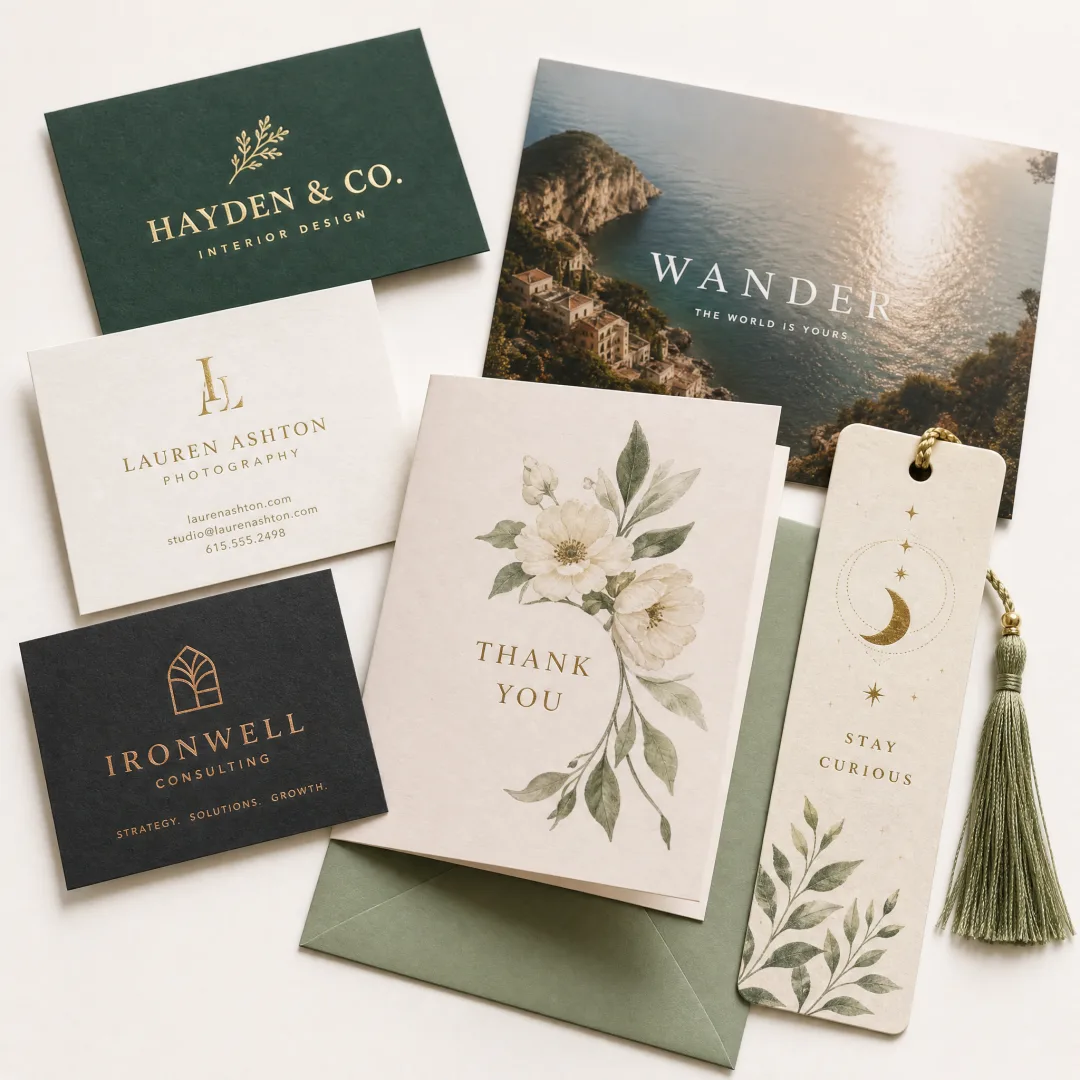
Cards serve roles that email cannot replace. A business card handed over at a trade show starts a real conversation. A postcard from a brand feels more intentional than yet another promotional email. Similarly, greeting cards carry emotional weight — they mark birthdays, holidays, and moments that matter. Even bookmarks, small as they are, keep your brand visible every time someone opens a book. Most importantly, physical cards demand attention in a way that digital notifications never will.
What makes a card effective, however, comes down to two things: the quality of the print and the thought behind the design. This guide walks you through seven major card types — postcards, business cards, greeting cards, thank you cards, note cards, prayer cards, and bookmarks. You will learn about standard sizes, paper choices, finishing techniques, and why many businesses now turn to card printing China suppliers for better pricing without sacrificing quality.
Postcard Printing: Direct Mail That Actually Gets Seen
Postcards remain one of the most cost-effective direct marketing tools available today. Unlike a letter inside an envelope, a postcard reveals its message instantly. Since there is no barrier between the recipient and your content, postcard open rates hover around 90% in many direct mail campaigns.
Standard Postcard Sizes
Most printers offer postcards in several standard dimensions. The most common is 4 × 6 inches (102 × 152 mm), which qualifies for USPS First-Class Mail postcard rates in the United States. Slightly larger options include 5 × 7 inches and 6 × 9 inches. For oversized designs, 6 × 11 inches gives you nearly double the visual space. Of course, custom sizes are always an option if your campaign calls for something unique.
If you plan to mail your postcards, size matters for postage costs. Stick with 4 × 6 or 5 × 7 inches to keep mailing economical. For handout cards at events, however, larger formats like 6 × 9 inches make a stronger visual impact. In short, match the size to the distribution method.
Paper and Coating Choices
Postcards should feel substantial. After all, a flimsy card sends the wrong message about your brand. Most professional postcard printing uses 14 pt or 16 pt card stock, which translates to roughly 300–350 GSM. This weight resists bending during both mailing and handling.
Coating is equally important. A gloss UV coating on the front makes colors pop and protects against scratches. Matte coating, on the other hand, gives a softer, more sophisticated look. Many direct mail postcards use a gloss front for image impact and an uncoated back so recipients can write on it. Therefore, the two-sided approach delivers both visual punch and practical usability.
Postcard Use Cases
Real estate agents send “just sold” postcards to neighborhoods. Retailers announce seasonal sales with oversized 6 × 9 inch cards. Restaurants mail menus on durable coated stock. Event organizers, for their part, use postcards as save-the-date reminders. In every case, the physical presence of a postcard cuts through digital noise. What is more, postcards work just as effectively for B2B follow-ups as they do for consumer promotions.
For businesses ordering in bulk, card printing China services often provide substantial savings. A run of 5,000 postcards printed domestically might cost $0.30–0.50 per piece. The same order from an experienced Chinese printer, by contrast, can drop below $0.10 per piece — a difference that adds up fast.
Business Card Printing: Your Brand in Someone’s Pocket
A business card represents your brand in roughly 3.5 × 2 inches of paper. That small rectangle needs to convey professionalism, personality, and key contact details all at once. People judge books by their covers — and they judge companies by the feel of their business cards.
Standard Business Card Dimensions
The standard business card size in North America is 3.5 × 2 inches (88.9 × 50.8 mm). In Europe and much of Asia, the common format is 85 × 55 mm. Both are close enough that most wallets and cardholders accommodate either size without issue. In fact, the dimensional difference is barely 4 mm in either direction.
Designers should always include a 3 mm bleed area around all edges. This extra margin ensures that your background colors and images extend fully to the edge after trimming. Without bleed, you risk thin white borders along the cut lines — and those can make even a great design look unprofessional.
Paper Weight and Its Impact
Business card weight says a lot before anyone reads a single word. The industry standard falls between 300 and 350 GSM. At this weight, the card feels solid but not thick. For a premium impression, 400 GSM or higher creates a noticeably heavier card that people instinctively keep rather than toss.
Below 300 GSM, the card feels flimsy. It bends too easily and creases in wallets. Therefore, unless budget is the absolute priority, avoid going below 300 GSM for business card printing .
Premium Finishing Techniques
This is where business cards truly stand apart. Spot UV applies a glossy, raised coating to selected areas — a logo, a name, or a graphic element — while leaving the rest of the card matte. The contrast between glossy and matte surfaces creates a tactile experience that people remember. Specifically, it draws the eye to the most important branding element on the card.
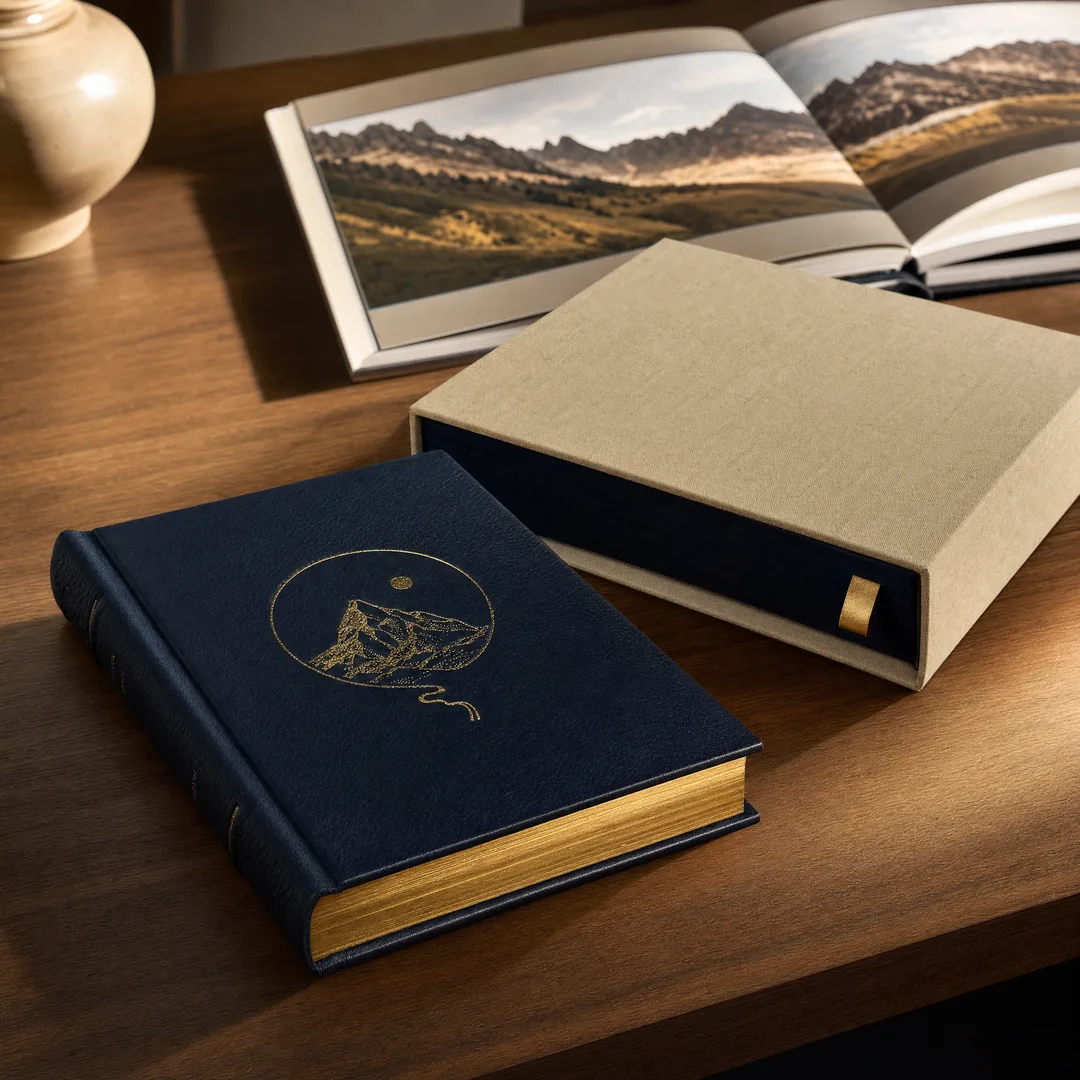
Foil stamping uses heat and pressure to bond metallic foil onto the card surface. Gold, silver, rose gold, and holographic foils catch the light beautifully. Moreover, foil works especially well on dark or black card stock where metallic details create dramatic contrast.
Embossing raises selected areas of the card to create a three-dimensional texture. A debossed logo, pressed into the paper, feels equally premium. Both techniques add depth that flat printing cannot achieve.
Soft-touch lamination gives the entire card a velvet-like texture. People instinctively rub their thumb across a soft-touch card — and that sensory moment creates a lasting impression. Several premium card printing providers, including EcoPrinting, offer these finishing options as part of their standard catalog.
Greeting Card Printing: From Holidays to Business Thank-Yous
Greeting cards bridge the gap between personal sentiment and professional courtesy. A holiday card sent to clients says “we value this relationship” in a way that no email can match.
Common Greeting Card Formats
The folded card is the classic format. A sheet of card stock, printed on one or both sides, folds in half to create a four-page structure: front cover, inside left, inside right, and back cover. The most popular folded size is A7 (5 × 7 inches when folded, from a 10 × 7 inch flat sheet). A6 (4.5 × 6.25 inches folded) works well for invitations and smaller announcements. A5 (5.8 × 8.3 inches folded), meanwhile, offers more design space for premium holiday cards.
Flat cards — single-panel, no fold — suit modern minimalist designs. They work particularly well for photo cards where the image deserves the full surface area. In addition, flat cards are simpler to produce and often cost less per unit.
Paper and Envelope Pairing
Greeting cards look best on uncoated or lightly textured paper stock. A smooth coated stock can feel too commercial. Uncoated paper, especially in the 250–300 GSM range, provides a warm, natural texture that complements handwritten messages inside. Moreover, uncoated stock absorbs ink without smudging, which makes it ideal for fountain pen users.
Envelopes deserve equal attention. A mismatched envelope cheapens the entire presentation. Standard A7 envelopes fit 5 × 7 inch folded cards. A6 envelopes fit the 4.5 × 6.25 inch format. Naturally, many custom card printing services offer matching envelope sets as part of a complete greeting card package. As a result, you can order cards and envelopes together from a single supplier.
Business Applications
Beyond holiday greetings, businesses use custom greeting cards for client appreciation, new product launches, and event invitations. A real estate agent might send housewarming cards. A SaaS company could include a handwritten card with onboarding welcome kits. The versatility of greeting card printing , therefore, makes it one of the most underutilized tools in B2B relationship marketing.
Thank You Cards, Note Cards & Prayer Cards: Small Formats with Big Impact
Sometimes the smallest cards carry the most meaning. A thank you card arriving in the mail feels personal and intentional. Note cards serve as elegant stationery for brief handwritten messages. Prayer cards, in turn, honor loved ones at memorial services and celebrations of life.
Thank You Cards
Businesses that send handwritten thank you cards stand out instantly. In an age of automated email sequences and templated responses, a physical card with a real signature cuts through the noise. The standard format is a flat 4 × 6 inch or folded A2 (4.25 × 5.5 inches) card. For instance, a folded A2 card gives you a cover for branding and an interior for a handwritten message.
Paper choice matters here. A 250–300 GSM uncoated stock accepts fountain pen and rollerball ink without smearing. Glossy coated cards, in contrast, repel most pen inks and force the writer to use a permanent marker instead. For thank you card printing , therefore, always specify uncoated stock if you plan to write on the card by hand.
Note Cards
Note cards sit between business cards and greeting cards in size and purpose. The typical format is a flat 4 × 5.5 inch or 4.25 × 5.5 inch card, often sold in sets with matching envelopes. They work as personal stationery, quick thank-you notes, or brand touchpoints included with product shipments. In short, they are the Swiss Army knife of the card world.
Many e-commerce brands include a blank note card inside every order. Customers can reuse these as gift tags or personal notes. This simple gesture increases brand recall and encourages repeat purchases. Note card printing in bulk (500–1,000 sets) keeps the per-unit cost below $0.15, thereby making it an affordable retention strategy.
Prayer Cards
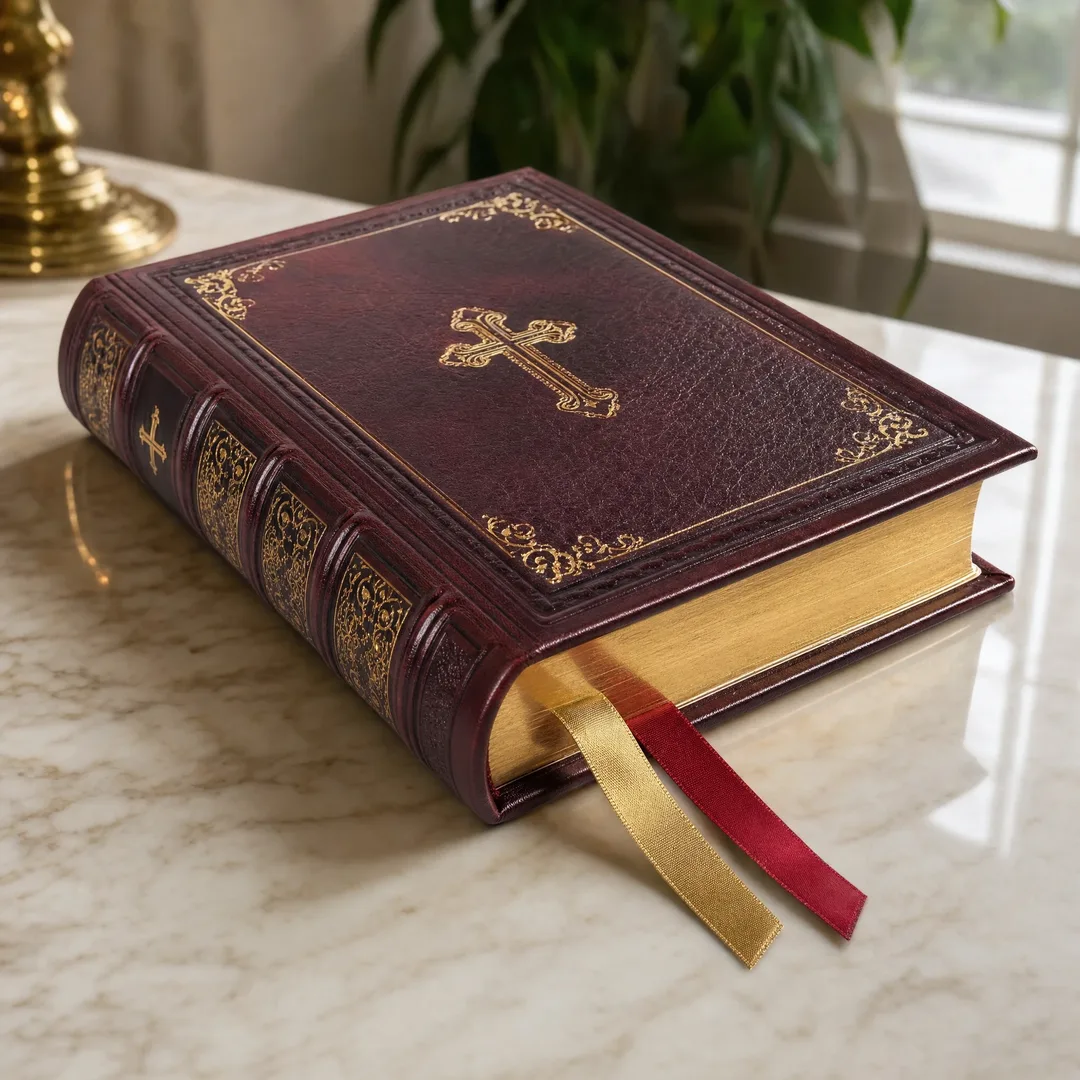
Prayer cards hold deep significance in many religious and cultural traditions. These small cards — typically 2.5 × 4.25 inches or 3.5 × 5 inches — feature a religious image on the front and a prayer, name, and dates on the back. Memorial prayer cards, for example, are often distributed at funerals and anniversary masses.
Quality matters enormously for prayer card printing . The card must feel dignified. Laminated finishes protect the card from wear over years of handling. Additionally, gold foil accents on the name or religious symbol add reverence. Established printers handle prayer card orders with the care these sensitive projects deserve, offering both standard and custom die-cut shapes.
Bookmark Printing: Affordable Brand Visibility That Lasts
Bookmarks occupy a unique space in the printed materials world. They are not quite stationery, not quite promotional merchandise, yet they serve both purposes exceptionally well. A bookmark handed out at a library event, bookshop, or literary festival carries your brand into someone’s daily reading habit — potentially for months or years. Indeed, few promotional items can match the daily exposure a bookmark provides.
Standard Bookmark Sizes
The most common bookmark dimensions are 2 × 6 inches, 2 × 7 inches, and 2 × 8 inches. The 2 × 6 inch format fits most paperback books. The longer 2 × 8 inch size, on the other hand, suits hardcover volumes. Custom widths from 1.5 inches to 2.5 inches are also widely available.
Finishing Options That Make Bookmarks Stand Out
Rounded corners are nearly universal in bookmark printing . Sharp 90-degree corners catch on pages and wear down quickly. A 1/8 inch (3 mm) corner radius prevents snagging and extends the bookmark’s lifespan significantly.
Drill holes with tassels add a traditional, elegant touch. A 3/16 inch hole punched near the top edge accommodates standard silk or cotton tassels in a wide range of colors. Tassels transform a simple printed strip into something people are proud to use. Moreover, the tassel itself can be color-matched to your brand for an extra touch of cohesion.
Lamination is essential for bookmarks. A matte or gloss laminate on both sides protects against moisture, finger oils, and repeated handling. Without lamination, even high-quality card stock printing will show wear within weeks.
Paper Weight Recommendations
Bookmarks need enough stiffness to slide between pages without folding. A minimum of 300 GSM is recommended. For premium bookmarks, 350–400 GSM provides excellent rigidity and perceived value. Some printers offer 14 pt or 16 pt stock specifically marketed as bookmark-grade paper. In particular, laminated 400 GSM bookmarks can last for years without visible wear.
Card Stock & Paper Options: The Foundation of Every Print Job
Paper choice affects everything: how colors appear, how the card feels in hand, and how long it lasts. Understanding the basic categories, therefore, helps you make informed decisions for any card printing project.
Coated vs. Uncoated Paper
Coated paper has a surface sealant — typically clay or polymer-based — that prevents ink from absorbing into the fibers. Since the ink sits on top of the paper, the result is sharper detail and more vibrant reproduction. Photographs and full-color designs almost always look better on coated stock. Consequently, most commercial card printing defaults to coated paper unless a different look is specifically requested.
Uncoated paper absorbs ink into its fibers. The result is a softer, more muted color palette with a natural, tactile feel. Uncoated stock accepts handwriting beautifully, which is why thank you cards, note cards, and greeting cards favor this option. In fact, most luxury stationery brands use uncoated paper exclusively.
In summary, the trade-off is straightforward: choose coated paper for visual impact and durability, uncoated paper for warmth and writability.
GSM Ranges for Different Card Types
Card Type
Recommended GSM
Thickness (pt)
Business Cards
300–450 GSM
14–18 pt
Postcards
300–350 GSM
14–16 pt
Greeting Cards
250–350 GSM
12–16 pt
Thank You / Note Cards
250–300 GSM
12–14 pt
Prayer Cards
300–350 GSM
14–16 pt
Bookmarks
300–400 GSM
14–16 pt
Anything below 250 GSM generally feels too light for standalone card products. Save lighter weights for flyers, letterheads, and envelope stocks.
Specialty Paper Options
Beyond standard coated and uncoated stocks, specialty papers open creative possibilities. Kraft paper — brown, textured, and eco-friendly in appearance — works well for rustic and natural brands. Linen-textured paper adds a subtle fabric pattern that catches light differently at every angle. Pearlescent paper , meanwhile, has a faint shimmer built into the coating itself, eliminating the need for additional metallic finishes.
EcoPrinting maintains a curated selection of specialty paper stocks sourced from certified sustainable mills. This allows clients to align their card paper types with their brand’s environmental commitments.
Finishing & Coating Options: The Details That Define Premium
Finishing is where good cards become great. The difference between a $0.05 card and a $0.50 card is almost entirely in the finishes applied after printing.
Lamination: Matte vs. Gloss
Matte lamination adds a thin protective film with a non-reflective surface. Colors appear slightly muted but deeply saturated. The surface resists fingerprints and scratches. It works well for business cards with large dark backgrounds, where glossy lamination would show every smudge. Furthermore, matte cards photograph better under direct light, which is useful for social media sharing.
Gloss lamination creates a shiny, reflective surface that makes colors jump off the card. Photographs and bright designs benefit most from gloss. However, gloss shows fingerprints more readily and can feel slightly sticky to the touch in humid environments.
Both options add approximately the same level of physical protection. Consequently, the choice comes down to aesthetics and handling experience. In other words, pick the finish that best matches your brand personality.
Spot UV Coating
Spot UV deserves its own category because the effect is so distinctive. A glossy, slightly raised coating is applied only to selected areas — a logo, a product image, or a name in elegant typography. The surrounding card surface remains matte. This selective gloss creates a visual and tactile contrast that immediately signals premium quality.
Spot UV pairs particularly well with matte lamination . The matte background makes the glossy UV areas pop even more dramatically. For maximum effect, combine spot UV with embossing on the same element — the gloss catches light while the raised texture engages touch.
Foil Stamping
Foil stamping transfers a thin metallic or pigment foil onto the paper surface using a heated die. Gold and silver are the classic choices, yet rose gold, copper, holographic, and matte colored foils are increasingly popular.
The key advantage of foil over metallic ink is opacity. Gold foil on black paper looks exactly like gold. Gold ink on black paper, in contrast, appears dull and translucent. Foil blocks the paper color completely, thereby delivering true metallic brilliance on any background.
Embossing & Debossing
Embossing uses a male-and-female die set to raise paper from the surface. Debossing pushes the design down into the paper instead. Both techniques add three-dimensional texture that makes people want to touch the card. Indeed, the tactile response alone often justifies the additional cost.
Blind embossing — embossing without any ink or foil — creates an elegant, understated effect. The raised design is visible only when light hits it at an angle. This restraint appeals to luxury brands and minimalist design sensibilities. Above all, it communicates sophistication without shouting.
Die-Cutting
Die-cutting uses a custom-shaped steel blade to cut cards into non-rectangular outlines. Rounded corners, curved edges, window cutouts, and completely custom silhouettes are all possible. A die-cut business card shaped like the product being sold — a guitar pick, a house silhouette for real estate, a tooth for dentistry — is instantly memorable.
The die itself represents a one-time tooling cost, typically $50–150 depending on complexity. Once the die exists, subsequent print runs use the same die without additional charges. For large orders, the per-unit cost of die-cutting adds only a few cents.
All of these card finishing options are available through established card printing China suppliers like EcoPrinting, often at significantly lower costs than domestic alternatives. The combination of skilled craftsmanship and competitive pricing makes Chinese print partners an increasingly popular choice for international brands.
Why Source Card Printing from China?
Over the past decade, China has become a dominant force in the global printing industry. This is not merely about lower labor costs. Rather, it reflects decades of investment in advanced printing equipment, skilled operators, and efficient supply chains. Furthermore, Chinese manufacturers have built vertically integrated facilities where prepress, printing, and finishing all happen under one roof.
Cost Advantage Without Cutting Corners
The most obvious benefit of card printing China is pricing. A full-color business card order of 1,000 pieces on 350 GSM stock with matte lamination can cost $0.03–0.06 per card from a Chinese supplier. The same specifications from a US or European printer, on the other hand, might run $0.20–0.40 per card. On a 5,000-card order, the savings exceed $1,000.
These savings come from genuine structural advantages: lower material costs, efficient production workflows, and competitive supplier density. Quality does not suffer either — many Chinese print factories operate the same Heidelberg and Komori presses found in Western print shops.
Low MOQ: A Game-Changer for Small Businesses
Historically, overseas printing meant ordering in massive quantities to justify shipping costs. This is no longer true. Many card printing MOQ requirements from Chinese suppliers have dropped to 100–500 pieces for most card types. Even 50-piece trial orders are sometimes available.
EcoPrinting, for example, accepts orders starting at 100 pieces for business cards and postcards. This low barrier lets startups, solopreneurs, and small brands test designs and paper stocks before committing to large production runs.
End-to-End Service
Modern Chinese printing companies do far more than run a press. They offer design review, color proofing, multiple finishing techniques under one roof, and international shipping with tracking. Many provide English-speaking account managers who guide clients through file preparation and production timelines.
Lead times typically run 5–10 business days for production plus 5–7 days for international express shipping. Expedited options can deliver in as little as one week from file approval to doorstep. In other words, you can move from design concept to physical cards in your hands within two weeks.
Quality Control
Reputable suppliers maintain ISO 9001 quality management certification and run inline inspection systems on their presses. They provide digital proofs before production and physical samples upon request. If a custom card printing project requires precise color matching — for brand consistency across multiple print runs — that capability is standard among mid-to-high-tier Chinese printers. As a result, even multi-year reprint orders maintain consistent color output.
Frequently Asked Questions About Card Printing
What is the best paper weight for business cards?
350 GSM strikes the ideal balance between quality feel and cost. Cards at this weight feel substantial in hand and hold up well in wallets. For luxury brands, 400–450 GSM adds a premium heft that clearly distinguishes your card from standard competitors.
How long does card printing from China take?
Production takes 5–10 business days on average. After that, international shipping adds 5–7 days for express courier or 10–20 days for economy freight. Plan for roughly 3 weeks from order confirmation to delivery. Rush production with expedited shipping, however, can compress this to 7–10 days for an additional fee.
Can I print different designs within the same order?
Yes. Many printers offer gang-run printing, where multiple designs share the same press sheet. This approach is common for business cards when a company needs different versions for different team members. However, some suppliers charge a small plate-change fee per additional design.
What file format should I submit for card printing?
PDF/X-1a is the industry-standard format. Submit files in CMYK color mode at 300 DPI with 3 mm bleed on all sides. Outline all fonts or embed them in the PDF. RGB files will be converted to CMYK, which can cause color shifts — therefore, always start your design in CMYK to avoid surprises.
Do Chinese printers offer eco-friendly paper options?
Many do. FSC-certified paper, recycled stock (up to 100% post-consumer content), soy-based inks, and water-based aqueous coatings are all available. EcoPrinting specifically highlights its sustainable printing options for clients with environmental procurement policies.
What is the minimum order quantity for custom card shapes?
Standard rectangular cards can be ordered in quantities as low as 100 pieces. Custom die-cut shapes, however, have a minimum of 500–1,000 pieces due to the one-time die setup. The die itself costs $50–150 and is stored for future reorders.
Choosing the Right Card Printing Partner
Selecting a printer involves more than comparing price lists. Communication quality, sample availability, production transparency, and after-sales support all matter when your brand reputation is on the line.
Start by requesting physical samples. A printer’s own sample kit reveals more about their capabilities than any website copy. Look at the registration accuracy on multi-color designs. Also, examine the consistency of foil coverage and the edge quality on die-cut pieces.
Ask about their quality control process. Do they check every sheet or only random samples? How do they handle color consistency across long print runs? Most importantly, what happens if the final product does not match the approved proof?
Finally, consider the total logistics picture. Shipping costs, import duties, and delivery timelines all affect the true cost and convenience of working with an overseas printer. A slightly higher per-unit printing cost from a supplier with reliable logistics can, in fact, save money overall compared to a cheaper printer with unpredictable delivery.
For brands exploring card printing China for the first time, EcoPrinting provides a straightforward entry point with English-language support, competitive pricing across all seven card types covered in this guide, and flexible minimum order quantities starting at just 100 pieces. Whether you need 500 postcards for a campaign, 200 premium business cards with foil stamping, or 1,000 prayer cards with gold accents, having a reliable print partner removes the friction from bringing your card designs to life.
Reach out for a sample kit, request a custom quote, and see the print quality firsthand. After all, every great card starts with a conversation. For more, read our card and game printing guide and our sticker printing guide . Browse our custom card printing to get started.