Introduction: Why Smart Brands Source Custom Packaging from China
I have worked with packaging suppliers across three continents, and I keep coming back to China. Not because it is the cheapest option — though the price gap is real — but because the ecosystem is simply unmatched. When you need a rigid box with magnetic closure, foil-stamped logo, and custom insert that fits your product down to the millimeter, you find three factories in Shenzhen that have done it ten thousand times before you even pick up the phone.
China produces over 60% of the world’s paper packaging, according to industry estimates. The concentration of expertise in the Pearl River Delta alone — spanning Guangzhou, Shenzhen, and Dongguan — means a factory specializing in custom box printing can source greyboard from a supplier 40 minutes away, magnetic sheets from another, and wrapping paper from a third. This supply chain density translates directly into faster turnaround and lower per-unit cost.
But sourcing custom packaging from China is not just about cost. It is about capability. The finishing techniques that Western factories treat as premium upsells — hot foil stamping, spot UV, embossing, soft-touch lamination — are standard fare in Chinese printing facilities that run Heidelberg and Komori presses around the clock. This guide walks you through every major packaging category, from rigid boxes to jigsaw puzzles, so you know exactly what to ask for when you contact a factory.
Rigid Boxes: The Gold Standard of Premium Packaging
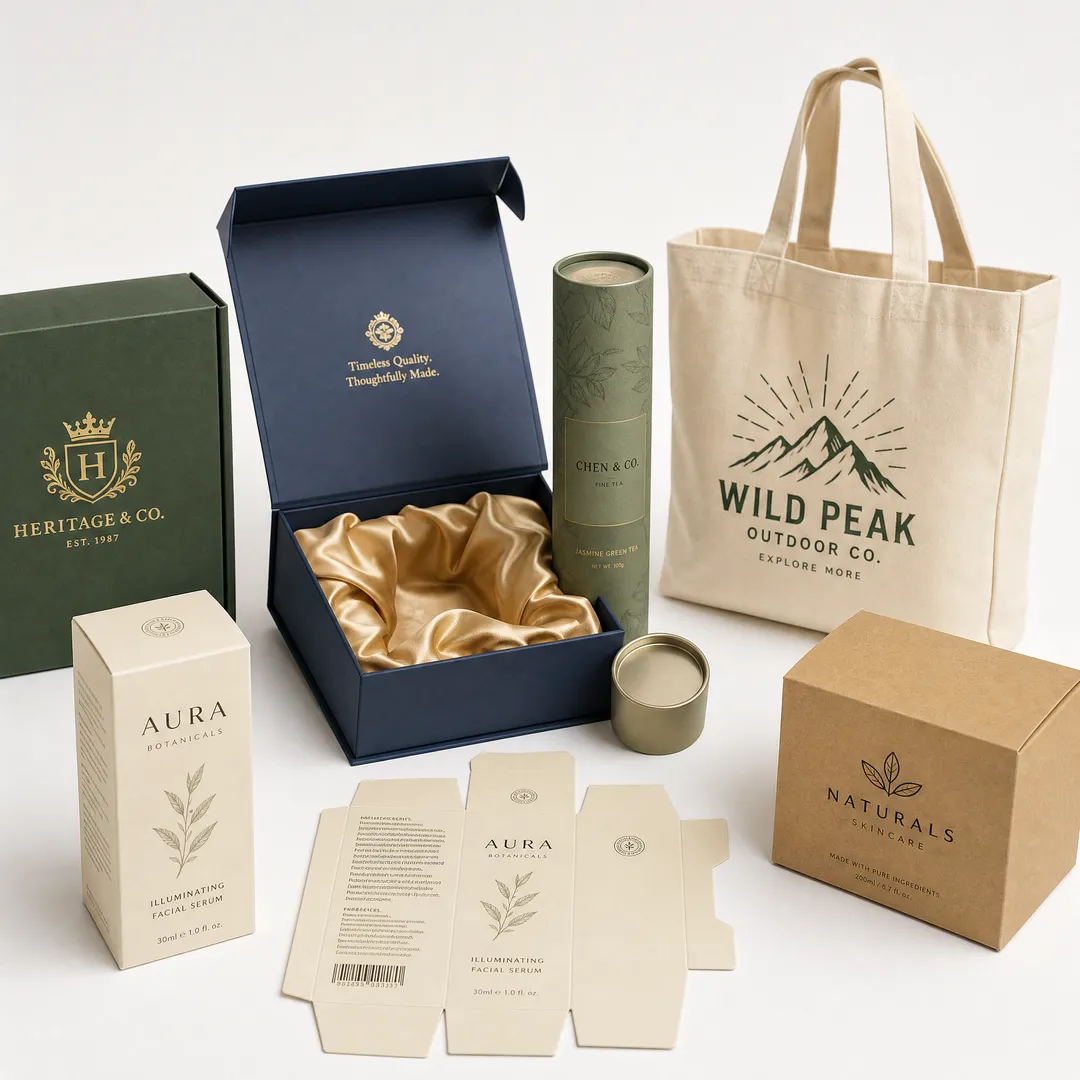
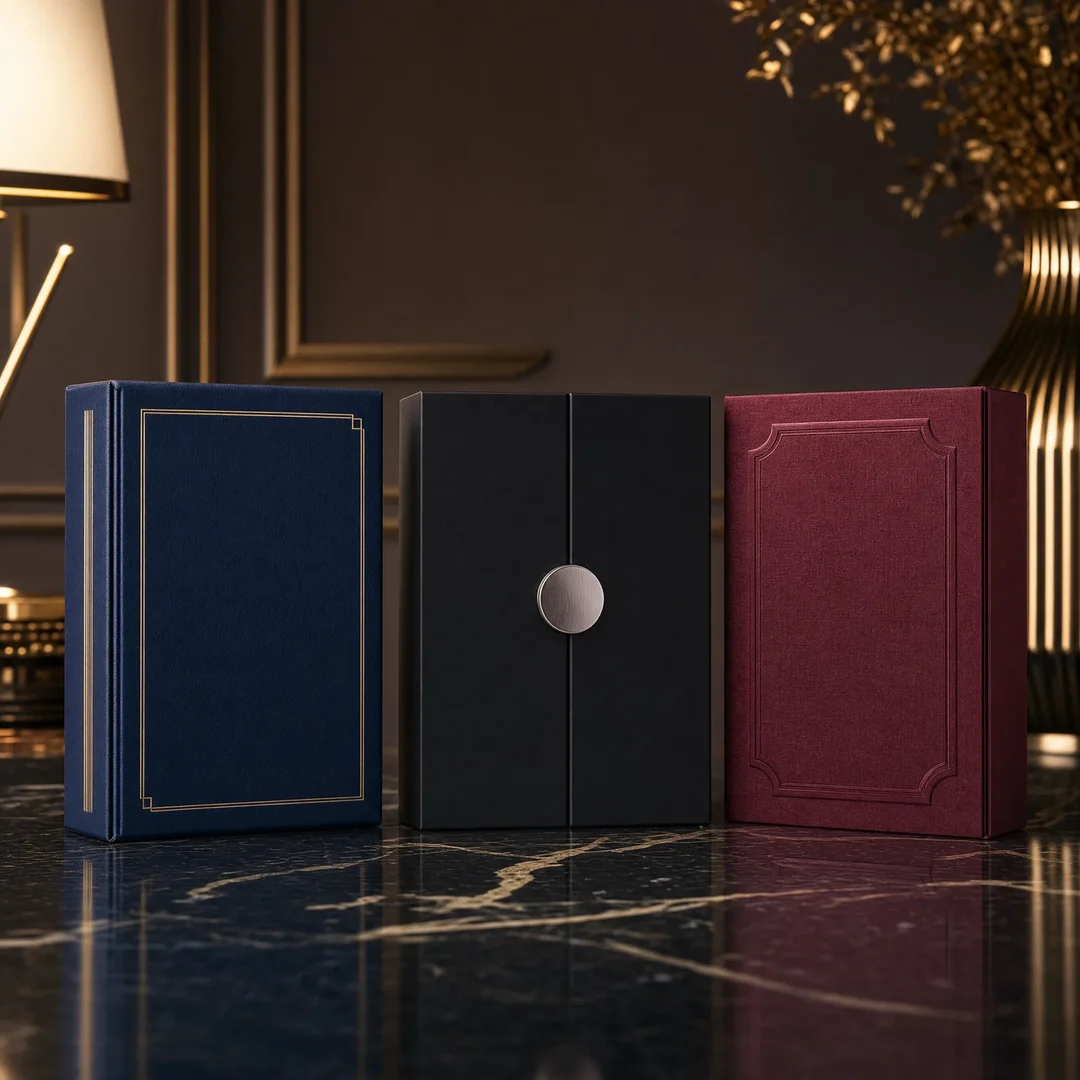
Rigid box printing is the backbone of luxury packaging. These are the thick, non-collapsible boxes you find housing high-end electronics, luxury watches, and premium cosmetics. A rigid box — also called a case-bound box or set-up box — consists of a greyboard core wrapped in printed paper or specialty material. The result is a box that feels substantial in the hand and communicates quality before the customer even opens it.
In China, custom rigid box printing typically uses 1200-1600 gsm greyboard as the base, wrapped with 128-157 gsm coated art paper for the outer layer. Factories in Dongguan and Guangzhou are particularly strong in this category, with some facilities running fully automated rigid box production lines capable of outputting 50,000 units per day.
Collapsible and Two-Piece Rigid Boxes
Traditional rigid boxes ship fully assembled, which means you pay for air. A lot of air. This is where collapsible rigid box printing changes the equation. These boxes are designed with a fold-down structure — the walls hinge flat — so they ship compact and are assembled on-site. The shipping cost savings can be 40-60% compared to pre-assembled rigid boxes, which matters enormously when you are importing container loads.
Two-piece rigid box printing refers to the classic lid-and-base construction, where the lid telescopes over the base. This is the format used for iPhone boxes, high-end chocolate packaging, and premium subscription boxes. Chinese manufacturers routinely offer both styles, often with the same tooling setup. The key specification to nail down is the lid depth relative to the base — too shallow and the unboxing feels cheap; too deep and the friction makes opening difficult.
Magnetic Boxes: The Unboxing Experience That Sells
If you have ever opened a premium e-commerce order and heard that satisfying click of a magnetic closure, you already understand the appeal. Magnetic box printing embeds magnets into the cardboard structure — typically in the flap or lid — to create a secure, reusable closure without clasps or ribbons. The magnets are concealed between layers of greyboard and wrapping paper, so the exterior remains clean and seamless.
Custom magnetic box printing in China is remarkably affordable compared to Western quotes. A standard 30×20×5 cm magnetic rigid box with full-color CMYK printing, matte lamination, and two embedded magnets can cost as little as $1.20-2.50 per unit at a 1,000-unit order from a magnetic box printing China supplier. The same box quoted in the US or Europe might run $4-7 per unit. The quality difference, in my experience, is negligible — and sometimes Chinese finishing is better because the volume of practice is higher.
The most common magnetic box configuration is the book-style flip lid, but drawer-style magnetic boxes and fold-out magnetic presentation boxes are also widely available. If your product photographs well, a magnetic box with a window cutout and PET film creates a display-worthy package that customers are genuinely reluctant to throw away.
Gift Boxes: Packaging That Becomes Part of the Gift
Gift box printing occupies a broad category that overlaps with rigid boxes and magnetic boxes but deserves its own discussion. A gift box is defined less by its structure and more by its purpose: it must look impressive on presentation, feel generous in the hand, and withstand the inevitable shaking and squeezing that curious recipients inflict before opening.
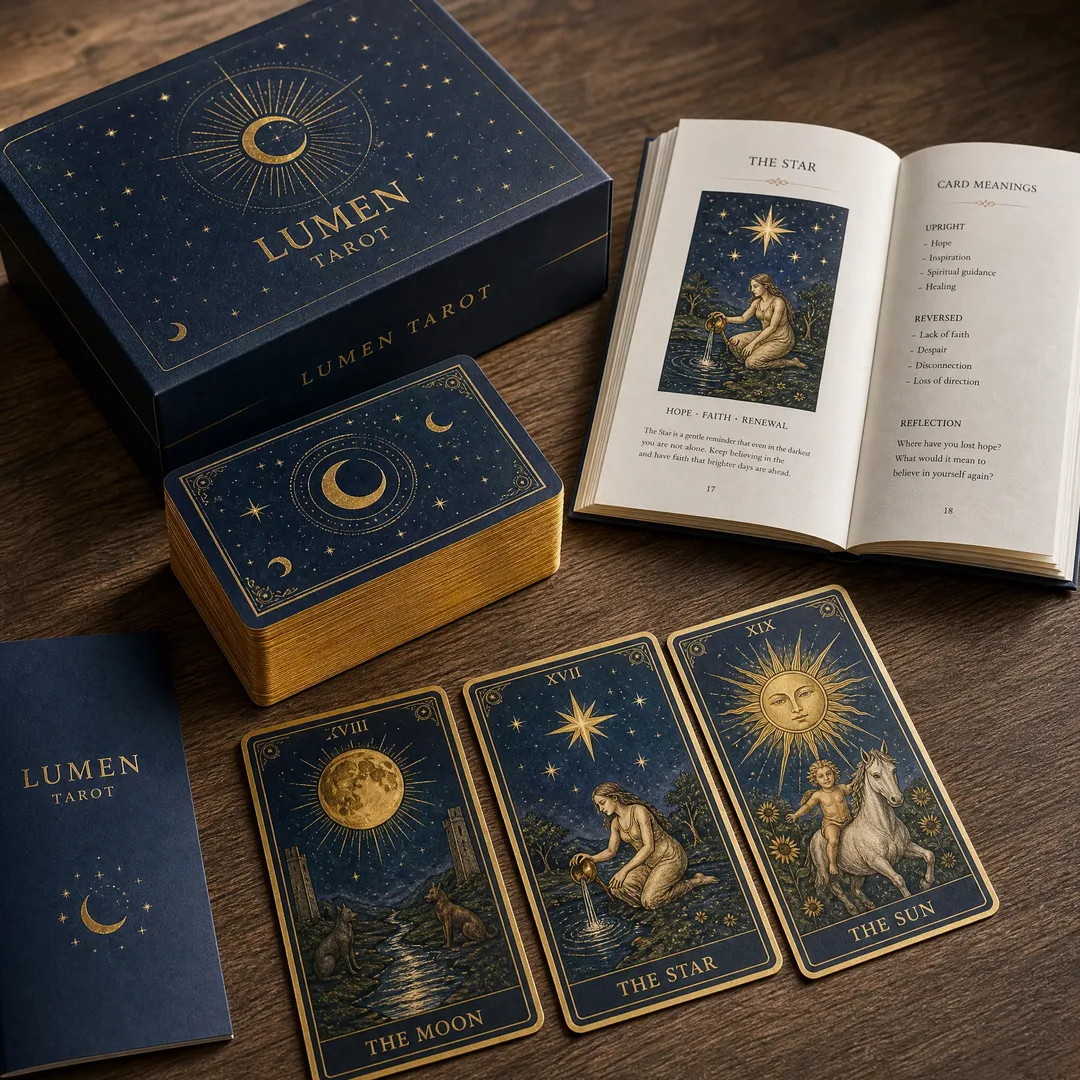
Custom gift box printing from Chinese factories often incorporates multiple finishing techniques on a single box — matte lamination for the base, gloss spot UV for the logo, and gold foil stamping for the brand name. This layered approach to finishing is something Chinese manufacturers excel at because their production lines are set up for multi-step processes. A gift box printing China supplier can also add ribbon pulls, elastic straps, foam inserts, and silk or velvet lining, all under one roof.
One trend worth noting: the rise of the “keep-worthy” gift box. Brands are increasingly designing boxes that recipients reuse for storage, which means the interior must be as finished as the exterior. Chinese factories have adapted quickly to this demand, offering flocked interiors, custom-fit foam cutouts, and even drawer compartments inside gift boxes.
Folding Cartons: The Workhorse of Retail Packaging
Folding carton packaging is the most ubiquitous box type in retail, and for good reason. It ships flat, assembles in seconds, and costs a fraction of rigid boxes. Think cereal boxes, pharmaceutical packaging, cosmetics cartons, and consumer electronics outer boxes. A folding carton is a single sheet of paperboard (typically 300-450 gsm) die-cut with fold lines, shipped flat, and erected when needed.
Custom folding carton packaging from China offers enormous flexibility in structural design. Reverse tuck, straight tuck, auto-lock bottom, crash-lock bottom, and display-top configurations are all standard offerings. Tuck box printing — where the closure flaps tuck into the box body — is the most common style, and custom tuck box printing typically adds only a modest tooling charge ($30-80 for a die) above the print cost.
The real advantage of sourcing folding carton packaging from China is in the print quality-to-price ratio. Because folding cartons are printed on offset presses before die-cutting, you get the same 4-color process quality as a rigid box but at 15-25% of the cost per unit. For brands selling products in the $20-50 retail range, this is the sweet spot of looking premium without destroying margins.
Kraft Boxes: The Eco-Conscious Consumer’s Favorite
Kraft box printing has surged in popularity as sustainability becomes a genuine purchase driver rather than a niche preference. Kraft paper — made from unbleached wood pulp with a characteristic brown color and visible fiber texture — signals “natural” and “eco-friendly” without needing a single word of copy. It is the visual shorthand for environmental responsibility.
Custom kraft box printing typically uses 250-400 gsm kraft paperboard, which can be printed with 1-2 spot colors or full CMYK. The natural brown background limits certain design choices — light colors and pastels do not pop well on kraft — but the aesthetic constraint is exactly what makes kraft packaging look intentional. Many brands pair kraft board with white or black single-color printing for a minimalist, premium-eco look.
Kraft box printing China suppliers offer both rigid kraft boxes (for premium products) and folding kraft cartons (for everyday retail). Because kraft paperboard is inherently less processed, the material cost is often lower than coated white board, and the difference in environmental impact is substantial. If your brand markets sustainability as a core value, kraft packaging from a Chinese factory with FSC certification is a defensible choice that your customers will notice.
Specialty Boxes: Jewelry, Perfume, and Wine
Some products demand packaging that is as specialized as the item inside. This is where dedicated jewelry box printing , perfume box printing , and wine box printing come in — each with distinct structural requirements.
Jewelry Boxes
Custom jewelry box printing requires precision insert work. The velvet, foam, or flocked paper lining must secure rings, necklaces, earrings, or watches without movement during shipping. Chinese jewelry box manufacturers often operate separate insert production lines — die-cut foam, thermoformed flocked trays, and vacuum-formed plastic inserts are all common. A well-made jewelry box from a Chinese factory includes the box, the insert, and the presentation layer as a single coordinated order, which simplifies sourcing enormously.
Perfume Boxes
Custom perfume box printing is a discipline of its own because the box must accommodate a glass bottle that is heavy, fragile, and often irregularly shaped. The structural design requires precise bottle-fit engineering — the internal cardboard or foam structure must grip the bottle firmly enough to prevent rattling but loosely enough for easy removal. Chinese factories that specialize in perfume packaging understand the high-speed filling line requirements of fragrance brands and design boxes that integrate smoothly into automated packaging workflows.
Wine Boxes
Custom wine box printing in China ranges from simple single-bottle folding cartons to elaborate wooden-appearance rigid boxes with magnetic closures and silk lining. The standard single-bottle wine box typically uses a two-piece rigid construction with a die-cut insert to cradle the bottle neck. For gift sets, double-bottle and triple-bottle configurations are widely available, often with a carry handle or ribbon closure built into the design.
Paper Tubes: Cylindrical Packaging with Shelf Impact
Paper tube printing produces cylindrical packaging made from spirally wound kraft paper or paperboard. These tubes are surprisingly versatile — they package everything from premium candles and cosmetics to posters, tea, and craft spirits. The cylindrical format stands out on retail shelves precisely because most competing products come in rectangular boxes.
Custom paper tube printing in China supports full-wrap CMYK printing on the outer surface, with options for foil stamping, embossing, and spot UV. The tube can be sealed with metal or plastic end caps, a telescoping lid, or a simple push-in closure. The material thickness is specified by the number of paper plies — 3-ply and 4-ply tubes are standard for consumer products, while heavier 5-ply tubes can support significant weight for industrial applications.
One advantage of Chinese paper tube manufacturers is their ability to handle mixed-media closures — metal tins, cork stoppers, and bamboo lids are all commonly available as add-ons. This opens up design possibilities that go well beyond the basic cardboard cylinder.
Bags: Canvas, Non-Woven, and the Plastic-Free Movement
Packaging does not start and end with boxes. Bags — particularly reusable bags — are packaging that continues advertising your brand long after the initial purchase. Two categories dominate custom bag production in China: canvas bags and non-woven bags.
Canvas Bags
Canvas bag printing uses cotton or cotton-blend fabric, typically 8-16 oz in weight, with screen printing or digital heat transfer for artwork. Custom canvas bag printing from Chinese suppliers offers a range of handle options — cotton webbing, rope, die-cut — and gusset configurations for volume. The durability of a well-made canvas tote means customers reuse it for years, creating thousands of brand impressions per bag. At MOQs as low as 500 units, canvas bags are accessible even for small brands.
Non-Woven Bags
Non woven bag printing is the more cost-conscious alternative. Non-woven polypropylene (NWPP) bags are lightweight, water-resistant, and significantly cheaper than canvas — often $0.15-0.40 per bag at 1,000-unit quantities. Custom non woven bag printing typically uses screen printing for simple logos or full-panel heat transfer for photographic designs. The material is technically plastic but is reusable and recyclable, and many Chinese factories now offer RPET (recycled PET) non-woven options for brands that want to close the loop.
Board Game Packaging: Boxes, Components, and the Complete Set
The board game industry has exploded, and Chinese factories have built specialized production lines to serve it. Custom board game printing is not just about the box — it is about every component inside it, manufactured to consistent specifications and assembled into a coherent product.
Board Game Boxes
Board game box printing is demanding because the box must be rigid enough to protect heavy components — boards, cards, tokens, and dice — through shipping and repeated use. Custom board game box printing typically uses a two-piece rigid construction with a full-wrap printed exterior and a plain or printed interior. The box depth is often greater than standard rigid boxes to accommodate multiple component layers. Chinese board game manufacturers routinely include custom thermoformed trays that organize components into discrete compartments, which is a feature gamers genuinely appreciate.
Game Pieces and Dice
Custom game pieces printing covers wooden meeples, plastic miniatures, acrylic tokens, and cardboard punch-out tokens. Chinese factories can produce these components in dozens of materials and finishes, often coordinating production across multiple specialized workshops to deliver a complete set. Custom dice printing is similarly flexible — standard 16mm D6 dice with engraved and painted pips, custom D20s for RPG games, or oversized promotional dice are all within the capability range of specialized Chinese dice factories.
Jigsaw Puzzles
Custom jigsaw puzzle printing is a niche but growing category, driven by the puzzle boom of recent years. Chinese puzzle factories print on 1.5-2.0mm greyboard using offset presses, then die-cut the printed sheet with steel-rule dies that produce clean, interlocking pieces. Piece counts range from 48-piece children’s puzzles to 2,000-piece adult challenges. The puzzle box itself is typically a rigid or folding carton box printed as part of the same order, ensuring visual consistency between the puzzle image and its packaging.
Custom Finishing Options: Where the Magic Happens
Print quality gets you to the table. Finishing is what wins the hand. Chinese factories offer a comprehensive range of finishing techniques, and understanding them is essential to specifying your packaging correctly.
Foil stamping uses heat and pressure to transfer metallic or pigment foil onto the box surface. Gold and silver are the most common foil colors, but Chinese suppliers stock holographic, copper, rose gold, and matte-colored foils as well. This technique is ideal for logos, brand names, and decorative borders. The setup cost is a one-time die charge (typically $40-80), after which the per-unit cost is minimal.
Embossing and debossing create raised or recessed relief patterns on the paper surface. Blind embossing — without foil or ink — produces a subtle, tactile effect that works beautifully on matte surfaces. Registered embossing aligns the relief with a printed element, so the raised area matches the artwork precisely. Chinese factories with Heidelberg cylinder presses handle registration to sub-millimeter tolerance.
Spot UV applies a high-gloss varnish to selected areas of the design, creating contrast between glossy and matte surfaces. Logos, product images, and decorative patterns are the most common targets for spot UV. The technique is especially effective on matte-laminated boxes, where the gloss-on-matte contrast is striking.
Die cutting is the process that gives a box its shape. Custom die-cut windows with PET film inserts let customers see the product inside without opening the box — a powerful retail tool. Die-cut shapes that depart from the standard rectangle — hexagons, circles, custom silhouettes — are also available, though they generally require a higher MOQ to amortize the custom die.
Lamination — gloss, matte, or soft-touch — protects the printed surface and defines the tactile character of the box. Soft-touch lamination, in particular, has become a signature of premium packaging because it mimics the feel of velvet or rubber and is genuinely pleasurable to handle.
MOQ and Turnaround Times: What to Expect
Minimum order quantities vary significantly by box type, and this is where many first-time buyers get caught out. Here is what I have observed across multiple Chinese suppliers:
For rigid boxes and magnetic boxes , standard MOQ is 500-1,000 units per design. Some factories will accept 300 units for a premium price, but the per-unit cost at that volume can be 40-60% higher than at 1,000 units. For folding cartons , MOQ is typically higher — 1,000-3,000 units — because offset printing setup costs are amortized across the run. Kraft boxes and paper tubes often have lower MOQs (300-500 units) because the simpler material and finishing requirements reduce setup overhead.
For canvas bags and non-woven bags , MOQ is generally 500-1,000 units, though screen-printed canvas bags can sometimes be ordered at 300 units. Board game sets and jigsaw puzzles typically command higher MOQs — 1,000-5,000 sets — due to the multi-component assembly required.
Turnaround times follow a consistent pattern: 3-5 business days for sampling (after artwork approval), 10-15 business days for production, and 15-25 days for ocean freight to US or European ports. Air freight cuts transit to 5-7 days but can triple the logistics cost. Chinese New Year (late January to mid-February) adds 3-4 weeks to every timeline, so plan accordingly.
Why EcoPrinting for Your Custom Packaging
After working with dozens of Chinese packaging suppliers over the years, I have learned that the factory matters as much as the specification. The right partner catches material inconsistencies before they become production problems. They suggest structural improvements that reduce cost without compromising quality. And they communicate clearly — in English — about timelines, shipping logistics, and any issues that arise during production.
EcoPrinting has built its reputation on exactly this approach. With FSC-certified materials, Heidelberg offset presses, and a dedicated English-speaking project management team, EcoPrinting bridges the gap between Western brand expectations and Chinese manufacturing capability. Whether you need 500 rigid magnetic boxes for a product launch or 50,000 folding cartons for retail distribution, the production infrastructure is in place to deliver consistent quality at competitive pricing.
If you are sourcing custom packaging from China , the most valuable thing you can do is send your specifications to a factory that understands your market. Request samples — not just of your design, but of previous work in your product category. The quality of those samples tells you more about what you will receive than any website or catalog ever could.
Ready to start your custom packaging project? Contact EcoPrinting today for a free consultation and quote. Our team will review your artwork, recommend the optimal box structure and finishing options, and deliver samples within 5 business days of design approval.