What Softcover Book Printing Actually Costs
Softcover book printing cost is one of the first questions every author and publisher asks, and one of the hardest to answer with a single number. A 100-page paperback and a 400-page color novel sit at opposite ends of the price scale, even from the same printer. The good news is that the cost is predictable once you know which levers move it.
This guide breaks down every variable that shapes a softcover printing quote, from paper and page count to quantity and cover finish. By the end you will be able to read a quote line by line and know exactly where your money goes.
Softcover Formats and Binding
Softcover is an umbrella term, not a single product. The binding method you choose fixes how the book feels, how many pages it can hold and part of the unit cost, so it is worth deciding before you price anything else.
Perfect Binding
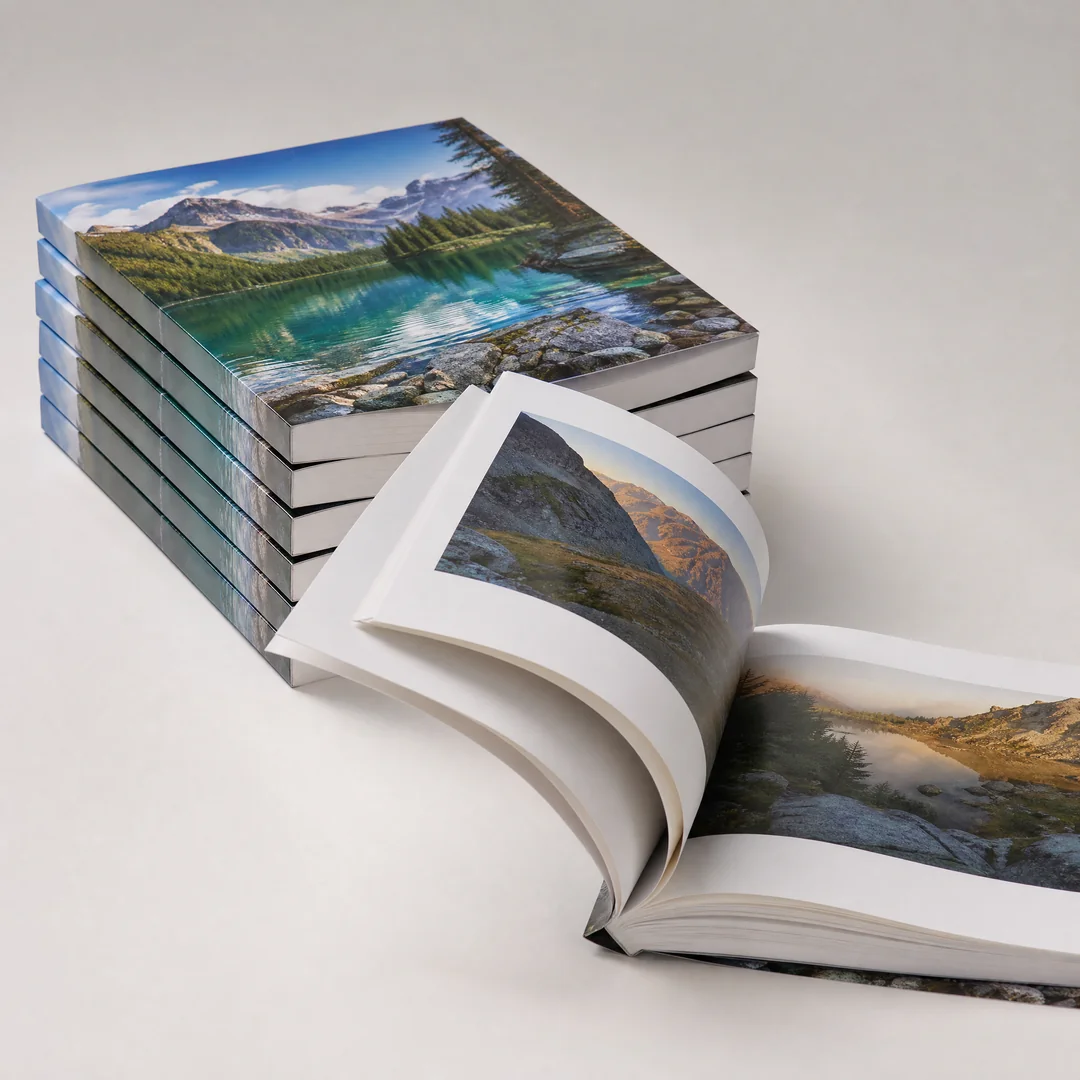
Perfect binding glues the book block to a flexible card cover at the spine, which is why you can print a title and spine text. It is the standard for novels, memoirs, textbooks and most trade paperbacks. The cost scales with page count, and it works best between roughly 40 and 900 pages.
Saddle Stitching
Saddle stitching folds and staples sheets through the fold, so it suits booklets, brochures and thin catalogs rather than full books. It is cheaper than perfect binding but tops out around 64 to 96 pages, depending on paper weight.
Spiral and Wire-O
Spiral and wire-o binding let the book lie flat, which makes them common for workbooks, planners and manuals. The coil adds a small cost per unit and suits a narrower page range, but the lay-flat function is worth it for books people actually write in.
The Cost Drivers, Ranked
Most softcover book printing quotes are shaped by five variables, and they are not equally weighted. Understanding the order of influence helps you spend your budget where it actually shows instead of where it disappears.
Page Count and Trim Size
Page count is the biggest single driver, because it sets how much paper and ink every copy consumes. A standard 6 x 9 inch trade paperback is the cheapest format to fill, while oversized or unusual trim sizes waste paper on the sheet and raise the price. Choosing a standard size is the easiest money-saver on the list.
Print Quantity
Quantity works the opposite way most people expect: the unit price falls sharply as the run grows, because the fixed setup cost is spread over more books. A run of 250 copies costs far more per book than a run of 2,500. The sweet spot depends on how many you can realistically sell, since printing extra books you never ship wastes more than you save.
Color Versus Black and White
Black-and-white interiors are the default for novels and text-heavy books, and they are dramatically cheaper than color. A color interior can triple the printing cost, so it is usually reserved for children’s books, cookbooks, photography and textbooks where color actually earns its keep.
Paper Choice
Paper weight and finish change both the feel and the price. A 50 to 70 lb uncoated paper keeps novels light and affordable, while a heavier coated paper gives color pages more punch at a higher cost. Thinner paper also makes a thick book easier to hold and cheaper to ship, which is why mass market paperbacks feel so light.
Cover Finish and Extras
The cover carries the book’s first impression, so this is where most buyers add value deliberately. A matte or gloss lamination protects the cover and adds a small cost, while spot UV and foil stamping on the title add a premium feel for only a few cents more per unit.
Standard Softcover Sizes
Trim size affects both the reading experience and the price, because an inefficient size wastes paper on the press sheet. Sticking to a standard dimension is one of the quiet ways to keep a softcover book printing cost down.
Trade Paperback
The 6 x 9 inch trade paperback is the most common size for fiction and non-fiction in North America, and it is usually the cheapest to produce because printers set up for it constantly. A 5.5 x 8.5 inch option reads slightly smaller and costs about the same.
Mass Market and Digest
Mass market paperbacks run about 4.25 x 6.87 inches and use thinner paper to keep the book pocket-sized, while digest sizes sit around 5.5 x 8.5 inches. These smaller formats save material but leave less room for large type or generous margins.
Square and Custom Sizes
Square formats such as 8 x 8 and 9 x 9 inches suit children’s books and photography, while custom sizes let a book stand out on the shelf. Both usually cost more than standard rectangles because they use the press sheet less efficiently, so reserve them for projects where the format is part of the product.
Printing Method: Offset or Digital
The printing method is decided almost entirely by your quantity, and it sets the floor for your unit price. Matching the method to the run size is the second-biggest money decision after page count.
Offset Printing
Offset printing burns the image onto plates and runs long sheets at high speed, so it becomes the cheapest option once you cross a few hundred copies. It also reproduces fine gradients and Pantone spot colors more accurately, which matters for illustrated and art books.
Digital and Print-on-Demand
Digital printing skips the plates and prints straight from the file, which makes it ideal for short runs, proofs and print-on-demand. You pay a higher cost per book but avoid committing to a large inventory, so it suits self-publishers who want to order small batches as sales come in.
How to Read a Softcover Quote
A clean quote separates unit cost, setup fees and shipping so you can compare suppliers on equal terms. Here is what to look for on the page.
Setup, Plates and Proofs
Setup fees cover file preparation, plates and a printed proof, and they are charged once per run regardless of quantity. On a small run these fixed costs can exceed the paper and ink, which is why the unit price falls so fast as quantity climbs. Always ask whether the setup fee is included or added on top.
Unit Price and Price Breaks
The unit price is the cost per book at a given quantity, and serious printers list price breaks at 500, 1,000, 3,000 and 5,000 copies. Request the full break table rather than a single number, because the gap between two adjacent quantities is often large enough to change your whole order plan.
Freight and Customs
Shipping can rival the printing cost on an international order, especially when you ship by air instead of sea. Get the freight quoted on the actual finished weight and destination, not a rough estimate, and confirm who clears customs before you approve the order.
Proofs and Quality Checks Before You Commit
A printed proof is the cheapest insurance you can buy on a softcover print run, because it catches color, paper and layout problems while they are still cheap to fix.
Digital Versus Physical Proofs
A digital proof confirms the layout and pagination but tells you little about how the colors will actually print. For a first edition or a book with photos, approve a physical proof on the real paper so you can judge the weight, the cover finish and the color in your hands.
Approving the Cover Separately
The cover is the one piece every buyer stares at longest, so it deserves its own approval step. Check the lamination, the spine width and the title alignment on the physical sample, because a cover that looks perfect on screen can shift a few millimeters in production.
A Realistic Budget for a Softcover Book
For planning purposes, a standard 6 x 9 inch novel of around 250 pages in black and white lands near the low end of the range in runs of 1,000 copies or more, while the same book in a 250-copy digital run costs several times more per unit. Color interiors, heavier paper and premium covers each push the number up from there.
The exact figure depends on your specifications, but the pattern is always the same: more quantity lowers the unit cost, and every upgrade you add to paper, color or finish moves the price in the other direction.
Getting an Accurate Softcover Printing Quote
The fastest way to a reliable number is to brief every variable at once: trim size, page count, binding, paper, color, quantity and destination. A printer who asks for those details is protecting you from surprises; one who quotes without them is guessing. Two printers quoting the same specifications should land close together, so a wide gap usually means one of them made different assumptions.
When you are ready to price your book, send your complete specifications and compare quotes that list the same items. The product pages and guides below take you straight to the details.