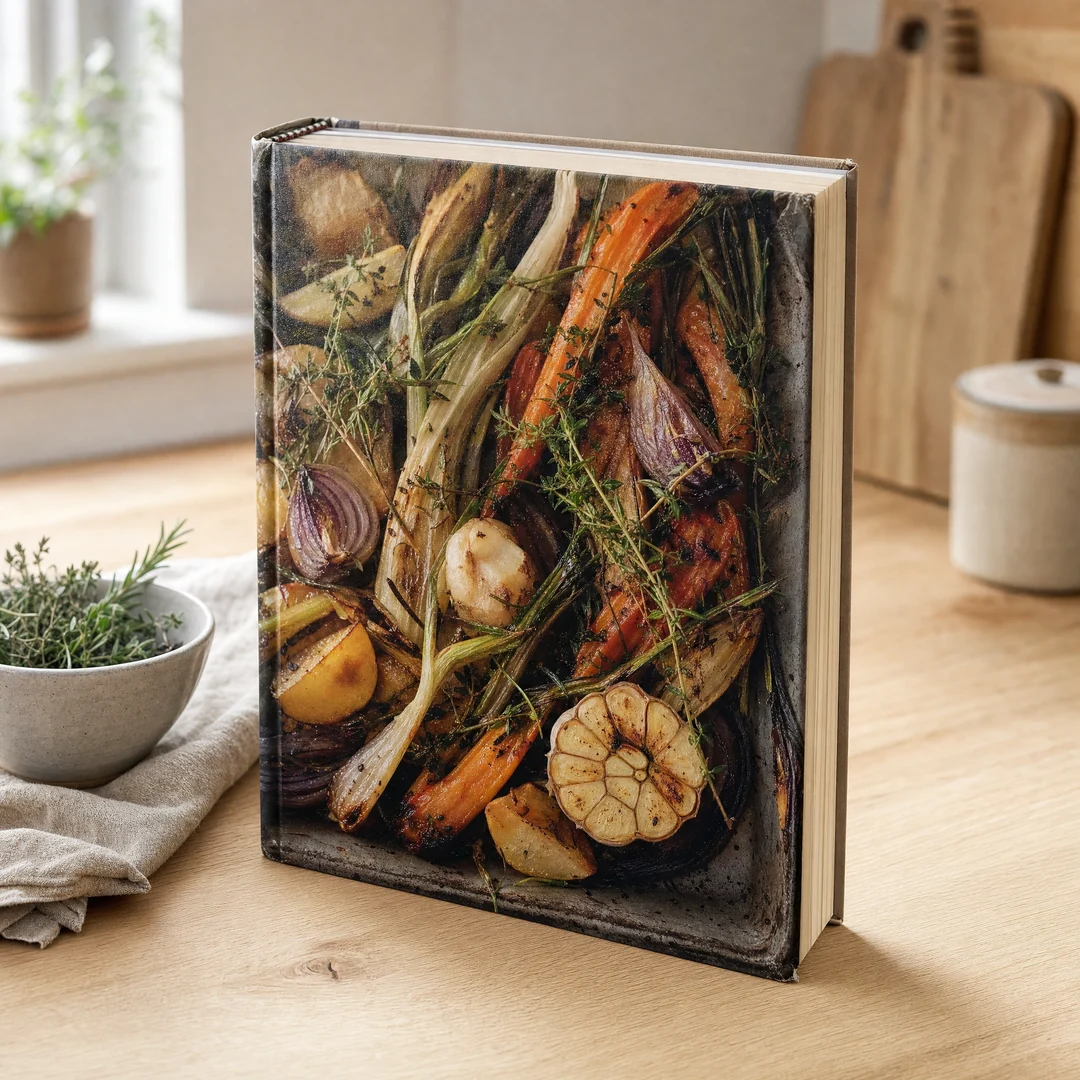
One Cookbook, Three Quotes, a Three-Fold Spread
A food blogger sends the same 200-page cookbook to three printers. All three receive identical PDFs for a 7×10 inch book with a full-color interior. At 1,000 copies, the quotes come back at $4.90, $7.20, and $11.50 per copy.
None of those printers is trying to cheat anyone. The spread comes from specifications that look identical on a purchase order but are not identical on press: 128 gsm matte art paper in one quote, 80 gsm offset in another; a sewn hardcover against a glued softcover; a digital proof against a press check nobody budgeted for; FOB Shenzhen against DDP Toronto.
Cookbook printing cost is therefore not a market rate you can look up. It is eight cost blocks, multiplied by a quantity curve, plus freight. Change one block and the whole number moves. This guide walks through each one so you can read a quote for what it contains and compare suppliers on equal footing.
If you already know your trim size and page count, request a number from the cookbook printing service page. For the reasoning behind the price, keep reading.
What Makes Up Cookbook Printing Cost
Every estimate you receive is a bundle of eight cost blocks. Suppliers rarely itemize all of them, which is exactly why two totals can differ so much.
Paper
Paper is usually the largest material cost, and the one buyers underestimate. Cookbooks are image-led, so the interior needs coated stock: 128 gsm or 157 gsm matte art paper for a standard edition, heavier for a premium one. Heavier sheets cost more per tonne and add spine bulk, which changes binding cost. Endpapers are priced separately.
Printing
Full-color printing runs four process inks on every signature. A cookbook with black-only recipe pages still pays four-color rates on its photo signatures, and printers cannot always split the run economically. Spot, metallic, or Pantone-matched brand colors add plates and wash-ups.
Binding
Perfect binding, spiral, Wire-O, and sewn hardcover sit at different price points because they consume different materials and labor minutes. Binding also carries a fixed setup: die and punch tools, glue pots, or sewing line changeovers. On short runs, setup is a large share of the binding line item.
Cover Finishing
Lamination is close to mandatory for a cookbook, because a kitchen counter is a hostile environment for uncoated board. Matte lamination, soft-touch film, spot UV, foil stamping, and embossing each add a pass through a finishing machine, and each pass has a minimum charge.
Handwork and Collation
Tabs, thumb indexes, gatefold pages, and inserted cards are assembled by hand, quoted per unit and per operation. Handwork does not scale down well, which is one quiet reason small custom cookbook printing orders cost more than buyers expect.
Proofing
A digital proof is cheap or free. A contract proof on the actual press stock costs more but is the only reliable way to judge whether a roast chicken looks appetizing or grey. For photo-heavy titles, that money is usually well spent.
Packing
Standard export packing means shrink wrap, cartons, and a pallet configuration that survives a container. Custom slipcases, belly bands, or retail-ready display cartons push this line up sharply.
Freight
Freight is the block most often quoted as an afterthought. Sea, air, and express differ wildly per kilogram, and books are heavy. Whether freight sits inside the unit price or on its own line tells you how comparable two quotes really are.
How Print Run Size Moves Unit Cost and Total Budget
Printing is a fixed-cost business wearing a variable-cost disguise. Plates, make-ready sheets, color approval, die setup, and line changeover cost roughly the same whether you print 250 copies or 3,000. Spread those costs across more books and the unit price falls; the total invoice still rises.
250 Copies
This is the zone where setup dominates. A 200-page cookbook here can carry a unit cost two to three times higher than the same book at 3,000 copies, because every copy absorbs a full share of make-ready. Small runs suit test launches, family cookbooks, or a restaurant gifting copies to investors, not retail distribution.
500 Copies
The first meaningful step down. Make-ready is still visible in the price, but paper purchasing starts to reach a sensible order size and binding setup is amortized over twice as many units. Many first-time self-publishers land here.
1,000 Copies
This is the usual inflection point for bulk cookbook printing. Plate and setup costs drop to a small fraction of the unit price, and the printer can plan a single uninterrupted press run. Unit cost typically falls 25 to 35 percent against the 500-copy level.
2,000 to 3,000 Copies
Beyond 1,000 copies the curve flattens. You are now buying paper and press time, not setup. The extra saving per copy is real but modest, and it comes with storage, cash flow, and obsolescence risk. Going from 1,000 to 3,000 should be justified by committed sales, not by the unit price alone.
The table below shows indicative cookbook printing cost per copy for a 200-page, 7×10 inch book with a full-color interior, ex-works China. Treat every figure as a planning band, not a quotation — final pricing depends on paper choice, finishing, quantity, and delivery terms.
Print run
Perfect bound (softcover)
Spiral bound
500 copies
$3.60 – $5.20
$4.10 – $5.90
1,000 copies
$2.60 – $3.90
$3.00 – $4.40
3,000 copies
$1.90 – $2.90
$2.20 – $3.30
Indicative only. Ranges assume 200 pages, 7×10 inches, 128 gsm coated interior, laminated cover, standard export packing, and freight excluded.
How Trim Size, Page Count, Photos, Paper, and Binding Change the Price
Once quantity is fixed, five specification decisions drive most of the remaining variance. They interact, so change them together rather than one at a time.
Trim Size
Common cookbook formats are 6×9, 7×10, 8×10, and 8.5×11 inches. Larger trims use more paper per page and fit fewer pages on a press sheet, so cost rises faster than the page count suggests. A 7×10 book is the usual compromise: enough room for a photo and a method column without the paper bill of a coffee table format. Standard sizes also use existing cutting dies, avoiding a setup charge.
Page Count
Books are printed in signatures, so page counts round up to a multiple of four or eight depending on the press. A 196-page book may be priced as 200 pages. This matters when you are close to a boundary: trimming two pages can sometimes drop you into a cheaper signature count, while adding two can cost nothing at all. Ask the printer where their break points fall.
Color Mix
A fully illustrated cookbook and a cookbook with photo signatures plus black-only recipe pages are different products. Splitting the interior lets you print text sections at a much lower rate, but it adds a separate plate set and a collation step, so the saving only appears above a certain quantity.
Paper Weight and Coating
Food photography needs coated stock. Uncoated paper drinks ink, and a glossy sauce or a fresh herb salad loses saturation and contrast. Matte art paper at 128 gsm is the workhorse; 157 gsm feels more substantial and has better opacity, at higher cost and with more spine bulk. Gloss art paper renders highlights sharply but shows fingerprints on a counter, a practical argument for matte in this category.
Binding Method
Sewn hardcover costs the most and lasts the longest. Perfect bound softcover is the cheapest option that still looks like a book. Spiral and Wire-O sit in between and solve a specific problem, which is the subject of the next section.
Binding Choices for a Cookbook That Must Lie Flat
Recipe books get used in a way novels never are. They sit open on a counter, get splashed, and are read at arm’s length while both hands are busy. That usage pattern should decide the binding, before you collect quotes.
Perfect Binding and the Counter Problem
Perfect binding glues the text block into a square spine. It is the cheapest and most familiar option, and a poor fit for a working cookbook: a glued spine does not stay open unless you weight it down. Repeat that under kitchen conditions and the joint eventually cracks, usually near a heavy photo spread. Fine for books that are read rather than used, wrong for books that are cooked from.
Spiral and Wire-O
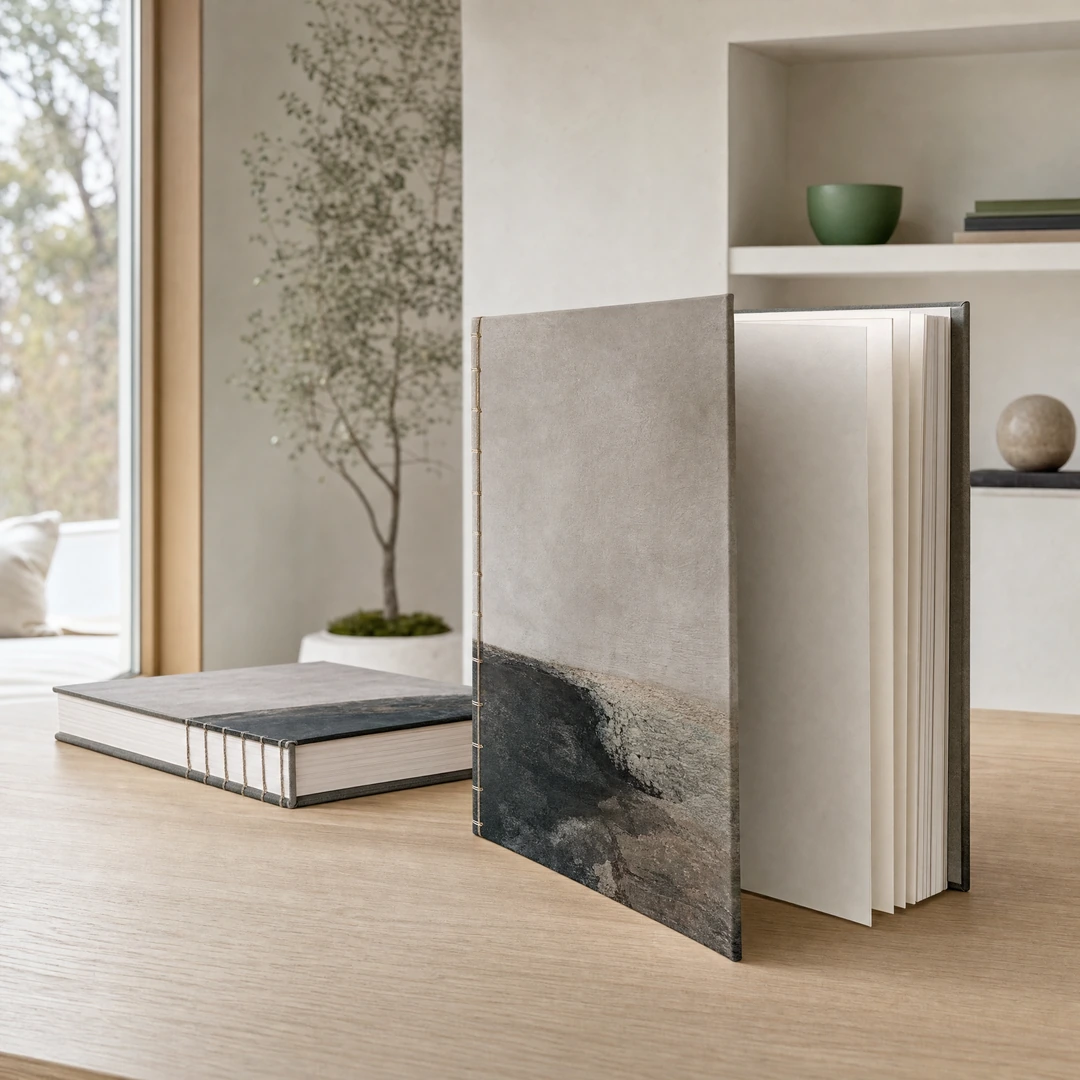
Plastic spiral and twin-loop wire both punch the binding edge and thread a coil through it, so the book opens 360 degrees and folds back on itself. Spiral is cheaper and comes in many colors, though its diagonal run means facing pages do not align perfectly. Wire-O uses metal loops that align facing pages precisely — useful when a recipe runs across a spread. Both add a punching and inserting step, so expect a modest premium over perfect binding, often the smallest cost increase in the project for the largest gain in usability. See the spiral and coil binding guide and the Wire-O binding overview for pitch and material details.
Sewn Hardcover
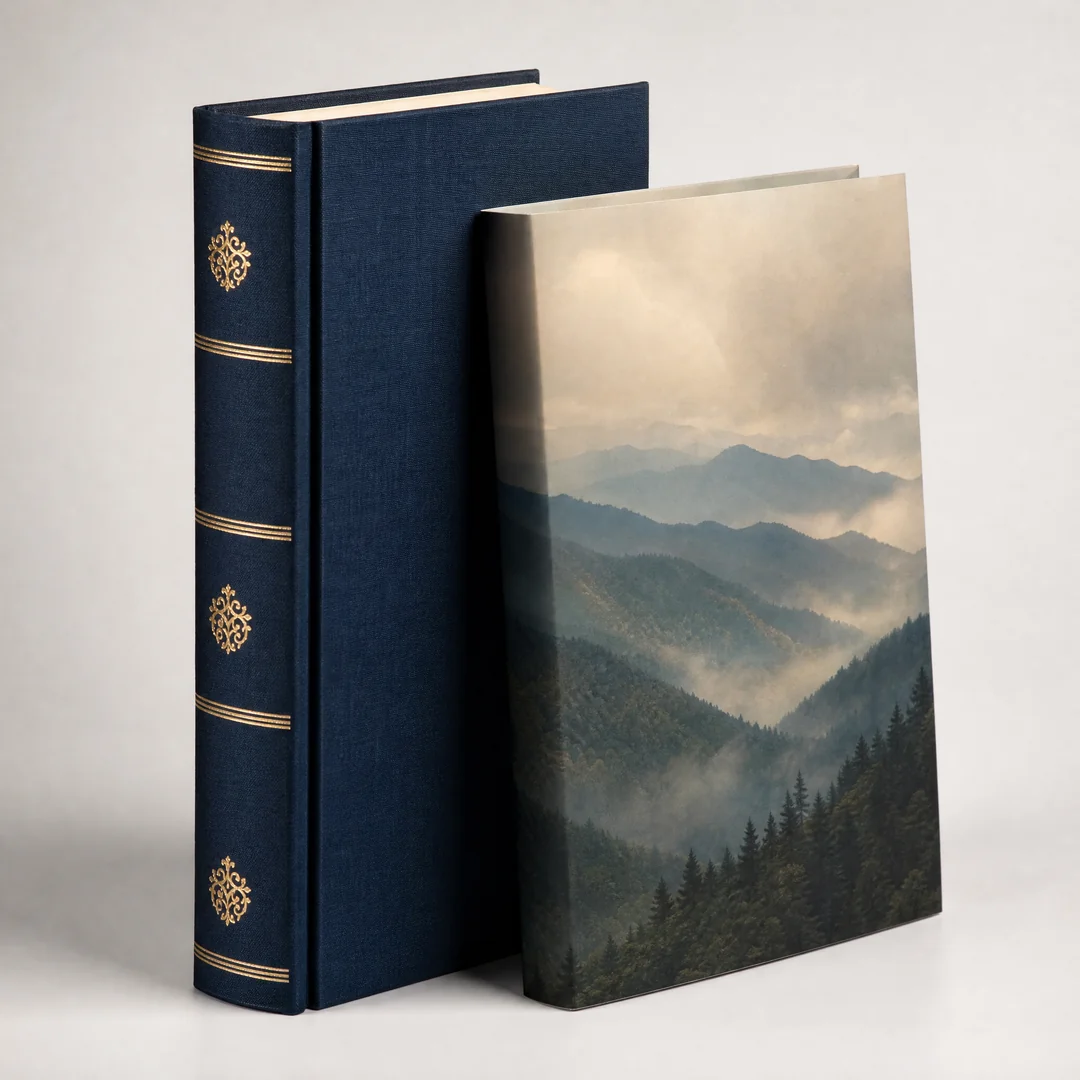
A sewn hardcover is the premium answer. Sewn signatures open flatter than glued ones, and a hollow back lets the book lie open without breaking the spine. Add a wipe-clean laminated case and it survives a decade of Sunday cooking. The trade-off is cost and weight: expect a significant step up from softcover, driven by board, case wrap, endpapers, and manual casing-in. It suits gift editions and flagship titles; compare options on the hardcover book printing page.
Surface Protection
Whatever the binding, the cover needs a film. Matte lamination hides fingerprints and grease well; gloss wipes clean but shows smudges between wipes. Soft-touch film feels luxurious and stains easily, a real risk in a kitchen. For home cooks, specify matte or gloss and skip soft-touch.
Comparing a Cookbook Printing Cost Quote
Three quotes from three cookbook printing services are only comparable if they describe the same object. Before you look at the total, walk the list below for each supplier and mark what is included, what is excluded, and what is priced as an extra.
Paper brand and weight — mill, grade, and gsm for text and cover, not just “art paper”Bleed and image handling — whether the printer checks bleed, resolution, and color profile, or prints files as suppliedProof type — digital, contract, or press proof, and whether a second round is chargedPlate and setup charges — stated separately or buried in the unit priceCover finishing — lamination type, spot UV, foil, emboss, and any minimum charge per passBinding consumables — coil diameter, wire gauge, headbands, ribbon markersPacking — shrink wrap, carton count, pallet pattern, edge protectionTrade term — FOB, CIF, or DDP, and which port or doorFreight basis — actual weight or volumetric weight, and who books the spaceDuty and tax — included, excluded, or reimbursed against documentsLead time — production days and transit days quoted separatelyPayment schedule — deposit percentage, balance trigger, and currency
A quote that says “1,000 copies, $3.10 each” without those lines is not a price, only an opening position. The supplier who itemizes is the one you can hold to a delivery date, because the scope is written down.
Shipping and Import Costs When You Print in China
With cookbook printing in China, freight is where a competitive cookbook printing cost quietly becomes an expensive landed cost. Books are dense, so they hit weight limits before they fill a container.
Sea, Air, and Express
Sea freight is the default above a few hundred copies. It is slow — typically four to seven weeks door to door depending on the lane — and cheap per kilogram. Air freight cuts that to one or two weeks at several times the cost. Express courier suits samples and short runs but becomes unreasonable past a few hundred kilograms. On a 1,000-copy cookbook, sea freight usually adds a dollar or two per copy to landed cost; air adds considerably more.
Volumetric Weight
Carriers charge whichever is greater, actual weight or volumetric weight. Cartons of books are small and heavy, so actual weight normally wins, but pallet height and carton dimensions still affect how many copies fit in a container. Reducing page count or trim size lowers both paper cost and freight — a rare double saving.
Duty, VAT, and Local Taxes
Printed books attract different treatment by destination. Many countries apply a reduced or zero rate to printed books while charging standard rates on calendars, stationery, and some promotional material. VAT or sales tax applies on import in most markets, at the destination country’s rate, not the printer’s. None of this can be quoted generically: confirm the tariff classification and current rate with a customs broker before you set a retail price.
Clearance and Importer Responsibility
Unless you buy DDP, the importer of record is you. That means providing a commercial invoice, packing list, bill of lading, and any certificate the destination requires, then paying duty and tax at clearance. Missing paperwork produces storage charges that can exceed the freight saving. The shipping and customs guide for books from China covers documents, Incoterms, and typical timelines.
Ways to Cut Cost Without Ruining the Food Photography
Cutting cookbook printing cost is mostly a design decision, not a negotiation tactic. The following moves protect image quality while removing spend that readers never notice.
Stay on a standard trim. 7×10 or 8×10 uses existing dies and standard press sheet layouts. A custom size adds cutting setup and wastes paper at the edges.Design to signature boundaries. Land on a page count that divides cleanly by the press signature, and you avoid paying for blank pages.Consolidate photo pages. Grouping images into photo signatures lets text pages print cheaper, if the run can absorb the extra plate set.Drop unnecessary spot colors. One Pantone accent is a finishing touch; four are a plate bill. Brand color can usually be built from process inks.Simplify the cover. Matte laminate plus one foil element often looks more expensive than three combined effects, at a fraction of the finishing cost.Round up the print run deliberately. Moving from 800 to 1,000 copies frequently costs little more in total and lowers unit cost, provided you can store and sell them.Plan for sea freight. Booking early enough to avoid air freight is usually the single largest saving available on an overseas order.Skip handwork unless it earns its place. Tabs and gatefolds are memorable, but each one adds a per-unit manual operation. Use them once, where they matter.
What not to cut: paper grade on photo pages, proofing on a color-critical title, and cover lamination. Those three protect the thing readers judge first — whether the food looks worth cooking.
What to Send to Get an Accurate Cookbook Printing Quote
An accurate cookbook printing quote depends on the brief, not the supplier’s mood. Send these twelve items in one message and you will get comparable numbers back, within two business days.
Trim size in inches or millimeters, with orientation
Extent: total page count, including front and back matter
Which pages are full color and which are black only
Text paper preference: gsm, coated or uncoated, matte or gloss
Cover stock and finishing: lamination type, foil, spot UV, emboss
Binding method: perfect, spiral, Wire-O, or sewn hardcover
Print quantity, plus one or two alternate quantities for comparison
Proofing level required
Packing and pallet requirements, including any retail cartons
Delivery address, port, or door, and preferred Incoterm
Target in-hand date and acceptable transit mode
Artwork status: print-ready PDF, or files still in layout
If the artwork is not final, say so. Printers can quote from a specification sheet, and knowing files are still in progress stops them from promising a schedule they cannot hold. Files should arrive with 3 mm bleed, embedded fonts, CMYK images at 300 dpi, and a defined safety margin on the binding edge; the print-ready file preparation guide lists the checks that prevent common reprint causes.
Turning a Cost Range Into a Decision
Cookbook printing cost settles once you fix five variables: trim, extent, color split, binding, and quantity. Everything else — paper brand, proofing level, packing, freight term — is a smaller adjustment on top of that base. Fix the five, ask three suppliers for the same brief, and the numbers become comparable instead of confusing.
Then decide where the money should go. For most cookbooks that means spending on paper and proofing, choosing a lay-flat binding because the book will be used in a kitchen, and saving on cover effects readers admire once and never think about again.
Ready to price your own title? Share your trim size, page count, and print run through the custom cookbook printing page and ask for a quote with two quantity break points. A specific brief gets you a specific number, and a specific number is the only one worth budgeting against.