If you’ve ever sourced printed packaging products from China, you already know the drill: contact six different factories for six different products, juggle six different email threads in mangled English, and pray that at least four of them understood your artwork specs.
But here’s the thing a lot of buyers don’t figure out until their third or fourth order — many of these products come from overlapping supply chains. A factory that prints paper tubes probably has a sister workshop that runs canvas bags. The non-woven bag guy is two industrial parks down from the manual printing house.
And once you know how these categories work, you can bundle orders, cut your unit cost by 15–30%, and deal with maybe two contacts instead of six.
This guide covers four specialty printing categories that trip up first-time buyers the most: paper tubes, canvas bags, non-woven bags, and custom manuals (instruction booklets, product guides, spec sheets). I’ll walk through what actually matters when you’re spec’ing each one, what the real MOQ and pricing ranges look like, and how to approach one-stop procurement without getting burned.
Paper Tube Printing: What You’re Actually Buying
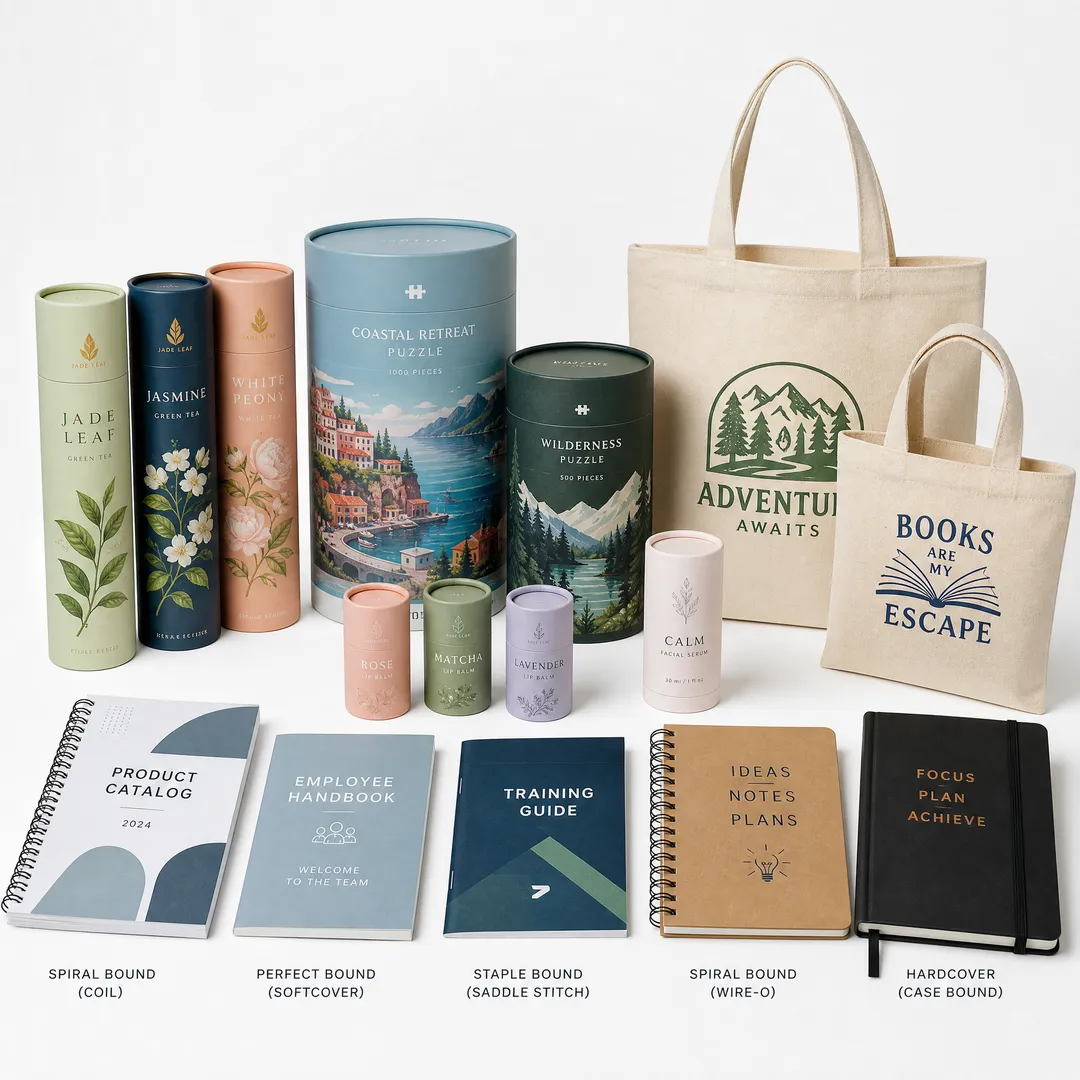
Paper tubes — also called cardboard cylinders, paper cans, or round packaging — show up everywhere. Cosmetics brands use them for perfume and serum boxes. Tea companies pack loose leaf in them. Puzzle makers ship jigsaws in them. Wine producers are increasingly ditching wooden boxes for heavyweight paper tubes. They’re rigid, printable end-to-end, and carry a sustainability story that plastic containers can’t match.
How a Paper Tube Is Built
Every paper tube has two structural layers worth caring about:
The rigid core is almost always gray board — recycled paper fiber pressed into sheets at 1.5mm, 2mm, or 2.5mm thickness. 1.5mm works for lightweight products like tea sachets or small candles. 2mm is the standard for cosmetics and most mid-weight goods. 2.5mm is what you spec when the product is heavy (wine bottles, large gift sets) or when the tube needs to survive international shipping without looking like it went through a trash compactor.
The outer wrap is where your design lives. Most Chinese factories stock these options:
C2S (coated two sides) : Smooth, glossy surface that takes full-color offset printing beautifully. The default for most premium tubes.Kraft paper : Uncoated brown paper. Big with brands pushing a “natural” or zero-waste vibe. Takes printing well but colors come out muted compared to coated stock.Colored paper : Pre-dyed stock for designs where you don’t want full-coverage printing. Cheaper and faster to produce.Textured paper (linen, leatherette, etc.): Adds a tactile element. Popular in luxury cosmetics and spirits. Costs jump about 20–40% over standard C2S.Metallic paper : Gold, silver, rose gold foil-finish stock. High-end look but scratches easily — you’ll want a matte lamination over it.
Inside the tube, factories add an inner lining if the product demands it — food-grade PET for tea and snacks, anti-static film for electronics, or just a clean white paper liner for general goods.
Diameter, Height, and Wall Specs
There’s no “standard” paper tube size because every order is custom, but here are the ranges most Chinese factories work within:
Diameter : 20mm (pencil-thin, for single lipsticks or vape cartridges) to 300mm+ (wine gift boxes, large puzzle tubes).Height : 30mm to 500mm. Beyond 500mm the tube gets wobbly and needs a thicker wall.Wall thickness : 1.5mm to 3.0mm (gray board core only). Thicker walls = heavier feel = more expensive shipping.
Bottom and lid configurations include push-in lids, screw caps (threaded paper), metal end caps, and clear plastic windows. The window option — a die-cut opening covered with PET film — is massive in the tea and confectionery space because it lets customers see the product without opening the package.
Printing Methods for Paper Tubes
This is where people mess up. Not every method works on a curved, rigid surface.
Offset (litho) printing : Your best bet for full-color, photo-quality graphics. The design is printed flat on the wrapping paper first, then laminated onto the gray board core. Supports CMYK + spot colors. MOQ typically 500–1000 units.Silk screen printing : Works directly on the tube surface. Solid colors only — great for bold logos and monochrome designs. Much cheaper than offset for simple artwork. Line thickness minimum is about 0.13mm, and text smaller than 6pt will blur.Foil stamping : Gold/silver/colored foil pressed onto the tube surface with a heated die. Used for logos, borders, and decorative accents. Adds a per-unit surcharge of $0.05–0.15.Embossing/debossing : Raised or recessed patterns pressed into the wrap. Combined with foil stamping for a luxury effect.Flexographic printing : Viable for kraft tubes with simple 1–2 color designs. Lower setup cost than offset but can’t handle gradients.
MOQ and Pricing Reality Check
The numbers factories quote on Alibaba are frequently… aspirational. Here’s what actually closes:
Order Size
Per-Unit Cost (approx.)
Notes
500–1,000
$0.80–1.50
The sweet spot for sampling a new market. Most flexible factories will take 500.
2,000–5,000
$0.40–0.80
Standard small-to-mid brand order. Unit cost drops noticeably above 3,000.
10,000–50,000
$0.20–0.45
Bulk territory. Offset printing plate costs ($80–150 per color) get amortized.
50,000+
$0.15–0.30
High-volume pricing. You’re negotiating directly with factory owners at this scale.
These numbers assume a standard 2mm wall tube with full-color offset wrap, 60–120mm diameter, 80–200mm height. Adding windows, foil stamping, metallic paper, or threaded caps all push the cost up. Food-grade inner lining adds about 10–15%.
One tip from painful experience: ask for freight quotes before you finalize tube dimensions. Tubes are hollow and eat container space. A 10% reduction in diameter can sometimes cut your shipping cost by 20% because of how they nest and stack.
Canvas Bag Printing: From Grocery Totes to Premium Retail Bags
Cotton canvas bags have been printing staples for decades, but the market shifted hard toward premiumization in the last few years. The $0.30 giveaway tote still exists, but the growth is in heavyweight, design-forward bags that people actually want to carry — which means the printing quality matters a lot more than it used to.
Material Weight: oz/yd² vs GSM
Canvas is typically quoted in ounces per square yard (oz/yd²), but Chinese factories increasingly use GSM (grams per square meter). Here’s the translation:
6oz (≈200 GSM) : Lightweight, soft drape. Fine for inexpensive promo bags but won’t survive heavy groceries.8oz (≈230 GSM) : The budget standard. Acceptable for event giveaways and trade show totes.10oz (≈290 GSM) : The workhorse. Most retail tote bags and mid-market promotional bags land here. Good balance of cost and durability.12oz (≈340 GSM) : Heavy-duty. Carries substantial weight. Visible texture. Often used for premium retail bags.14oz (≈380 GSM) : Fashion-grade. Structured, holds its shape, feels expensive. Common in boutique retail and luxury brand totes.16oz (≈450 GSM) : Basically a bag that can stop bullets. Overkill for most purposes but makes a statement.
Common Dimensions
Most Chinese canvas bag factories keep standard cutting dies for these sizes:
Flat tote (no bottom gusset, no side gusset) :
20×25cm — Small tote, good for jewelry or cosmetics
25×30cm — Compact shopping bag
30×35cm — Standard tote, the most-ordered size
35×40cm — Large tote, fits A4 documents and laptops
With bottom gusset (no side gusset) :
30×20×10cm
40×30×10cm
45×35×15cm
Custom dimensions add zero tooling cost — they just cut the fabric differently. The price difference is entirely about how much material gets used.
Printing Methods: Pick Based on Your Design, Not Your Budget
Canvas bag printing in China breaks into four main methods, and picking the wrong one will make you sad:
Screen printing ($0.30–0.70 per color per bag, MOQ 200–500): The go-to for bold logos and typography. Ink sits on top of the fabric — vibrant, opaque, and durable. Great for 1–4 solid colors. Falls apart with gradients or photographs. Each color needs its own screen (setup fee $30–60 per screen), so 4-color designs mean 4× the setup cost.
Heat transfer / DTF (Direct to Film) ($1.50–3.00 per bag, MOQ 100–300): Full-color designs printed onto a film and heat-pressed onto the bag. Handles photographs, gradients, and complex artwork that screen printing can’t. The print has a slight plastic feel on the fabric surface, though. Durability: decent but not eternal — expect fading after 20–30 washes.
Sublimation ($2.00–4.00 per bag, MOQ 100–300): Hands-down the best looking, but with a giant asterisk: it only works on polyester or poly-coated fabric. On 100% cotton canvas, the ink won’t bond. What you get is edge-to-edge, seamless color that literally becomes part of the fabric — no texture, no peeling, no fading. Some factories offer a poly-coated cotton canvas specifically for sublimation; ask about it.
Digital / DTG (Direct to Garment) ($3.00–6.00 per bag, MOQ 50–100): Inkjet-style printing directly onto the fabric. Unlimited colors, no screens, no minimums. Ideal for photo prints and short-run designer bags. The catch: slower production, and the per-unit cost doesn’t drop much at scale. Not economical above 500 units.
MOQ and Pricing
Canvas bags have some of the friendliest MOQs in the printing industry:
Order Size
Per-Unit Cost (basic 10oz, 1-color screen print)
100–300
$0.80–1.50
500–1,000
$0.50–0.90
2,000–5,000
$0.35–0.65
10,000+
$0.25–0.50
Full-color sublimation or DTG at low quantities pushes the unit cost to $4–8. Heavyweight canvas (14oz+) and custom sizing add 20–40%. Zippers, inner pockets, and magnetic snaps each add $0.20–0.50 per bag.
Non-Woven Bag Printing: Cheap, Fast, and Surprisingly Nuanced
Non-woven polypropylene (PP) bags are the unsung heroes of trade shows, grocery chains, and corporate events. They cost pennies, print easily, and come in a bewildering range of GSM weights, colors, and lamination options. If canvas is a Toyota Camry, non-woven is a Honda Civic — not glamorous, but it’ll get the job done reliably and cheaply.
Understanding GSM for Non-Woven Bags
Non-woven bags are measured strictly in GSM, and the difference between 60 GSM and 100 GSM is immediately obvious when you hold them:
60–70 GSM : Ultralight. Feels papery. Fine for single-use event bags or lightweight retail wrapping. Tends to tear at stress points if overloaded.70–80 GSM : The standard for exhibition giveaways and promotional bags. Light, functional, okay durability. Most trade show bags you’ve ever received were probably 70–80 GSM.80–100 GSM : The sweet spot. Noticeably thicker, holds 5–8kg without drama, reusable several times. This is what most supermarket chains order.100–120 GSM : Heavy-duty non-woven. Structured, rigid, durable. Often laminated for water resistance. Used for premium retail bags and corporate gift bags.
Lamination matters. Unlaminated non-woven bags have a fabric-like texture and cost less. Laminated bags (a thin gloss or matte PP film bonded to the surface) are water-resistant, look more polished, and take printing better — especially full-color designs. The lamination adds about $0.02–0.05 per bag.
Printing Methods on Non-Woven Fabric
Non-woven PP doesn’t absorb ink the way cotton does. It’s essentially plastic, which limits your options:
Screen printing ($0.10–0.40 per color per bag, MOQ 500–1,000): Still the most common method. Works great for 1–3 solid colors. Fast setup, cheap at scale. Same limitations as canvas screen printing — no gradients, no photos.
Flexographic (flexo) printing ($0.05–0.15 per bag at volume, MOQ 2,000–5,000): Think of it as a high-speed rotary version of letterpress. Uses flexible plates wrapped around cylinders. Handles up to 4–6 colors and can do simple gradients. The per-unit cost is untouchable at high volumes, but the plate setup ($150–400 per color) kills small orders. Best for runs of 10,000+ units.
Gravure printing (MOQ 5,000–10,000+): Uses engraved metal cylinders. The highest quality for non-woven bags — photorealistic detail, rich gradients, consistent color across huge runs. Cylinder costs are eye-watering ($500–1,000 per color), so this only makes sense at 50,000+ units. Used by major retail chains and FMCG brands.
Heat transfer / sublimation ($0.50–1.50 per bag, MOQ 200–500): Full-color graphics on laminated non-woven surface. Decent quality, fast turnaround, no plate costs. The print quality isn’t as crisp as gravure, but for runs under 5,000 it’s usually the best-looking option.
MOQ and Real Pricing
Non-woven bags are genuinely cheap:
Order Size
Per-Unit Cost (80 GSM, 1-color screen, standard size)
500–1,000
$0.15–0.30
2,000–5,000
$0.08–0.18
10,000–50,000
$0.05–0.10
50,000+
$0.03–0.06
Lamination, multi-color printing, heavier GSM, and custom sizes all nudge these numbers up. A laminated 100 GSM bag with full-color heat transfer might run $0.50–0.80 at 2,000 units.
Custom Manual Printing: Instruction Booklets and Product Guides
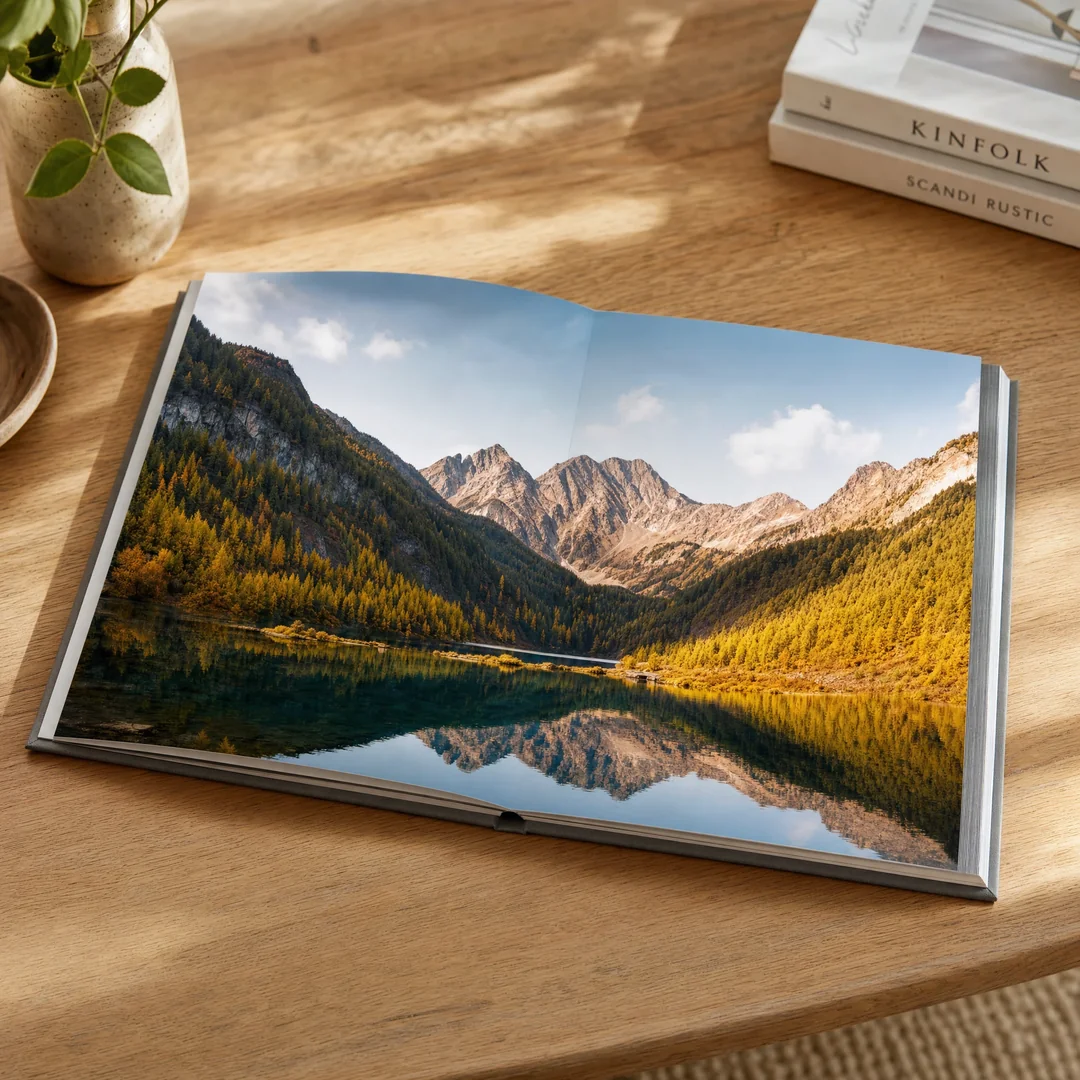
Instruction manuals, product spec sheets, assembly guides, warranty booklets — these are the printed products nobody thinks about until the very end of a product launch, at which point there’s a panic because the product is sitting in a warehouse and the manuals haven’t even been quoted.
Chinese manual printing is a mature, competitive industry, and the quality you can get now is comparable to domestic printing at 40–60% of the cost — if you specify things correctly.
Paper Stock and Page Count
The most common paper choices:
Cover : 128–200 GSM gloss or matte art paper. Heavier cover stock adds perceived quality and durability.Inner pages : 80–128 GSM. 80 GSM is thin but cost-effective for thick manuals (100+ pages). 100–105 GSM is the standard. 128 GSM gives a premium feel but adds weight.
A typical product manual is 8–32 pages. Assembly guides for furniture run 16–48 pages. Full technical spec books can hit 100+ pages.
Binding Methods
Binding isn’t an afterthought — it determines how the manual actually functions in the user’s hands:
Saddle stitch : Two or three wire staples through the spine fold. Works for 4–64 pages. Cheap, lays flat. The default choice for simple instruction sheets and thin booklets.Perfect binding : Pages glued at the spine with a wrap-around cover. Works for 28+ pages. Looks professional, stacks neatly, but doesn’t lay flat.Wire-O / spiral binding : Metal or plastic coil through punched holes. Lays completely flat, folds back on itself. Great for workshop manuals, cookbooks, and anything meant to be referenced while hands are busy. Adds $0.15–0.40 per unit.Loop stitch / singer sewn : Thread-stitched spine with a loop for hanging. Mostly used for swatch books and fabric sample manuals.
Printing: Offset vs Digital
Offset printing (MOQ 500–1,000): The go-to for runs above 500. Lower per-unit cost, consistent color, supports Pantone matching. Setup costs (plates) run $50–120 per color set. Economical above about 300–500 copies.
Digital printing (MOQ 1–500): No plates, no setup fees. Print-on-demand pricing that doesn’t drop much at scale. Great for prototypes, small batches, and manuals that get revised frequently. Per-page cost is higher than offset at volume, but you skip the plate investment.
Common Specifications
Spec
Typical Range
Finished size
A4 (210×297mm), A5 (148×210mm), B5 (176×250mm), or custom
Cover paper
128–200 GSM gloss/matte art paper
Inner paper
80–128 GSM gloss/matte art paper, offset paper, or woodfree
Binding
Saddle stitch (≤64pp), perfect bound (≥28pp), wire-O, spiral
Color
CMYK full color, or 1C/1C (black only)
MOQ
500–1,000 (offset); 50–100 (digital)
Lead time
7–15 days production + shipping
Pricing Benchmarks
For an A5 saddle-stitch manual, 16 pages + 4-page cover, full color on 128 GSM art paper:
Quantity
Per-Unit Cost
500
$0.80–1.20
1,000
$0.45–0.70
5,000
$0.20–0.35
10,000
$0.12–0.22
50,000
$0.08–0.15
Add about 30–50% for A4 size, perfect binding, or thicker paper. Wire-O binding adds a fixed surcharge regardless of quantity.
The One-Stop Procurement Playbook
Here’s the money-saving insight that most buyers miss: paper tubes, canvas bags, non-woven bags, and printed manuals often flow through the same industrial clusters. The Pearl River Delta (Shenzhen, Dongguan, Guangzhou) and the Yangtze River Delta (Shanghai, Suzhou, Wenzhou) each have dense printing ecosystems where a single trading company or factory group handles multiple product lines.
If you order paper tubes from Factory A and canvas bags from Factory B and manuals from Factory C — three separate orders, three sets of shipping, three bank transfers — you’re leaving money on the table.
Why Bundling Works
Consolidated shipping . Three small LCL (less than container load) shipments cost more than one consolidated LCL or shared FCL (full container load). A single 20ft container from Shenzhen to LA runs about $2,500–3,500; three separate LCL shipments for small volumes could easily total $800–1,200 each .Negotiating leverage . A $3,000 order gets a “thanks for your business” email. A $15,000 bundled order across four product types gets a production manager’s personal WhatsApp and priority scheduling.Single QC inspection . Instead of coordinating three separate third-party inspections, you send one inspector to one logistics hub for a single day.Consistent color management . When the same ink supplier and color calibration workflow spans your entire order, your brand’s Pantone 186C red looks identical on the paper tube, the canvas bag, and the manual cover — not three slightly different shades of “close enough.”
How to Structure a Bundled Order
Step one: find a factory or trading company that does at least two of these product categories in-house and partners with trustable subcontractors for the rest. Many print-focused trading companies in Shenzhen operate exactly this way — they own the paper tube and manual printing lines, and work with long-term bag factory partners.
Step two: send a single RFQ with all four product specs in a spreadsheet. Be explicit that you’re looking at a bundled order. Factories sharpen their pencils when they see total order value instead of four separate minimums.
Step three: negotiate a consolidated shipping arrangement before you sign off on production. Don’t wait until everything is packed and sitting in different warehouses — that’s how you end up paying for domestic China freight between factories plus an LCL consolidation fee at the port.
Step four: one pre-shipment inspection, one payment milestone schedule, one shipping date. Simpler logistics = fewer things that can go wrong.
Red Flags in One-Stop Suppliers
“We can do everything!” If a supplier claims to manufacture paper tubes, bags, manuals, and also injection molding and die-casting… they’re a pure trading company marking up subcontractors. That’s not inherently bad, but you should know what you’re paying for.Unwilling to share factory addresses . Legit one-stop operations are usually transparent about where each product gets made. Opaque chains get price-bloated fast.Charging full MOQ on every product type in a bundle . A fair supplier will let you mix products toward a combined volume discount. If your total order is 15,000 units across four categories, the per-unit pricing should reflect that total — not four separate 3,750-unit quotes.
Quick Reference: Four Product Types at a Glance
Product
Sweet-Spot MOQ
Typical Unit Cost
Best Printing Method
Lead Time (Production)
Paper Tube
500–3,000
$0.30–0.80
Offset (full color)
10–18 days
Canvas Bag
300–1,000
$0.50–1.50
Screen (1–4C)
7–14 days
Non-Woven Bag
1,000–5,000
$0.08–0.30
Screen / Flexo
5–12 days
Custom Manual
500–2,000
$0.20–0.70
Offset
7–15 days
Buying specialty printed products from China isn’t complicated once you know the vocabulary. The factories are there, the quality is competitive, and the price gap versus domestic suppliers hasn’t closed much. The part people get wrong isn’t the product specs — it’s the logistics. Bundle your categories, consolidate your shipping, and treat your supplier like a partner rather than a transactional vendor. Do those three things and you’ll pay 20–40% less than the buyer who sends four separate RFQs to four separate Alibaba listings.
Related Packaging & Sourcing Guides
Complete Guide to Custom Packaging from China — Everything you need to know about sourcing custom packaging, from materials to logisticsCustom Packaging Box Styles & Finishes: The Complete MOQ Guide — Rigid boxes, folding cartons, finishes, and everything betweenPackaging Printing Costs & Logistics from China: MOQ, Freight, RFQ Guide — Real pricing, freight math, and how to structure your RFQ wiselyPackaging Color Management & QC from China: Pantone, G7, Delta E Guide — How to ensure your brand colors come out right across every order