Your Story Deserves More Than a Template — Here’s How to Print It Right
If you are holding a manuscript — a stack of poems, a memoir you spent years writing, or a family history you pieced together from old letters and faded photographs — you already know the weight of what is in your hands. This is not a mass-market paperback you are printing. It is personal. It matters how the paper feels. It matters whether the binding holds after fifty readings. And it matters whether your great-grandchildren can pick it up in thirty years and still turn the pages.
At EcoPrinting, we have printed thousands of poetry collections, memoirs, and family history books for self-publishers around the world. Every project teaches us something new. And after years of doing this work, one thing has become obvious: each of these three genres needs fundamentally different treatment at the printing stage. A poetry book is not a memoir. A memoir is not a family history. The paper, the binding, the layout, the image handling — they all shift depending on what you are creating.
This guide walks you through exactly what to consider for each genre, plus the universal factors that affect every self-published book: sizing, paper selection, binding, cost, and the logistical challenges of self-publishing. By the end, you will have a clear picture of what your book should look like — and how to get it printed without making expensive mistakes.
Poetry Book Printing Essentials
Layout, Spacing & the Poetry Page
Poetry lives in the white space. Unlike a novel, where you can pack text densely and let the reader fall into a narrative rhythm, a poem breathes on the page. Line breaks are not decorative — they are part of the meaning. So when you print a poetry collection, the typography and spacing have to be deliberate.
The most common mistake I see? Poets sending in manuscripts formatted like a Microsoft Word document — single-spaced, flush left, no breathing room. That works for business reports. It kills poetry. You want generous margins, especially on the inside gutter so the binding does not swallow your line endings. You want consistent line spacing that gives each poem room to sit on the page. And you want a typeface that feels literary without being decorative — something like Garamond, Caslon, or Baskerville. Save the sans-serif fonts for subway signs.
Professional poetry book printers understand that the page is part of the poem. When you work with a printer who gets this, they will not cram your verses into a standard novel template. They will respect the white space.
Paper Choices That Honor the Poem
Poetry collections are usually text-only or text-heavy with minimal images. That means you do not need glossy coated paper — in fact, you should avoid it. Glossy paper creates glare under reading lamps and feels slick and commercial. Poetry calls for something tactile.
Uncoated woodfree paper — what the industry calls offset paper — is the standard choice for poetry books. It has a natural, slightly textured surface that feels good between the fingers. It absorbs ink cleanly without bleeding, and it ages well without yellowing too quickly. Cream or natural-white shades are particularly popular with poets because they soften the contrast between black ink and white paper, making long reading sessions easier on the eyes.
For premium editions, some poets choose a heavier uncoated stock — 100 gsm or 120 gsm — which gives the book more physical presence and prevents show-through on thinner pages. If your collection includes occasional artwork or photography inserts, those pages can be printed on a coated matte stock and bound in as signatures.
Binding & Format Options for Poetry Collections
Most self-published poetry books fall into one of two formats: the slim paperback chapbook (20-48 pages) or the full-length perfect-bound collection (60-120 pages). Chapbooks often use saddle-stitch binding — two staples through the spine — which is cost-effective for low page counts but limits you to about 48 pages maximum. For anything longer, perfect binding (glued spine) is the standard.
Hardcover poetry books are less common but can be stunning. A cloth-bound hardcover with a dust jacket and a ribbon marker turns a poetry collection into a gift object — the kind of book people keep on a nightstand, not a shelf. The trade-off is cost. Hardcover runs typically start at 100-200 copies to make the unit economics work.
Standard poetry book sizes lean toward the intimate. A 5.5″ × 8.5″ or 5″ × 8″ trim size is common — small enough to slip into a bag, large enough for the poems to breathe. Some experimental poets go for square formats like 6″ × 6″ or 8″ × 8″, which create a completely different reading experience but require careful layout work to avoid awkward line breaks.
Memoir & Biography Book Printing
Handling Photographs in Memoirs
Memoirs are different from poetry in one critical way: they almost always include photographs. And photographs change everything about how a book is printed.
The first decision is where to put the photos. The traditional approach is a photo insert — a block of 8-16 pages printed on glossy or matte coated stock, bound into the center of the book. This keeps the photo pages visually distinct from the text pages and allows you to use different paper for each section. The alternative is to scatter photos throughout the text, which looks more integrated but requires the entire book to be printed on a photo-friendly paper stock — a much more expensive option.
Image resolution is where most first-time memoir authors run into trouble. That old family photo scanned at 72 dpi from Facebook? It will look terrible in print. You need 300 dpi at the actual print size. A 4″ × 6″ photo at 300 dpi requires a source image of at least 1200 × 1800 pixels. If you are working with archival photos, scan them at 600 dpi or higher — you can always downsample, but you cannot recover detail that was never captured.
For black-and-white photos, ask your printer about duotone printing. Instead of printing grayscale images with black ink only, duotone uses two ink colors — typically black plus a warm tone — to create richer, more dimensional images. It costs more than standard black-and-white but less than full-color, and the results can be beautiful.
Hardcover vs Softcover for Personal Stories
A memoir is often a book someone will keep for life. It is given to children, grandchildren, close friends. For that reason, hardcover is the dominant format for memoirs — and I would argue it is worth the investment.
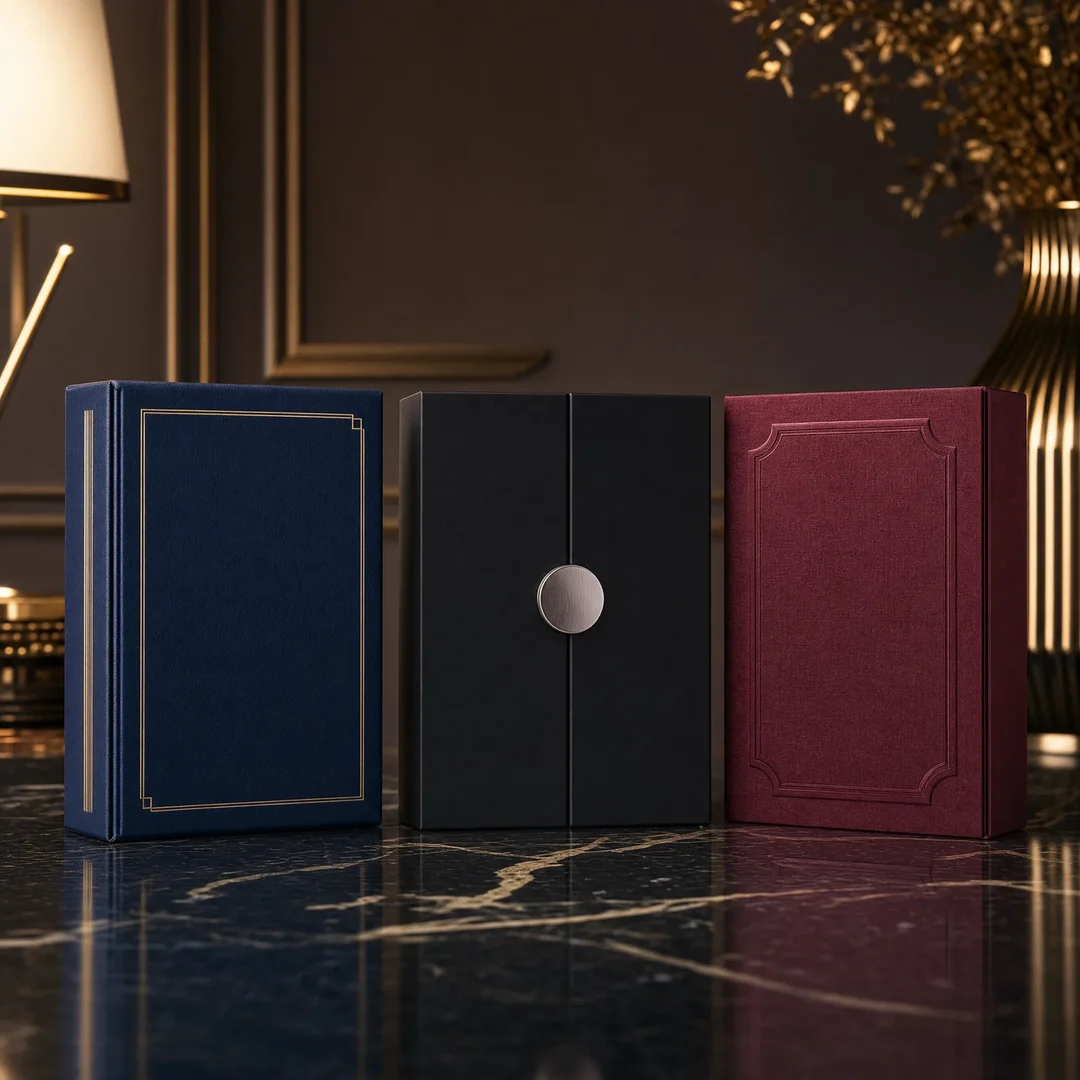
A case-bound hardcover with a printed cover (no dust jacket) is practical and durable. You can add a dust jacket for a more traditional bookstore look, but dust jackets tear. For a book meant to be handled and passed around, a case-bound design where the cover art is printed directly on the board is more resilient. Linen or cloth covers with foil stamping for the title are another premium option that ages beautifully.
Softcover memoirs work too — especially for authors who plan to sell at events, keep the price accessible, or print larger quantities. A matte-laminated softcover with French flaps (folded-in edges) adds a touch of elegance without the hardcover price tag.
Telling a Visual Story Through Design
Beyond photos, memoirs benefit from thoughtful interior design. Chapter openers with small decorative elements — a filigree, a rule line, a drop cap — signal to the reader that this is a crafted object, not a word-processed document. Pull quotes can highlight key passages and break up long text sections. Even small details like running headers with the chapter title on one page and the book title on the facing page add a professional polish that readers notice, even if subconsciously.
Work with a designer who has experience in book layout specifically, not just graphic design. Web designers and book designers think differently about margins, type sizing, and page flow. A book interior is a specialized piece of design work, and it is worth getting right.
Family History Book Printing
Genealogy Formats & Family Tree Layouts
Family history books present unique layout challenges. A standard narrative format works fine for the storytelling sections, but family trees, pedigree charts, and descendant lists do not fit neatly into a 6″ × 9″ portrait page. This is why family history books often use larger formats — 8.5″ × 11″ or even 8.5″ × 8.5″ square — to accommodate wide charts and multi-column layouts.
For family tree diagrams, consider fold-out pages. A fold-out page is printed on a wider sheet that is then folded to fit within the book’s trim size, unfolding to reveal a full-width chart. Fold-outs add cost and complexity to the binding process, but for a complex genealogy spanning six or seven generations, they are often the only way to present the information legibly.
Some families opt for a landscape-format book — 11″ × 8.5″ instead of 8.5″ × 11″ — specifically because family tree charts expand horizontally. This is an underused format that can work brilliantly for genealogy projects, though it does require custom binding work.
Old Photo Scanning & Restoration
Family history books almost always include historical photographs — and those photos are rarely in perfect condition. Faded, scratched, creased, torn. Before you send them to the printer, they need scanning and restoration.
Scan at a minimum of 600 dpi in TIFF format. JPEG compression introduces artifacts that become visible in print, especially in areas of subtle tonal gradation like faces and skies. TIFF preserves all the detail. Once scanned, photo restoration software — or a professional retoucher — can remove scratches, adjust contrast, and even rebuild missing sections of damaged prints.
One practical tip: label your photo files systematically before you start layout. A naming convention like “Smith-John-wedding-1942.tiff” is infinitely better than “IMG_4729.jpg” when you are trying to find the right image six months into a family history project that spans hundreds of photos.
Archival-Quality Materials for Generations
This is where family history books diverge most from other genres. A poetry collection might be read for a decade. A memoir might last a lifetime. But a family history book? It needs to survive for generations — literally.
Acid-free paper is non-negotiable for family history books. Standard wood-pulp paper contains lignin and acids that cause pages to yellow, become brittle, and eventually disintegrate — a process that accelerates in humid environments. Acid-free paper, sometimes called archival paper, is manufactured without these reactive compounds. It stays flexible and bright for a century or more.
Pair acid-free paper with sewn binding rather than perfect binding. In a perfect-bound book, the pages are held together by glue. Glue dries out, cracks, and eventually fails — I have seen perfect-bound books from the 1990s where pages are already falling out. Sewn binding — where pages are stitched together in signatures before the cover is attached — creates a book that can last for hundreds of years with proper care. Sewn hardcover with acid-free paper is the gold standard for heirloom-quality family history books.
For the cover, look at cloth or bonded leather with foil stamping. It resists wear, feels substantial, and conveys permanence in a way that a glossy paperback cover never will.
Sizes, Paper & Binding Options
Popular Book Sizes by Genre
Book size is one of those decisions that feels minor until you see the printed result. The wrong size makes a poetry collection feel like a user manual or a memoir feel like a cheap paperback. Here is a quick reference for what works in each genre:
Genre
Common Trim Sizes (inches)
Best For
Poetry
5″ × 8″, 5.5″ × 8.5″, 6″ × 9″
Intimate feel, easy to hold, classic proportions
Poetry (experimental)
6″ × 6″, 8″ × 8″ (square)
Visual poetry, mixed-media collections
Memoir / Biography
5.5″ × 8.5″, 6″ × 9″
Standard trade paperback size, widely accepted
Memoir (photo-heavy)
7″ × 10″, 8″ × 10″
Larger photos, coffee-table feel
Family History
8.5″ × 11″, 8.5″ × 8.5″
Genealogy charts, large format, maximized legibility
Family History (landscape)
11″ × 8.5″
Wide family trees, horizontal layouts
Paper Selection Guide
Paper choice affects everything: how the book feels in the hand, how text and images look, how long the book lasts, and how much it costs. Here is what I recommend for each genre:
For poetry books: Uncoated woodfree offset paper, 80-100 gsm, in cream or natural-white. Avoid bright-white — it creates harsh contrast that tires the eyes. If you print on cream paper at 100 gsm, your poetry book will feel substantial even at 80 pages.
For memoirs: The text pages can use the same uncoated stock as poetry — 80-100 gsm. But if you have photo inserts or scattered images throughout, those pages need coated paper: matte coated at 128-157 gsm works beautifully. Glossy coated is fine for photo inserts but can feel too commercial for a personal memoir.
For family history books: Acid-free uncoated paper, 100-120 gsm minimum, with sewn binding. If the book includes color photo sections, print those signatures on acid-free coated matte stock. Budget more for paper here — this is not the place to save a few dollars per copy.
Across all three genres, paper weight matters for another reason: show-through. When you can see text from the reverse side of the page bleeding through, reading becomes frustrating. Heavier paper eliminates this. As a rule of thumb, 80 gsm is the floor for text-only books. Below that, show-through becomes a real problem.
Binding Methods Compared
Here is a straightforward comparison of the binding methods relevant to personal and literary book printing:
Binding
Best For
Max Pages
Durability
Cost
Saddle Stitch
Chapbooks, short poetry (≤48pp)
~48
Low
$
Perfect Binding
Poetry collections, memoirs, softcover
~400
Medium
$$
Sewn Perfect Binding
Longer poetry, memoir, family history
~600
High
$$$
Case-Bound Hardcover
Premium memoir, family history, gifts
~800
Very High
$$$$
Wire-O / Spiral
Workbooks, journals (not recommended for literary)
~300
Medium
$$
For family history books that are meant to last multiple generations, sewn hardcover is the only binding I would personally recommend. For poetry and memoir, sewn perfect binding offers an excellent middle ground — better durability than standard perfect binding without the full cost of hardcover.
Cost & Self-Publishing Challenges
What Drives Your Printing Cost
If you have never printed a book before, the pricing can feel opaque. Let me break down the variables that actually move the needle:
Quantity is the biggest lever. Printing 50 copies versus 500 copies changes the unit cost dramatically because the setup costs — plate-making for offset, machine calibration, prepress — are spread across more units. A 100-page poetry book might cost $6-8 per copy at 50 units vs. $2-3 per copy at 500 units. The total spend goes up, but the per-book cost drops sharply.
Color pages. Black-and-white interior pages are printed in one pass with one ink. Full-color pages require four passes (CMYK) and higher-quality paper. A book with 20 color photo pages costs significantly more than the same book printed entirely in black-and-white — sometimes 2-3x more, depending on the split between color and mono sections.
Binding. Hardcover costs 30-50% more than softcover at the same page count. Sewn binding adds another layer of cost. Special cover treatments — foil stamping, embossing, dust jackets — add incremental costs per unit.
Paper weight and type. Acid-free archival paper costs more than standard offset paper. Heavier paper (120 gsm vs. 80 gsm) increases both the material cost and the shipping weight. Special papers like textured laid stock or cotton-content paper for poetry editions carry premium prices.
Shipping. Books are heavy. A single hardcover memoir can weigh 1-2 pounds. Fifty copies shipped internationally from China to the US or Europe can cost hundreds of dollars in freight. Factor shipping into your budget from the start — it is not an afterthought.
Short-Run Printing: The 50-500 Copy Sweet Spot
Most self-publishers in poetry, memoir, and family history are not printing thousands of copies. You are printing for yourself, your family, your community, and maybe a small commercial release. That 50-500 copy range is where the math works best for overseas printing from China — where you get the unit economics of offset printing without committing to a warehouse full of books.
Digital printing is an option for runs under 100 copies. It eliminates plate costs and has faster turnaround, but the per-unit cost stays high and you sacrifice some quality — particularly in color consistency and paper options. Offset printing starts to beat digital around the 200-300 copy mark, and by 500 copies the difference is substantial.
My practical advice: if you need fewer than 100 copies and you are not picky about paper and binding options, digital is fine. If you want archival paper, sewn binding, foil stamping, or any kind of premium finish — or if you need more than 200 copies — offset printing from China is almost certainly the better deal.
ISBN, Copyright & Distribution
Printing the book is one thing. Getting it into the world is another. Here are the three logistical hurdles every self-publisher faces:
ISBN. You need an ISBN if you plan to sell your book through retailers or list it in library catalogs. In most countries, ISBNs are purchased through a national agency — Bowker in the US, Nielsen in the UK. Buy your own ISBN rather than using a free one from a platform, because the ISBN owner controls the book’s metadata. If you do not own your ISBN, you do not fully own your book’s identity. A family history book given only to relatives probably does not need an ISBN. A memoir you plan to sell on Amazon definitely does.
Copyright. In most countries, your work is automatically copyrighted the moment you write it. But registering that copyright with your national copyright office gives you legal protection if someone infringes. It is a small fee and a simple form — worth doing before you send files to print.
Distribution. If you want your book available on Amazon, Barnes & Noble, or through independent bookstores, you need a distribution strategy. Print-on-demand through KDP or IngramSpark is the simplest path — but the print quality is not the same as offset. Some authors take a hybrid approach: offset-print a batch for personal copies, events, and direct sales, while also listing a POD version for online retail. This works well but requires managing two separate ISBNs and two production workflows.
Quality Control When Printing Overseas
Printing a book in China through a service like EcoPrinting gives you access to high-quality offset printing at prices that are genuinely hard to match domestically. But you need to manage the process correctly.
Always request a printed proof before the full production run. A digital proof (PDF review) catches layout errors. A physical proof — an actual printed copy shipped to you — catches color shifts, paper texture issues, and binding problems that no screen can show you. Yes, it adds a week or two to the timeline. It is still worth it every single time.
Communicate your specifications clearly. If you want cream paper, say so. If you want the photos printed at a specific contrast level, say so. Do not assume the printer will interpret your intentions correctly. The more specific you are, the closer the result will be to what you imagined.
And finally: work with a printer who specializes in books, not general commercial printing. Book printing is a craft with its own standards, tolerances, and best practices. A printer who mostly does brochures and business cards will not understand why a 1mm spine misalignment matters or why acid-free paper is worth the extra cost. Find a book printer. Your book deserves it.