Faith in Every Page
Most book printers can handle a paperback novel. But hand them a stack of 30gsm India paper and ask them to Smyth-sew it into a genuine leather cover with gilt edges and Yapp overhang — and suddenly you’ll find out who actually knows what they’re doing. Bible printing is a different league altogether. The paper behaves like tissue. The binding has to survive decades of daily use. And the finishing details aren’t just decorative — they’re part of what makes a Bible feel like a Bible.
If you’re a publisher, ministry, or church organization looking into bible printing china options, you’ve probably already discovered that domestic quotes come with sticker shock. A leather-bound, gilt-edged, Smyth-sewn Bible printed locally can cost several times what a Chinese printer would charge for the same specification — and honestly, the quality gap isn’t what most people expect it to be. China is home to the world’s largest Bible printing facility, and the country’s book manufacturers have spent decades perfecting the ultra-thin paper handling, precision binding, and artisanal finishing techniques that religious books demand.
At EcoPrinting, we’ve seen firsthand how the right combination of paper, binding, and finishing can turn a printed book into something people cherish for a lifetime. This guide walks through every specification that matters when printing Bibles, prayer books, and religious books — from paper weights and leather grades to edge gilding and minimum order quantities. Whether you’re planning a first print run or refining an existing product, you’ll find the details here that most printing guides skip.
Bible Paper Demystified
What makes Bible paper different from regular book paper?
Bible paper — also called India paper or scripture paper — is not just “thin paper.” It’s an engineered material. Standard book paper runs around 80–100gsm. Bible paper sits in the 28–55gsm range, with the most common weights between 30–40gsm for traditional Bibles. At those weights, a typical sheet starts approaching the thickness of tissue paper — yet it has to hold black ink on both sides without the text from the reverse bleeding through. That’s the real engineering challenge: opacity at minimal thickness.
Manufacturers achieve this by adding titanium dioxide and other mineral fillers during paper production. These fillers scatter light, preventing show-through even when the sheet is barely thicker than a human hair. The paper is also acid-free by design — lignin, the compound in wood pulp that causes paper to yellow and turn brittle over time, is chemically removed. The result is a sheet that stays white, flexible, and strong for decades.
What paper weights should you choose?
Paper weight is the single biggest decision that affects everything else: how thick the spine is, how readable the text looks, and how the finished book feels in the hand. Here’s a practical breakdown based on what works for different types of religious books:
For compact and pocket Bibles, 28–33gsm is the traditional choice. At this weight, a 1,200-page Bible can stay under an inch thick. The paper feels delicate — almost like onion skin — but top-quality 30gsm India paper is surprisingly tough. The trade-off is that show-through is more noticeable, especially under bright reading lights. For personal and standard-size Bibles that see daily use, stepping up to 35–40gsm makes a real difference. The pages feel more substantial, highlighting bleeds through less, and the overall durability improves noticeably.
For prayer books, hymnals, and religious texts that involve shorter page counts, 50–70gsm opaque paper is often a better call than India paper. You don’t need the extreme thinness for a 200-page prayer book, and a slightly heavier sheet gives you cleaner print quality with less show-through — which matters when the text is meant for liturgical reading. For journaling Bibles and study editions where readers will write notes, highlight passages, or use colored pencils, 38–45gsm is the sweet spot. Anything lighter and the paper will buckle from moisture and bleed through to the next page.
Leather Covers & Yapp Edges
Genuine leather, bonded leather, or PU — which should you choose?
Walk into any Christian bookstore and you’ll see three tiers of Bible covers. The entry-level shelf is dominated by PU leather (polyurethane) — also called imitation leather or faux leather. It’s synthetic, affordable, and looks decent when new, but it doesn’t develop a patina and tends to crack at the hinge after a few years of heavy use. For a budget-friendly congregational Bible or mass distribution project, PU covers keep costs manageable while still delivering a leather-like appearance.
Bonded leather sits in the middle. It’s made from leather scraps and fibers that are ground down, mixed with a binding agent, and pressed into sheets with an embossed grain pattern. Bonded leather feels closer to the real thing than PU, and it’s widely used in mid-range Bibles. The downside is durability — bonded leather can delaminate over time, especially along the spine where the book flexes most.
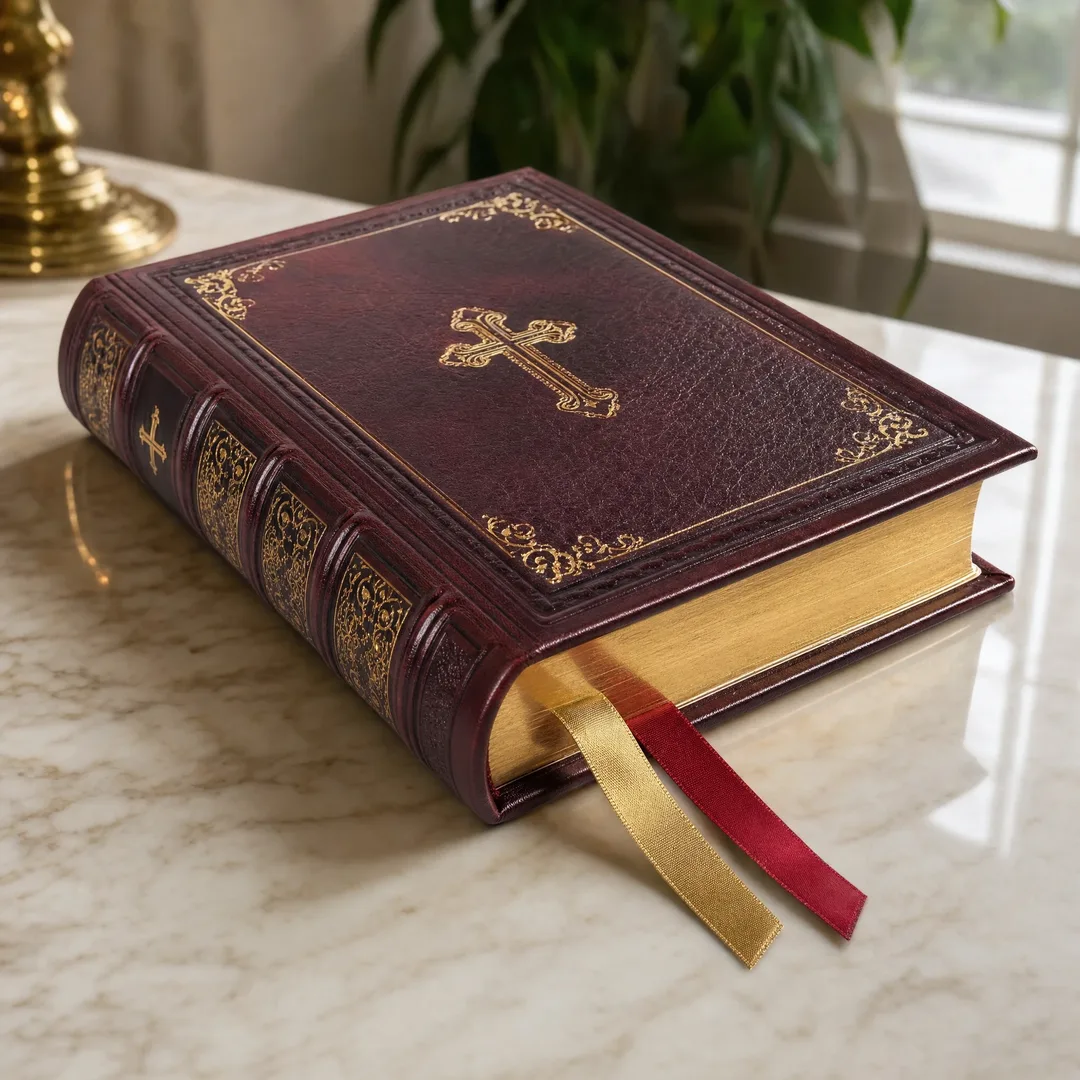
Genuine leather is the premium choice, and it comes in grades. Calfskin and goatskin are the gold standards in Bible binding — extremely flexible, durable, and with a natural grain that feels supple in the hand. Goatskin, in particular, is prized for its combination of softness and tensile strength. A genuine leather Bible, properly Smyth-sewn with a leather-lined edge binding, can easily last 30–50 years of daily use. When you’re printing a Bible that someone will read every morning for decades, genuine leather is not an extravagance — it’s the right material for the job.
What are Yapp edges and why do they matter?
If you’ve ever held a premium leather Bible and noticed that the cover extends slightly past the page edges, that’s a Yapp edge. Named after William Yapp, a 19th-century London bookbinder who popularized the design, Yapp edges serve a practical purpose: the leather overhang shields the delicate page edges from dust, moisture, and wear when the Bible is closed and carried in a bag or pocket. There are three variants. Standard Yapp extends about 3/8 inch beyond the text block — this is what most commercial leather Bibles use. Semi-full Yapp extends further, around 5/8 inch, offering more protection. Full Yapp covers the entire text block when folded over, making it the most protective option and a popular choice for pocket Bibles that get carried daily. At EcoPrinting, we can spec Yapp edges at any level on leather-bound religious books — it’s a small detail that changes the entire feel of the finished product.
Binding That Lasts a Lifetime
Smyth sewing: the gold standard for Bible binding
If you remember one technical term from this guide, make it Smyth sewing. Named after the Smyth manufacturing company that perfected the machine, Smyth-sewn binding involves stitching folded signatures (groups of pages) together with durable thread through the fold line. Each signature is sewn to its neighbor, and the entire book block is then reinforced with glue and fabric backing at the spine before being cased into the cover.
Why does this matter so much for Bibles? Two reasons. First, a Smyth-sewn Bible lays flat when open — you can set it on a desk or lectern and it stays open without the pages flipping. If you’ve ever tried preaching from a glued Bible that keeps snapping shut, you understand the difference immediately. Second, Smyth sewing is dramatically more durable than perfect binding (glue-only). A glued Bible’s pages will eventually loosen and fall out as the adhesive dries and cracks over years of use. A sewn Bible’s pages stay locked in place because the thread provides mechanical strength that adhesive alone can’t match.
For hardcover Bibles and leather-bound editions, Smyth sewing is the baseline we recommend at EcoPrinting. The only scenario where glued binding makes sense for religious books is ultra-budget mass distribution — and even then, the long-term durability trade-off is real.
Rounded spine vs. square spine
Most hardcover Bibles use a rounded spine. The rounding process — physically hammering or pressing the spine into a convex curve — distributes stress across the binding and makes the book open more naturally. A square spine (flat back) is simpler to produce and common in thinner books, but for a Bible with 800+ pages, rounding is worth the extra production step. The book simply handles better.
Case binding and flexi-cover options
Case binding — where the book block is glued into a rigid cover made from board wrapped in cloth, printed paper, or leather — is the standard hardcover construction. For religious books that don’t need the formality of leather, a printed paper case (PPC) hardcover with a dust jacket is an attractive, cost-effective alternative. Flexi-cover Bibles (also called flex cover or softcover leather) use a thinner, more pliable board or a semi-rigid material that gives the cover flexibility without sacrificing structure. They’re lighter than full hardcovers and popular for personal Bibles carried to church services.
Gold Edges, Ribbons & the Details That Matter
Gilt edges: gold, silver, and red-under-gold explained
That shimmering gold edge on a premium Bible isn’t paint. It’s a thin metallic foil — typically gold or silver — that’s applied to the trimmed page edges under heat and pressure. The edges are first sanded smooth, then coated with a primer that helps the foil adhere, and finally the foil is pressed on. The result is a reflective edge that protects the paper from dust and moisture while giving the Bible its characteristic premium look.
The most common options are gold (warm, classic), silver (cooler, modern), and red-under-gold — a technique where a layer of red dye is applied first, followed by gold foil. The red peeks through subtly along the edges and becomes more visible when the pages are fanned, creating a distinctive two-tone effect that’s especially popular in European Bible editions. Gold edges are the traditional choice for most Christian Bibles. Silver is often preferred for Jewish prayer books and some contemporary designs. Red-under-gold signals a higher-end product and tends to be specified for deluxe gift editions and commemorative Bibles.
Ribbon markers: simple but essential
Ribbon markers — those thin fabric strips attached to the spine that you use to keep your place — might seem like a minor detail, but they’re one of those things you really miss when they’re not there. Most Bibles come with one or two ribbons. Premium editions often have three, which lets the reader mark the Old Testament reading, the New Testament reading, and a favorite passage simultaneously. The ribbons are typically polyester satin in standard colors (black, red, gold, white, navy), though custom colors are available for branded church editions. When specifying ribbons for your Bible printing project, pay attention to the length: ribbons should extend at least 1.5–2 inches past the bottom page edge so they’re easy to grab without pulling the book open awkwardly.
Thumb indexing: a practical upgrade
Thumb indexing — also called tab indexing or cut-in indexing — involves cutting semi-circular notches into the fore-edge of the book, with printed tabs marking each book of the Bible. It’s a labor-intensive finishing process that adds cost but dramatically improves usability, especially for study Bibles and pew Bibles that people reference frequently. If your target audience includes pastors, Sunday school teachers, or anyone who flips between books of the Bible regularly, thumb indexing is worth budgeting for.
Two-color printing and red-letter editions
Most Bibles are printed in black ink only. But two-color printing — black text with specific passages in red — is a defining feature of red-letter editions, where the words of Christ appear in red ink throughout the New Testament. Executing this on ultra-thin Bible paper requires precise registration (alignment) between the two color plates. Even a millimeter of misalignment creates a blurry ghost effect that’s immediately visible on such thin stock. Printers that specialize in Bible production have the press setup and operator experience to get this right consistently — it’s one more reason to choose a manufacturer with proven religious book experience rather than a general commercial printer.
Zipper closures and protective cases
Zipper Bible cases — where a zipper runs around three sides of the cover, enclosing the entire book — are popular for carry-around Bibles, especially for teens and young adults. The zipper protects the page edges from getting bent or dirty in a backpack or purse. Zipper closures add to the production cost and require a slightly wider cover margin to accommodate the zipper track, but they’re a high-perceived-value feature for the consumer market.
Bible Sizes & Page Layouts
Standard Bible format sizes
Bible sizes are generally described by their intended use rather than precise trim dimensions — though here are the approximate measurements that correspond to each category. Compact or pocket Bibles run roughly 4.5 × 6.5 inches, small enough to fit in a jacket pocket or small purse. Personal size Bibles are typically 5.5 × 8.5 inches — the most popular format for daily reading and carrying to church. Standard Bibles come in at 6 × 9 inches, offering a larger typeface and more comfortable reading experience. Large print editions run 6.5 × 9.5 inches or larger, with 10–12 point type that’s accessible for readers with vision challenges. Pulpit or giant print Bibles are the largest format at 7 × 10 inches and up, designed to sit open on a lectern rather than be carried around.
Prayer book and hymnal sizes
Prayer books don’t need to accommodate thousands of pages of scripture, so their trim sizes are more flexible. Common prayer book dimensions range from 4 × 6 inches (a true pocket format) to 5.5 × 8.5 inches (a standard book size that matches many Bible editions). Hymnals are larger — typically 6 × 9 inches or 7 × 10 inches — because they need to be readable by multiple people at once when held or set on a pew rack. The larger format also accommodates musical notation, which requires more horizontal space than prose text.
Print Runs and What to Expect
How many Bibles should you order?
Order quantity is one of the first questions any printer will ask, and the answer changes based on your use case. For self-publishers or a single church congregation ordering custom editions, 300–500 copies is typically the minimum practical run. At this volume, you can get Smyth-sewn binding, leather or PU covers, and customized stamping — but the per-unit cost will be higher because the setup costs (plate making, foil die creation, machine setup time) are spread across fewer copies.
For a mid-size publisher or ministry ordering 1,000–3,000 copies, per-unit costs drop significantly. This is the volume range where most custom religious book projects land. You get full access to premium options — genuine leather, gold edges, two-color printing — at a unit price that makes sense for retail distribution or large-scale ministry use.
At 5,000 copies and above, you’re in publishing-volume territory. The economies of scale really kick in here, especially for paper and binding costs. Large publishers that order in the tens of thousands can achieve per-unit prices that are a fraction of what a small-run project costs. This is also where web printing (reel-fed, as opposed to sheet-fed offset) becomes an option for projects on 30–50gsm Bible paper, enabling even greater efficiency.
Can you print a single Bible on demand?
Print-on-demand (POD) for Bibles is technically possible but comes with major limitations. POD platforms are designed for standard book papers (60gsm minimum) and can’t handle 30gsm India paper. They also don’t offer Smyth sewing, gilt edges, genuine leather covers, or most of the other specialty features that define a quality Bible. For a one-off prototype or a pre-production sample, POD can work for testing layout and typography on standard paper. But for the actual product, traditional offset printing at a specialized facility is the only way to achieve true Bible specifications.
Getting Your Order Right
Why Bible printing experience matters
Bible printing isn’t something you want to trust to a printer who’s never handled India paper before. The thin stock requires different press tension settings, different folding machine adjustments, and different gathering and sewing techniques compared to standard book paper. Printers without religious book experience will struggle with paper jams, misregistration, and binding failures — problems that multiply across a production run and lead to rejected copies, wasted material, and delayed delivery.
At EcoPrinting, we’ve worked with enough religious publishers and ministry organizations to know the difference between a Bible that looks good in a product photo and one that holds up to daily use for years. We stock the right papers, we run the right equipment, and we’ve trained our bindery teams on the specific techniques that Smyth-sewn, leather-bound, gilt-edged books require.
What to prepare before requesting a quote
When you’re ready to get pricing for your Bible or religious book printing project, having the following details ready will get you an accurate quote faster. Know your trim size — not a vague “small Bible” but the actual dimensions in inches or millimeters. Know your page count — an exact number, not a range. Specify your paper weight and type — “35gsm India paper, off-white shade” is infinitely more useful than “thin Bible paper.” Be clear about the cover material — genuine leather, bonded leather, PU, or hardcover with dust jacket. List your finishing requirements — gold edges, ribbon marker quantity and colors, thumb indexing, red-letter printing, foil stamping on the cover and spine, and whether you want Yapp edges. Finally, state your order quantity and target delivery date. With those details, a specialized printer can give you a firm quote with realistic production timelines.
Production and shipping timelines
A typical Bible printing project with Smyth sewing, leather binding, and gilt edges takes 4–6 weeks of production time, plus shipping. Sea freight from China to the US or Europe adds another 3–5 weeks depending on the destination port. Air freight can compress the shipping window to 5–10 days but at a significantly higher cost. If you’re working toward a specific launch date, conference, or holiday season, start the process at least 3–4 months in advance. Rush production is sometimes available, but tight deadlines on complex book specifications increase the risk of quality compromises. Good Bible printing rewards patience.
Making It Yours
Customization that builds your brand
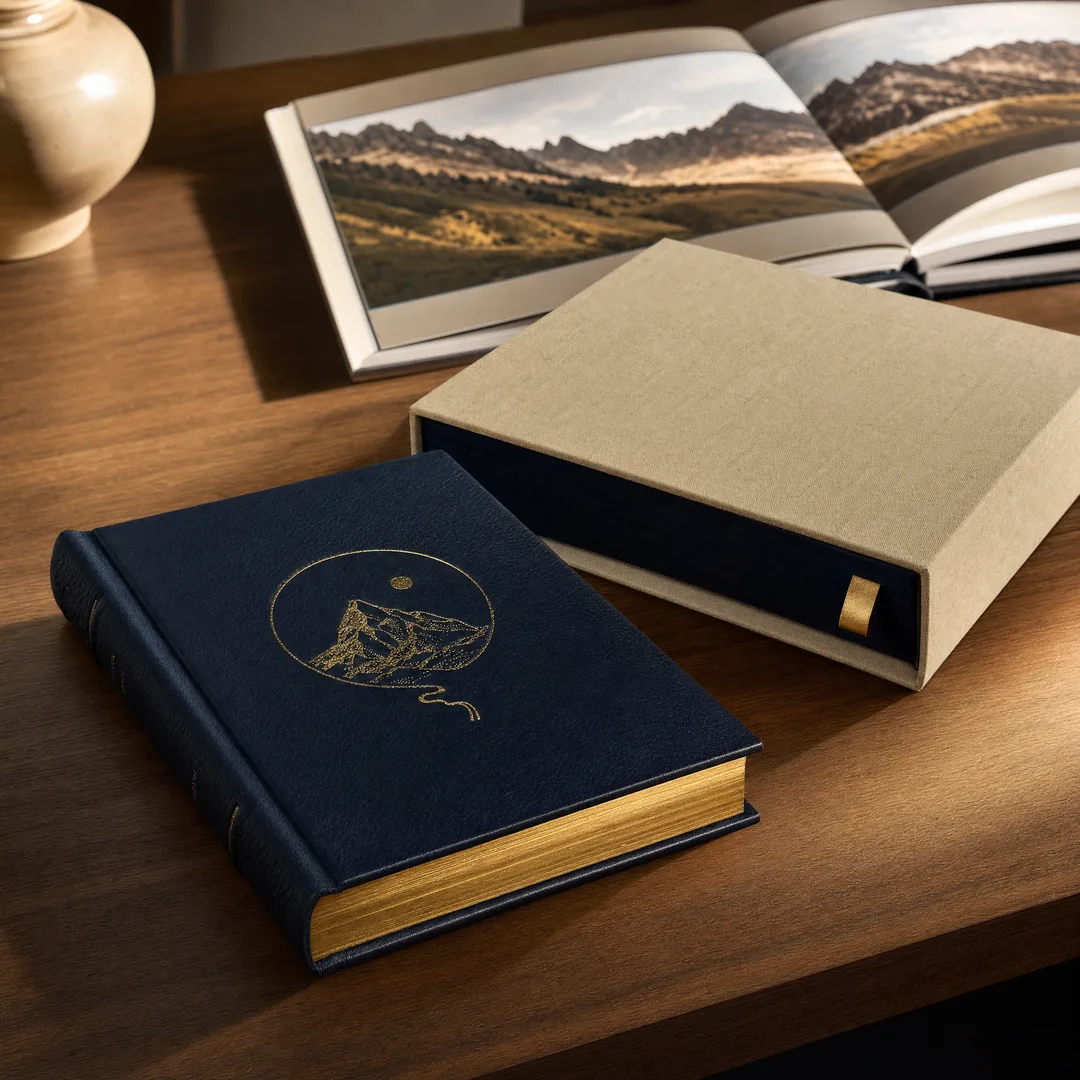
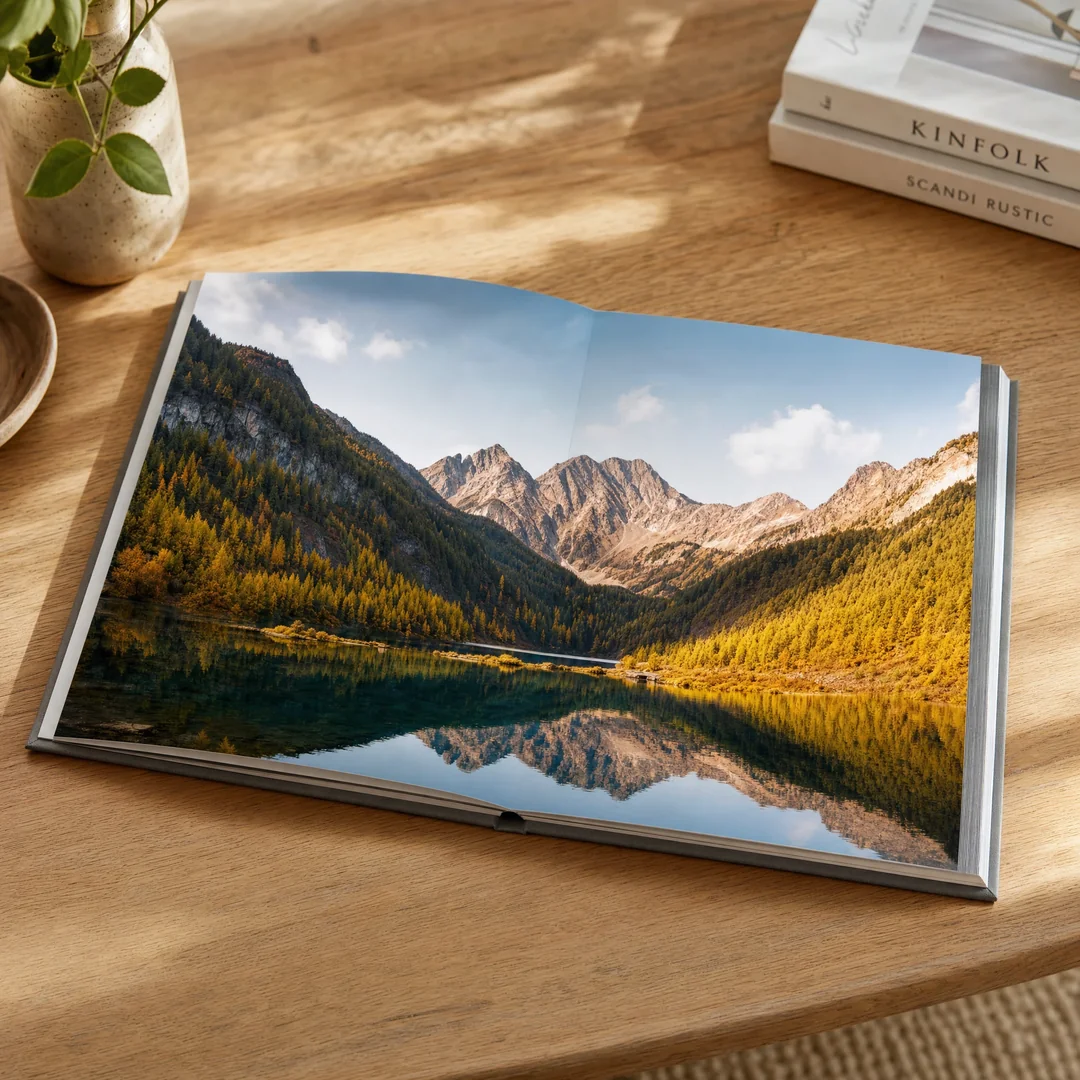
One of the biggest advantages of printing religious books in China is the depth of customization available at a price that makes business sense. Foil stamping your organization’s logo on the cover costs a few cents per book once the die is made. Custom endpapers — the decorative sheets that line the inside covers — can feature your church’s imagery, a map, or a family record page. The copyright page, title page, and even the ribbon colors can all be tailored to your specific requirements. For publishers building a branded Bible line or ministries creating a signature edition, these details add up to a product that feels uniquely yours rather than off-the-shelf. Full-color printing deserves a note here too: while most Bibles and religious books are printed in black or black-plus-red, children’s Bibles, illustrated gospel books, and family devotional editions often benefit from full-color CMYK printing on heavier paper stock. The production approach shifts — you’d typically use 80–128gsm coated paper instead of India paper for full-color religious books — and the binding and finishing options stay the same.
Endpaper choices for religious books
Endpapers are one of those details that most people never think about but notice immediately when they’re done well. For Bibles, decorative endpapers — marbled patterns, parchment-style designs, or custom-printed maps — add a layer of visual richness that elevates the entire book. Premium editions often use heavier endpaper stock (120–170gsm) with a cloth hinge for reinforcement at the joint where the cover meets the text block. Standard editions typically use plain white or cream endpapers at 100–120gsm. The choice comes down to budget and brand positioning, but it’s worth knowing that upgraded endpapers contribute disproportionately to the perceived quality of a finished Bible.