Why Board Books Are the Gold Standard for Children’s Publishing
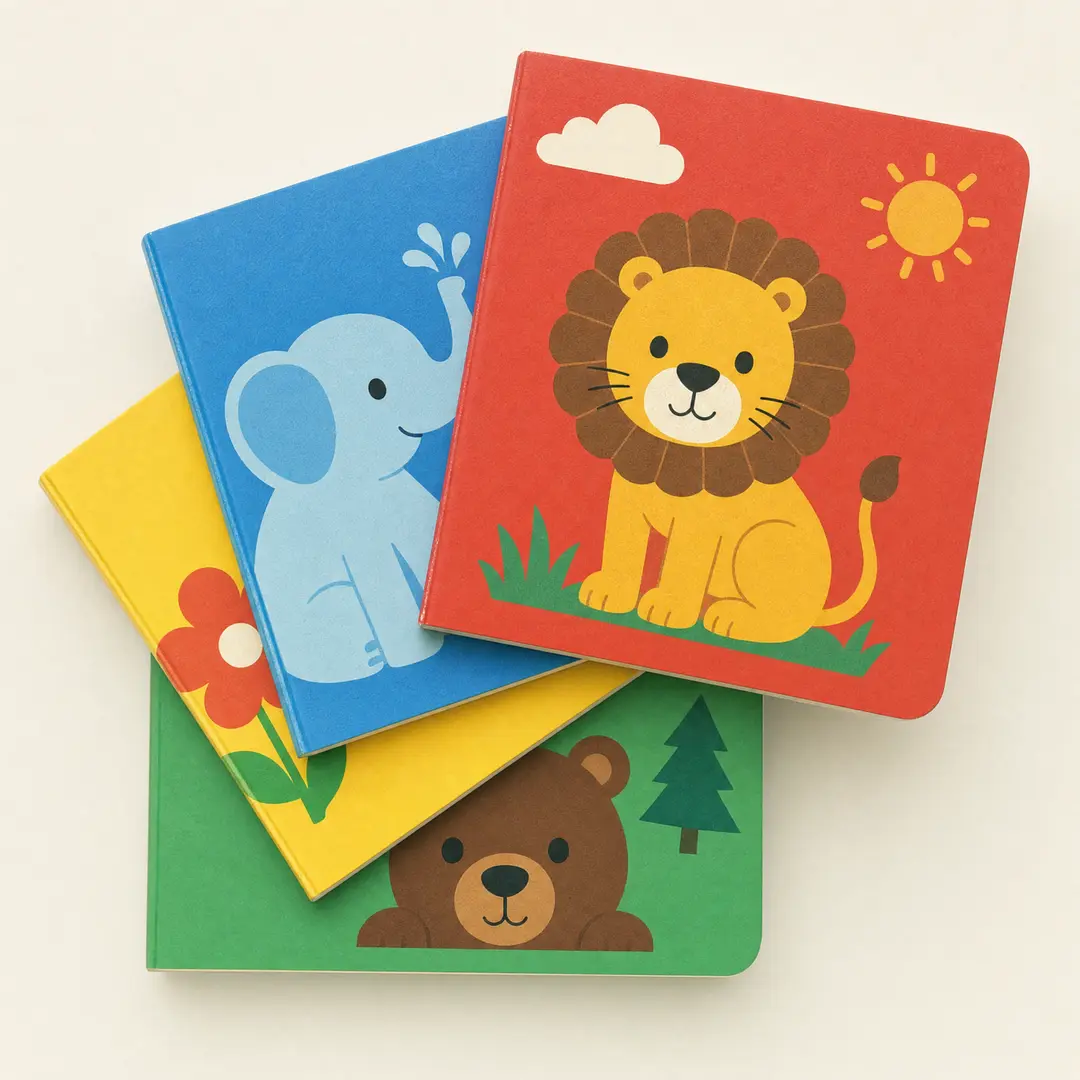
Walk into any bookstore’s children’s section and you will see them immediately — those chunky, colorful books with thick pages that toddlers love to grab, chew, and drop. These are board books, and they are not just another format option. For publishers targeting the 0-3 age range, board book binding is often the make-or-break factor that determines whether a title survives long enough to build a readership.
Parents know the drill. A paperback picture book given to a one-year-old might last a week before the pages tear. A standard hardcover fares slightly better, but the paper pages still shred under determined little fingers. Board books, on the other hand, can endure years of enthusiastic handling. That is why nearly every classic children’s title — from Goodnight Moon to The Very Hungry Caterpillar — exists in a board book edition.
But what exactly goes into board book binding? How do those thick, practically indestructible pages get made? And when should you choose a self-cover format over a hardcover board book? Let us walk through everything publishers need to know.
What Is Board Book Binding?
Board book binding is a specialized manufacturing process where each page is constructed from two sheets of thick cardstock — typically 350 gsm C1S (coated-one-side) paper — mounted together with adhesive. The coated side faces outward for printing, while the uncoated sides are glued together to create a single rigid, durable page. Once all spreads are assembled, the cover is wrapped around the page block and glued into place, creating the finished book.
Here is what makes this binding method fundamentally different from standard book production: there is no traditional spine binding at all. Regular books gather folded signatures and sew or glue them along the spine edge. Board books skip that entirely. Instead, each two-page spread is printed, cut, folded, and then glued to its neighboring spread — one at a time — in sequence. PrintNinja describes it plainly: “The board book binding methodology is not actually technically ‘binding’ at all.”
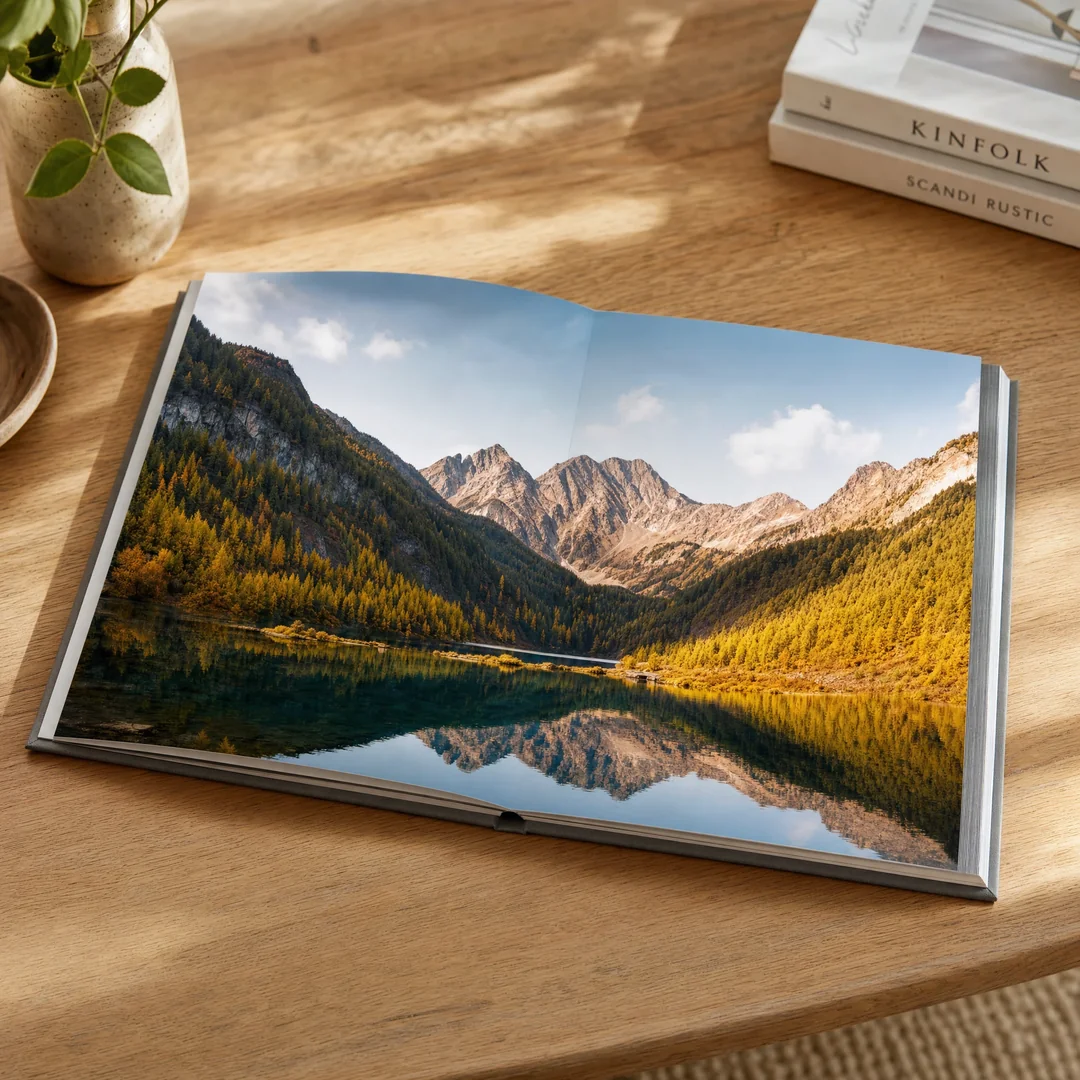
The result is a book where every single page has the heft and rigidity of a cover. Small children can turn pages easily because the thick board stock provides natural grip and resists bending. The square, flat spine gives the book a clean shelf presence and makes stacking easy. And because each spread is individually glued rather than sewn, board books open remarkably flat — a feature that illustrators love because it lets artwork spread seamlessly across two facing pages.
Page counts for board book binding range from 8 to 64 pages. Fewer than 8 and the book block lacks the structural mass to hold its shape. More than 64 and the accumulated thickness makes it hard to open flat. For most children’s titles, the practical sweet spot sits between 12 and 32 pages. Because spreads are assembled in pairs, page counts must be multiples of two — not the multiples of four required by traditional signature binding.
Self-Cover vs. Hardcover Board Book Binding
Not all board books are created equal. The binding world splits into two main categories: self-cover and hardcover. Understanding the difference matters because it directly affects your production cost, turnaround time, and the final feel of the book in a reader’s hands.
Self-Cover Board Book Binding
In a self-cover board book, the cover and interior pages share the same construction. The outer wrap is made from the same 350 gsm C1S paper as the inside pages, with no separate heavier case around the book block. After the interior spreads are glued together, the printed cover sheet is laminated and wrapped directly around the first and last pages.
This approach is simpler and more economical. Production is faster with fewer steps, and the lighter weight reduces shipping costs. Self-cover board books also lay completely flat when open because the pages are not anchored to a separate spine case. For most standard children’s board books, self-cover binding is the default choice.
Hardcover Board Book Binding
A hardcover board book adds a separate case-style cover built from heavy greyboard — typically 2 to 3 mm thick — wrapped with printed cover stock, usually 157 gsm coated paper. This creates the familiar overhang where the cover extends slightly beyond the page edges, just like an adult hardcover novel.
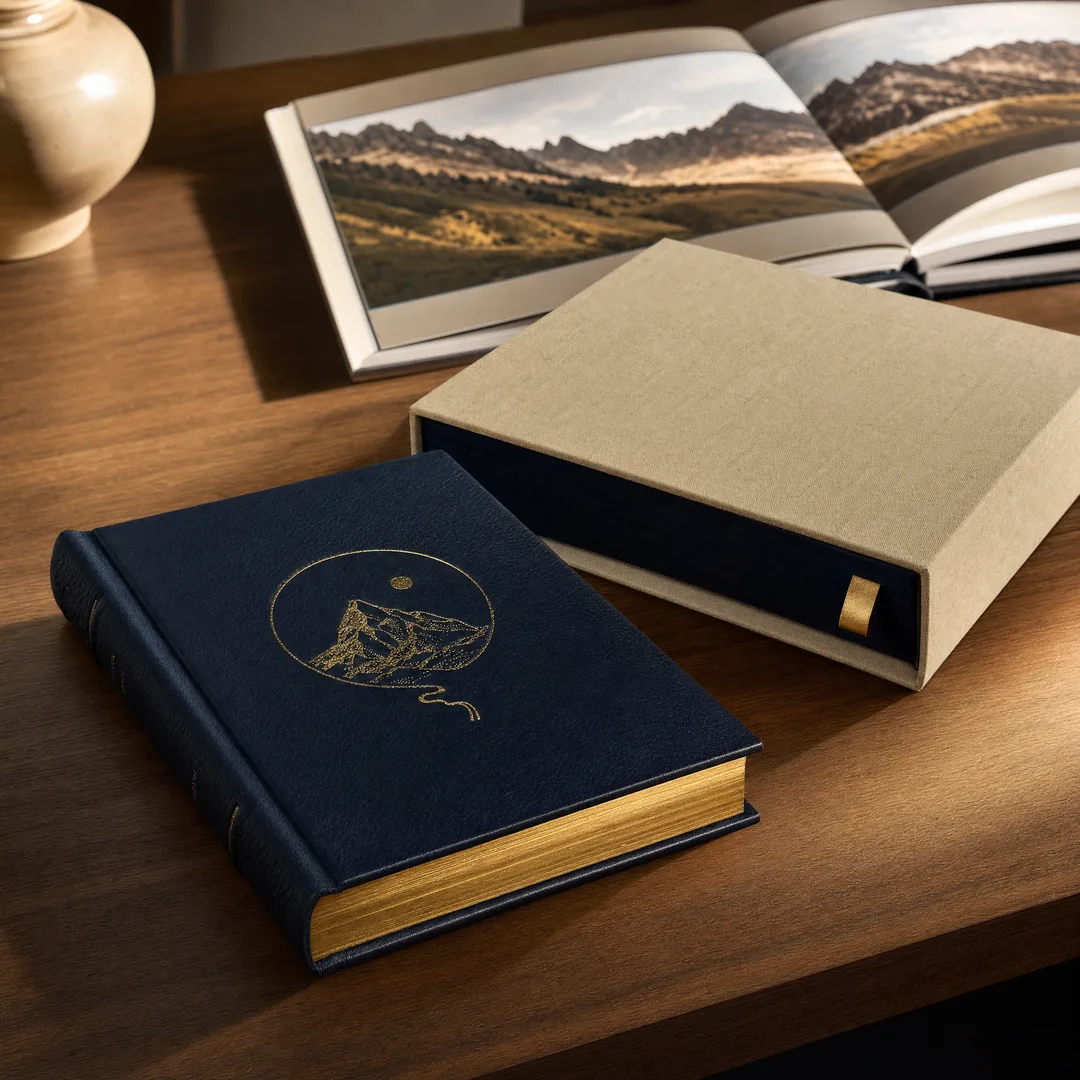
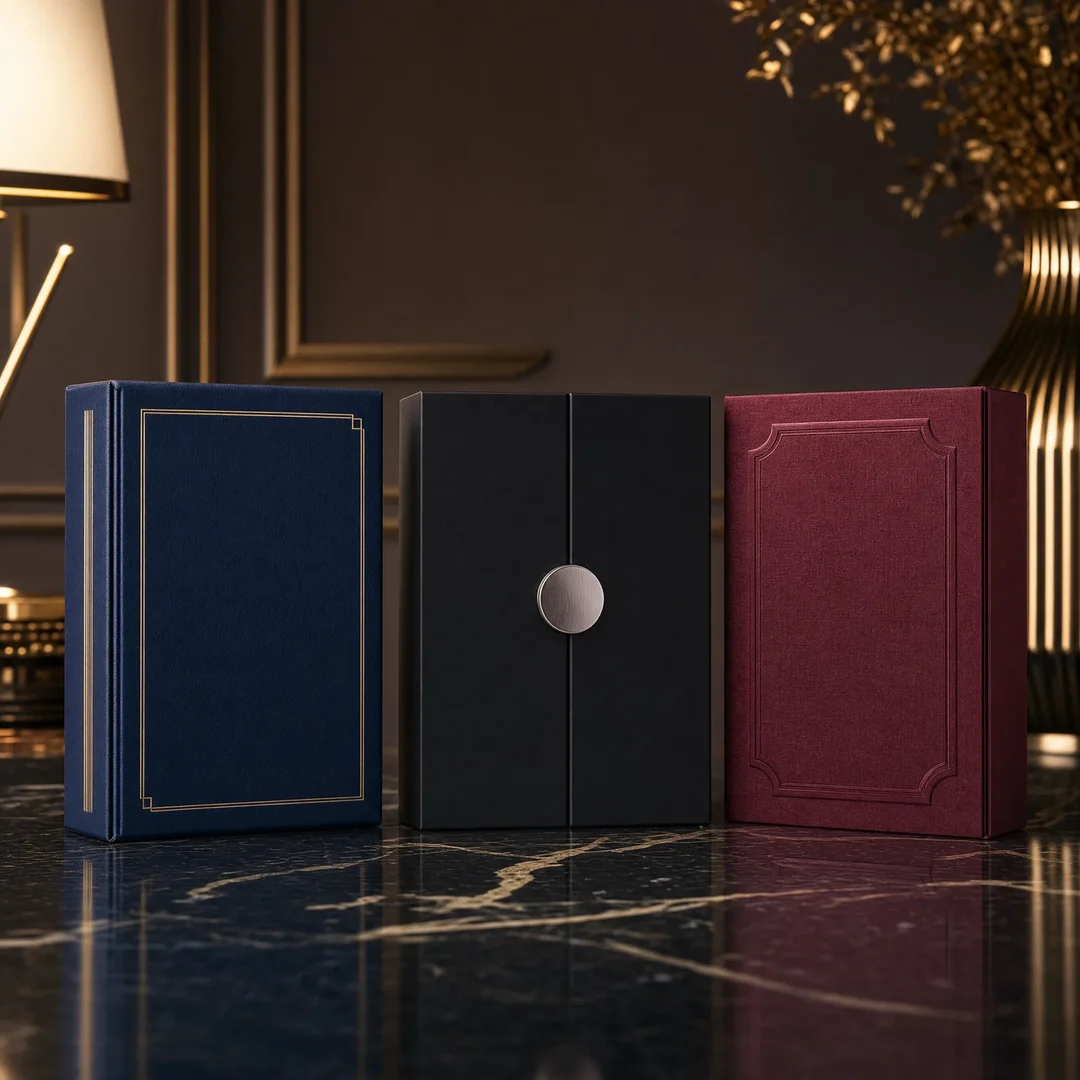
The trade-offs are clear. Hardcover board books offer greater durability and a more premium feel, with more finishing options: padded covers with a sponge layer, ribbon bookmarks, head and tail bands, embossing, foil stamping, and die-cut windows. But all of this requires more material, more labor, and more production time — plus higher shipping weight.
Corner rounding illustrates the difference. On a self-cover board book, rounded corners are trimmed into the cover and interior in a single pass. On a hardcover version, the cover and interior must be rounded separately because the cover overhangs the pages. Some publishers opt for rounded interior corners with straight cover corners as a practical compromise.
Which One Should You Choose?
Choose self-cover board book binding when cost control and fast turnaround are priorities. It works beautifully for standard baby and toddler titles, especially at higher print volumes.
Choose hardcover board book binding when you need a premium product — a keepsake edition, a library-bound title that will circulate heavily, or a luxury gift book. The extra investment can justify itself through higher retail pricing and perceived value.
Key Advantages of Board Book Binding
Board book binding is not just about making pages thicker. It delivers a set of functional benefits that directly serve the end user — a small child who has not yet learned to treat books gently — while also giving publishers, illustrators, and retailers compelling reasons to choose the format.
Unmatched Durability
A well-made board book survives drops, spills, teething, and being sat on. The double-layered construction of each page means that even if the outer surface scratches or gets sticky, the structural core remains intact. Add lamination to every page, and the book becomes largely resistant to moisture and grime. For daycare centers, pediatric waiting rooms, and any environment where books see heavy use, board book binding is the only format that makes practical sense.
Tactile Appeal and Sensory Engagement
Children learn through touch. Board books with their thick, smooth pages invite tactile exploration in a way that flimsy paper pages simply cannot. The weight and texture signal quality to parents, too. When a customer picks up a board book, the heft communicates substance. This is why board books consistently outperform paperbacks in the baby and toddler category — the physical experience of holding the book feels satisfying before a single page is turned.
Lay-Flat Design
Because board book pages are glued spread-by-spread rather than gathered into a tight spine, the book opens fully flat without cracking or splitting. For illustrators, this is a gift: it allows full-bleed artwork that stretches uninterrupted across two facing pages. For toddlers learning to handle books, the lay-flat behavior means the book stays open on the floor or high chair tray without needing to be held down — a small but meaningful usability win.
Customization and Interactive Elements
Board book binding supports an impressive range of special features. Lift-the-flap mechanisms hide surprises behind die-cut panels. Touch-and-feel textures — fuzzy fabric patches, bumpy silicone dots, smooth mirror foil — integrate directly into the thick pages. Pop-up elements create three-dimensional scenes that spring to life when the page opens. Slide-and-pull tabs let children move characters across the spread. These interactive elements transform a simple reading experience into active play, and board book construction provides the structural integrity needed to make them last.
The Board Book Binding Production Process
Understanding the manufacturing sequence helps publishers plan timelines, anticipate costs, and communicate intelligently with printing partners. Here is the typical production flow for board book binding:
1. Prepress and Proofing
Files are checked for bleed, color profile (CMYK), and resolution. A physical proof — digital or press-proof — is produced so the publisher can verify colors, trim alignment, and page sequence before the full print run.
2. Plate Making
Approved artwork is transferred to metal printing plates, one set per color (CMYK). For board books, plates cover two-page spreads since that is how pages are printed and assembled.
3. Printing
Offset presses apply ink to the coated side of 350 gsm C1S paperboard. Because the substrate is thick, presses run slower than for thin paper. Color consistency is critical — any drift between spreads will stand out when the book is bound.
4. Laminating
Each printed sheet receives a protective laminate — typically gloss or matte — on the printed side. Lamination shields the ink from scratches, drool, and sticky fingers, while also intensifying color saturation for a vibrant look.
5. Mounting and Wrapping
This is the core of board book binding. Two printed sheets are glued together, uncoated side to uncoated side, to form each spread. Spreads are then assembled in sequence and glued to one another along their fold edges. Once the interior block is built, the cover is wrapped around and glued to the first and last pages.
6. Trimming and Rounded Corners
The assembled book block is trimmed on three edges. Rounded corners are then die-cut in a single pass. Under CE (Europe) and CPC (United States) safety standards, rounded corners are mandatory for books intended for children under three — they eliminate sharp points that could scratch or poke.
7. Quality Control
Each book is inspected for glue adhesion, page alignment, lamination integrity, and corner uniformity. Safety testing may check for heavy metals in inks and adhesives, as young children inevitably mouth board books. Reputable manufacturers provide CE and CPC safety certificates on request.
8. Packaging and Shipping
Finished books are shrink-wrapped in bulk, packed into cartons, and prepared for freight. Board books are heavier than paperbacks of equivalent size, so shipping weight factors significantly into total project cost — especially for international orders.
Board Book vs. Hardcover: A Practical Comparison
Publishers sometimes confuse board books with hardcover children’s books. The two formats serve different purposes, and choosing the wrong one can lead to disappointing results — or unnecessary expense.
A standard hardcover children’s book uses a rigid case cover but contains regular paper pages — typically 80 to 150 gsm coated or uncoated paper. Pages are gathered into signatures, sewn or perfect-bound, and cased into the cover. This format works well for picture books aimed at ages 4 to 8, where children have the motor skills to turn paper pages without tearing them.
A board book, by contrast, has no distinction between cover thickness and page thickness. Every single spread is built from the same heavy board stock. This makes the entire book toddler-proof, not just the outside.
The practical differences extend further. Board books have fewer pages — typically 8 to 32 — while hardcover picture books commonly run 32 to 48 pages. Board books are smaller in trim size, designed to fit small hands (common formats: 5×5, 6×6, and 7×7 inches). Hardcover picture books often use larger formats like 8.5×11 inches. And board books, with their square flat spines, lack the rounded spine and dust jacket that characterize most hardcover picture books.
For publishers, the decision comes down to audience age. If your target reader is under three, board book binding is the right answer. Between three and five, either format can work. For ages five and up, a hardcover or paperback picture book makes more sense.
Frequently Asked Questions About Board Book Binding
What paper weight is used for board book pages?
Most board books use 350 gsm C1S (coated-one-side) paper, with two sheets mounted together to form each page. The resulting thickness is approximately 1 mm per page spread. Heavier papers up to 400 gsm are available for books that need extra rigidity, though they increase cost and weight.
Can board books have more than 64 pages?
In theory, yes, but in practice manufacturers strongly discourage it. Beyond 64 pages, the spine becomes disproportionately thick relative to the page width, making the book physically awkward to open. The binding adhesive also faces greater stress with each additional spread. For longer content, consider splitting the material into a series of shorter board books.
Are rounded corners required for board books?
They are not legally required in every jurisdiction, but they are an industry standard — and with good reason. Sharp corners on thick board stock can cause scratches or eye injuries. Both CE and CPC safety standards for children’s products effectively mandate rounded corners for books targeting children under three. Even for older audiences, rounded corners are recommended as a safety best practice.
How long does board book production take?
Standard production runs 4 to 6 weeks from file approval to finished books. Hardcover board books with special finishes may extend to 6 to 8 weeks. Ocean freight to the US or Europe adds another 4 to 6 weeks. Plan for at least 10 to 12 weeks total from final artwork to delivery.
Can I include interactive elements in my board book?
Yes. Lift-the-flap panels, touch-and-feel textures, pop-up mechanisms, and sliding tabs all work with board book binding. However, each interactive element adds complexity and cost. Discuss your design early with your printing partner so they can advise on feasibility.
Why Publishers Choose EcoPrinting for Board Book Binding
The right manufacturing partner makes all the difference in board book binding. At EcoPrinting, we specialize in board book production for independent publishers, self-published authors, and established children’s imprints alike. Our team works with 350 gsm C1S paperboard as standard and offers both self-cover and hardcover formats. Every book includes rounded corners for child safety, full-page lamination for durability, and rigorous quality control at each production stage. We can provide CE and CPC safety certificates on request — because nothing matters more than the safety of the small hands that will hold your book.
Publishing a children’s book is a creative investment. You have spent months developing your story and artwork. You deserve a printing partner who treats your project with the same care you put into creating it.
Want to see and feel the quality for yourself? We offer free board book samples so you can examine the paper weight, lamination finish, and rounded-corner construction before you commit. Reach out to our team today and let us help you bring your board book to life.