Two printers can quote the same 32-page children’s book at prices that differ by a factor of three. The files are identical, the page count is identical, and both suppliers promise full-color printing. So where does the gap come from?
In most cases, the gap in children’s book printing cost hides in specifications nobody wrote down. Paper weight, board thickness, binding style, ink chemistry, corner treatment, and run length each move the number. A quote is only as comparable as the spec sheet behind it.
This guide unpacks what really drives children’s book printing cost, why the category carries premiums that adult paperbacks never see, and how to spend money where a young reader will actually notice it. For the underlying production options, the children’s book printing service page covers formats and materials in detail.
The Three-Times Price Gap on the Same 32-Page Book
Every line item on a printing quote traces back to a physical decision. Change one decision and the price moves. Here are the eight that matter most.
Trim Size and Format
Trim size decides how many copies fit on a single press sheet. A standard 8.5 x 8.5 inch square picture book nests efficiently, so waste stays low. An unusual panoramic format or a die-cut shape forces custom imposition, and that waste gets billed back to you. Non-standard sizes also complicate board book tooling.
Page Count and Signature Math
Printers work in signatures, which are folded sheets of 8, 16, or 32 pages. A 28-page book still consumes a 32-page signature, so you pay for four pages of air. Rounding your manuscript to 24 or 32 pages often costs nothing extra and sometimes costs less than a 20-page book.
Paper Weight and Board Thickness
Children’s books use heavier stock than adult fiction, because small hands tear thin paper. A 157 gsm art paper interior feels flimsy for a picture book, while 200 to 250 gsm reads as premium. For board books, the greyboard core matters more than the surface paper. Standard 300 to 400 gsm board suits most toddler titles, and thicker cores raise both material and freight cost.
Full-Color Interior Printing
Almost every children’s book prints four-color process throughout, which is a fixed cost per sheet rather than a per-page fee. The real variable is ink coverage. Large flat areas of solid color, deep blacks, and heavy backgrounds all consume more ink and slow the press down, so illustration style has a direct budget consequence.
Binding Method
Binding is usually the second largest cost line after paper. Saddle stitch, perfect binding, and board book construction sit at very different price points, and the ladder below explains why.
Lamination and Surface Finishing
Matte or gloss lamination protects covers from sticky fingers and repeated handling. It also adds a per-copy charge. Spot UV, foil stamping, embossing, and soft-touch film each add a separate pass through a separate machine, which is why heavily decorated covers can cost more than the interior.
Proofing
A digital proof is cheap. A physical contract proof or a printed dummy costs more, yet it is the only reliable way to judge color and board stiffness before committing to thousands of copies. Budget for at least one physical sample on a first print run.
Freight, Duties, and Delivery Terms
Ocean freight is priced by volume, so bulky board books ship less efficiently than flat paperbacks. Air freight can multiply your landed cost. Incoterms matter too, because an FOB quote excludes the freight and duty that a DDP quote bundles in. Always compare landed cost, not factory price.
Children’s Book Specific Cost Adders
General book printing guides stop at paper and binding. Children’s books carry an extra layer of requirements that adult titles simply do not face, and each one adds cost.
Low-Migration and Soy-Based Inks
Standard offset inks are perfectly safe for adult reading, but they are not formulated for a board book that a teething toddler will chew. Low-migration inks and soy-based alternatives cost more per kilo and require tighter press control. Suppliers who already run these inks regularly absorb the setup cost, while a general printer will charge it to you as a one-off.
Rounded Corners
Sharp 90-degree corners on a board book are a genuine safety concern. Rounding requires a dedicated die and an extra die-cutting pass, so expect a modest per-copy increase plus a one-time tooling charge. The same logic applies to die-cut handles, tabbed pages, and shaped covers.
Thick Board and Layered Construction
A board book is not a thick sheet of paper. It is two printed sheets wrapped around a greyboard core and pressed flat. That lamination step consumes labor, and the thicker the core, the slower the line runs. Very thick “jumbo” board books for infants can cost more per page than a hardcover.
Safety Testing
If you sell into the United States, CPSIA and ASTM F963 apply. In the European Union, EN71 covers mechanical and chemical safety for toys and children’s articles. Third-party lab testing is priced per SKU and per test package, and it is a compliance cost rather than a printing cost. Reputable factories already hold reports for common materials, which shortens the path for your title.
Tear-Resistant and Specialty Stock
Some titles need synthetic paper, fabric pages, or water-resistant stock for bath and outdoor use. These substrates cost several times more than coated art paper and often require different inks. They are worth it only when the use case demands them.
The Binding Cost Ladder
Binding choice sets the floor and ceiling of your unit price. Think of it as three rungs, each solving a different problem.
Saddle Stitch for Thin Picture Books
Saddle stitching folds sheets and drives two wire staples through the spine. It is the cheapest binding available, and it suits books of 8 to 48 pages. The catch is that a saddle-stitched book does not have a printable spine, so it will not sit face-out on a shelf or carry a title on its edge. For giveaways, activity books, and thin early readers, it remains the most economical choice.
Perfect Binding for Mid-Thickness Titles
Perfect binding glues a square spine to a wrapped cover, the same construction as a trade paperback. It unlocks a printable spine, holds 40 to 200 pages comfortably, and costs more than saddle stitch because of the extra gluing and trimming stages. Books above roughly 80 pages need it for structural reasons, since staples cannot hold that much paper.
Board Books for the Toddler Market
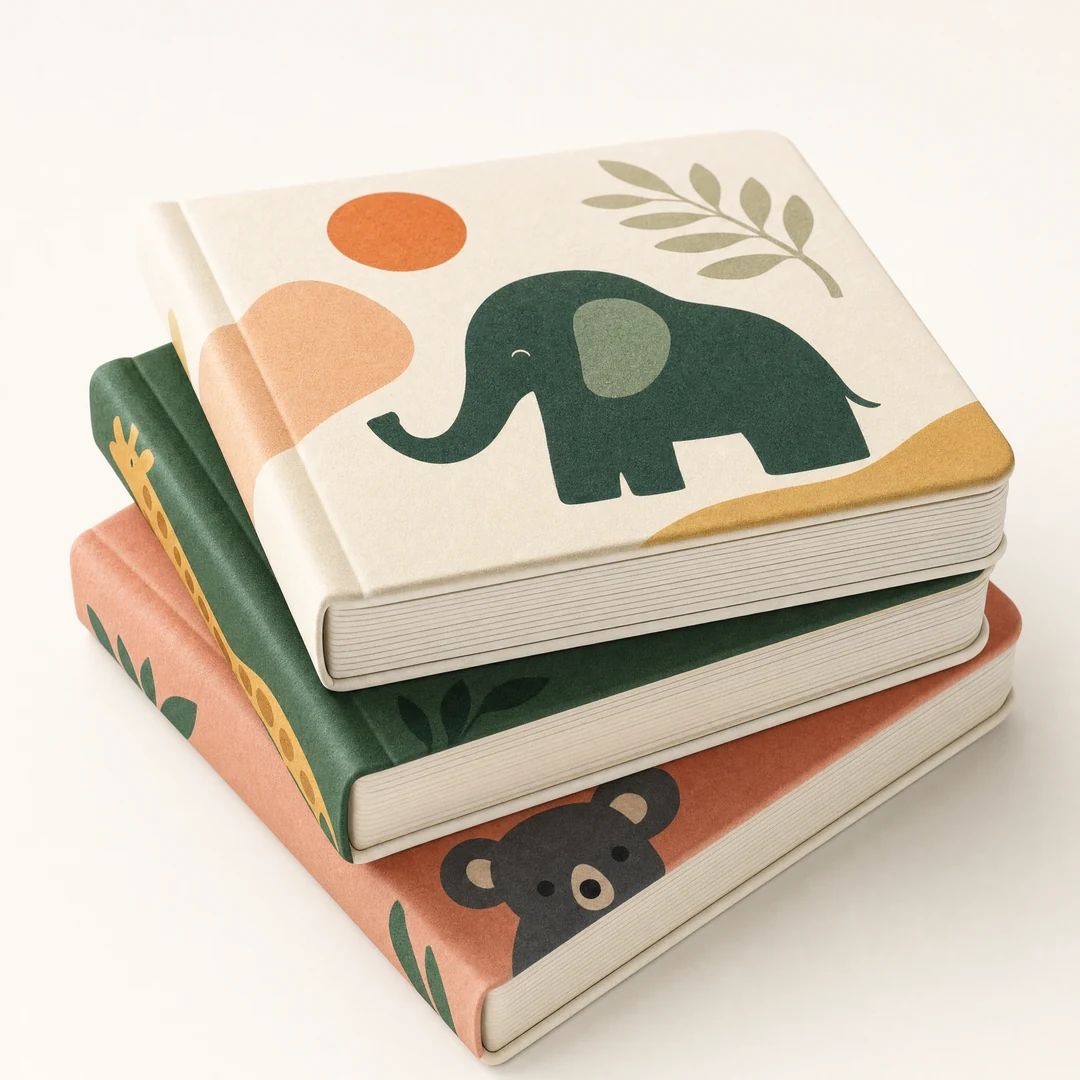
Board book production is the most expensive rung. Each spread is mounted to a board core, edges are rounded, and every page must survive bending, dropping, and wiping. Tooling, labor, and material all climb at once, which is why a 16-page board book often costs more per copy than a 32-page saddle-stitched book of the same trim. Specialized capacity matters here, and the board book printing page explains the construction options.
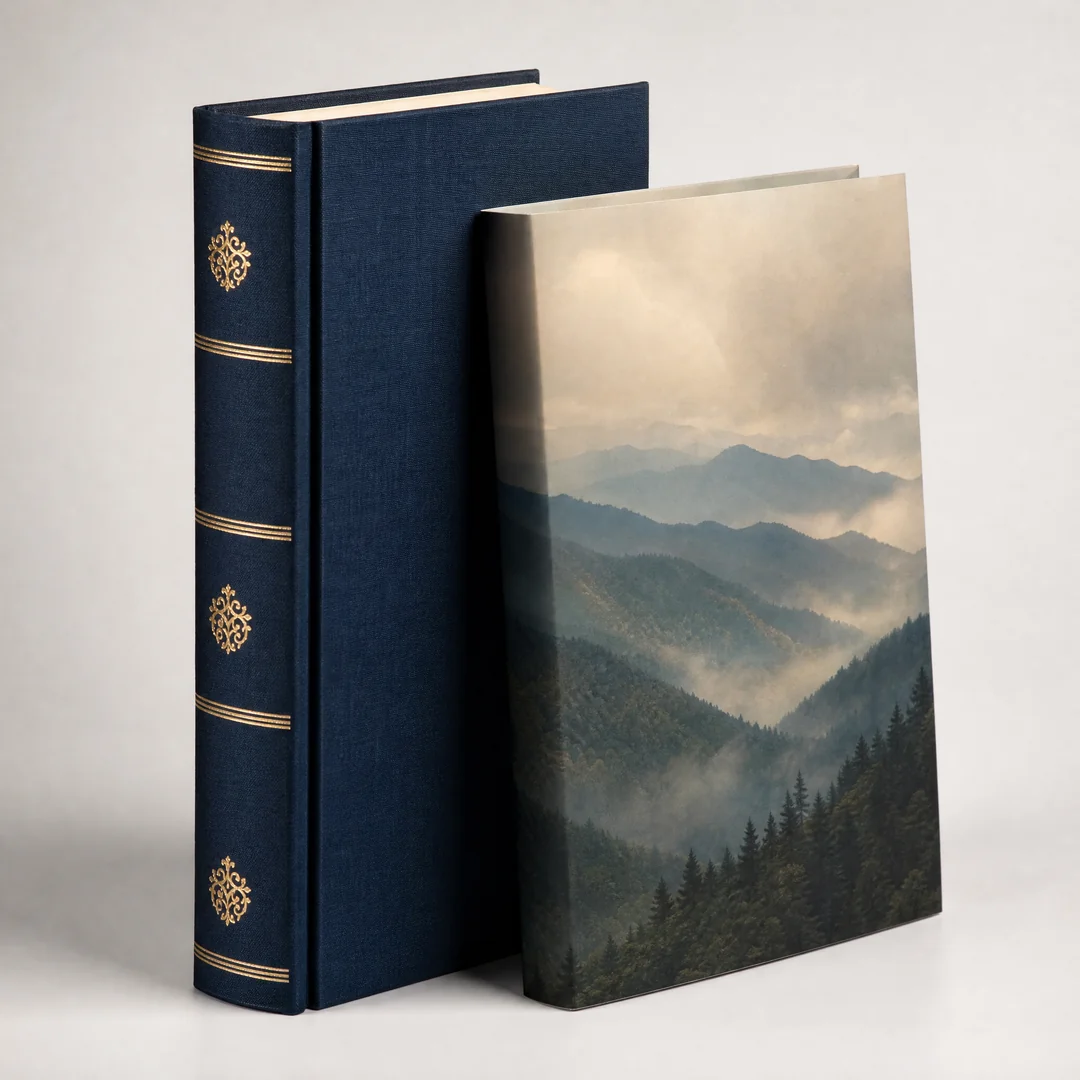
Two adjacent formats deserve a mention. A case-bound hardcover sits between board books and perfect binding on cost, and it delivers the gift-quality feel that awards and library sales reward. Comparing hardcover book printing against softcover options early prevents an expensive redesign later, and this hardcover versus paperback comparison lays out the trade-offs clearly.
The Effect of Print Run Size on Unit Price
Printing is a fixed-cost business. Plates, make-ready, die tooling, and machine setup cost the same whether you print 250 copies or 5,000. Spread that setup over more books and the per-copy figure falls, sometimes dramatically.
The curve is steep at the beginning and flat at the end. Moving from 250 to 500 copies often cuts unit cost by a third. Moving from 1,000 to 2,000 cuts it further, but by a smaller share. Beyond a few thousand copies, the savings flatten because paper and labor, which scale with volume, dominate the total.
Board books behave differently. Tooling and hand assembly keep a floor under unit cost, so the discount curve is shallower than for saddle-stitched titles. A full container load still offers the best rate, yet it only makes sense when you can sell or warehouse that inventory without choking your cash flow.
Indicative Price Ranges
The table below shows broad ranges for children’s book printing cost, gathered from typical offset production in Asia. Treat every figure as a directional signal, not a quotation.
Format
Trim Size
Page Count
Run Size
Indicative Unit Cost (USD)
Saddle stitch picture book
8.5 x 8.5 in
24 to 32
500 to 1,000
1.20 to 3.00
Saddle stitch picture book
8.5 x 11 in
32 to 48
1,000 to 3,000
0.90 to 2.20
Perfect bound picture book
8.5 x 8.5 in
32 to 48
1,000 to 3,000
1.40 to 3.20
Case-bound hardcover
8.5 x 11 in
32 to 40
1,000 to 3,000
2.60 to 5.50
Board book
6 x 6 in
12 to 24
1,000 to 3,000
1.30 to 2.80
Board book
7 x 7 in
16 to 24
3,000 to 5,000
1.00 to 2.20
Indicative only. Final quote depends on specifications, artwork complexity, ink coverage, finishing, packaging, and delivery terms. Freight and duties are excluded.
Strategies for Lowering Unit Cost
Cost control is mostly a design-stage activity. Once files are approved and plates are burned, the levers disappear.
Standardize the Trim Size
Choosing a common square or portrait format lets the printer gang your job with similar work, which reduces paper waste. Custom dies are the single most avoidable expense on a first title.
Consolidate Reorders Into One Run
Two runs of 1,000 copies cost more than one run of 2,000, because setup happens twice. If you expect a reprint within a year, print the combined volume now and store the surplus, provided storage is cheaper than the second setup.
Cut Spot Colors
Every additional spot color needs its own plate and its own wash-up. Four-color process already reproduces most illustration styles well. Reserve Pantone matches for brand-critical elements such as a logo or a licensed character.
Simplify Finishing
Skip foil, spot UV, and embossing on a debut title, then add them to an anniversary edition once demand is proven. Matte lamination alone delivers durability without the extra passes.
Plan Ahead for Sea Freight
Air freight can double your landed cost on a heavy board book shipment. Booking production four to six weeks earlier usually secures ocean rates and avoids expedited charges. Seasonal titles especially benefit, since Q4 capacity tightens every year.
What to Include in a Request for Quote
A vague request produces a vague number. Include the following and suppliers can quote accurately on the first pass.
Trim size in inches or millimeters, plus orientation
Total page count, including endpapers if applicable
Binding style: saddle stitch, perfect bound, case bound, or board book
Interior paper weight and desired finish, matte or gloss
Cover stock and lamination preference
Board thickness in millimeters for board books
Corner treatment: square or rounded
Ink requirements, including low-migration or soy-based requests
Target markets and any CPSIA, EN71, or ASTM testing needs
Print quantity and expected annual reprint volume
Delivery city, port, and preferred Incoterm
Required delivery date or on-sale date
Adding a reference sample or a competitor title helps more than a paragraph of description, because it settles paper and board questions in one glance. The children’s book printing product page lists the specification fields our team asks for.
Next Steps for Your Children’s Book Project
Children’s book printing cost is not a single number. It is the sum of format, paper, binding, safety, and volume decisions, and each one is negotiable at the design stage. Fix the trim size, choose the binding rung that matches your page count, and price freight into the landed figure before you sign.
Start with a clear spec sheet, request two or three comparable quotes, and ask each supplier what would change if you doubled the run. That single question reveals how much of the price is setup and how much is material. When you are ready to compare options, review the children’s book printing capabilities and send your specifications for a firm quote.