Why the Box Matters as Much as What’s Inside It
Walk into any high-end boutique and pay attention to what happens before you see the actual product. The salesperson doesn’t just hand you a ring — they place a velvet-lined case on the counter. A bottle of premium wine isn’t pulled from a shelf; it’s lifted from a branded wooden chest. This moment of anticipation, the few seconds between seeing the box and discovering its contents, is worth more to a brand than most marketing campaigns ever will. Getting it right starts with understanding gift box printing — not just as a manufacturing step, but as a strategic branding decision.
Over the past decade, China has become the world’s most concentrated hub for custom gift box printing . The combination of skilled labor, advanced machinery, and deep material supply chains means you can get packaging that rivals European craftsmanship at a fraction of the cost. Whether you’re launching a jewelry line, rebranding a perfume collection, designing limited-edition wine gift sets, or simply upgrading your retail presentation, knowing how gift box printing china suppliers operate will save you time, money, and frustration.
This guide walks you through the full landscape: box construction types, category-specific requirements for jewelry, perfume, and wine packaging, premium finishing techniques, the brand customization workflow, real-world MOQ and cost expectations, and why sourcing from China’s packaging clusters makes economic sense. By the end, you’ll understand exactly what to ask for — and what to avoid.
Gift Box Construction Types
Before discussing specific product categories, it helps to understand the structural options available. The box style you choose affects everything: perceived value, production cost, shipping durability, and the unboxing experience. Most custom gift box printing projects fall into one of five construction types.
Rigid Box (Set-Up Box)
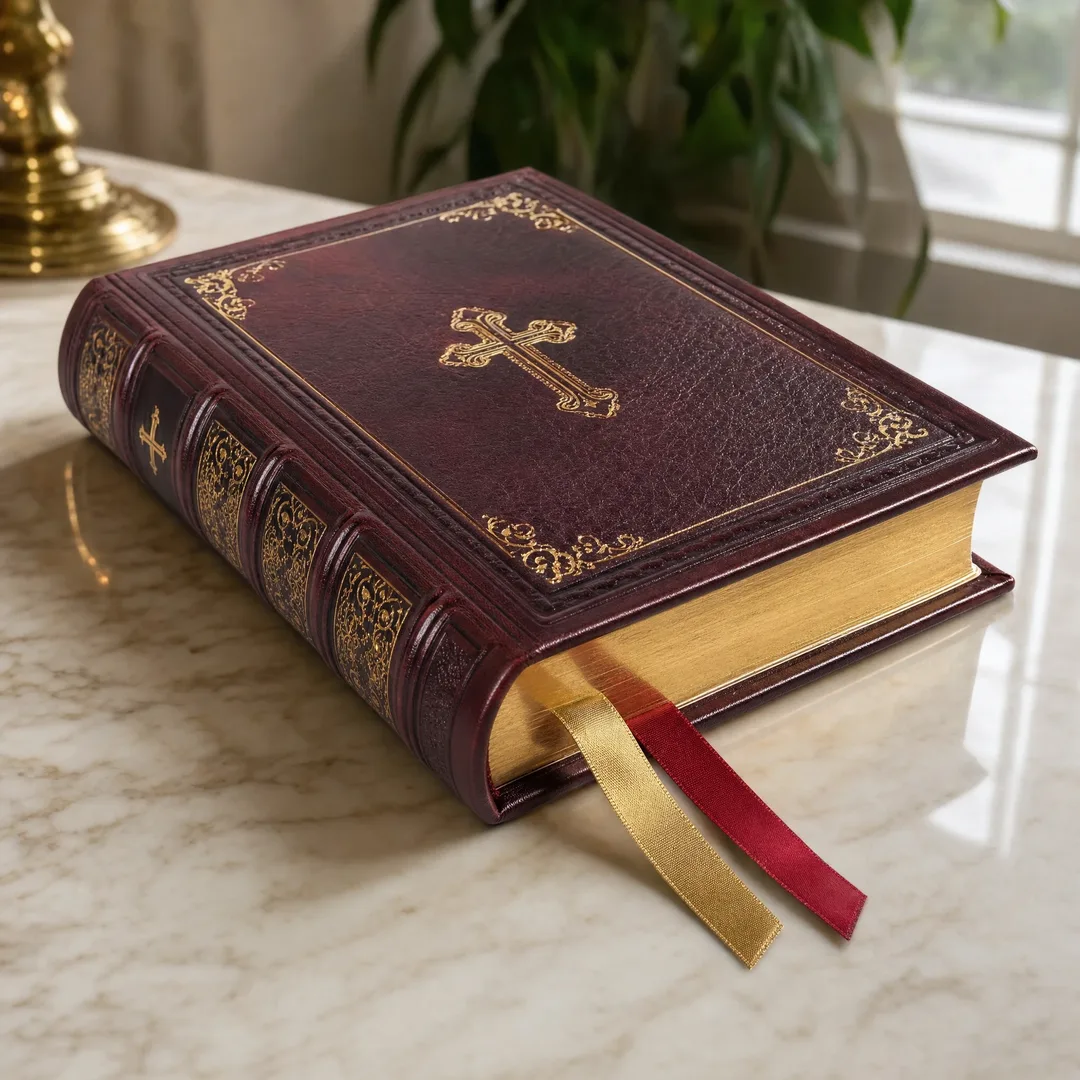
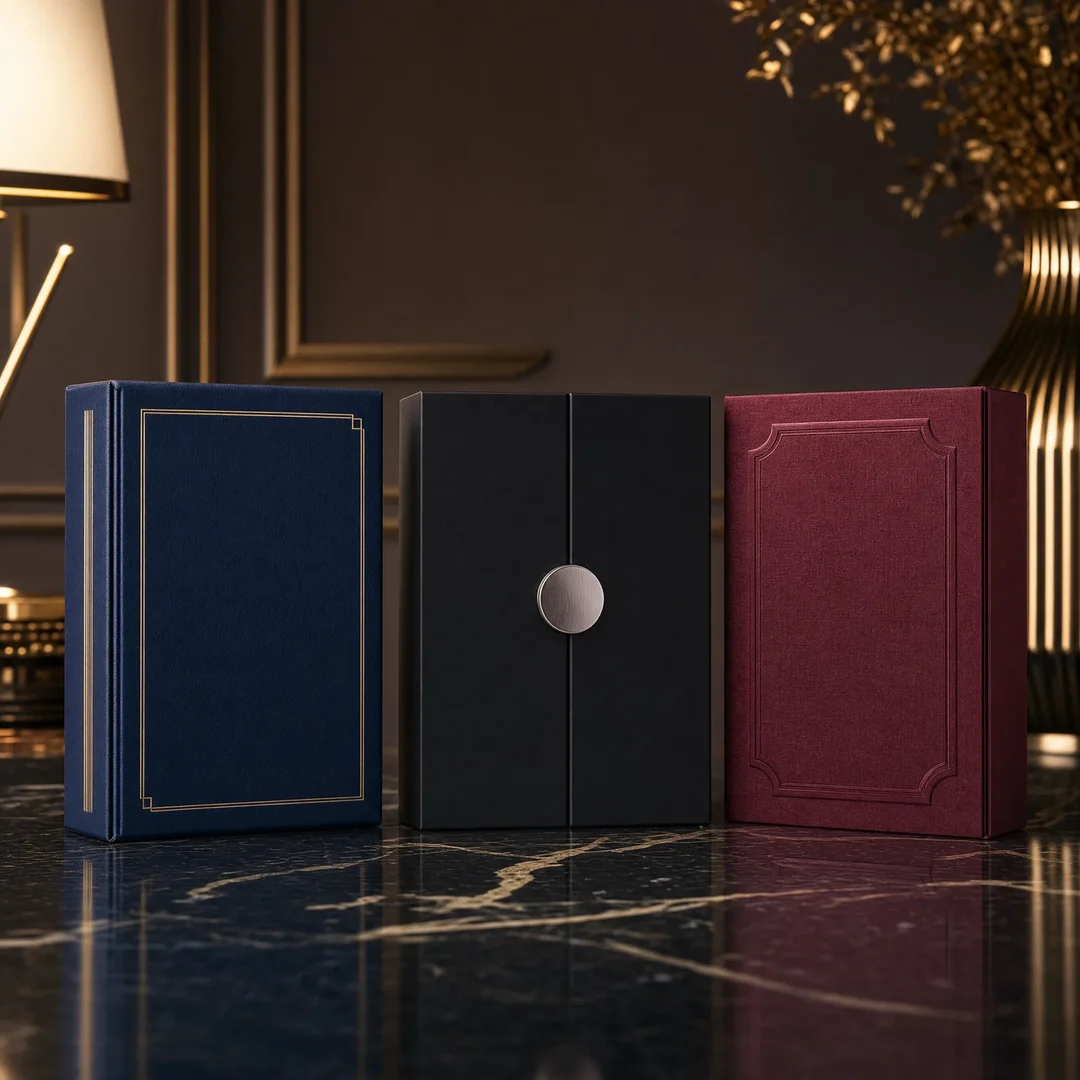
The rigid box is what most people picture when they think of luxury packaging. It’s made by wrapping printed paper or specialty material around a thick greyboard core — typically 1.5mm to 3mm — giving it a satisfying weight and structural rigidity. These boxes don’t fold flat; they’re shipped pre-assembled, which adds to freight cost but delivers an unmistakable premium feel. Rigid boxes are the go-to for high-end jewelry, limited-edition perfumes, and collector-grade wine presentations. They hold their shape even when empty, which matters more than you’d think during the retail display moment.
Magnetic Closure Box
A subset of rigid construction, magnetic boxes incorporate hidden magnets into the lid flap or side panels. When the lid closes, it snaps into place with a quiet, satisfying click. This small detail elevates the perceived quality significantly. Magnetic boxes are especially popular for subscription kits, corporate gift sets, and premium cosmetics where the customer opens and closes the box repeatedly. The magnet strength needs to be calibrated carefully — too weak and the box feels cheap, too strong and the user struggles to open it one-handed.
Drawer Box (Slide Box)
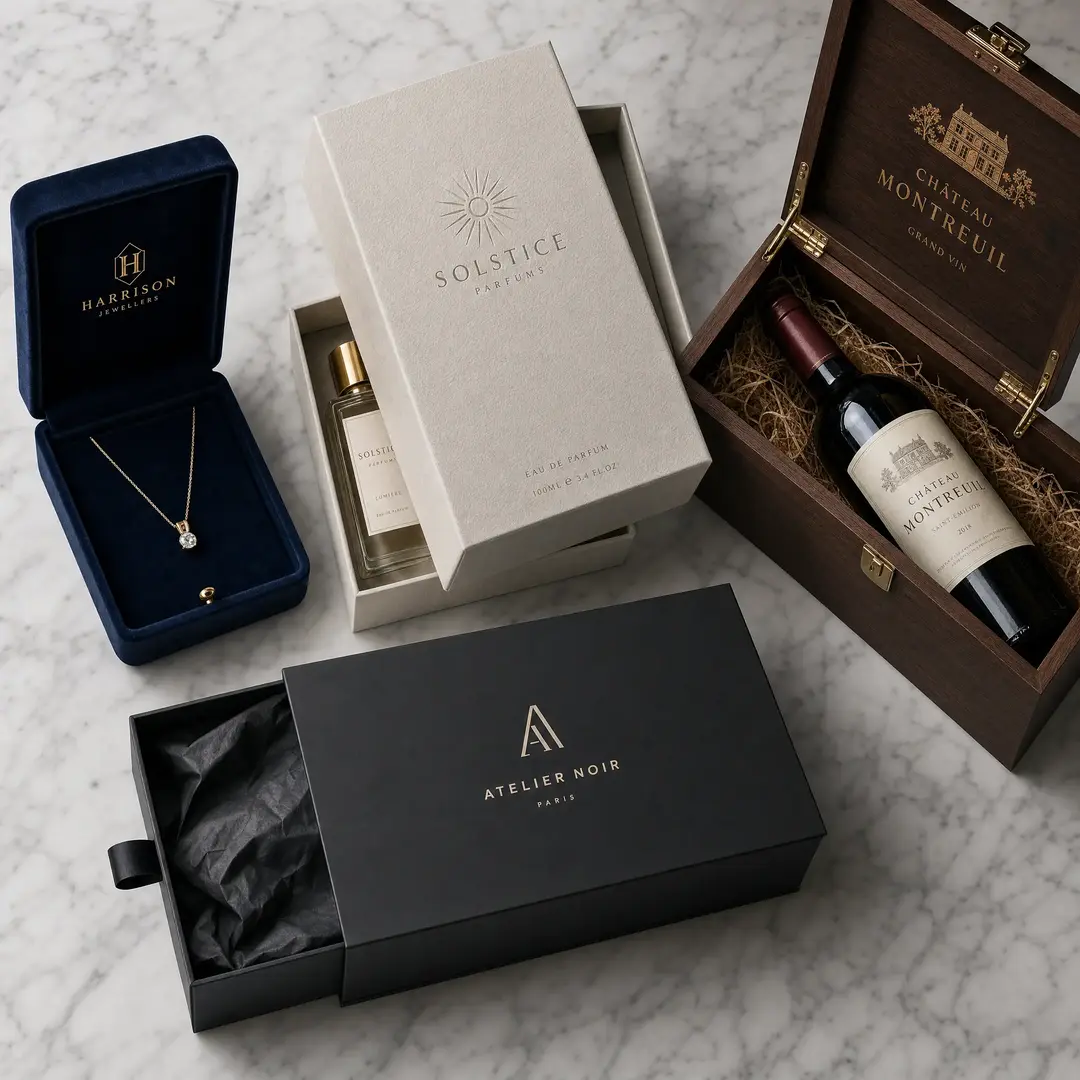
Drawer boxes consist of an outer sleeve and an inner tray that slides out horizontally. The pulling motion creates a deliberate reveal — you’re not just opening a lid, you’re drawing the product toward you. This format works particularly well for necklace displays, watch presentation, and multi-bottle wine sets. A well-executed drawer box with ribbon pull tab and soft-touch coating tells the customer they’re holding something special before they even see the contents.
Foldable Box (Collapsible Box)
Not every brand needs heavy rigid construction. Foldable boxes ship flat and are assembled on-site, dramatically reducing shipping volume and freight costs. Modern foldable designs can incorporate magnetic closures and premium paper stocks that look far more expensive than their price point suggests. These are ideal for e-commerce brands that need packaging to survive shipping but don’t want to pay for air freight on pre-assembled rigid boxes. The trade-off is a slightly less luxurious hand feel compared to a full rigid build.
Set-Up Box with Shoulder Neck
This variation of the rigid box features an inner shoulder or neck piece that creates a recessed platform for the product. When the lid is removed, the product sits framed within this recess — creating a gallery-like presentation. Perfume brands favor this construction because it holds the bottle securely upright while showcasing the full label design. The shoulder neck also provides structural reinforcement, making the box more resistant to compression during shipping.
Jewelry Box Packaging
Jewelry box printing sits at the intersection of precision engineering and emotional design. A jewelry box doesn’t just protect the piece — it sets the stage for how the wearer feels about it. The difference between a ring presented in a generic cardboard insert versus a deep navy velvet nest is the difference between “here’s your purchase” and “this moment matters.”
Velvet Interior and Material Selection
The interior of a jewelry box is where most buyers focus their attention — and for good reason. Velvet, suede, satin, and flocked foam are the standard lining materials for custom jewelry box printing projects. Velvet remains the most popular choice for rings and earrings because of its deep, light-absorbing texture that makes metals and gemstones pop visually. The color of the interior matters strategically: black and dark navy are timeless and versatile, while ivory or blush pink can reinforce a specific brand aesthetic. High-end manufacturers in jewelry box printing china hubs offer custom-dyed velvet to match exact brand Pantone colors, though this typically raises the minimum order quantity.
Display Window Integration
A clear PVC or PET display window turns the jewelry box from a storage container into a retail display tool. The window allows the customer to see the actual piece without opening the box — crucial for retail environments where reducing handling time matters. The window is typically die-cut into the lid and sealed with transparent film. For upscale applications, some manufacturers use anti-scratch PET film with UV protection to prevent yellowing over time. The window shape itself can be custom die-cut to match brand motifs — a heart-shaped window for an engagement ring box, for example.
Ring, Necklace, and Earring Box Formats
Each jewelry type demands a slightly different insert configuration. Ring boxes are the most compact, typically 45mm to 55mm square, with a single slot lined in plush velvet. Necklace boxes are larger and flatter, often featuring a padded display card with hooks or a foam channel that keeps the chain tangle-free during shipping. Earring boxes usually contain two symmetrical cutouts or a shared platform with separate compartments. The insert material — EVA foam, molded pulp, or cardboard with fabric wrapping — affects both the protective quality and the unboxing feel. For luxury brands, a combination of rigid outer construction with a custom flocked insert tray hits the sweet spot between protection and presentation.
Perfume Box Packaging
Perfume box printing is arguably the most brand-driven packaging category. Walk through any department store fragrance section and you’ll notice the boxes do heavy lifting: they communicate gender positioning, price tier, and brand personality before anyone smells a single note. A poorly executed perfume box undermines the entire product experience before the bottle is even visible.
Structural Design for Bottle Protection
Perfume bottles are fragile, often irregularly shaped, and sometimes quite heavy. The box structure must account for all three factors. Most custom perfume box printing projects use a rigid set-up box with a shoulder neck insert that cradles the bottle base and prevents lateral movement. For taller bottles, an internal collar or tiered insert provides additional stability at the neck. The dimensional tolerances are tight — typically ±1mm — because a loose fit leads to bottle rattling during transit, which customers interpret as poor quality even if the perfume itself is exceptional.
Brand Identity Through Paper and Finish
The paper stock selection for perfume packaging is strategic. Textured stocks like linen-embossed or laid-finish papers signal artisanal, small-batch positioning. High-gloss laminated stocks with foil accents project mainstream luxury. Matte soft-touch finishes occupy the minimalist, modern niche. Perfume box printing china manufacturers offer an extensive range of specialty papers, including metallic pearlescent stocks and FSC-certified recycled options for brands with sustainability positioning. The key is consistency across production runs — a perfume brand’s packaging must look identical whether the box was produced in batch one or batch fifty.
Premium Paperboard and Inner Structure
Beyond the outer box, the inner structure matters. Some perfume brands opt for a two-piece construction: an outer rigid sleeve with full-color printing and an inner plain rigid tray. This creates a layering effect during unboxing. Others prefer a single-piece magnetic closure box with a custom die-cut platform that holds the bottle and a sample vial side by side. The thickness of the greyboard core — typically 2mm for standard perfume boxes, up to 3mm for heavyweight editions — determines the box’s perceived substantiality.
Wine Box Packaging
Wine box printing covers a broader material spectrum than most other packaging categories. While paper-based rigid boxes dominate jewelry and perfume, the wine sector frequently crosses into wood, leather, and hybrid constructions. A wine gift box needs to handle significant weight — a full 750ml bottle plus packaging can approach 2kg — while maintaining an air of ceremony and occasion.
Wooden Wine Box Construction
Wooden wine boxes carry a sense of heritage that paper simply cannot replicate. Common wood types used in custom wine box printing include pine, birch, MDF with wood veneer, and bamboo for eco-conscious brands. Pine boxes are the most cost-effective and are often laser-engraved with brand logos rather than printed. Birch and veneered MDF offer a smoother surface suitable for silk-screen printing or foil branding. Most wooden wine boxes feature a hinged lid with metal clasp or a sliding lid design. The interior is typically lined with velvet, satin, or flocked foam, with die-cut recesses that hold bottles securely. For export shipments, wooden boxes require fumigation certificates — an important logistics detail that wine box printing china suppliers handle as standard.
Leather and PU Leather Wine Boxes
Leather-wrapped wine boxes occupy the ultra-premium tier. Genuine leather boxes are handcrafted, expensive, and typically reserved for limited-edition releases or high-end corporate gifts. PU leather (polyurethane synthetic leather) provides a similar aesthetic at roughly one-third the cost, with better color consistency and resistance to humidity. These boxes often feature metal hinges, combination locks, or magnetic clasps. The interior is almost always lined with plush velvet or satin. PU leather wine boxes are especially popular for single-bottle gift sets aimed at the holiday and Lunar New Year markets.
Single, Double, and Multi-Bottle Configurations
The number of bottles dictates the box dimensions and structural approach. Single-bottle boxes are the most common — compact enough to be carried with one hand, typically featuring a hinged or slide-off lid. Double-bottle configurations use a side-by-side or stacked layout, with padded dividers between the bottles to prevent glass-on-glass contact. Multi-bottle sets of three or more are usually housed in larger wooden crates or rigid paper boxes with custom-molded EVA foam inserts. Each additional bottle adds approximately 1.3kg to the gross weight, which affects both the required board thickness and the shipping cost calculation. Most manufacturers recommend a minimum 2.5mm greyboard or 9mm wood panel thickness for boxes holding two or more bottles.
Premium Finishing Techniques
The finishing stage is where a good box becomes a great one. In gift box printing , the difference between mass-market and luxury is almost entirely in the post-press treatment. Chinese manufacturers have invested heavily in finishing equipment over the past five years, meaning techniques that were once only available from Italian or German binderies are now accessible from Shenzhen and Dongguan at competitive prices.
Foil Stamping
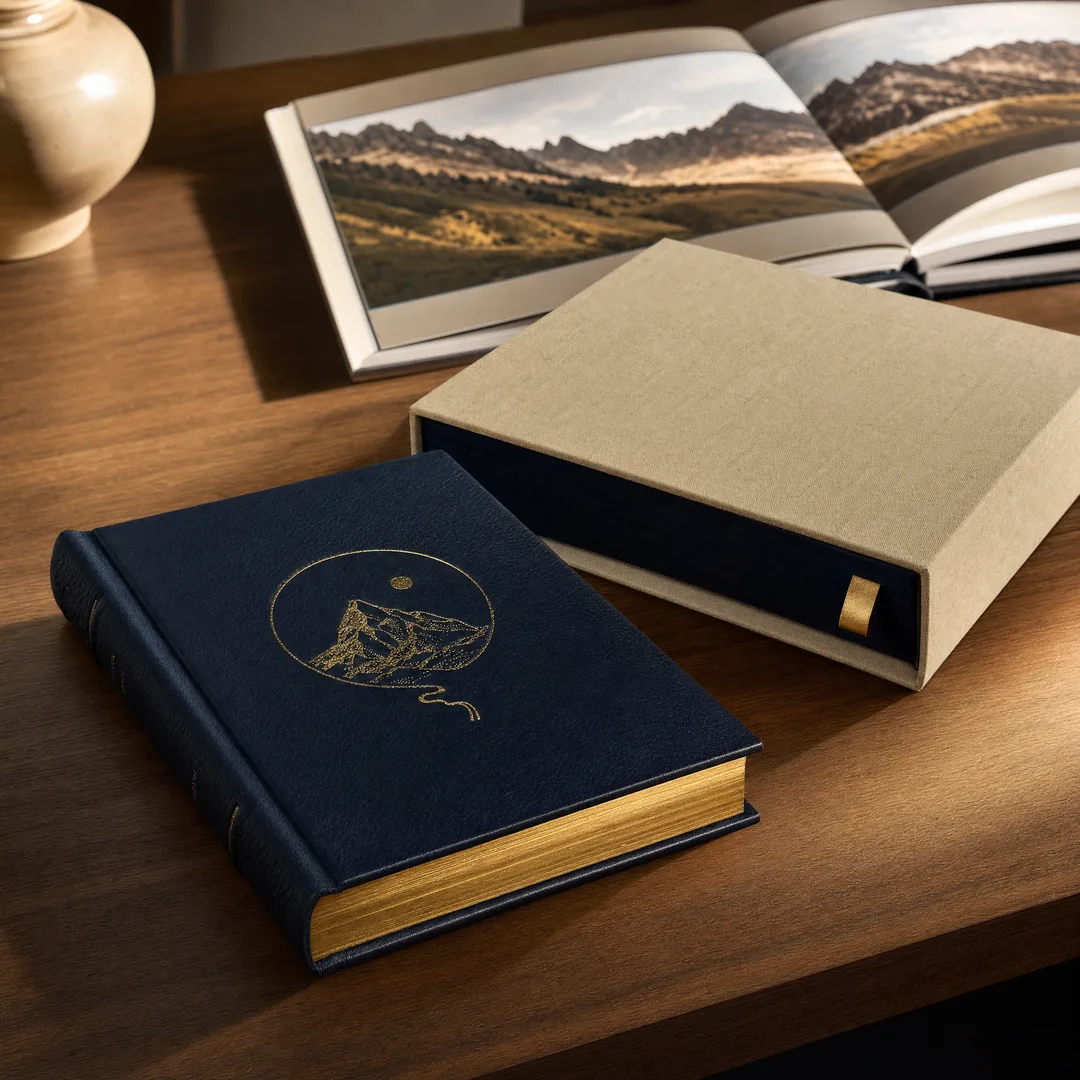
Foil stamping uses heat and pressure to transfer metallic foil onto the box surface. Gold and silver are the classics, but rose gold, copper, holographic, and matte metallic foils are increasingly popular. The foil sits slightly raised from the surface, catching light in a way that flat printing never can. For maximum impact, foil stamping is often paired with a debossed area — the foil sits in a recessed well, creating a dimensional, coin-like logo impression. One practical note: foil coverage area affects cost significantly. A small centered logo might add $0.08 per box, while full-wrap foil patterns can triple the per-unit finishing cost.
Embossing and Debossing
Embossing raises the paper surface from behind, creating a three-dimensional relief. Debossing presses the design into the surface from the front. Both techniques work without ink or foil — they rely purely on light and shadow to define the design, which gives them an understated, architectural quality. Embossing is especially effective on uncoated and textured papers where the raised area contrasts with the fibrous background. For intricate designs with fine lines, a copper die produces crisper results than magnesium, though it costs roughly 30% more to manufacture. Most custom gift box printing suppliers recommend a minimum 2mm stroke width for clean embossing results on paper stocks above 157gsm.
Spot UV and Soft-Touch Coating
Spot UV applies a high-gloss varnish to selected areas of the box surface, creating a contrast between glossy and matte zones. A common application is spot UV over a logo on an otherwise matte-finished box — the glossy logo catches the eye without being as flashy as foil. Soft-touch coating, sometimes called velvet lamination, applies a matte finish with a suede-like tactile quality. It’s fingerprint-resistant, which matters for boxes that will be handled repeatedly at retail counters. The combination of soft-touch base coating with spot UV accents is currently one of the most requested finish combinations among premium packaging buyers.
Die-Cutting for Custom Shapes and Windows
Die-cutting allows box panels to be cut into non-rectangular shapes — curved lids, scalloped edges, custom window cutouts, and interlocking structural features. The die itself is a custom-made steel rule blade bent to the required shape and mounted on a plywood base. Die production costs range from $30 to $80 depending on complexity and size, and the die can typically last for 50,000+ impressions before needing replacement. For short-run projects, digital cutting (using a CNC knife rather than a steel die) eliminates the die cost entirely, though the per-unit cutting speed is slower.
Brand Customization Workflow
Transitioning from a packaging concept to a finished production run involves more steps than most first-time buyers anticipate. Understanding the workflow helps set realistic timelines and budgets for custom jewelry box printing , custom perfume box printing , and custom wine box printing projects alike.
Custom Shape and Structural Design
Every custom box starts with structural design. The manufacturer’s engineering team takes your product dimensions, weight, and desired box style and creates a dieline — a technical drawing showing fold lines, glue tabs, and cut boundaries. For complex structures like drawer boxes or multi-compartment wine cases, a physical white sample (an unprinted prototype made from the actual board stock) verifies that everything fits before any printing plates are made. This step typically takes 3 to 5 working days and costs $50 to $150 depending on complexity. Rushing through structural design is the most common cause of production delays — a millimeter of error here multiplies across thousands of units.
Insert Tray Design
The insert tray is what holds the product in place — and it’s often where brands underinvest. A generic foam insert works functionally but feels forgettable. A custom-molded insert with flocked surface, color-matched to the brand palette, and precisely contoured to the product silhouette transforms the unboxing moment. Common insert materials include EVA foam (durable, precise, moderate cost), flocked plastic (velvety surface, good for jewelry), molded pulp (eco-friendly, lower cost but rougher texture), and fabric-wrapped cardboard (versatile, widely used for perfume and cosmetics). The mold cost for custom EVA inserts ranges from $80 to $300 depending on the cavity complexity — a one-time investment amortized across the production run.
Logo Application Techniques
How your logo appears on the box is a decision with both aesthetic and budget implications. The hierarchy of cost, from lowest to highest, typically runs: flat printing → spot UV → debossing → foil stamping → embossing → 3D embossed foil. Each step up adds depth, light interaction, and tactile richness. Many brands combine techniques — foil-stamped logo on a debossed plate, for example, or embossed logo with spot UV overlay. The key is restraint: a single well-executed logo technique reads as intentional luxury, while four techniques crammed onto one panel reads as trying too hard.
Unboxing Experience Design
The unboxing experience has become a competitive differentiator in its own right, fueled by social media and direct-to-consumer business models. Elements that contribute to a memorable unboxing include: a ribbon pull tab that slides the inner tray out smoothly, a tissue paper wrap with branded sticker seal, a magnetic closure that snaps satisfyingly, layered reveals where opening the outer box exposes a secondary compartment or message card, and interior printing — brand patterns or messaging printed on the inside lid, visible only when opened. These details add marginal cost — typically $0.10 to $0.50 per box depending on the combination — but their impact on repeat purchase behavior and social sharing is disproportionate to the cost.
MOQ and Cost Realities
Understanding minimum order quantities and how they affect unit pricing is essential for realistic budgeting. The numbers vary significantly by construction type, material, and finishing complexity.
MOQ by Box Type and Process
For standard rigid gift boxes with basic printing and no specialty finishes, most Chinese manufacturers set MOQ at 300 to 500 units. Foldable boxes can go as low as 100 to 200 units because the production setup is simpler. Wooden wine boxes typically require 100 to 200 units minimum due to the manual assembly involved. Boxes with complex finishing — foil stamping plus embossing plus custom inserts — often see MOQ pushed to 500 to 1,000 units because the setup and calibration time for each finishing station needs to be amortized. If you order below the stated MOQ, most suppliers will still produce the order but at a 20% to 40% per-unit surcharge to cover the fixed setup costs.
Bulk Discount Tiers
Unit cost drops predictably as quantity increases, though the curve flattens beyond certain thresholds. A typical rigid magnetic closure gift box might cost $2.80 per unit at 500 pieces, drop to $1.90 at 2,000 pieces, and level off around $1.50 at 10,000+ pieces. The biggest price breaks happen between 500 and 3,000 units — after that, material cost becomes the dominant factor and further discounts are incremental. For reference, wooden wine boxes follow a steeper curve: $8 to $12 per unit at 200 pieces, $5 to $7 at 1,000 pieces. PU leather wine boxes sit between paper and wood, typically $4 to $8 per unit depending on the interior configuration.
Sample and Tooling Costs
Sample fees are a standard part of the sourcing process and should be budgeted upfront. A digital printed sample (produced on a flatbed printer without making actual printing plates) costs $30 to $80 and takes 2 to 4 days. A production-grade sample — made with the actual materials, printing plates, and finishes that will be used in the full run — costs $80 to $200 and takes 5 to 8 days. This fee is usually credited against the full production order if you proceed. Tooling costs — dies for cutting, embossing, and foil stamping — are one-time charges. Expect $30 to $80 per cutting die, $50 to $120 per embossing die, and $60 to $150 per foil stamping die. These are reusable across reorders, so plan to archive them with your manufacturer.
Why Source Packaging from China
The global packaging supply chain has gravitated toward specific Chinese manufacturing clusters for structural reasons, not just price. Understanding the geography and economics makes you a more informed buyer.
The Manufacturing Clusters: Shenzhen, Dongguan, and Yiwu
Each cluster has a distinct specialization. Shenzhen and Dongguan, in Guangdong province, form the premium packaging belt. These factories serve global luxury brands and have invested in Heidelberg and Komori printing presses, automated die-cutting lines, and clean-room assembly areas. They’re the right choice for brands where print registration accuracy, color consistency, and finishing precision are non-negotiable. Yiwu, in Zhejiang province, operates at a different tier — more focused on speed, variety, and smaller MOQ flexibility. Yiwu suppliers excel at standard gift box structures with quick turnaround, making them suitable for promotional packaging, seasonal gift sets, and brands that don’t need absolute print perfection. Many brands use both: Dongguan for flagship products, Yiwu for promotional runs.
Price Competitiveness
The cost advantage isn’t just about labor rates — it’s about supply chain density. Within a 50-kilometer radius of Dongguan, a packaging factory can source greyboard, specialty paper, magnetic closures, ribbon, EVA foam, and metal hinges from local suppliers who deliver same-day. This vertical integration of the supply chain eliminates the logistics markups that European and North American packaging converters pay on imported raw materials. The result: a gift box printing china factory typically quotes 30% to 60% below equivalent Western manufacturers, while delivering comparable or superior finish quality on equivalent equipment. The gap narrows for very small runs — under 300 units — where the shipping cost from China can erode the unit price advantage.
Lead Times and Shipping Reality
Standard production lead time for custom gift boxes runs 15 to 25 working days from artwork approval. Complex projects with multiple finishing passes, custom inserts, and specialty materials extend to 25 to 35 days. After production, sea freight to the US West Coast takes 12 to 18 days, East Coast 25 to 35 days, and Europe 22 to 30 days. Air freight cuts transit to 5 to 8 days but costs roughly 4 to 6 times more — viable only for lightweight foldable boxes or urgent small-batch orders. The practical takeaway: budget 45 to 60 days from final artwork approval to delivery at your warehouse. Rush production with air freight can compress this to 20 to 25 days for a significant cost premium. Planning ahead is the single most effective cost-control measure in the entire packaging sourcing process.