What Is Saddle Stitch Binding?
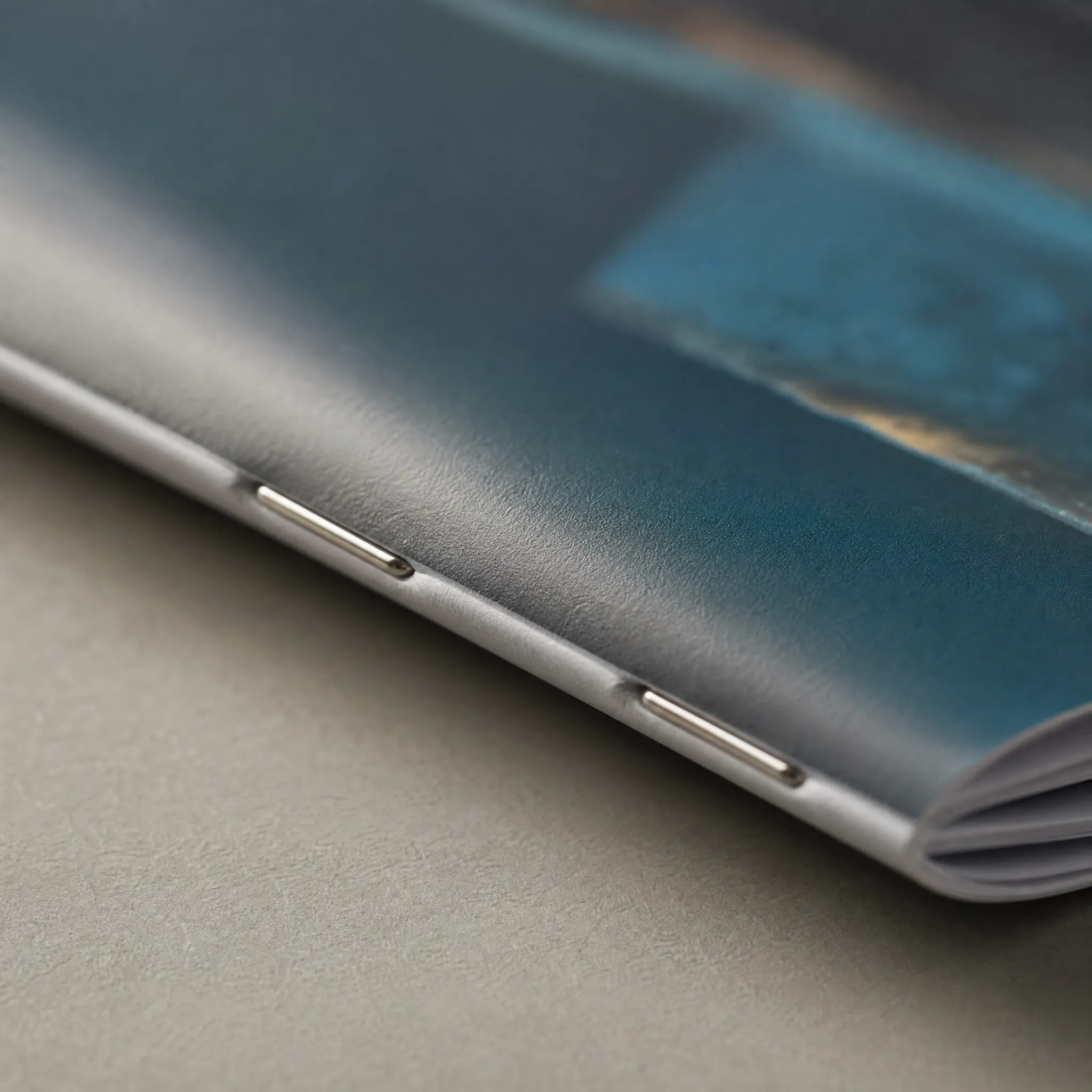
Saddle stitch binding ranks among the most widely used booklet binding methods in commercial printing. The process uses metal staples driven through the fold line of nested pages to create a clean, secure spine. Print shops around the world rely on this technique for magazines, catalogs, brochures, and countless other printed materials.
Why is it called saddle stitching? The name comes from the machinery itself. During assembly, folded signatures drape over a V-shaped conveyor belt that resembles a horse’s saddle. The pages hang down on both sides while stapling heads fire wire stitches through the center fold. This simple mechanical action gives the method both its name and its reputation for speed.
Saddle stitch binding works best for publications with lower page counts. Most projects fall between 8 and 80 pages, though 16 to 64 pages represents the sweet spot for quality and durability. The binding method demands that total page counts land in multiples of four because each printed sheet, when folded in half, creates four distinct pages.
Compared to perfect binding, wire-o, or case binding, saddle stitching costs significantly less. The straightforward workflow — fold, gather, stitch, trim — keeps production time short and equipment requirements modest. Small runs and large volumes alike benefit from this efficiency, which explains why the method has remained a staple of the printing industry for decades.
How the Saddle Stitch Process Works
The saddle stitch binding line operates as a coordinated sequence of mechanical steps. Each stage builds on the previous one, and the entire process runs on a single continuous production line. Understanding this flow helps print buyers appreciate both the speed and the constraints of the method.
First, the printed sheets arrive from the press as large flat sheets containing multiple pages arranged in an imposition layout. These sheets go through a folder that creases each one precisely in half. The folded product is called a signature. Each signature typically holds four, eight, or sixteen pages depending on the original sheet size and the finished trim dimensions.
Next, the signatures move to the gathering section. Here, mechanical arms pick up each signature in sequence and drop them onto the saddle conveyor. The signatures nest inside one another — the first signature becomes the outer cover, and subsequent signatures stack from the inside out. A small lap or lip on one edge of each signature helps the machine open the folded piece so it drapes correctly over the saddle.
The gathered booklet then travels along the saddle conveyor toward the stitching heads. At the stitching station, two or three wire staples fire through the center fold from the outside. The staple legs pass through all nested pages and clinch against a metal block on the inside. This produces a tight, flat closure that holds every page securely in place.
After stitching, the bound booklet moves to a three-knife trimmer. This station trims the head, foot, and face edges to the final finished size. The result is a clean, square-edged booklet ready for packaging and shipment. The entire line — from fold to finished product — takes only seconds per copy.
Modern saddle stitch lines can produce thousands of booklets per hour. Automated quality checks monitor staple placement, trim accuracy, and page sequence throughout the run. This consistent output makes saddle stitching the default choice for high-volume periodical printing and time-sensitive commercial jobs.
Key Advantages of Saddle Stitch Binding
Saddle stitching offers a distinct set of benefits that keep it relevant across many printing applications. Print buyers choose this method for reasons that go well beyond price alone.
Cost Efficiency
No other commercial binding method matches saddle stitching for economy. The process avoids expensive adhesives and specialized binding machinery. It uses simple metal wire — typically two staples per booklet — and the entire binding step happens in a single inline operation. Material costs stay low because the cover comes from the same stock as the interior pages in most self-cover projects. Even when using a heavier cover stock, the incremental cost remains modest compared to perfect binding or case binding alternatives.
Production Speed
The inline nature of saddle stitching eliminates batch-processing delays. In perfect binding, operators must wait for glue to cure before trimming can proceed. Wire-o and spiral binding require separate punching and coil-insertion steps. Saddle stitching combines folding, gathering, stapling, and trimming into one continuous workflow. Rush orders and tight deadlines favor this method heavily.
Lay-Flat Design
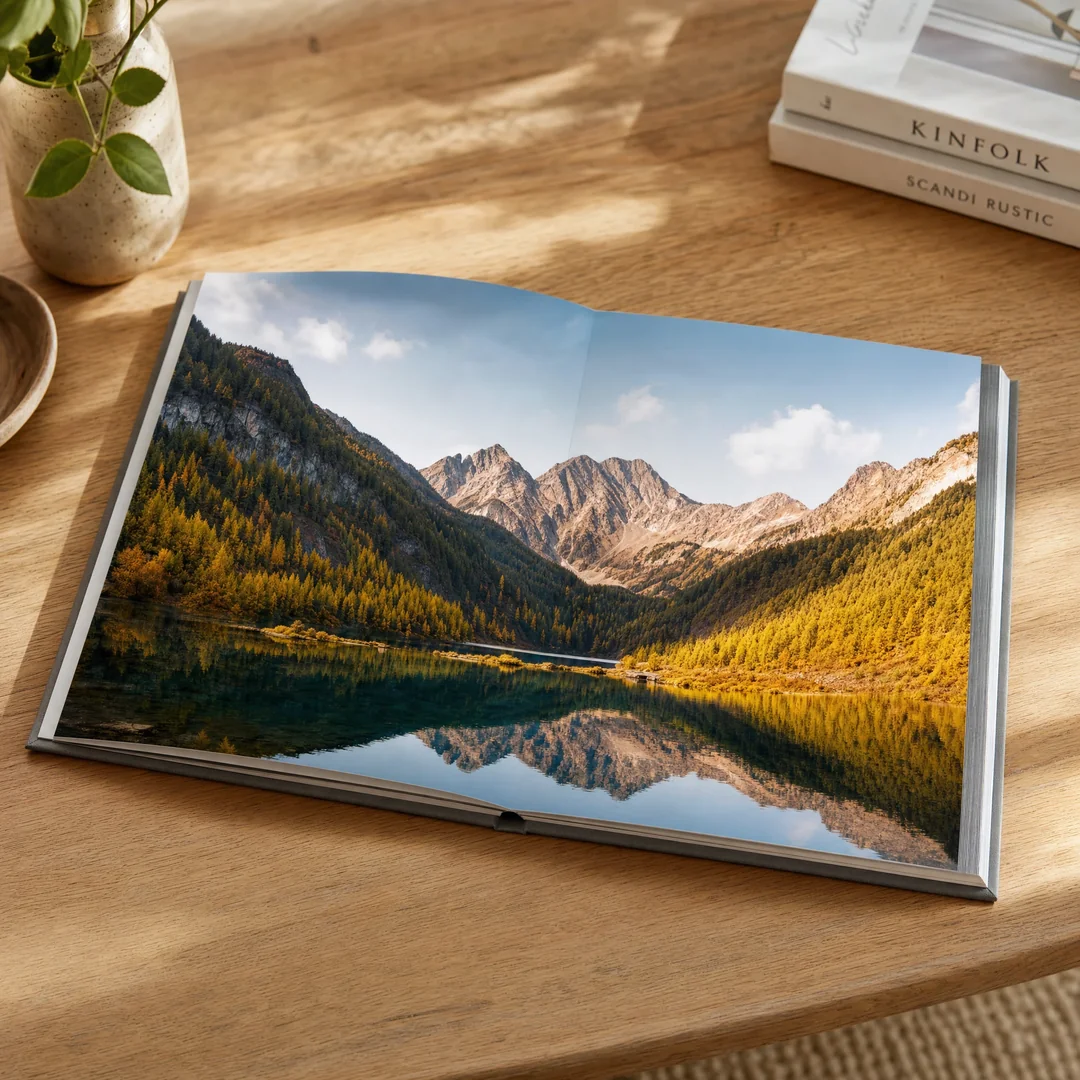
Saddle-stitched booklets open flat without fighting the spine. When you set a saddle-stitched catalog on a table, it stays open naturally. Readers can view full-page spreads without losing content to the gutter. Perfect-bound books, by contrast, have a curved spine that resists flat opening. The lay-flat property matters for instruction manuals, recipe books, sheet music, and any reference material meant to stay open during use.
Versatility in Paper and Sizes
Saddle stitching accommodates a broad range of paper stocks and finished dimensions. Coated papers, uncoated text, lightweight newsprint, and heavy cover stocks all run successfully through saddle stitch lines. Common finished sizes include A4 (210 x 297 mm), A5 (148 x 210 mm), US Letter (8.5 x 11 inches), and a variety of custom square and landscape formats. The method also handles mixed-stock projects where the cover uses heavier paper than the interior pages.
Lightweight and Portable
Saddle-stitched publications weigh less than their perfect-bound or wire-o equivalents. The absence of heavy adhesive layers and thick spine materials reduces overall weight significantly. Lower weight translates directly to lower postage costs for direct mail campaigns and distribution logistics. Event programs, trade show materials, and mass-mail catalogs benefit especially from this portability advantage.
Limitations to Keep in Mind
Every binding method involves trade-offs. Saddle stitching reaches its practical limits in several areas that print buyers should understand before committing to a project.
Page Count Constraints
Wire staples can only penetrate so many sheets. The practical maximum for saddle stitching sits around 80 pages with lightweight text stock, dropping to roughly 40 pages with heavier cover-weight paper. Beyond these thresholds, staples struggle to close properly. Pages near the center of the booklet start pulling away from the spine. Multi-pass stitching can extend the range slightly, but serious bulk demands a different binding approach.
Durability Considerations
Saddle-stitched booklets perform well under normal handling but show wear faster than perfect-bound or case-bound books under heavy use. The staples can loosen over time if the booklet gets repeatedly bent backwards. The cover and first few pages may begin to separate at the fold line after extended handling. Reference manuals and textbooks that see daily use generally need perfect binding or hardcover construction instead.
Aesthetic Positioning
Saddle stitching reads as professional and clean but not premium or luxury-grade. Visible staples on the spine and the absence of a printable spine surface limit the visual impact. Bookstore shelves and coffee-table displays favor perfect-bound or hardcover formats with spine printing. Saddle stitch suits functional, widely distributed, or short-lifecycle publications rather than keepsake or gift editions.
Page Creep
When multiple signatures nest inside one another, the inner pages push outward beyond the outer pages at the face edge. This phenomenon is called creep or pushout. Even a modest 20-page booklet shows noticeable creep after trimming if the layout ignores it. Pre-press teams compensate by shifting inner page content slightly toward the spine during imposition. Print buyers who design their own files must account for creep or risk losing page numbers and margin content to the trim blade.
Ideal Page Count and Paper Guide
Page count drives nearly every decision in saddle stitch planning. The binding method demands page counts divisible by four, but the ideal range depends on paper weight and the intended use of the finished piece.
For thin booklets such as event programs or quick-reference guides, 8 to 16 pages works beautifully. These lightweight publications fold, stitch, and trim with minimal mechanical stress on the staples. Self-cover designs — where the cover and interior share the same paper stock — keep costs at their absolute minimum.
Catalogs, magazines, and corporate lookbooks typically land between 24 and 48 pages. At this range, the paper choice starts to matter more. Coated text stocks in the 80 to 128 gsm range provide a smooth surface for color images while keeping the spine pliable enough for clean folding. Cover stock in the 200 to 300 gsm range adds durability and a premium hand-feel without overwhelming the staples.
For the upper range, 52 to 80 pages, lightweight text stock becomes essential. Papers in the 60 to 80 gsm range fold cleanly and keep total booklet thickness manageable. Heavier coated stocks at these page counts can cause staple blowout at the head and foot of the spine. Every project over 64 pages should get a pre-production consultation with the bindery to confirm feasibility.
Paper grain direction also influences the final product. Sheets should run with the grain parallel to the spine whenever possible. Cross-grain folding produces cracked spines, uneven folds, and trimmed booklets that refuse to lie flat. Most commercial print shops manage grain direction automatically in their imposition software, but designers ordering custom stock should verify orientation before committing to press.
Best Projects for Saddle Stitch Binding
Certain printed products align almost perfectly with what saddle stitching does best. Recognizing these matches helps print buyers choose the right method from the start.
Corporate Brochures and Lookbooks
Company brochures, service catalogs, and product lookbooks thrive in saddle stitch format. These materials typically run 12 to 40 pages and need to feel substantial without becoming unwieldy. The lay-flat property allows full-bleed photography spreads that stay visible across the fold. Sales teams appreciate the light weight for carrying multiple copies to client meetings.
Event Programs and Calendars
Conference programs, theater playbills, sports event guides, and wall calendars all share a common need for short production runs with fast turnaround. Saddle stitching delivers exactly that. Calendars especially benefit from the flat-opening design — each month stays visible without the user wrestling against a stiff spine.
Instruction Manuals and User Guides
Product manuals and quick-start guides need to stay open on a workbench while someone follows the steps. Saddle stitching outperforms perfect binding here by a wide margin. The booklet stays flat, the user keeps both hands free, and the pages turn easily without snapping shut. For products sold at retail, the lower binding cost also keeps the overall packaging budget in check.
Comic Books and Zines
The traditional comic book format owes its existence to saddle stitching. Standard comic books run 20 to 32 pages with a self-cover, making them a natural fit for the method. Independent zines and small-press publications also gravitate toward saddle stitch for its low setup costs and fast production. The visible staples have become part of the aesthetic vocabulary of these formats rather than something to hide.
Newsletters and Membership Bulletins
Nonprofits, professional associations, and community groups produce regular newsletters that benefit from saddle stitch binding. The format feels more substantial than a loose-leaf mailer but costs far less than perfect binding. Members can file each issue on a shelf without the publication falling apart, and the low weight keeps postage costs predictable.
Workbooks, Activity Books, and Sticker Books
Children’s activity books, educational workbooks, and sticker-book inserts all suit saddle stitch binding. The flat-open design encourages writing and drawing across the full page. Staple binding keeps individual sheets from falling out — a real concern with glue-bound activity books that see heavy handling by small hands.
Notebooks and Journals
Thin notebooks and pocket journals ranging from 16 to 48 pages make excellent saddle-stitched products. These compact formats fit easily into bags and pockets. The staples hold up well through reasonable use, and the clean folded edge provides a functional spine without bulk.
The Complete Production Process
Moving from a digital file to a finished saddle-stitched booklet involves multiple stages. Each step contributes to the final quality, and skipping or rushing any phase produces visible defects. Here is the full sequence as it runs in a professional bindery.
Step 1: Computer-to-Plate (CTP). The production run starts in pre-press. Rasterized page data from the imposition file gets imaged onto aluminum printing plates using a CTP laser system. Each color separation — cyan, magenta, yellow, and black for standard four-color process — receives its own plate. Modern CTP systems achieve resolutions up to 2400 dpi, delivering the sharp dot structure required for high-quality offset printing.
Step 2: Offset Printing. The plates mount onto the press cylinders, and the production run begins. Offset presses apply ink to the non-image areas of the plate via a blanket cylinder, transferring the image to paper with consistent color density. Large-format presses print multiple pages on a single sheet in an imposition layout that maps each page to its correct position after folding.
Step 3: Folding. Press sheets move to the folding machine where mechanical rollers and folding plates crease each sheet precisely in half. For saddle stitch projects, this is typically a single right-angle fold. The folded sheets are now called signatures. Cross-folds are rare in saddle stitch work because they complicate the gathering stage.
Step 4: Gathering. Signatures load into the gathering stations of the saddle stitcher in page-sequence order. The machine opens each signature at the centerfold and drops it onto the moving saddle conveyor. Signatures nest one inside the next, building the complete booklet block from the outside cover inward.
Step 5: Stitching. The nested booklet passes under the stitching heads. Two or three wire staples — depending on trim size and booklet thickness — fire through the spine fold. The staple legs clinch against a forming block on the inside, producing a tight closed loop that holds all signatures together. Staple wire gauge selection depends on the total booklet thickness.
Step 6: Trimming. A three-knife trimmer cuts the three open edges — head, foot, and face — to the final finished dimensions. The trim blades operate simultaneously for square, parallel edges. This step also removes the folded lap from the signature edges, leaving a clean book block.
Step 7: Quality Inspection. Each booklet passes through an automated inspection station that checks staple position, staple clinch quality, trim squareness, page sequence, and print registration. Operators pull random samples for manual inspection throughout the run. Defective copies get flagged and separated from the production stream.
File Preparation Checklist
Proper file setup prevents production delays and ensures your saddle-stitched booklet looks exactly as intended. Print buyers who handle their own design files should pay close attention to each item on this list.
1. Page Count Must Be a Multiple of Four. Every saddle-stitched booklet requires a total page count divisible by four. This includes the front cover, back cover, and all interior pages. A 20-page file, for example, will always produce a blank page somewhere in the finished product. Check your page count before exporting the final file.
2. Bleed Extends at Least 3 mm Beyond Trim. Any image, color block, or graphic that touches the edge of the finished page must extend past the trim line. The standard bleed allowance is 3 mm or 1/8 inch on all sides. Without bleed, slight trim variations produce thin white slivers along the page edges. This defect is immediately visible and nearly impossible to fix after production.
3. Safe Zone Maintains 6 mm Inside Trim. All critical content — text, logos, page numbers, and key visual elements — should stay at least 6 mm or 1/4 inch inside the trim line. This safe zone protects against content loss if the trim blade shifts slightly during production. Page numbers placed too close to the face edge are the most common casualty of trimming.
4. Image Resolution Set to 300 dpi Minimum. All raster images in the document must use a resolution of at least 300 dpi at the final print size. Lower-resolution images appear soft or pixelated on press, especially on coated paper stocks that reveal every detail. Vector artwork — logos, illustrations, and type — should remain in vector format throughout the design process.
5. Page Order Follows Reader Sequence. Supply your file as single, sequential pages in reading order — page 1 first, page 2 next, and so on through the back cover. Do not attempt to arrange pages in printer’s imposition or folding order. The pre-press department handles imposition mapping using specialized software. Providing files in reader sequence avoids confusion and reduces setup time.
6. Creep Allowance Considered for Projects Over 20 Pages. Nesting multiple signatures pushes inner pages outward at the face edge. For projects exceeding 20 pages, consult your print provider about creep compensation. Most pre-press departments can apply incremental shifts to inner page content during the imposition stage. If you manage your own imposition, your layout software likely includes a creep adjustment feature.
7. Color Space Set to CMYK. Commercial offset presses print in CMYK — cyan, magenta, yellow, and black. RGB images and spot colors get converted during pre-press, often with visible color shifts. Build your file in CMYK mode from the start to maintain predictable color output. Embed the appropriate ICC color profile for the target press and paper stock.
8. Fonts Embedded or Converted to Outlines. Every font used in the document must travel with the file. Embed fonts in the PDF export settings, or convert all type to outlines before sending. Missing fonts cause text reflow that can break layouts and introduce typographic errors that nobody catches until the printed copies arrive.
Saddle Stitch vs. Single Sewn vs. Loop Stitch
Three wire-based binding methods serve different needs within the same family of binding techniques. Knowing the distinctions helps print buyers choose the right option for each project.
Saddle Stitch
The standard two-staple method described throughout this guide. It delivers the lowest production cost and the fastest turnaround time of any wire binding. Use saddle stitching for short-lifecycle publications, high-volume distribution, and any project where the staples perform their function without needing to do anything beyond holding pages together. Most commercial magazines, catalogs, and programs ship with saddle stitch binding.
Single Sewn (Side Stitch)
Single sewn binding uses wire staples driven through the entire book block from front to back, near the spine edge. Unlike saddle stitch, where staples pass through the fold, side stitching punches through the face of the stacked pages. This creates a much stronger mechanical bond because the staples travel through every sheet rather than just the fold line.
The durability gain comes with a trade-off: side-stitched books do not open flat. The staples anchor the pages near the binding edge, preventing the book from lying open naturally. Single sewing suits reference manuals, legal documents, and archival records where durability matters more than reading comfort. Production costs run higher than saddle stitch because the process requires a separate stitching step and a different machine configuration.
Loop Stitch
Loop stitching modifies the standard saddle stitch by forming an extended loop in the staple wire on the outside of the spine. The loop protrudes about 6 to 8 mm beyond the fold, creating attachment points for three-ring binders or filing systems. Users can slide a loop-stitched booklet directly into a binder without punching holes or adding a separate binding element.
This method targets training manuals, procedure guides, and reference materials destined for binder storage. Loop stitching costs slightly more than standard saddle stitch due to the specialized stitching heads and slower running speed. The page count limits mirror standard saddle stitch — the loops share the same staple penetration constraints. Loop stitch also works well for sample books and swatch kits that need to sit inside a larger binder system.
Saddle Stitch vs. Perfect Binding vs. Wire-O
When choosing a binding method, the decision often comes down to three strong contenders. Each serves a distinct niche, and understanding the differences prevents costly mismatches between the project and the binding technology.
Saddle Stitch Binding
Page range: 8 to 80 pages; best results under 64 pages.
Cost: The lowest of any commercial binding method. No adhesives, no coil materials, and a single inline production step.
Spine: Folded paper edge with visible staples. No printable spine surface.
Lay-flat: Excellent. Opens flat without resistance.
Durability: Moderate. Staples may loosen with aggressive handling.
Saddle stitch works best for short-run publications, periodicals, brochures, and anything that needs fast turnaround at the lowest possible cost. The absence of a printable spine limits its use in retail book environments but has little impact on direct-distribution and event-based materials.
Perfect Binding
Page range: 28 to 400+ pages; the go-to method for thicker publications.
Cost: Higher than saddle stitch due to adhesive materials and separate binding and trimming stages.
Spine: Flat, square, and printable. This is the standard for trade paperbacks and professional reports.
Lay-flat: Poor. The glued spine resists flat opening, and content near the gutter can be hard to read.
Durability: Good. Glue-bound pages hold up well under repeated reading but can crack at the spine over years of use.
Perfect binding suits novels, non-fiction books, thick catalogs, and annual reports where spine printing adds professional value. The method supports much higher page counts than saddle stitch and produces a bookstore-ready appearance. Trade-offs include higher cost, longer production time, and the inability to open flat.
Wire-O Binding
Page range: 16 to 275 pages; the most flexible option for thick documents.
Cost: Higher than saddle stitch. Requires separate hole-punching and wire insertion steps.
Spine: Visible C-shaped wire loops threaded through punched holes. The wire spine creates a distinct industrial or office-supply aesthetic.
Lay-flat: Excellent. Pages rotate a full 360 degrees around the wire loops, and the book stays open on any page without hands holding it down.
Durability: Very good. The metal wire spine resists wear, and individual pages cannot pull free.
Wire-O binding dominates the planner, calendar, notebook, and training-manual categories. The full lay-flat capability makes it the first choice for cookbooks and music books that sit open on a stand. The wire spine adds thickness and weight compared to saddle stitch, and the visible metal loops rule out spine printing. Wire-O also costs more, both in materials and production time.
How to Choose
Three questions usually settle the decision. First, what is the page count? Under 64 pages heavily favors saddle stitch; over 80 pages rules it out. Second, what is the budget? Tight budgets demand saddle stitch for any project it can physically handle. Third, how will the reader use the finished piece? Books that stay open during use favor saddle stitch or wire-o. Books that sit on shelves and get picked up occasionally work well with perfect binding. When the answers point in different directions, prioritize the reading experience — the binding should serve the content, not the other way around.
Frequently Asked Questions
What paper sizes can EcoPrinting saddle stitch?
Our saddle stitch line handles standard sizes including A4, A5, A6, US Letter, and US Half Letter. We also accommodate custom dimensions up to 17 inches head-to-foot and 12.5 inches spine-to-face. Square formats, landscape orientations, and slim booklets all run without issue. Contact our pre-press team for projects outside standard dimensions — we will confirm feasibility before you commit to a production schedule.
What is the minimum and maximum page count?
The minimum page count for saddle stitching is 8 pages, including the cover. The practical maximum depends on paper weight. Lightweight text stock (60 to 80 gsm) allows up to 80 pages. Medium-weight stock (100 to 128 gsm) tops out around 64 pages. Heavy coated stock (150 gsm and above) works best at 48 pages or fewer. Every project must have a page count divisible by four.
Does saddle stitching work for large print runs?
Yes. Saddle stitch lines are built for volume. Our equipment runs thousands of booklets per hour with automated quality control throughout the production. The inline workflow — fold, gather, stitch, trim — eliminates batch-processing bottlenecks that slow down other binding methods. Large corporate brochures, mass-mail catalogs, and high-circulation newsletters all benefit from saddle stitch efficiency at scale.
How long does saddle stitch production take?
Standard production lead time for saddle stitch projects at EcoPrinting is 8 to 12 business days from file approval. Rush service shortens this to 4 to 6 business days for time-sensitive projects. The exact timeline depends on print run size, paper stock availability, and finishing requirements beyond standard trimming. We confirm the delivery date at the proof stage so you can plan your distribution with confidence.
Can I mix different paper stocks in the same booklet?
Absolutely. Many saddle-stitched projects use a heavier cover stock to frame lighter interior pages. For example, a 250 gsm coated cover with 100 gsm interior text stock creates a premium hand-feel while keeping total booklet weight manageable. Mixed-stock projects need proper grain-direction alignment and may require scoring on the cover fold to prevent cracking. Our pre-press team reviews mixed-stock files to confirm compatibility before production begins.
Does saddle stitch support multiple sections or chapters?
Yes. Saddle stitch booklets can include distinct sections marked by design treatments, divider pages, or stock changes. The structure lives entirely in the page layout rather than the binding mechanism. Unlike ring-bound or post-bound formats that allow physical section separation, saddle-stitched sections exist as visual and organizational devices within a single bound block. Designers should plan section transitions to work within the continuous page sequence of the booklet.
Why Choose EcoPrinting for Saddle Stitch Binding?
Binding quality depends on equipment calibration, operator experience, and pre-press discipline. EcoPrinting brings all three to every saddle stitch project.
Our production floor runs modern saddle stitch lines with automated quality monitoring at every stage. Staple placement accuracy, trim squareness, and page-sequence verification happen in real time, not after the run finishes. This inline inspection catches defects before they become reprints, saving time and material on every order.
Our pre-press team reviews every file submission for bleed compliance, creep compensation, image resolution, and color space before plates go to press. We flag potential issues and propose fixes instead of silently running a flawed layout. This upfront attention prevents the most common saddle stitch defects — incomplete bleeds, vanishing page numbers, and misregistered crossovers — that plague rushed production workflows.
We stock a wide range of paper options including FSC-certified stocks for clients with sustainability requirements. Coated, uncoated, recycled, and specialty finishes are all available for saddle stitch projects. Our paper buyers maintain relationships with major mills so we can source specific stocks quickly when an off-the-shelf option does not fit the brief.
EcoPrinting also supports the full lifecycle of your printed project. Beyond saddle stitch binding, we offer lamination, spot UV coating, die cutting, foil stamping, and fulfillment services. A single print partner for binding and finishing simplifies logistics and keeps your project timeline under one roof.
Ready to start your saddle stitch project? Contact our team for a quote, or upload your file for a complimentary pre-press review. We will confirm page count, paper stock, and binding compatibility within one business day — no obligation, no pressure, just the information you need to make the right print decision.