Introduction: What Makes Specialty Book Printing Different
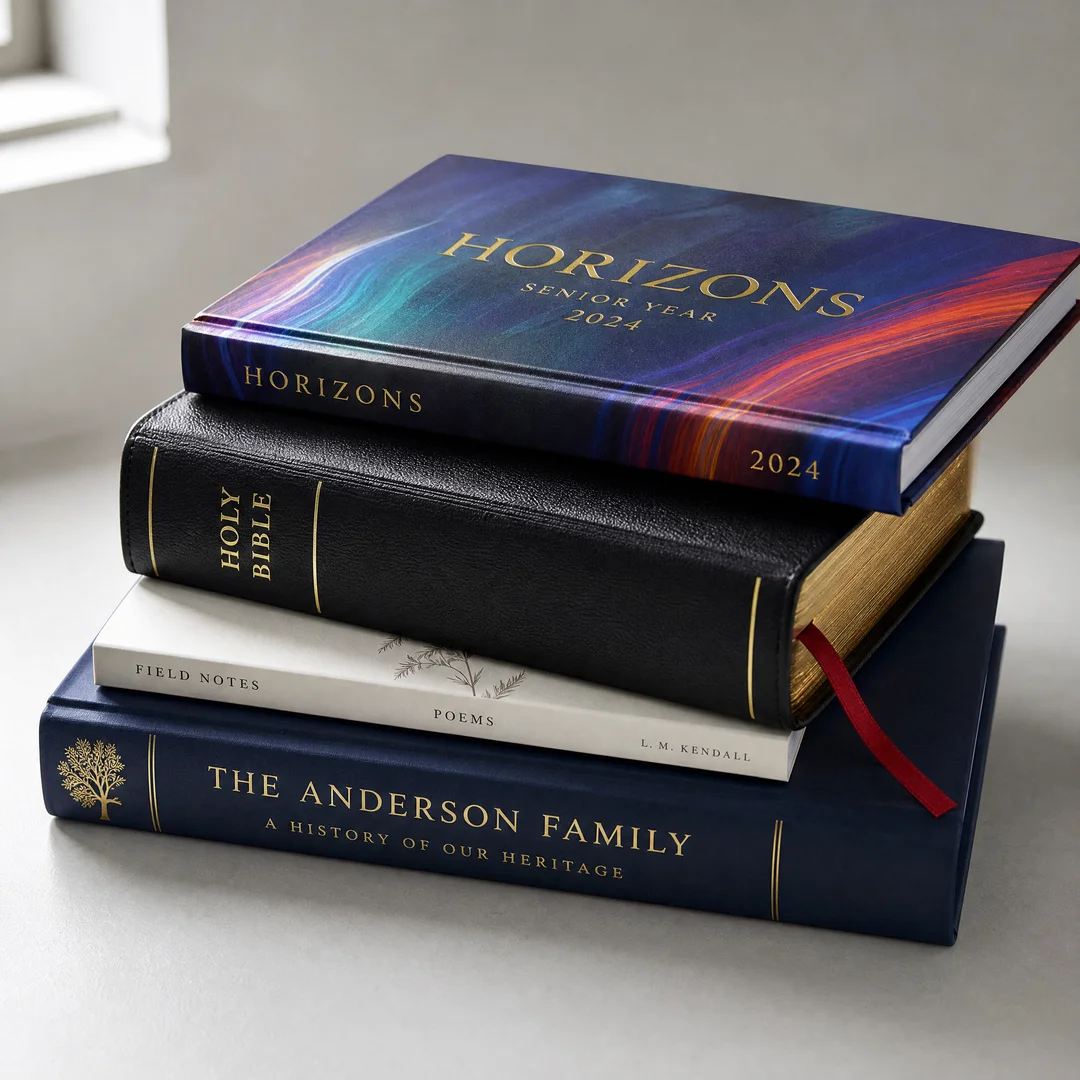
Not all books are created equal. A mass-market paperback follows a standardized production path that keeps costs low and turnaround fast. A specialty book, on the other hand, demands a fundamentally different approach. Specialty book printing encompasses niche categories where standard trade book specifications do not apply: yearbooks with hundreds of photo pages, Bibles printed on ultra-thin 30gsm paper, poetry chapbooks where every typographic detail matters, and family history books that blend archival photographs with genealogical charts.
These projects share a common challenge. They require production techniques, paper stocks, binding methods, and finishing options that fall outside the default settings of most commercial printers. The good news for publishers, self-publishing authors, schools, and religious organizations is that China has evolved into the global center for specialty book printing. Decades of investment in offset and digital press technology, combined with a deep pool of skilled hand-finishing labor, mean that Chinese printing factories can deliver specialty books with a level of craftsmanship that is increasingly hard to source domestically, often at 40 to 60 percent lower unit costs.
This guide explores how specialty book printing in China serves five distinct niche categories: yearbooks, Bibles and religious books, poetry collections, memoirs, and family history books. In addition, it covers the binding methods, paper choices, cover materials, and finishing techniques that turn a standard printed block of pages into a cherished, lasting object. If you have been wondering whether offshore printing can handle the unique demands of your project, the answer is yes, and this guide will show you exactly how.
Yearbook Printing in China
Yearbooks sit at the intersection of high page counts, heavy image content, and emotional significance. A school or university yearbook is not a throwaway item. It gets handled dozens of times during signing parties, sits on shelves for decades, and serves as a collective memory artifact for entire graduating classes. Yearbook printing china has become a mature export category precisely because Chinese factories understand these durability and reproduction requirements.
Durability and Binding for Yearbooks
The binding is the single most important structural decision for a yearbook. Hardcover case binding remains the gold standard. Pages are printed, folded into signatures, sewn together through the fold, and then cased into a rigid cover made from 2 to 3 mm gray board wrapped with coated paper or cloth. This sewn-and-cased construction means the book opens flat for easy signing and will not shed pages after repeated use. For schools working with tighter budgets, sewn perfect binding, where signatures are sewn before the spine glue is applied, offers a middle ground between durability and cost. Spiral and wire-O binding options provide lay-flat functionality that works well for thinner yearbooks or activity supplements.
Paper and Color Reproduction
Yearbooks are image-heavy by nature. Hundreds of portrait photos, candid shots, event spreads, and team pictures demand consistent color reproduction across every copy in the print run. Chinese printers typically recommend 128gsm or 157gsm coated paper for yearbook interiors. Coated stock holds ink on the surface rather than absorbing it, which produces sharper detail and more vibrant color. For cover customization, factories offer gloss lamination for a shiny, protective finish, matte lamination for a subdued, elegant look, and soft-touch lamination for a velvety tactile experience. Foil stamping the school name and graduation year on the cover adds a ceremonial quality that students and parents appreciate.
Bible and Religious Book Printing
China occupies a unique position in global religious publishing. The Amity Printing Company in Nanjing is the world’s largest Bible printer, having produced over 200 million copies since its founding. While Amity handles large-scale institutional orders, a parallel ecosystem of commercial bible printing china specialists serves churches, ministries, and religious publishers worldwide with smaller custom runs.
The Challenge of Thin Paper
What makes Bible printing technically distinct is the paper. A standard trade paperback uses 60lb to 80lb offset stock; a Bible uses Bible paper weighing just 30gsm to 50gsm (roughly 20lb to 34lb text weight). This paper must be thin enough to keep a 1,200-page volume portable, opaque enough to prevent show-through from the reverse side, and strong enough to withstand decades of daily use without tearing. Chinese paper mills produce dedicated Bible paper in both bright white and cream tones, with opacity ratings that allow legible printing on both sides of an exceptionally thin sheet.
Binding and Cover Options for Religious Books
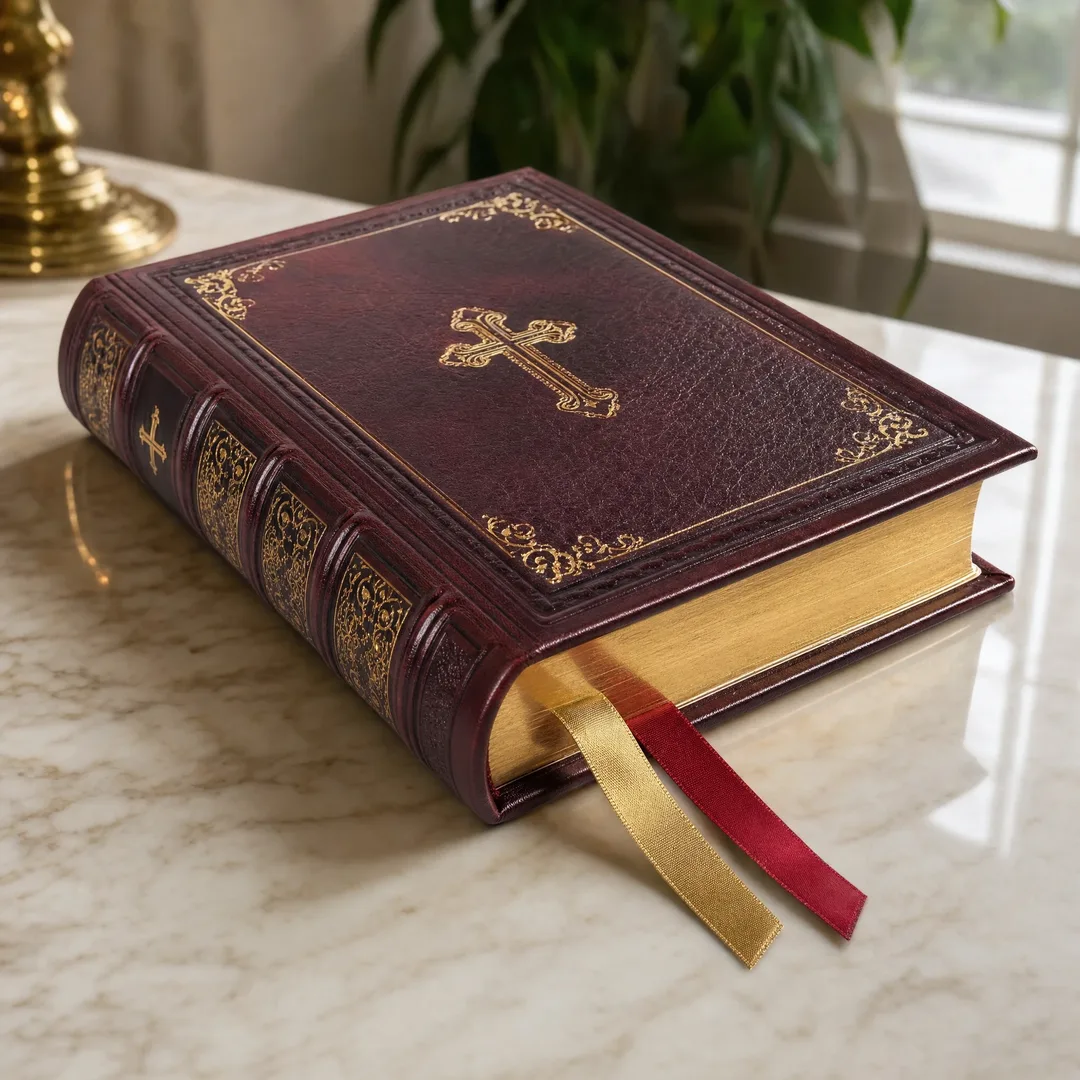
Religious books span a wide range beyond the Bible itself: hymnals, prayer books, devotional guides, study Bibles with commentary, and custom editions for special occasions. The binding options available from Chinese printers reflect this diversity. Flexibound binding, which pairs a sewn text block with a flexible leather or faux-leather cover, has become especially popular for Bibles because the spine is not fully glued, allowing the book to open flat on a lectern or lap. For premium gift editions, factories offer genuine leather or PU leather covers with foil stamping, raised spine bands, gilt edges, ribbon markers, and even thumb indexing tabs.
For organizations ordering religious book printing in quantities of 500 copies or more, offset printing in China typically delivers unit costs 40 to 50 percent below equivalent domestic production, with no sacrifice in binding quality. Whether you need 500 leather-bound pew Bibles or 10,000 softcover devotional booklets, the production infrastructure exists to handle it.
Poetry Book Printing
Poetry occupies a special place in publishing. A poetry collection is rarely a volume someone reads once and discards. It is returned to, underlined, dog-eared, and gifted. The physical object matters. This makes poetry book printing a discipline where paper choice, typography, white space, and binding finesse carry disproportionate weight relative to the word count.
The Chapbook and the Slim Volume
Most poetry collections are short. A full-length collection might run 80 to 120 pages; a chapbook might be 24 to 48 pages. This low page count creates a binding challenge that Chinese printers solve through multiple approaches. Saddle stitching works for chapbooks up to about 48 pages and keeps costs very low. For collections in the 48-to-120-page range, perfect binding with a heavier cover stock creates a proper spine wide enough to carry the title text. Some poets prefer a French-fold cover, where the cover paper is folded back on itself at the edges, creating a soft, tactile lip around the book block.
Paper and Typography Considerations
A poetry book is fundamentally about the relationship between text and page. The paper should feel substantial without being stiff. Uncoated offset stock in 80lb to 100lb text weight provides a natural, slightly textured surface that invites touch. Cream or natural-white tones are overwhelmingly preferred over bright white, as they reduce eye strain during extended reading and lend a warmer, more literary feel. Leading, margins, and the placement of line breaks demand precise communication with the printer. Chinese factories experienced in poetry production understand that the ghost of a shifted line break ruins a poem, and they treat file preparation and proofing with corresponding care.
Memoir and Family History Book Printing
Memoir printing and family history book printing represent one of the fastest-growing segments in specialty book production. Unlike trade memoirs destined for bookstore shelves, most privately commissioned memoirs and family histories are produced in small quantities: 50 to 500 copies, distributed among family members, and designed as heirlooms rather than commercial products.
Handling Photographs and Archival Documents
A family history book typically mixes old black-and-white photographs, color snapshots, scanned documents, maps, family tree diagrams, and narrative text. This mixed-content profile demands careful prepress work. Photos pulled from old albums or scanned from faded prints often need color correction and dust removal before they are print-ready. Chinese printers with dedicated prepress departments can handle this restoration work as an add-on service, saving authors the cost of hiring a separate photo editor.
For the interior pages, a 100lb to 128gsm coated matte stock strikes the right balance. It is heavy enough to prevent show-through when photos are printed on both sides of a sheet, yet the matte finish keeps text readable without the glare that glossy paper introduces. For authors who want every photograph to look its best, coating one side of each sheet and leaving the text-heavy reverse side uncoated is technically possible, though it raises the per-unit cost.
Heirloom-Quality Binding
A family history is meant to last generations. Sewn hardcover case binding with acid-free paper is the baseline recommendation for any project intended as an heirloom. Acid-free paper resists yellowing and embrittlement over decades, while sewn binding means the pages will not detach from the spine as the glue ages. Many families choose to dress these books in cloth covers with foil-stamped titles, mimicking the look of classic library editions. Dust jackets with a family photograph on the front and a genealogical summary on the flaps add both protection and narrative context.
For shorter runs, some Chinese printers offer lay-flat photo book binding, where each spread is printed on a single sheet and mounted to a rigid substrate. This option works especially well for photo-heavy family histories where images span across the gutter. The cost per unit is higher, but the presentation quality is unmatched for small quantities.
Specialty Binding and Customization Options
The binding is where a specialty book announces its quality before the reader turns a single page. Chinese printing factories offer a comprehensive menu of binding styles, each suited to different book types, budgets, and durability requirements.
Hardcover Case Binding
Case binding is the premium option. The book block is sewn through the fold into signatures and then glued into a rigid case made from gray board wrapped with paper, cloth, or leather. The spine can be square for a crisp modern look or rounded for thick volumes that need to open flat. Case-bound books are the standard for yearbooks, premium Bibles, family histories, and high-end poetry collections.
Sewn Perfect Binding
Sewn perfect binding bridges softcover economics with hardcover durability. Signatures are sewn together before the spine glue is applied, creating a paperback that opens more readily and resists page detachment better than standard perfect binding. It is the recommended binding for poetry collections, memoirs, and devotional books where the budget supports a step up from basic paperback construction.
Flexibound Binding
Flexibound construction pairs a sewn book block with a flexible cover material, typically leather, faux leather, or heavy laminated paper. The spine is attached only at the endpapers, leaving the cover free to flex with the book’s movement. This binding has become the dominant choice for premium Bibles and journals because it combines hardcover durability with the comfortable, open-flat reading experience of a paperback.
Spiral and Wire-O Binding
For books that must lie completely flat, spiral (plastic coil) and wire-O (twin-loop metal wire) binding are the practical solutions. These are common for cookbooks, instructional manuals, and thin yearbook supplements. Wire-O binding projects a more professional appearance and is available in a range of metal finishes including silver, black, and bronze.
Saddle Stitching
Saddle stitching, where folded sheets are stapled through the center fold, is the simplest and most economical binding method. It is limited to roughly 48 to 64 pages depending on paper weight, making it suitable for chapbooks, thin poetry pamphlets, and short-run event booklets.
Paper, Cover, and Finishing for Specialty Books
Paper Stock Selection
Paper is the largest single material cost in book production, and the choice ripples through every aspect of the final product: weight, thickness, opacity, texture, color reproduction, and perceived value. For specialty book printing in China, the paper options break down into four broad categories.
Bible paper is designed for maximal page count in minimal thickness. At 30gsm to 50gsm, it is roughly one-quarter the thickness of standard offset paper. It requires specialized handling during printing and binding because the sheets are so thin they can wrinkle or tear on standard press feeders. Only printers with dedicated thin-paper production lines should be trusted with Bible paper projects.
Uncoated offset paper is the workhorse of literary publishing. Available in weights from 50lb to 100lb text and in shades from bright white to warm cream, uncoated stock absorbs ink into the fiber rather than holding it on the surface. This creates a natural, matte reading surface ideal for poetry, memoirs, and text-heavy books. Cream and natural-white offset papers are especially popular for family histories because they evoke the warm tone of archival paper.
Coated paper in gloss, matte, or silk finish keeps ink on the surface for sharper detail and more saturated color. Gloss coated stock delivers the highest color pop and is standard for yearbook interiors. Matte coated stock provides strong image reproduction without the glare of gloss, making it a versatile choice for books that mix text and images.
Textured and specialty paper , including linen, felt, laid, and vellum finishes, adds tactile dimension. These papers are typically used as endsheets, title page inserts, or section dividers rather than full interior stocks because the texture can interfere with small text readability.
Cover Materials
The cover material sets expectations before the book is even opened. Chinese printers offer an extensive palette: coated art paper with lamination for colorful dust jackets and case wraps, cloth (linen, cotton, or buckram) for library-style hardcovers, PU leather and genuine leather for Bibles and premium gift editions, and uncoated kraft or textured stock for an artisanal, handcrafted aesthetic.
Specialty Finishing Techniques
Finishing is where Chinese printing’s labor-cost advantage is most pronounced. Techniques that are prohibitively expensive in Western markets due to hand-labor requirements become accessible at Chinese factory pricing. Foil stamping presses metallic or pigmented foil into the cover material under heat and pressure, creating a reflective title or design element. Embossing raises a design above the cover surface, while debossing presses it inward. Spot UV applies a glossy, raised clear coating to specific areas, creating contrast against a matte background. Gilded edges apply metallic foil to the page edges, a hallmark of premium Bibles and collector’s editions. Painted edges, where the page block is clamped and sprayed with color, have become a popular trend for special edition poetry and fiction. Ribbon markers, headbands, tailbands, and rounded spine construction complete the premium package.
The Production Process for Niche Book Types
Specialty book printing follows a production sequence that, while sharing the broad strokes of commercial book manufacturing, includes additional checkpoints and handwork stages that standard trade books skip entirely.
Step 1: Prepress and File Preparation
The prepress phase involves file inspection, color profile assignment, imposition layout, and proof generation. For mixed-content books like yearbooks and family histories, prepress technicians check that every image meets the minimum resolution threshold, typically 300 DPI at final print size. They also verify that text set in small point sizes, common in poetry and Bible printing, will remain legible after the ink gain inherent to offset printing. A digital or hard-copy proof is produced and shipped for client approval before plates are made.
Step 2: Plate Making and Press Setup
Offset printing requires aluminum printing plates for each color channel, typically CMYK. For books with metallic spot colors, such as gold chapter headings in a religious book, an additional plate is created. The press operator runs a make-ready sequence to align registration, balance ink density, and match the approved proof. For specialty books on thin paper, press speed is reduced and ink tack is adjusted to prevent the web from tearing or wrinkling.
Step 3: Printing
The actual print run is the fastest phase. Modern sheet-fed offset presses can print 10,000 to 15,000 sheets per hour. For short-run specialty books under 500 copies, digital printing with toner or inkjet technology eliminates plate costs entirely and allows print-on-demand economics, though the per-unit cost is higher than offset for quantities above 500.
Step 4: Post-Press Finishing
After printing, sheets are folded into signatures, gathered in sequence, and prepared for binding. This is where specialty books diverge from standard production. Hand-finishing steps may include tipping in a photo plate, inserting a vellum divider page, attaching a ribbon marker, rounding the spine, applying gilt edges, or wrapping a dust jacket. Each of these steps adds time and cost but also adds the distinctive quality that defines a specialty book.
Step 5: Quality Control and Packing
Before packing, each book is inspected for binding integrity, cover alignment, color consistency, and finishing quality. Books are then shrink-wrapped individually or in bundles, packed into corrugated cartons, palletized, and prepared for sea or air freight.
Cost and Timeline Guide
Understanding the cost structure of specialty book printing in China helps set realistic budgets and avoids surprises when quotations arrive.
Cost Components
The total landed cost of a book printed in China divides roughly into four buckets. Printing and binding accounts for approximately 50 to 60 percent of the total and covers plates, press time, paper, ink, binding labor, and finishing. Prepress and proofing adds 5 to 10 percent and covers file checks, color correction, and proof production and shipping. Freight and logistics represents 25 to 35 percent and varies dramatically based on whether you choose sea freight (4 to 5 weeks, lower cost) or air freight (5 to 10 days, significantly higher cost). Customs and import duties account for the remaining 5 to 10 percent, though many printers offer DDP (Delivered Duty Paid) terms that bundle everything into a single door-to-door price.
Factors That Influence Cost
Book specifications drive cost more than any other variable. Page count, trim size, paper weight, binding style, color coverage, and the number of specialty finishing operations all multiply the base printing cost. A 96-page saddle-stitched poetry chapbook on uncoated stock costs a fraction of a 400-page case-bound yearbook with foil stamping, embossing, and gilded edges. Print quantity is the other major lever. Offset printing’s high setup cost amortizes across the run, so the per-unit price drops steeply as quantity increases from 500 to 5,000 copies. Beyond 5,000, the curve flattens.
Typical Timeline
A standard specialty book project printed in China follows this schedule: prepress and proofing takes 1 to 2 weeks depending on revision rounds. Printing and binding takes 3 to 5 weeks for most configurations, longer if extensive hand-finishing is required. Sea freight to North America or Europe adds 4 to 5 weeks, while air freight cuts this to 5 to 10 days. The total door-to-door timeline ranges from 8 to 12 weeks for sea freight and 6 to 8 weeks for air freight. Publishers should build at least 2 weeks of buffer into their schedules for customs clearance and unforeseen port delays.
For independent authors and small publishers who prefer to avoid the logistics complexity, working with a provider like EcoPrinting that offers DDP shipping and consolidated project management can compress the effective timeline by handling freight coordination, customs brokerage, and last-mile delivery as a single integrated service.
How to Choose a Specialty Book Printer in China
Selecting the right printing partner is the single decision that most determines the outcome of a specialty book project. The factories are not interchangeable. Each has strengths in particular binding styles, paper stocks, and production scales.
Verify Specialty Experience
Ask to see samples of previous work in your specific book category. A printer that excels at standard trade paperbacks may have no experience with 40gsm Bible paper or sewn case binding. Request physical samples mailed to your address. Digital photos cannot convey paper weight, cover texture, binding tightness, or finish quality. If a printer cannot provide samples of similar projects, treat that as a red flag.
Evaluate Communication and Process
The best Chinese printing partners assign a dedicated English-speaking project manager to each account. Communication clarity during the quoting and proofing stages almost always predicts how smoothly the production phase will run. Ask about their proofing process in detail: do they provide digital proofs, hard-copy proofs, or both? How many revision rounds are included? What is the approval workflow?
Compare DDP versus FOB Pricing
FOB (Free On Board) pricing covers production and delivery to the departure port. After that, you are responsible for freight, insurance, customs clearance, import duties, and final delivery. DDP (Delivered Duty Paid) pricing bundles everything into a single landed cost. For first-time importers of printed books, DDP terms eliminate a steep learning curve and several opportunities for costly mistakes. Many established printers, including EcoPrinting’s book printing service , offer DDP as the default quoting method for international clients.
Check Minimum Order Quantities and Payment Terms
Offset printing carries minimum order quantities that typically start at 300 to 500 copies. Below that threshold, digital printing is the more economical route, and many Chinese printers offer digital short-run services alongside their offset production lines. Payment terms for first-time clients commonly require a deposit of 30 to 50 percent with the balance due before shipment. Established relationships may qualify for net terms.
Review Quality Assurance Protocols
Ask about color management standards, specifically whether the printer calibrates to GRACoL or Fogra specifications. Inquire about their tolerance for binding defects and what percentage of overrun or underrun they allow. Industry standard is plus or minus 10 percent, and the invoice adjusts accordingly. A printer that is transparent about these protocols during the sales conversation is far more likely to honor them during production.
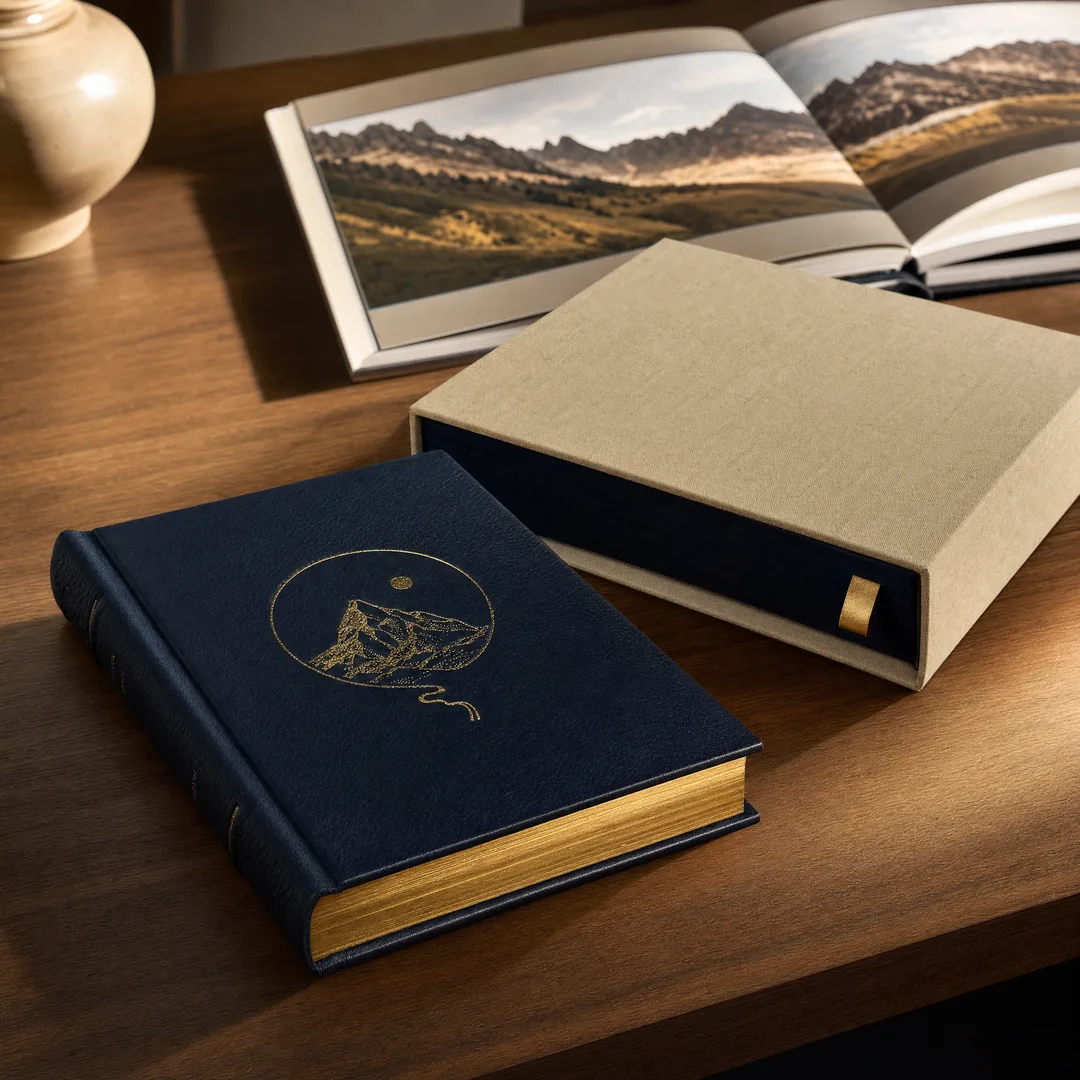
For projects that demand meticulous attention to specialty binding and finishing, EcoPrinting’s specialty binding capabilities include the full range of options discussed in this guide, from sewn case binding to foil stamping, gilded edges, and custom slipcases, all managed through a single point of contact.
FAQ: Specialty Book Printing in China
What types of books count as specialty printing?
Specialty book printing covers any book project that requires non-standard paper, binding, or finishing. This includes yearbooks, Bibles, religious books, poetry collections, chapbooks, memoirs, family history books, genealogy books, photo books, art books, cookbooks, and any hardcover edition with custom finishing such as foil stamping, embossing, or gilded edges.
How much can I save by printing specialty books in China?
For offset print runs of 500 copies or more, printing in China typically delivers unit cost savings of 40 to 60 percent compared to equivalent-quality domestic production. The savings are most pronounced for books with labor-intensive finishing, since China’s skilled handwork labor pool operates at costs that are not replicable in Western markets.
What is the minimum order quantity for specialty book printing in China?
Offset printing minimums typically start at 300 to 500 copies. For smaller quantities, digital printing is the more cost-effective option, and many Chinese factories offer digital short-run services with no minimum order. The per-unit cost is higher than offset at scale, but digital eliminates plate costs entirely for quantities under 300.
How long does specialty book printing take from order to delivery?
A typical project takes 8 to 12 weeks door to door with sea freight: 1 to 2 weeks for prepress and proofing, 3 to 5 weeks for printing and binding, and 4 to 5 weeks for ocean shipping and customs clearance. Air freight cuts the shipping phase to 5 to 10 days, reducing the total timeline to 6 to 8 weeks.
Can Chinese printers handle complex mixed-content books with photos and text?
Yes. Many Chinese printing factories have dedicated prepress departments that handle photo color correction, dust removal from scanned images, and precise layout for mixed-content books. This is standard practice for yearbook printing, family history book printing, and memoir printing projects that blend photographs, documents, and narrative text.
What file formats should I prepare for specialty book printing?
Print-ready PDF files with embedded fonts, 300 DPI image resolution, 3mm bleed on all edges, and CMYK color space are the industry standard. Some printers also accept Adobe InDesign packaged files or PDF/X-1a compliant files. Always confirm the printer’s specific file preparation guidelines before starting your layout.
Is Bible printing in China subject to special regulations?
Bible printing for export is a well-established industry in China, with factories like Amity Printing operating for decades. For commercial orders, standard export documentation applies. It is advisable to confirm with your chosen printer that they have experience with religious book printing and are familiar with the thin-paper handling requirements unique to Bible production. For publishers seeking a reliable partner, EcoPrinting’s religious book printing service combines thin-paper expertise with comprehensive binding and finishing options.
How do I ensure consistent quality across a large print run?
Request a production sample pulled from the middle of the print run, not just a pre-production proof. Specify color tolerance expectations in writing before production begins. Choose a printer that follows GRACoL or Fogra color management standards and is transparent about their quality control checkpoints throughout the production process.
Conclusion
Specialty book printing in China has matured into a sophisticated export industry that serves publishers, schools, religious organizations, and independent authors worldwide. The combination of modern offset and digital press technology, deep experience with niche paper stocks and binding methods, and access to cost-effective hand-finishing labor creates a value proposition that is difficult to match through domestic production alone.
Whether your project is a 500-copy yearbook run for a graduating class, a leather-bound family Bible edition, a delicate poetry chapbook, or a comprehensive family history spanning multiple generations, a Chinese printing partner with demonstrated experience in your specific book category can deliver the quality, durability, and presentation your project deserves. The key is to select a partner that communicates clearly, provides physical samples of comparable work, and manages the full production and logistics chain from prepress to doorstep delivery.
Take the time to request samples, compare DDP quotations, and verify specialty experience. When the boxes arrive and you hold a finished book that exceeds expectations, you will know the effort was worthwhile.