Coloring Book Printing in China: What Actually Matters When You’re Ready to Print
If you’ve been sketching, designing, or curating a coloring book and you’re finally ready to move from the idea stage to a physical product, you’ve probably already realized there’s a lot more to it than hitting “print.” The paper has to feel right under a pencil. The binding needs to survive being opened flat on a table for an hour. The colors on the cover need to look the same as they did on your screen. These things aren’t optional — they’re the difference between a book someone buys once and a brand they come back to.
What makes coloring book printing in China worth considering isn’t just cost, although the savings are real. It’s the fact that experienced Chinese print manufacturers have spent years refining the exact production chain coloring books demand: uncoated paper stocks that take pigment without bleeding through, binding lines calibrated for lay-flat usability, and ink systems that meet international safety standards. Getting those details right from the start saves you from the kind of reprints and quality complaints that kill margins.
This guide walks through every decision you’ll face — paper weight, binding style, cover finishing, color accuracy, minimum order quantities, and safety certifications — so you can approach your print order with a clear plan rather than a list of questions you didn’t know you needed to ask.
Paper Selection for Coloring Books
Paper is the single most important material choice in any coloring book project. You can have beautiful artwork and sharp printing, but if the paper buckles under a marker or turns pencil shading into a muddy smear, nobody enjoys using the book — and nobody buys the sequel. The paper decision touches everything: cost, weight (which affects shipping), durability, and the actual coloring experience.
Why Uncoated Paper Is the Only Real Choice for Interior Pages
Coated paper — the kind used in glossy magazines and photography books — has a smooth, sealed surface that repels rather than absorbs. That’s great for displaying photos. It’s terrible for coloring, because pencil, crayon, and marker pigment sits on top instead of bonding with the fibers. The result: smudging, slow drying, and frustration.
Uncoated paper, by contrast, has an open fiber structure that accepts pigment from colored pencils, crayons, gel pens, and most water-based markers. It provides the slight tooth that gives pencil shading its texture and depth. For coloring books, uncoated offset paper (also called woodfree uncoated paper) is the industry standard. It’s smooth enough for crisp line art printing but absorbent enough for coloring. If someone tells you they’ve printed coloring books on coated stock and it worked fine, ask them what mediums they tested. Usually the answer is “just pencils.”
What GSM Weight Works Best for Different Coloring Mediums?
Paper weight is measured in GSM (grams per square meter), and your choice here directly determines which coloring tools your book can handle:
100–120 GSM: The budget-friendly option. Works fine for crayons and colored pencils, but water-based markers will ghost through to the reverse side. Suitable for simple children’s coloring books where the medium is predictable, but it won’t satisfy an adult coloring enthusiast who switches between tools.
120–140 GSM: The sweet spot for most coloring books. Thick enough to prevent most bleed-through with pencils and light markers, without pushing the per-unit cost too high. This is what you’ll find in the majority of commercially successful coloring books. It handles kids pressing hard with crayons and adults layering pencil colors.
140–160 GSM: The premium tier. If your book is designed for water-based markers, gel pens, or mixed media, this is where you want to be. The extra weight absorbs more moisture and reduces ghosting to near zero. It also gives the pages a more substantial feel, which matters for books positioned at a higher price point. Expect to pay 15–25% more for this upgrade versus the 120 GSM baseline.
160 GSM and above: Overkill for most projects. At this point you’re closer to cardstock, and while the coloring surface is fantastic, the book becomes heavier, thicker, and more expensive to ship. Reserve this for premium editions, art books, or single-sided perforated pages meant for framing.
Brightness and Whiteness — Getting the Right Shade for Coloring
Paper brightness affects how colors appear on the page. High-brightness paper (90–100 ISO) makes whites look crisper and can make colored areas pop, but it can also create eye strain during long coloring sessions. Many coloring book publishers actually prefer a cream or natural white shade — it’s warmer, easier on the eyes, and gives the finished colored page a slightly vintage look that photographers call “flattering.” It’s a subjective choice, but one worth making deliberately rather than just accepting whatever stock the printer defaults to.
Binding Options That Make or Break the Coloring Experience
Binding isn’t just about holding pages together. For a coloring book, the binding directly determines whether someone can actually use the book comfortably. If pages won’t stay open, if the spine cracks after a week, or if artwork disappears into the gutter, you’ve created an object people resent rather than enjoy. Each binding method has a clear page-count range where it performs well — and a threshold where it starts causing problems.
Saddle Stitch — Best for Thin Coloring Books Under 64 Pages
Saddle stitch binding (also called staple binding) is exactly what it sounds like: folded sheets are gathered and stapled through the center fold. It’s the most affordable binding method and works reliably for books with a lower page count. For a simple children’s coloring book with 24–48 pages, saddle stitch is often the right call: it’s lightweight, inexpensive to produce, and surprisingly durable for its cost.
The catch is page count. Saddle stitch maxes out at around 64–80 pages depending on paper thickness. Push beyond that and the book develops “creep” — the inner pages protrude further from the spine than the outer pages, requiring the edges to be trimmed, which eats into your margins. Also, saddle-stitched books don’t have a printable spine, so they’re harder to identify on a shelf. For anything longer than a short activity book, you’ll want to look at the next option.
Perfect Binding — When Your Coloring Book Needs a Professional Spine
Perfect binding uses adhesive to attach the pages to a wraparound cover, creating the flat spine you see on paperback novels. For coloring books with 64 pages or more, this is the most common choice. It gives you a printable spine — which matters for retail visibility — and it handles higher page counts without the creep issues that plague saddle stitch. PUR (polyurethane reactive) glue is the adhesive you want to ask about specifically; it’s stronger and more flexible than standard EVA hot melt, which means the book opens flatter and pages are less likely to detach with repeated use.
The trade-off: perfect bound books don’t lay completely flat on their own. They need to be held open, and the inner margin (gutter) needs to be generous enough that artwork doesn’t disappear into the binding. A minimum 15mm inner margin is a good starting point for perfect bound coloring books. If lay-flat usability is critical for your project, read the next section.
Wire-O and Spiral Binding — The Flat-Lay Advantage
Wire-O binding (twin-loop wire) and spiral/coil binding are the gold standard for usability. The book opens a full 360 degrees and lies totally flat on a table without any pressure. For adult coloring books, premium editions, and any project where the coloring experience is the primary selling point, this is the binding that reviewers and customers consistently praise.
Wire-O uses metal double loops threaded through punched holes. It looks more polished than plastic spiral coil and is available in a range of metallic finishes. Spiral coil (plastic) is slightly cheaper and comes in color options that can be matched to the cover design. Both methods add roughly 20–30% to the binding cost compared to perfect binding, and the wire or coil adds to the overall thickness for shipping calculations. The other consideration: Wire-O and spiral bound books don’t have a printable spine, so retail display is different. Many publishers solve this by using a cover that extends beyond the wire, or by relying on face-out shelf placement.
Cover Design and Finishing for Coloring Books
The cover does two jobs: it sells the book on a shelf or screen, and it protects the pages inside. For a coloring book, the cover is especially important because unlike a novel — where the cover protects text pages that are readable regardless — a coloring book’s interior pages are blank canvases waiting to be filled. The cover needs to survive being tossed in a bag, leaned on while coloring, and handled by kids. The finish you choose directly impacts how the cover wears over time.
Matte vs Gloss Lamination — Which One Actually Works for a Coloring Book?
Gloss lamination makes colors pop. It’s shiny, reflective, and grabs attention on a retail shelf. For a coloring book cover with vibrant, saturated artwork, gloss lamination can make the illustration look almost wet with color. The downside: gloss shows fingerprints instantly. After one coloring session, the cover can look greasy and handled.
Matte lamination has become the dominant choice for coloring book covers, and there are solid reasons for it. A matte finish feels velvety and premium in the hand — people instinctively treat it more carefully. It hides fingerprints and minor scratches. The colors are slightly more subdued than gloss, but most designers compensate by bumping saturation slightly in the cover file. The trade-off is that matte lamination can show scuff marks on dark backgrounds more visibly than gloss, so if your cover design is predominantly black or dark navy, gloss might actually wear better.
For most coloring books, the recommendation is matte lamination. It communicates quality, holds up to handling, and lets the cover illustration speak without the distraction of glare. If you’re printing a premium or gift edition, add soft-touch lamination to the conversation — it’s a matte variant with a suede-like tactile feel that’s genuinely addictive to hold.
Soft-Touch and Specialty Finishes Worth Considering
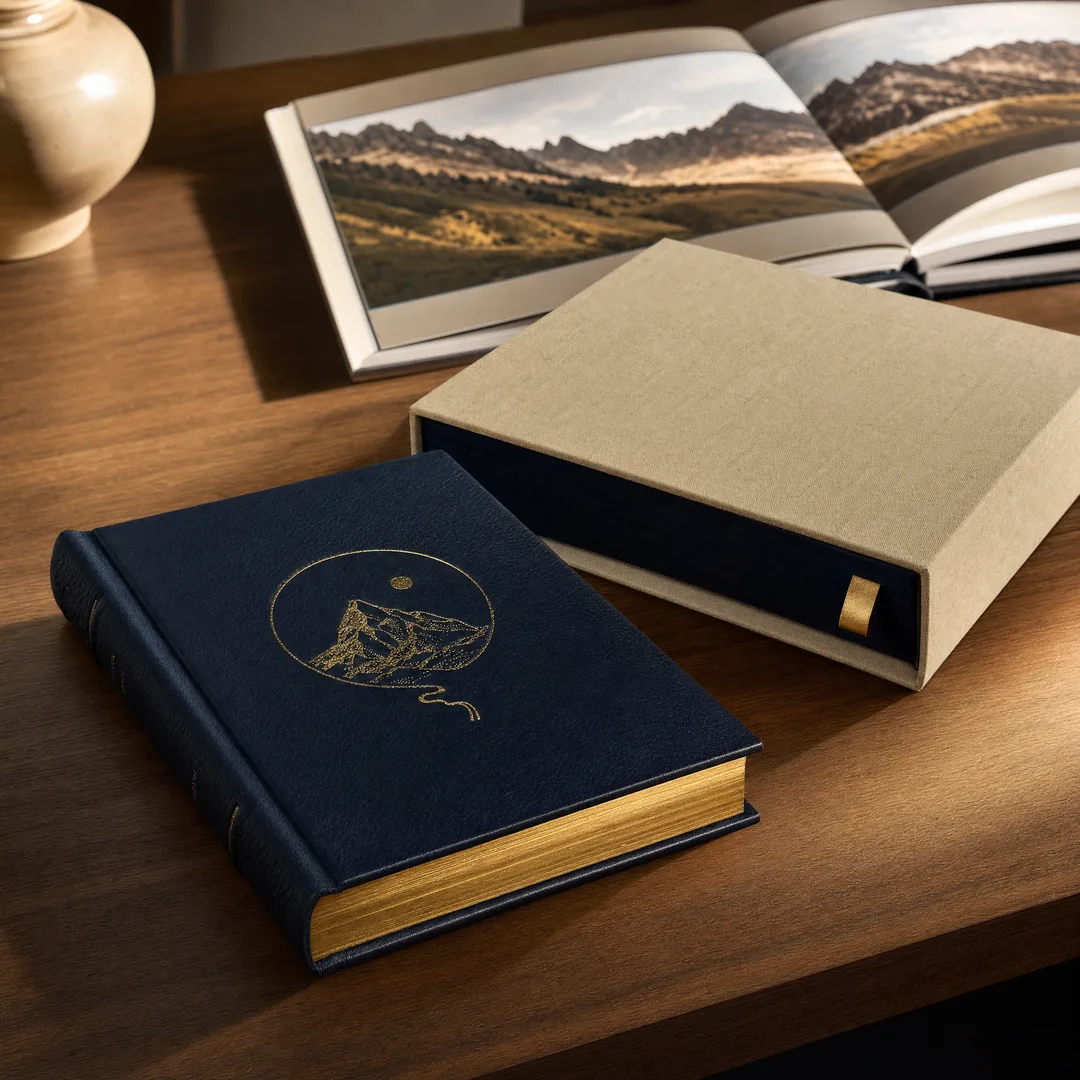
Soft-touch lamination is a premium matte finish with a velvety, almost rubberized texture. It’s expensive — usually adding 15–25% to cover costs — but for a coloring book positioned as a gift item or premium product, it creates a tactile first impression that glossy or standard matte covers can’t match. Spot UV, where a glossy coating is applied to specific design elements (like the title or a central illustration), creates contrast against a matte background and draws the eye exactly where you want it. Foil stamping in gold or silver adds a similar focal effect with metallic shine. These specialty finishes aren’t necessary for every project, but for limited editions, gift sets, or high-retail-price coloring books, they significantly raise perceived value.
CMYK Color Accuracy — Why It Matters More Than You Think
If you’ve ever designed something in RGB and then seen it printed, you know the gut-punch of colors that look completely different on paper. RGB (the color space of screens) uses light to create color and can produce bright, saturated tones that physical ink simply cannot replicate. CMYK (cyan, magenta, yellow, and key/black) is the color space of printing, and its gamut is narrower. That neon green on your monitor? It’s going to print as something closer to olive unless you compensate.
How CMYK Affects Cover Vibrancy and Interior Line Art
For the cover of a coloring book, color accuracy is critical. The cover is what sells the book, and if the printed result doesn’t match the digital preview, you’ve created a trust problem before the customer even turns a page. Converting your cover artwork to CMYK before submitting files is non-negotiable — do it in Adobe InDesign, Illustrator, or Photoshop and review the soft proof carefully. Pay special attention to blues and purples, which shift the most dramatically in the RGB-to-CMYK conversion.
For interior pages, the situation is different. Coloring book line art should be printed in pure black (100% K) only. Using a rich black mix (C60 M40 Y40 K100, for example) can create registration issues — if any of the color plates are slightly misaligned, the black lines will have a colored halo around them. Pure K avoids this entirely. The interior artwork file should be grayscale or bitmap, not CMYK, with black set to overprint so it sits cleanly on the uncoated paper.
File Setup Tips to Avoid Color Shift
A few rules that prevent most color disasters: always embed the color profile (FOGRA39 is standard for coated paper in Europe; GRACoL or SWOP for North American printers — but confirm with your printer which profile they calibrate to). Include a 3mm bleed on all sides. Keep all text and critical design elements at least 5mm inside the trim line. And order a physical hard proof before production — not a digital PDF proof, but an actual printed sample on the production paper stock. The $50–100 this costs is the cheapest insurance you’ll ever buy against a print run that doesn’t match your expectations.
Minimum Order Quantity (MOQ) and Pricing Tiers
MOQ is one of the first questions every first-time publisher asks, and it’s a fair one — nobody wants to commit to a warehouse full of books they haven’t sold yet. The answer depends on the printing method, and understanding the trade-off between digital and offset printing is the key to making a smart decision.
What Is the Typical MOQ for Coloring Book Printing in China?
For digital printing, MOQs can be as low as 50–100 copies. Digital presses don’t require printing plates, so setup costs are minimal. The per-unit price stays relatively flat regardless of quantity, which makes digital printing ideal for small test runs, Kickstarter fulfillments, or niche coloring books with a limited audience. The quality has improved dramatically in recent years, though digital still can’t quite match offset for smoothness of large solid-color areas.
For offset printing, the typical MOQ from Chinese manufacturers starts around 300–500 copies but becomes truly cost-effective at 1,000 copies and above. Offset requires creating printing plates (one set per color), so the setup cost is spread across the entire print run. At 500 copies, the per-unit cost might be $3–4. At 3,000 copies, it might drop to $1.50–2.50. At 10,000 copies, you’re looking at significantly lower costs still. The exact numbers depend on page count, paper weight, binding, and finishing, but the curve is always the same: the more you print, the less each book costs.
How Pricing Changes with Quantity — A Practical Breakdown
Here’s a rough framework — not a quote, but a realistic expectation for a standard 48-page coloring book with saddle stitch binding, 120 GSM uncoated interior, and matte laminated 250 GSM cover, printed offset in China:
At 500 copies, expect roughly $2.80–3.50 per book. The setup costs (plates, make-ready) dominate the total. At 1,000 copies, per-unit drops to $1.90–2.60. At 3,000 copies, you’re looking at $1.30–1.80. At 10,000+ copies, costs can fall below $1 per book depending on the exact specifications. Every additional finishing option — Wire-O binding, soft-touch lamination, foil stamping — adds to these figures. The smart play for a new title is often to print a smaller digital run first, test market response, then commit to an offset run once you’ve validated demand.
Safety Certifications for Children’s Coloring Books
If your coloring book is designed for children — especially children under 12 — safety certification isn’t optional. It’s a legal requirement in both the US and EU markets, and major retailers and distributors will not stock children’s products without proper documentation. Even if you’re selling directly online, liability exposure makes certification essential.
ASTM F963 and CPSIA — US Market Requirements
In the United States, children’s products must comply with the Consumer Product Safety Improvement Act (CPSIA) and the ASTM F963 toy safety standard. Coloring books marketed to children 12 and under fall under these regulations. The requirements cover lead content in inks and substrates, phthalate limits, and mechanical safety (no sharp edges, small parts, etc.). A Children’s Product Certificate (CPC) must be issued based on third-party lab testing from a CPSC-accepted laboratory. Reputable Chinese printing partners routinely work with accredited labs in Hong Kong or mainland China to provide this testing.
EN 71 — European Toy Safety Standards
For the European market, EN 71 is the governing standard. Part 1 covers mechanical and physical properties, Part 2 covers flammability, and Part 3 covers the migration of certain elements (heavy metals). Coloring books classified as toys require EN 71 compliance. The CE mark must be affixed to the product. As with US certification, your Chinese print partner should be able to coordinate EN 71 testing through an accredited laboratory and provide the test reports and Declaration of Conformity.
What About Non-Toxic Inks and Materials?
Modern offset printing inks — particularly soy-based and vegetable-based inks — are inherently low in volatile organic compounds and heavy metals. Most major ink manufacturers have reformulated their products to be compliant with safety standards as a baseline. The paper itself is rarely an issue; woodfree uncoated paper from reputable mills is clean and safe as manufactured. The adhesives used in perfect binding and the laminates applied to covers are the materials worth checking specifically — ask your printer to confirm that all materials in the production chain are suitable for children’s products and can be documented. A good printer will have this information ready.
Custom Sizes, Page Counts, and Other Specifications
One of the advantages of working with a dedicated book printer is the freedom to specify exactly what you want rather than picking from a limited template. Coloring books don’t have to be 8.5 × 11 inches just because that’s the default.
What Are the Most Popular Coloring Book Sizes?
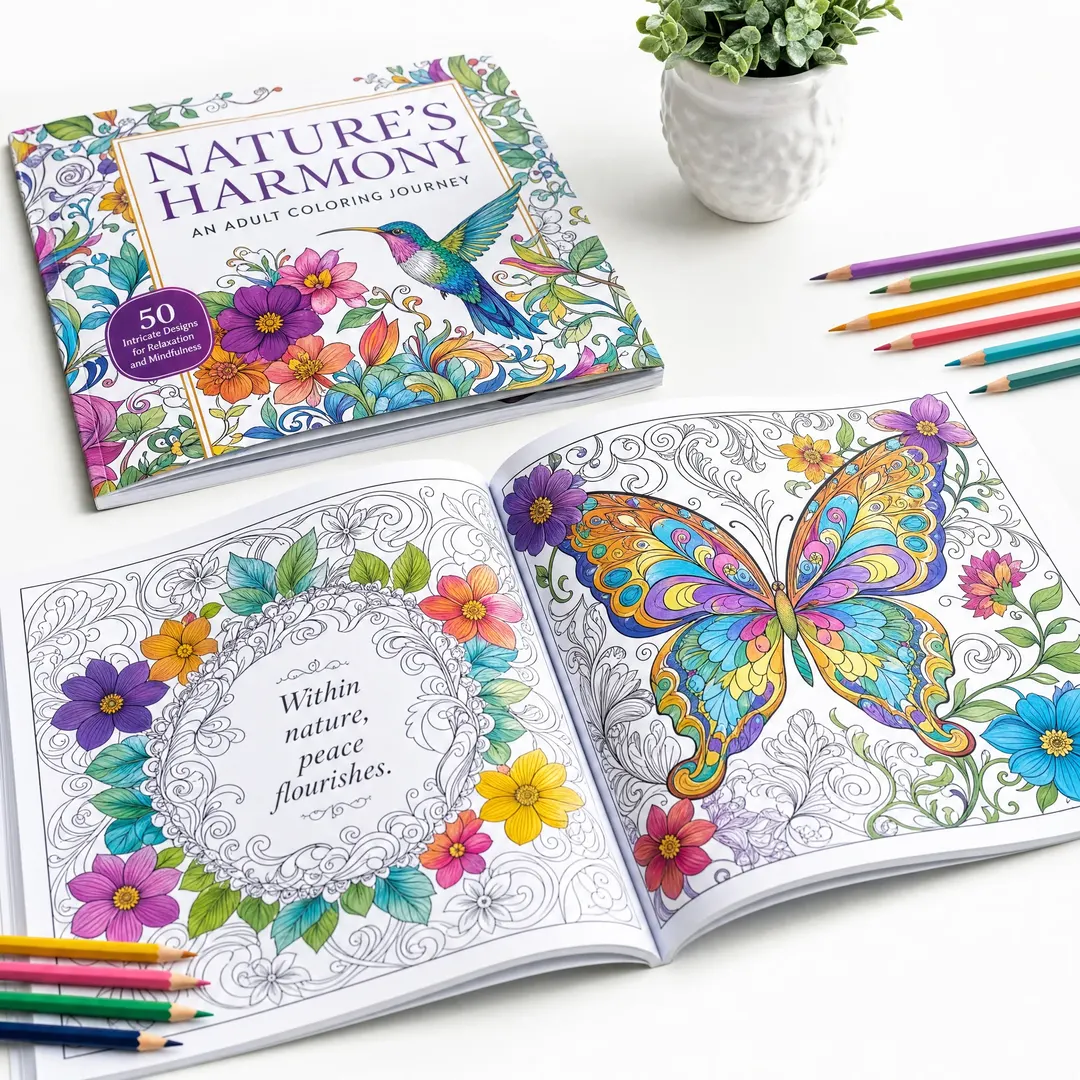
The most common coloring book formats are 8.5 × 11 inches (US Letter, or roughly A4) and 8.5 × 8.5 inches (square). Square formats have become increasingly popular for adult coloring books — they feel distinct from standard books on a shelf and provide a balanced canvas for designs that aren’t oriented in one direction. Smaller formats like 6 × 9 inches (US Trade) and 5.5 × 8.5 inches work well for portable coloring books, purse-sized editions, or travel activity books. Custom sizes are absolutely possible — the main constraint is paper sheet efficiency: standard press sheet sizes are typically 25 × 35 inches or 28 × 40 inches, and your book dimensions should divide evenly into those sheets to avoid paper waste and extra cost.
How Many Pages Should a Coloring Book Have?
There’s no universal answer, but market patterns are clear. Children’s coloring books typically run 24–48 pages — short enough that a child can finish the book in a reasonable timeframe, long enough to feel like value for money. Adult coloring books generally have 48–96 pages. Less than 48 pages and the book feels thin for the price; more than 96 pages and the binding (especially perfect binding) starts to work against the coloring experience because the book becomes harder to keep open. The page count also needs to be divisible by the number of pages per signature — for saddle stitch, pages must be in multiples of 4; for perfect binding, most printers work in signatures of 8, 16, or 32 pages. Check with your printer before finalizing your page count.
Frequently Asked Questions About Coloring Book Printing
Can I Print a Small Batch of Coloring Books?
Yes — digital printing makes runs as small as 50 copies feasible. The per-unit cost will be higher than offset, but for testing a new design, fulfilling a small Kickstarter campaign, or creating a limited edition, digital is the right tool. Some Chinese printers have invested heavily in high-end digital presses (HP Indigo, for example) that produce quality close to offset with the flexibility of short runs.
How Long Does Coloring Book Printing Take in China?
A typical timeline from file approval to ex-factory: digital printing takes 5–10 business days; offset printing takes 15–25 business days for standard specifications. Add time for hard proof production and courier delivery (3–5 days each way), plus shipping to your destination (air freight: 5–10 days; sea freight: 25–40 days to the US or Europe). Realistically, plan for 6–8 weeks from final file submission to books in hand for an offset job with sea shipping, or 3–4 weeks with air freight for a smaller run.
What File Format Should I Submit My Artwork In?
Print-ready PDF with embedded fonts, CMYK color space for cover files, grayscale or bitmap for interior line art. Resolution: 300 DPI minimum. Bleed: 3mm on all sides. Most printers will provide a detailed file preparation guide — follow it exactly. The most common submission mistakes are forgetting to outline fonts, placing RGB images, and insufficient bleed.
Do I Need to Worry About Bleed-Through on Coloring Book Pages?
Bleed-through happens when ink or pigment from one side of the page shows through to the other side. It’s primarily a function of paper weight and opacity. At 120 GSM and above, bleed-through is minimal with pencils and crayons. Water-based markers will still show through somewhat at 120 GSM — if your book is designed for markers, specify 140 GSM minimum and consider making the pages single-sided (printed on one side only) if the reverse side ghosting would ruin the experience.
Can My Coloring Book Be Printed on Recycled Paper?
Yes. Recycled uncoated paper is available from many mills, and the quality has improved to the point where it’s indistinguishable from virgin paper for coloring purposes. The texture may be slightly more pronounced, which can actually enhance the coloring experience with pencils. Specify FSC-certified recycled stock if environmental credentials are part of your brand positioning. Expect a 5–15% cost premium depending on the specific paper and availability.