Why China Remains the Unmatched Hub for Custom Board Game Components
If you have spent any time researching where to manufacture a board game, you already know the answer points in one direction. China produces the vast majority of tabletop games sold worldwide, and not just because of pricing. The real advantage is an entire ecosystem of specialized factories sitting within a few hundred kilometers of each other, sharing raw material supply chains, tooling expertise, and decades of accumulated know-how. You simply do not find that density anywhere else.
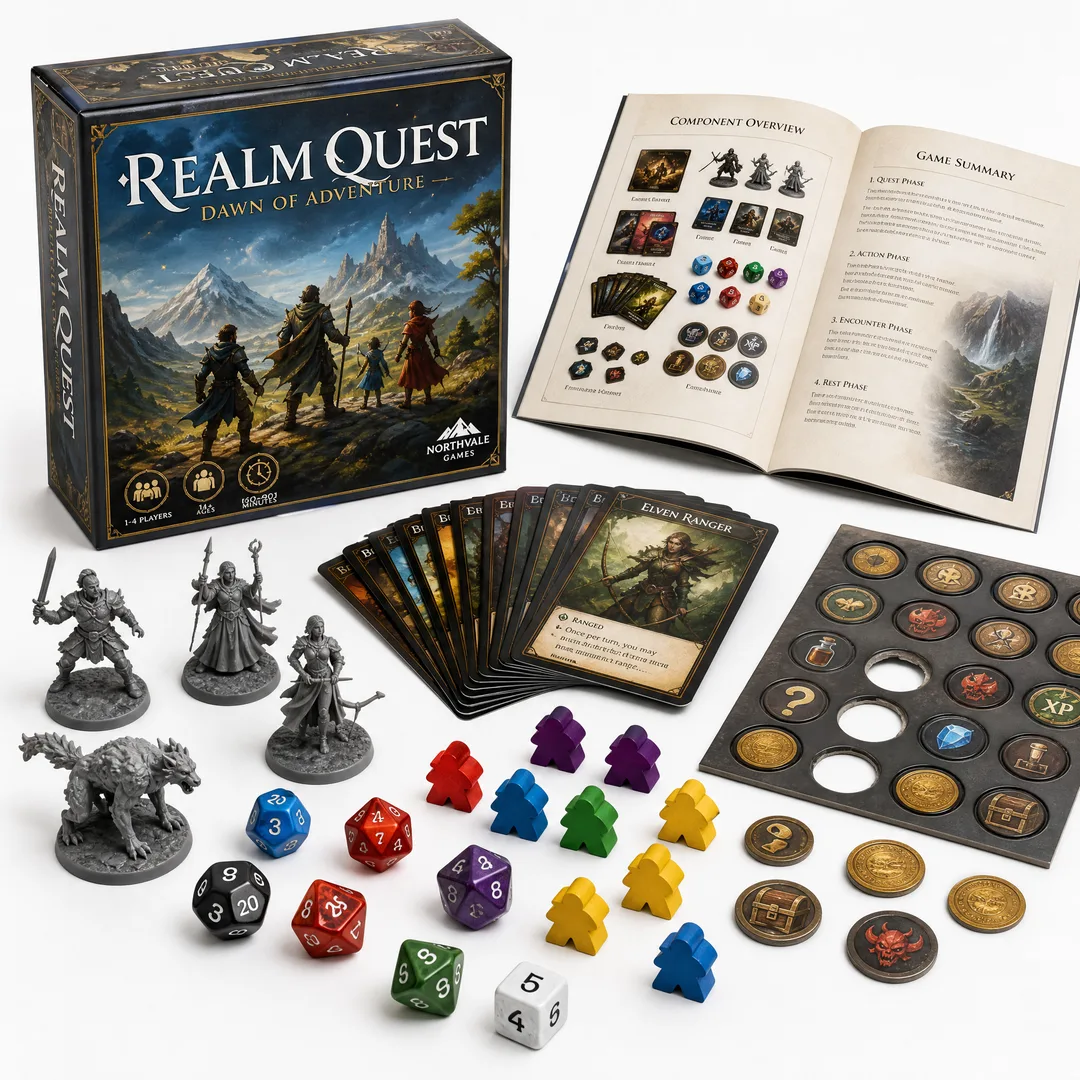
For a first-time Kickstarter creator, the manufacturing landscape can feel overwhelming. You are not buying one thing. You need a box, cards, tokens, dice, a rulebook, and maybe miniatures. Each comes from a different kind of factory with different machinery, different minimums, and different lead times. The smartest move most publishers make is finding a partner who can coordinate all of it under one roof. This guide walks through every major component category, explains how each one is made, what your options are, and what you should watch for when sourcing from China.
Game Box Manufacturing: The First Thing Your Customer Touches
Your box does more than hold pieces. It sits on a retail shelf, arrives on a backer’s doorstep, and gets opened on camera during unboxing videos that can make or break a crowdfunding campaign. Investing in the right box structure is one of the highest-ROI decisions you will make in the entire production process.
Rigid vs Telescoping Boxes: Which One Suits Your Game?
Most mass-market board games use telescoping boxes — the classic two-piece setup where a lid slides over a base tray. These are constructed from 1.5mm to 2mm greyboard wrapped in printed art paper, typically 128gsm to 157gsm coated stock. They are lightweight, cost-effective, and the industry standard for games under the $40 retail mark. If you are producing a mid-weight Eurogame with standard components, a telescoping box in the 300x300mm range will serve you well.
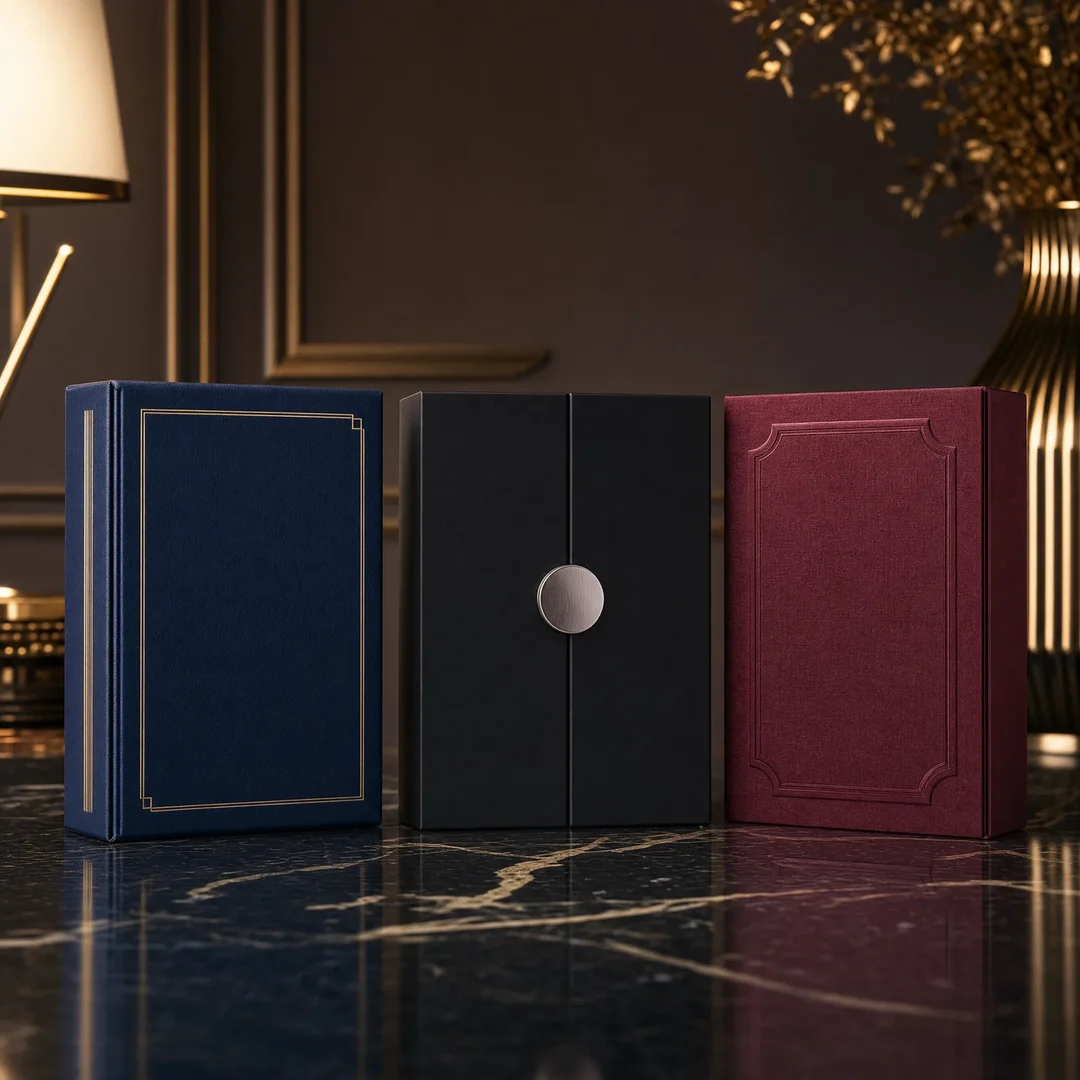
Rigid boxes, sometimes called setup boxes, are built around a 2mm to 3mm greyboard core wrapped in premium paper or book cloth. The walls are thicker, the corners are sharp, and they do not collapse under weight the way a flimsy telescoping box might after a year on the shelf. These are the boxes you see on deluxe Kickstarter editions. The per-unit cost is higher, but the perceived value jump is significant enough that many publishers use a rigid box as their primary stretch goal unlock.
Custom Inserts, Magnetic Closures, and Premium Finishes
A well-designed insert tray protects your components during shipping and makes the unboxing experience feel intentional. Vacuum-formed plastic trays are the most common choice for high-volume production. For a more premium feel, die-cut greyboard inserts wrapped in velvet-finish paper or flocked lining eliminate plastic entirely while delivering the presentation of a jewelry box.
Magnetic closures add a satisfying snap and keep the lid securely closed. Two small neodymium magnets are enough for standard box sizes; heavy deluxe editions exceeding 2kg loaded weight need four magnets or larger diameters. On finishing, matte lamination with spot UV on the title logo is the most popular combination. Soft-touch lamination gives a velvety hand feel, and foil stamping on the box spine makes your game recognizable on a crowded shelf.
Custom Game Pieces and Miniatures: Bringing Your Game World to Life
Game pieces are the tactile soul of your board game. Players spend more time touching meeples, miniatures, and tokens than they do reading the rulebook. The material you choose shapes not just the feel of the game but also your tooling budget, per-unit cost, and production timeline.
Wood vs Plastic vs Resin: A Practical Material Guide
Wooden pieces — meeples, cubes, discs, and custom shapes — are cut from birch or beech hardwood, then dyed or painted. A custom-shaped meeple cutting die costs $150 to $400, and per-piece prices start around $0.03 to $0.08 at volume. Wood has a warm, organic feel and appeals to gamers who prefer natural materials. The tradeoff is that wood cannot achieve the fine sculpted detail that plastic or resin can.
Injection-molded plastic miniatures are the gold standard for detail. A steel mold for a 28mm miniature can run $2,000 to $8,000 depending on complexity and cavity count. At 5,000 units, a detailed miniature might cost $0.15 to $0.40 per figure; at 50,000 units, that drops to $0.05 to $0.15. PVC is less expensive than ABS, but ABS holds crisper detail and takes paint better. If you plan to offer painted miniatures, spec ABS.
Resin casting uses cheap silicone molds ($50 to $300 each) that degrade after 30 to 50 casts. Resin captures exceptional surface detail and is the go-to choice for low-volume premium miniatures and prototypes. For batches under 500 units, resin is often the only viable option. Above 2,000 units, injection molding wins on both price and consistency. Metal coins and tokens — cast from zinc alloy or stamped from brass and electroplated — add weight and premium feel, with mold costs of $80 to $200 and per-piece costs of $0.15 to $0.50 at quantities of 1,000 to 5,000.
Dice Printing and Customization: More Than Just D6s
Dice might seem simple, but they carry disproportionate technical complexity. Getting the balance right, the pips aligned, and the color consistent across production batches requires precision manufacturing that not every factory can deliver.
Dice Materials: Acrylic, Resin, Wood, and Metal
Acrylic dice are the industry workhorse — injection-molded, transparent or opaque, taking screen printing or pad printing for face markings. Per-die cost at 1,000 units ranges from $0.08 to $0.25 for standard 16mm D6s. Custom colors add a small premium but no additional tooling. Resin dice, the kind you see in premium RPG sets, are cast in silicone molds with embedded inclusions like glitter, foil, or liquid cores. These are labor-intensive and priced at $2 to $5 per die at low volumes, but fully customizable without the huge mold investment.
Wooden dice are CNC-engraved from hardwood blanks and laser-etched with numbers or symbols, costing $0.10 to $0.30 per die. Metal dice — zinc alloy or solid brass — are the premium option starting around $1.00 per die and climbing fast with complex engravings or multi-color enamel filling.
Custom Faces, Engraving, and Mold Costs
If your game uses standard D6s with pips, off-the-shelf dice are fine and cost almost nothing. When you need custom faces — icons, symbols, or unique numbering — you have two paths. Pad printing applies ink via a silicone pad and works well for flat-faced acrylic dice. Engraving (laser or CNC) cuts the design into the surface and fills it with paint — the markings never wear off, but the process adds $0.05 to $0.15 per face.
For fully custom injection-molded dice with unique shapes, the mold cost is the barrier: a single-cavity steel mold for a custom D6 costs $800 to $2,500; multi-cavity molds producing 4 to 8 dice per shot cost $3,000 to $8,000. This is the same math as plastic miniatures — the mold is a capital investment that pays off over volume.
Game Tokens and Chips: The Workhorses of Tabletop Mechanics
Tokens are the silent workhorses of board game design. Resource markers, health counters, victory point chips, currency coins — they might not grab attention in a Kickstarter video, but players touch them more than any other component. Cutting corners on tokens is the kind of mistake your players will notice by game three.
Cardboard Punch Tokens: The Standard That Works
Punchboard tokens are manufactured by laminating printed art paper onto 1.5mm to 2.5mm greyboard, then die-cutting the sheet into individual pieces. A typical sheet of 210x297mm holds 20 to 40 tokens. The die-cutting tool costs $80 to $250, and once made, per-sheet production costs are low. Most publishers spec 2mm greyboard as the sweet spot between cost and perceived quality. The biggest quality concern with punch tokens is registration — ensuring the artwork aligns precisely with the die-cutting blade. A tolerance of ±0.2mm is standard and acceptable; for artwork with thin borders, spec ±0.1mm and expect a modest premium.
Acrylic Tokens, Poker-Style Chips, and Coin Tokens
Acrylic tokens are laser-cut from colored acrylic sheet in almost any flat shape. There is no risk of delamination since they are cut from solid material, and per-token costs start around $0.05 for simple shapes at 500 pieces. Poker-style chips — ceramic discs with edge spots and center inlays — are a popular upgrade for games with a strong currency mechanic. Ceramic chips use dye-sublimation printing directly into the surface, so artwork never peels off. A set of 100 custom ceramic chips costs $0.30 to $0.60 per chip at quantities of 500 to 1,000 sets. Metal coin tokens add premium weight and tactile quality; just account for the extra shipping weight when budgeting.
Jigsaw Puzzle Manufacturing: From Greyboard to Finished Product
Jigsaw puzzles have exploded in popularity, and many tabletop publishers are adding puzzles as companion merchandise or standalone offerings. Puzzle manufacturing shares DNA with board game token production — both rely on die-cutting printed board — but has its own technical requirements.
Greyboard, Chipboard, and the Die-Cutting Process
The standard puzzle substrate is 1.5mm to 2mm greyboard, laminated with printed art paper on the front side at 157gsm to 200gsm coated stock. Most premium puzzles use a matte or semi-matte lamination that provides a non-glare playing surface. The steel-rule die for a jigsaw puzzle is a grid of interlocking blades arranged in a pattern of knobs and holes. Each die is custom-made for a specific piece count and puzzle size. A 500-piece die costs $300 to $800; a 1,000-piece die runs $500 to $1,200. Well-maintained dies produce 300,000 to 400,000 puzzles before replacement; worn dies produce loose-fitting pieces — the telltale sign of a factory cutting corners.
Piece Counts, Box-in-Box Packaging, and Quality Control
Standard retail puzzles range from 100 to 2,000 pieces, with 500 and 1,000 being the sweet spots for retail. The piece count affects die cost and pressing time but not board material cost — a 500-piece and a 1,000-piece puzzle cut from the same board size use the same amount of greyboard. Box-in-box packaging is the industry standard: pieces are bagged inside a smaller inner box that slides into a decorative outer box with full print treatment. Quality control for puzzles centers on three checks: piece fit, print-to-die registration, and dust levels. The best factories run every puzzle through a mechanical shaker that removes loose dust before bagging.
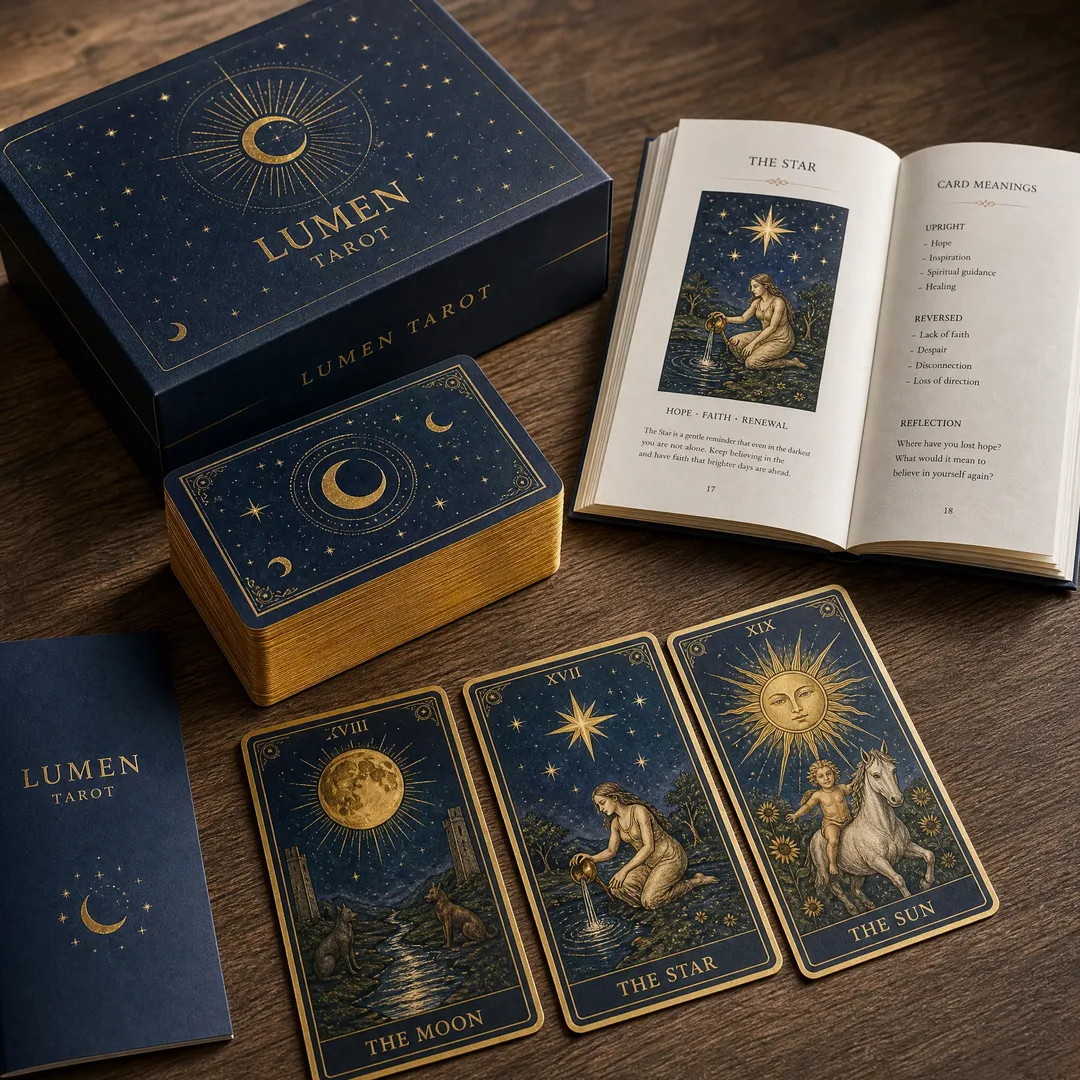
Playing Cards: Cardstock, Finishes, and Tuck Boxes
Cards are present in the vast majority of tabletop games, and quality differences are immediately apparent to players. A flimsy card that sticks to its neighbors or shows corner wear after a few shuffles drags down the entire game experience.
Cardstock Types: What Your Factory Needs to Know
The most common cardstock is 300gsm to 310gsm blue-core or black-core paper. The core color matters because it prevents light from passing through — a white-core card held up to bright light can reveal printed information on the other side. Black core is casino-grade and premium; blue core is slightly less opaque but costs 10 to 15 percent less. For thicker cards like tarot-size or character cards, 350gsm to 400gsm stock provides the necessary rigidity. PVC plastic cards are waterproof and tear-resistant, costing 3 to 5 times more than paper but compelling for games designed for outdoor play or heavy shuffling.
Finishes, UV Coating, and Tuck Box Design
Card finish is a surprisingly personal choice. Linen finish creates a subtle crosshatch texture that allows cards to glide over each other — the top choice for shuffle-heavy games. Matte finish provides a smooth, glare-free surface. Glossy finish maximizes color saturation but shows fingerprints. UV coating is essentially mandatory for any card game that will see regular play — uncoated cards show wear within a handful of shuffles. A quality factory applies UV coating to both sides as standard.
Tuck boxes are printed on 300gsm to 350gsm coated paper and die-cut to a precise folding pattern. A standard tuck box for a 54-card poker deck costs $0.15 to $0.35 per box at 1,000 units. Foil stamping on the tuck box is a cost-effective way to elevate presentation because the surface area is small.
Rulebook and Instruction Booklet Printing
Every board game designer knows the rulebook paradox: it is the most important document in the box and the one players are most likely to skim past. A well-printed rulebook communicates mechanics, sets the tone, and reduces support burden. A poorly printed one makes even a great game feel amateurish.
Saddle-Stitched vs Perfect-Bound vs Folded Formats
Saddle-stitched booklets — bound with wire staples through the spine — are the default for 90 percent of board game rulebooks. They are cheap, lay flat on the table, and work for any booklet from 4 to 64 pages. A 16-page full-color rulebook on 128gsm coated paper costs $0.30 to $0.60 per copy at 2,000 units. Perfect-bound booklets use hot-melt glue for a square spine and look more like a traditional book — the right choice for rulebooks exceeding 64 pages. The downside is they do not lay flat. Folded formats are ideal for games with simple rules: a 630x297mm sheet folded into a six-panel accordion costs $0.05 to $0.12 per copy and fits in a tuck box.
Paper Options and Printing Considerations
The standard rulebook paper is 128gsm coated stock for interior pages and 200gsm to 250gsm for covers. Uncoated paper suits narrative-heavy games where tactile quality matters more than color saturation. For games played around drinks or outdoors, a light aqueous coating on the cover adds water resistance. One detail that catches first-time publishers: saddle-stitched booklets require page counts divisible by four. If your rulebook has 14 pages, you will either cut two or add two blanks to hit 16.
All-in-One Packing and Assembly Services
This is the part of board game manufacturing that surprises most first-time publishers. You have sourced your box from one factory, cards from another, tokens from a third, and miniatures from a fourth. Now all of those components need to arrive in one place, get assembled into the correct configuration, get shrink-wrapped, packed into master cartons, and shipped to your fulfillment center. Someone has to do that, and it is probably not going to be you at scale.
Collation, Shrink-Wrapping, and Fulfillment Prep
A typical board game might have 12 to 20 individual components — card decks, punchboards, bagged tokens, dice, a rulebook, a game board, and inserts. Each needs to be placed correctly with the right orientation. At 1,000 units, that is a manageable but tedious manual process. At 10,000 units, it requires production-line coordination. Many Chinese manufacturers offer in-house assembly as part of a full-service package. When all components are produced and assembled under one roof, the coordination overhead drops dramatically — your factory contact becomes a de facto project manager tracking component arrivals and catching missing pieces before they become customer complaints.
Shrink-wrapping with 15-micron to 25-micron polyolefin film is the final protective layer. For Kickstarter fulfillment, where boxes might sit in a warehouse for months, consider corner protectors or thicker film to prevent scuffing.
Kickstarter-Ready Packaging: What It Actually Means
When a manufacturer says they offer Kickstarter-ready packaging, they should mean more than just a box. It means understanding the fulfillment pipeline: the game gets picked at a distribution center, gets a shipping label, and travels through a carrier network where it will be dropped, stacked, and jostled. The packaging needs to survive all of that. A truly Kickstarter-ready package includes internal structural support, component bagging for loose pieces, a void-fill strategy, and a master carton configuration that maximizes pallet density. If your manufacturer cannot describe their approach to each of these points, keep looking.
MOQ Guide for Each Board Game Component
Minimum order quantities are the single biggest source of sticker shock for new publishers. A factory might quote an attractive per-unit price and then reveal that the MOQ is 5,000 units — far more than your Kickstarter campaign is likely to sell. Understanding realistic MOQs by component category helps you plan your funding goal, stretch goals, and inventory strategy.
Realistic Minimums by Component Category
Printed boxes carry an MOQ of 500 to 1,000 units. Below 500, setup costs for printing plates and die-cutting dominate the per-unit price. Custom playing cards have an MOQ of 500 to 1,000 decks; tuck boxes are usually produced at the same quantity. Custom dice without custom molds — just pad-printed or engraved faces on standard blanks — can be ordered at 500 pieces. Custom injection-molded dice with unique shapes have an effective MOQ of 2,000 to 5,000 because of the mold investment.
Punchboard tokens can be produced at 500 sheets. Injection-molded plastic miniatures start making economic sense at 2,000 to 3,000 units due to mold costs. Resin miniatures, by contrast, can be produced at quantities as low as 100 to 200 pieces thanks to cheap silicone molds. Jigsaw puzzles typically have MOQs of 500 to 1,000 units because of the custom die-cutting tool. Rulebooks have flexible MOQs of 500 to 1,000 copies, with digital printing available for ultra-low quantities of 50 to 100 copies. For assembly services, the MOQ is usually driven by the highest-MOQ component in your game — smart publishers plan their component mix around this constraint.
Why China for Board Game Manufacturing: The Full Picture
By this point, you probably have a sense of why China dominates board game manufacturing. But let us pull the threads together, because when you are deciding where to invest your production budget, the decision deserves a clear-eyed assessment.
Cost Advantage: Real Numbers, Not Hype
Producing a standard mid-weight board game — 300x300mm telescoping box, 200 cards, two punchboards, a rulebook, and wooden pieces — costs roughly 40 to 60 percent less in China than in the United States or Western Europe. At 5,000 units, the landed-cost advantage is typically $4 to $6 per unit versus domestic production. On a 5,000-unit campaign, that is a $20,000 to $30,000 difference — the budget for your next game, or a substantial component quality upgrade on your current one.
One-Stop Solutions: The Ecosystem Advantage
The cost savings are real, but the ecosystem advantage might matter more. In the Pearl River Delta and Yangtze River Delta regions, you can find within a 50-kilometer radius: offset printing factories, injection molding facilities, woodworking shops, die-cutting specialists, paper mills, and assembly services. This density means your manufacturing partner can source components from within an existing network rather than building relationships from scratch. A manufacturer with deep local connections delivers value that you cannot replicate by cold-emailing factories on Alibaba.
Quality Control and Kickstarter Compatibility
Chinese board game manufacturing has matured significantly. The factories that serve the Kickstarter market operate at quality levels meeting or exceeding Western standards. They run inline inspection during production, perform batch sampling against agreed-upon benchmarks, and understand the consequences of shipping subpar product to a community of backers who will document every flaw on BoardGameGeek.
At EcoPrinting, we have built our board game component service around in-house production for printed components and coordinated production through our partner network for plastics, wood, and metal. The result is a single point of contact for an entire game’s component list with quality control checkpoints at every stage. For Kickstarter creators, this eliminates the coordination nightmare of managing multiple supplier relationships while trying to keep a campaign on schedule. The right manufacturing partner should feel like an extension of your team, not a vendor you are negotiating against. That is the standard we hold ourselves to, and it is the standard you should demand from any manufacturer trusted with your game.