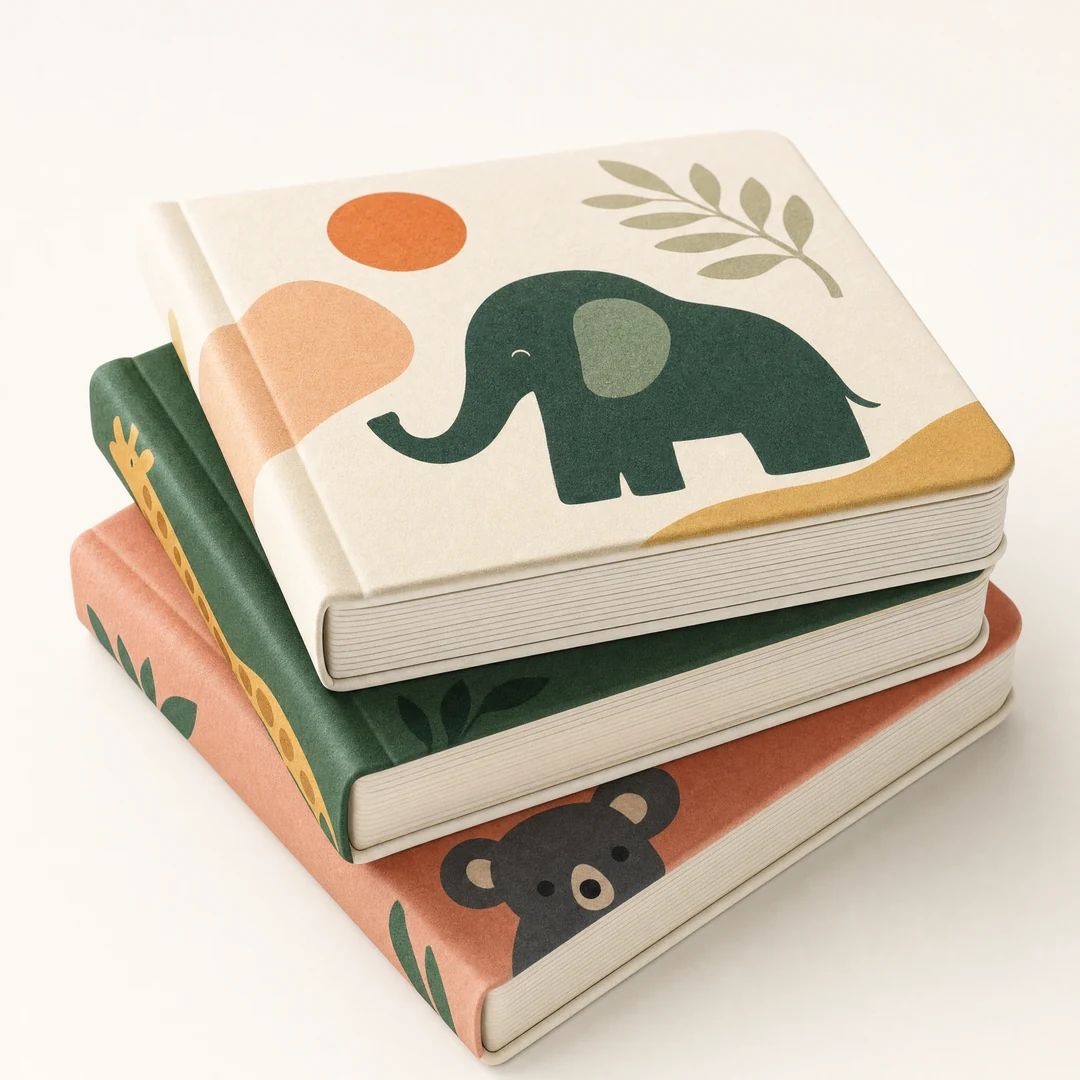
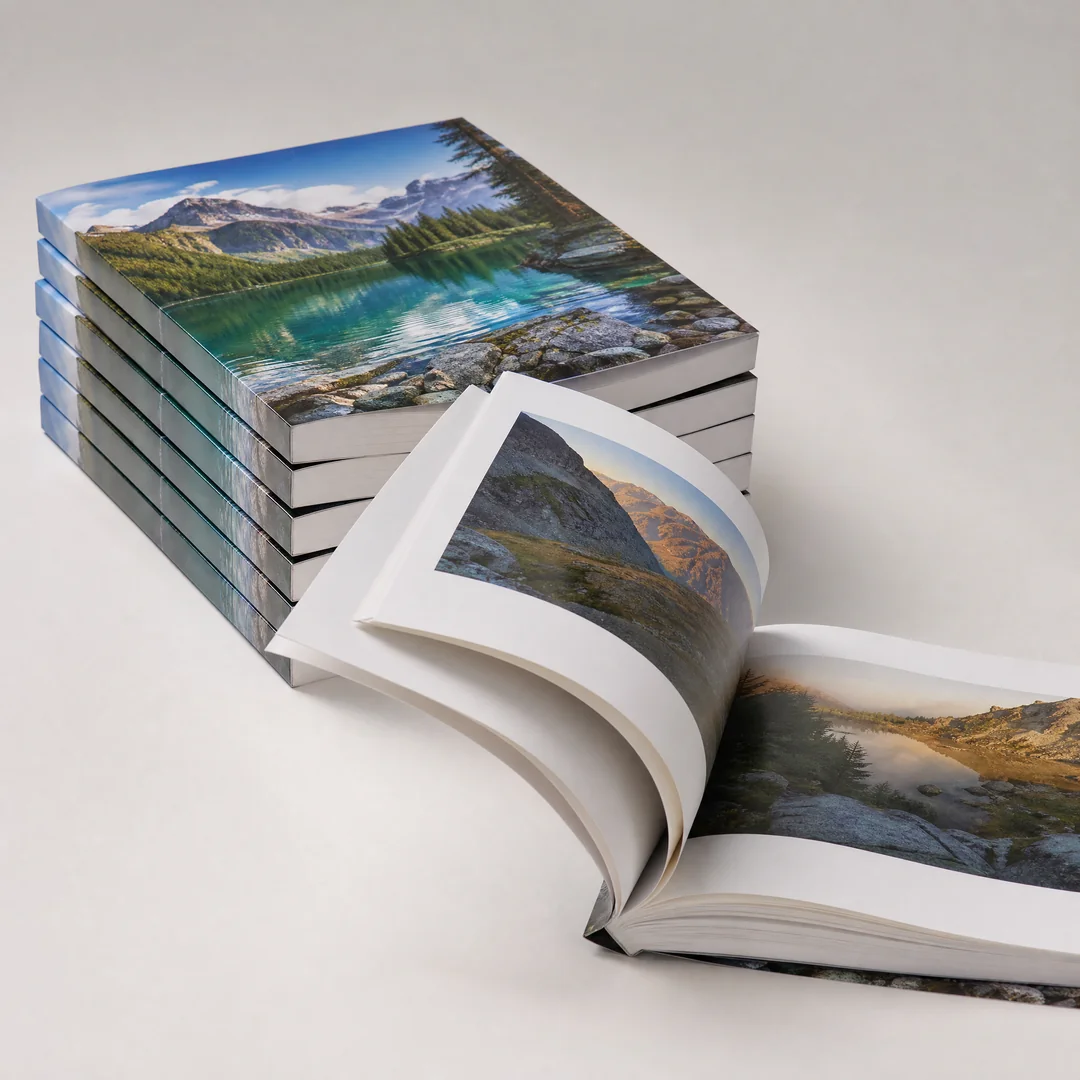
A 16-page board book can quote at $1.80 per copy from one printer and $6.50 from another. The artwork is identical. The page count is identical. Nothing in the files explains a gap that wide.
The explanation sits in specifications most buyers never compare side by side. Greyboard thickness, ply construction, wrap paper, corner die-cutting, lamination, hand assembly, and order quantity all move the number. Board book printing cost is a manufacturing figure, not a title figure.
This guide shows where the money goes. It also explains why thickness and spreads move the number more than raw page count, and which levers a buyer can pull. For format options first, the board book printing page covers construction and materials.
Why the Same 16-Page Board Book Quotes at $1.80 and $6.50
Start with volume. At 5,000 copies, setup costs spread thin and the unit price settles near material and press time. At 250 copies, the same die, plates, proof, and assembly line setup land on one small run. That alone can double the per-copy figure.
Then add construction. A 2mm single-ply board with flush-cut edges and no lamination is one product. A 3mm two-ply board with turned-in edges, matte lamination, and a custom corner is another. Both are legally board books. Only one survives a toddler.
Then add compliance. Low-migration inks and third-party safety testing carry cost that never appears on the press sheet, yet major retailers demand both. A quote without testing is a quote for a product you cannot legally sell in the US or the EU.
None of these gaps appear when you compare two numbers in an inbox. They appear when you compare two spec sheets.
What You Are Actually Paying For in a Board Book
A board book is not a thick paperback. It is a laminated composite built from board, paper, ink, adhesive, and labor. Each layer carries its own share of board book printing cost and its own failure mode.
The Greyboard Core
Greyboard is the recycled paperboard that gives a board book its stiffness. Factories sell it by thickness and by ply, and it usually forms the largest material line in the quote. Board is priced by weight, so a 3mm core consumes roughly twice the fiber of a 1.5mm core before any lamination.
Wrap Paper and Mounting
Printers glue art paper to both sides of the board. The wrap must be heavier than standard text stock to hide the board texture and survive folding at the edges. Mounting is a separate pass with adhesive and heat, and it decides whether the book stays flat. Uneven tension on the two sides curls a board book within days.
Printing and Ink
Interiors and covers print four-color process on sheet-fed presses. Ink cost scales with coverage, so full-bleed illustration and dense backgrounds consume more than open white space. Titles for young children often need low-migration inks and water-based coatings, which cost more per kilo than conventional offset inks.
Die-Cutting and Edge Work
Every board book is die-cut, because board cannot fold like paper. The die sets the trim, punches the rounded corners, and defines the wrap allowance. A standard radius die is cheap and often shared across jobs. A custom shape needs a new cutting forme, a counter-die, and a proof run.
Hand Assembly and Packing
Operators assemble board books by hand. They align printed wraps to board, fold turn-ins, press edges, and inspect every copy. Automation has barely touched this work, so labor stays a fixed per-unit cost. That is why board books never get as cheap as saddle-stitched booklets at high volume.
The Thickness Ladder from 1.5mm to 4mm
Thickness is the most requested upgrade and the easiest one to overbuy. Every step up adds fiber, adhesive, press time, and freight weight.
1.5mm Single Ply
The entry rung for budget toddler titles and promotional board books. It is light, cheap to ship, and adequate for short books that stay at home. It flexes more than thicker board, so it suits 10 to 12 spreads rather than 24.
2mm Single or Two-Ply
The most common specification for mass-market board books. At 2mm, a single ply still works, but many factories prefer two 1mm plies laminated together for flatter, more stable sheets. Expect roughly 8 to 12 percent over a 1.5mm build.
2.5mm Two-Ply
Above 2mm, single-ply board becomes hard to source and harder to keep flat. Two-ply construction adds a gluing pass, extra adhesive, and more handling. The step from 2mm to 2.5mm typically adds 15 to 25 percent to the board line.
3mm Two-Ply
The premium retail standard. A 3mm book feels substantial in the hand and resists bending through years of use. It also weighs more, which raises freight, and it needs deeper turn-ins and stronger edge pressing. Budget 30 to 40 percent above a 2mm build.
4mm Two or Three-Ply
This rung is reserved for gift editions, novelty formats, and books with embedded mechanisms. Thick board cuts slower, presses harder, and ships heavier. A 4mm build can run 50 to 65 percent above the 2mm baseline, and three-ply construction pushes it further.
Counting Spreads Instead of Pages
Board books are quoted in spreads. One spread is the two facing pages of an open book, so a 16-page title is 8 spreads and a 32-page title is 16 spreads. Printers think in spreads because each one is mounted as a printed sheet on one side of the board.
Most board book presses run 4, 6, or 8 spreads up on a sheet. That number, not your page count, decides how many sheets the job consumes and how the die is laid out. A 16-spread book splits neatly into two 8-up passes. A 12-spread book may need the same two passes with a quarter of the sheet empty.
Why 14 Spreads Can Cost More Than 16
Fourteen spreads fit no standard imposition. You still print and mount a 16-up layout, with four positions left blank. The die and folding sequence also need rework for the odd count. Material, press time, and setup stay at 16-spread levels while output drops. Unless the story truly needs 14 spreads, rounding to 16 usually costs less and delivers a better book.
Twenty-four spreads is a different animal. It needs three 8-up passes, more board, more assembly labor, and a heavier spine, so it lands closer to a short hardcover in cost. Buyers comparing a 24-spread board book with a 32-page story book often find the paper option cheaper per copy.
Board Book Add-Ons That Push the Quote Up
These items look small on a spec sheet and heavy on an invoice. Each one is a separate operation, and each one gets quoted separately.
Corner Die and Radius
Rounded corners are the default for child safety. A standard radius die may cost $80 to $250 once, while custom radii, shaped trims, or thumb notches need new tooling and a proof. Reusing a factory’s existing die removes that charge entirely.
Wrap Allowance and Turn-In
Turned-in edges fold the wrap over the board and hide the core. That fold needs 10 to 15mm of extra paper on every side, plus a second pass to glue and press it. Flush-cut edges skip the turn-in and save paper and labor, but they expose the greyboard edge and look cheaper.
Edge Pressing
Hydraulic pressing bonds the wrap, removes trapped air, and flattens the book. Most quotes include one pass. Tight flatness tolerances or thick 4mm board may need extra cycles and slower line speed, so ask whether pressing is priced per pass.
Tear-Resistant Treatment
An aqueous coating or thin film on interior spreads raises scuff and moisture resistance. It also adds a coating pass and can dull fine line art, so request a proof before you commit to the upgrade.
UV spot varnish is a separate line item again. It adds its own plate and a screen or flexo pass, so factories normally restrict it to the cover. Running spot UV across interior spreads slows the line and raises cost without adding much durability.
Low-Migration Ink
Children mouth books. Low-migration inks and coatings limit substances that could transfer, and they cost more than standard offset inks. Note that soy-based ink is not automatically low-migration; the two claims are separate and need separate confirmation.
Third-Party Safety Testing
CPSIA in the US, EN71 in the EU, and ASTM F963 all require lab testing for children’s products. Expect a few hundred to over a thousand dollars per SKU per market, depending on how many materials and colors are tested. Budget once and reuse the report across reprints if the specification does not change.
The Effect of Print Quantity on Unit Price
Board book pricing is front-loaded. Dies, plates, proofing, and line setup are fixed, so the first few hundred copies carry almost all of it. Every copy after that adds mostly material and labor.
That produces a steep curve, not a gentle slope. Moving from 250 to 500 copies often cuts the unit price by a quarter. Moving from 1,000 to 3,000 cuts it by another third. Beyond 5,000 the curve flattens, because board, wrap, and hand assembly dominate and none of them scale down.
The 500 to 1,000 range is the classic cliff. Many factories set a 1,000-piece minimum for custom board books, and quotes below that carry a small-run surcharge or a higher setup fee. If your title is a test, price both 500 and 1,000 and compare total spend rather than unit price.
Indicative Board Book Printing Cost Ranges
The table below shows typical wholesale ranges for a 6 x 6 inch board book. The specification is 16 spreads, four-color printing, rounded corners, and matte lamination. Figures are per copy, FOB China, and exclude freight, duty, and safety testing.
Quantity
2mm two-ply
3mm two-ply
250
$3.20 – $4.90
$4.10 – $6.20
500
$2.30 – $3.40
$2.90 – $4.30
1,000
$1.70 – $2.50
$2.15 – $3.10
3,000
$1.30 – $1.90
$1.65 – $2.35
5,000
$1.10 – $1.60
$1.40 – $2.00
These figures are indicative only. A final quote depends on board thickness, ply, wrap stock, corner tooling, ink specification, testing scope, packaging, and delivery terms. Use the ranges to sanity-check a quote, not to negotiate one.
Seven Ways to Lower Your Board Book Printing Cost
Most savings come from design decisions made before the first quote, not from squeezing a supplier on the last day.
Use a Standard 6 x 6 Inch Square Trim
A 152 x 152mm square nests efficiently on standard board sheets and matches tooling most factories already own. Custom landscape shapes and novelty trims waste board on every sheet and often need a new die.
Hold the Title at 16 Spreads
Sixteen spreads fill two 8-up passes with no empty positions. A title at 18 or 20 spreads forces a third pass for a handful of extra pages. That is the most expensive way to add content to a board book.
Choose 2mm Two-Ply Over 3mm
Board is the biggest material line. Dropping from 3mm to 2mm two-ply cuts fiber, adhesive, and freight weight while still handling normal toddler use. Reserve 3mm for gift, library, and export editions that need the extra heft.
Combine Titles in One Order
Setup, proofing, and freight are per order, not per title. Print two or three titles back to back on the same board stock and finish. Those costs are shared, provided trim, thickness, and lamination match across the list.
Cut Spot Colors and Metallics
Each spot color adds a plate, a wash-up, and a press pass. Four-color process with a well-built file covers almost all children’s illustration. Save metallic and fluorescent inks for one cover accent, not the interior.
Order Early and Ship by Sea
Air freight can add 15 to 25 percent to landed cost on a dense board book. Schedule production eight to ten weeks before your on-sale date, and avoid the pre-Lunar New Year crunch when factory capacity tightens and rates climb.
Reuse an Existing Die
Standard rounded corners, a common trim, and a factory’s existing cutting forme remove tooling charges and proof cycles. Custom shapes pay off only when the shape sells the book. Novelty formats such as the flap book carry their own tooling, so price that decision on purpose.
The RFQ Checklist for an Accurate Board Book Quote
Vague briefs produce wide ranges. A complete request produces numbers you can compare line by line.
Trim size and orientation, in inches or millimeters
Spread count and total page count, with the cover identified
Board thickness and ply, for example 2mm two-ply
Wrap paper stock and finish: gloss, matte, or uncoated
Corner style: standard radius, custom radius, or square
Edge style: turned-in or flush cut
Ink specification, including low-migration or spot color needs
Target markets and required testing: CPSIA, EN71, or ASTM F963
Print quantity plus expected annual reprint volume
Delivery port, Incoterm, and required delivery date
Send print-ready artwork as PDF/X-4 with 3mm bleed and outlined fonts. Add a reference sample or a competitor title when you can. One physical book settles questions about board feel, edge style, and wrap finish faster than a page of description. The children’s book printing page shows how adjacent formats are specified.
Next Step: A Firm Board Book Quote
Board book printing cost comes down to five decisions: thickness, ply, spreads, finishing, and quantity. Fix those before you request pricing, and competing quotes will finally describe the same product.
Start with a standard trim and a realistic spread count. Ask each supplier what changes at double the quantity, and price freight into the landed figure before you compare totals. When the specification is ready, review the board book printing capabilities and send your details for a firm quote.