The Box You Ship Is Not the Box They Remember
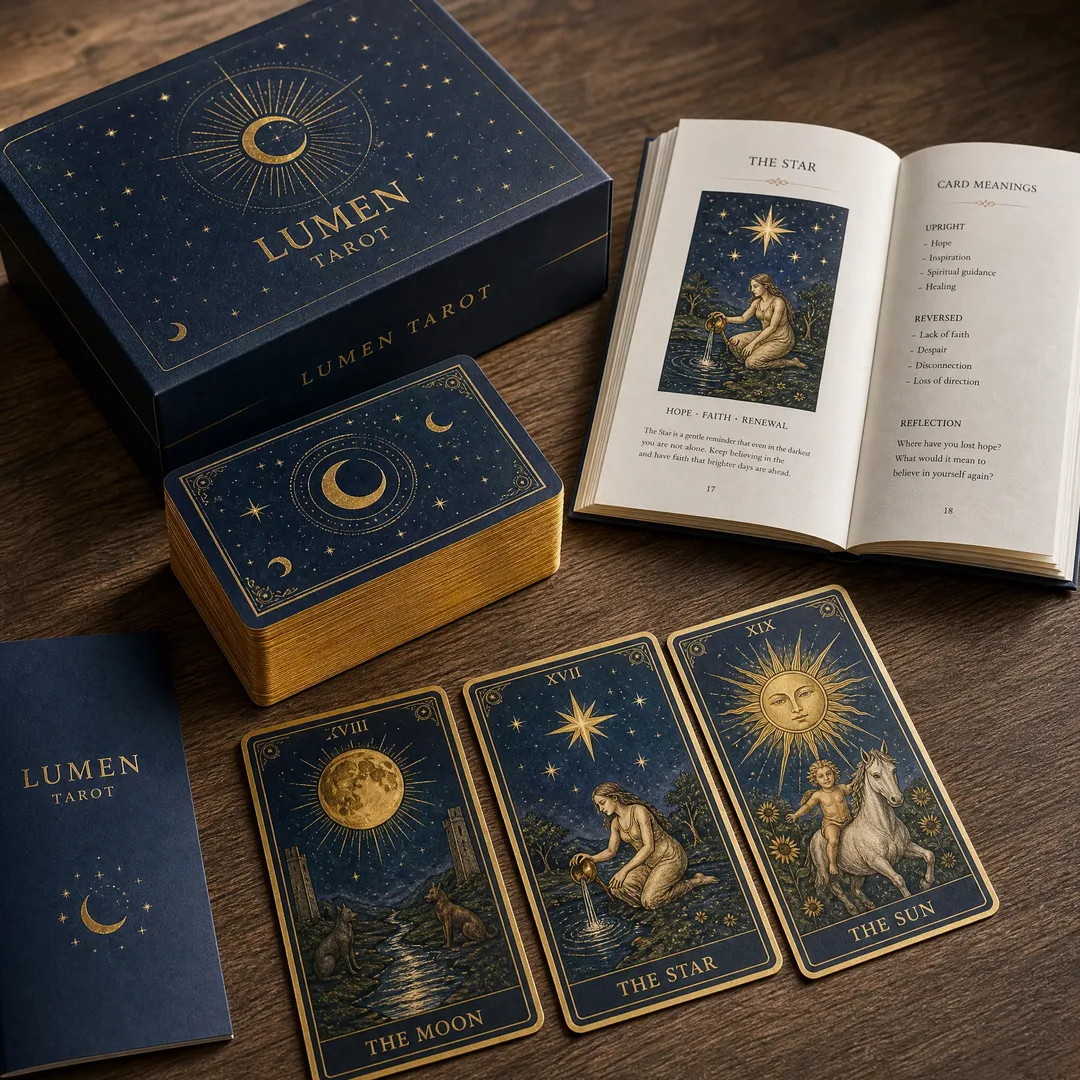
Walk down any shopping street and the packaging does most of the heavy lifting before the product even enters the conversation. A candle in a plain brown box competes on price. That same candle in a matte-laminated rigid box with gold foil and an embossed logo competes on desire. The difference is not just cosmetic. It is structural. It is tactile. And getting it right means understanding every step between a flat sheet of paperboard and a finished box that sits on a retail shelf, or lands on a doorstep, and makes someone stop scrolling long enough to feel something.
Most buyers who come to custom packaging printing in China for the first time walk in with a picture from Pinterest and a rough budget. They walk out with a stack of options they did not know existed: rigid boxes with hidden magnets, matte lamination with selective glossy windows, grey board thicknesses measured in fractions of a millimeter that change the whole feel of the unboxing moment. This guide covers the full production pipeline from box style to sea freight — not in abstract theory, but in the specific decisions that show up on quotes, on factory floors, and in the final product that your customer actually holds in their hands.
Box Styles That Define the Experience
Before you choose paper or finish, you choose the structure. The box style determines the unboxing flow, the level of product protection, and a large portion of the manufacturing cost. The four categories below cover roughly ninety percent of all custom packaging produced in China, and each one comes with design constraints that are not obvious until you have held a sample in your hands.
What are the most common custom box styles for packaging?
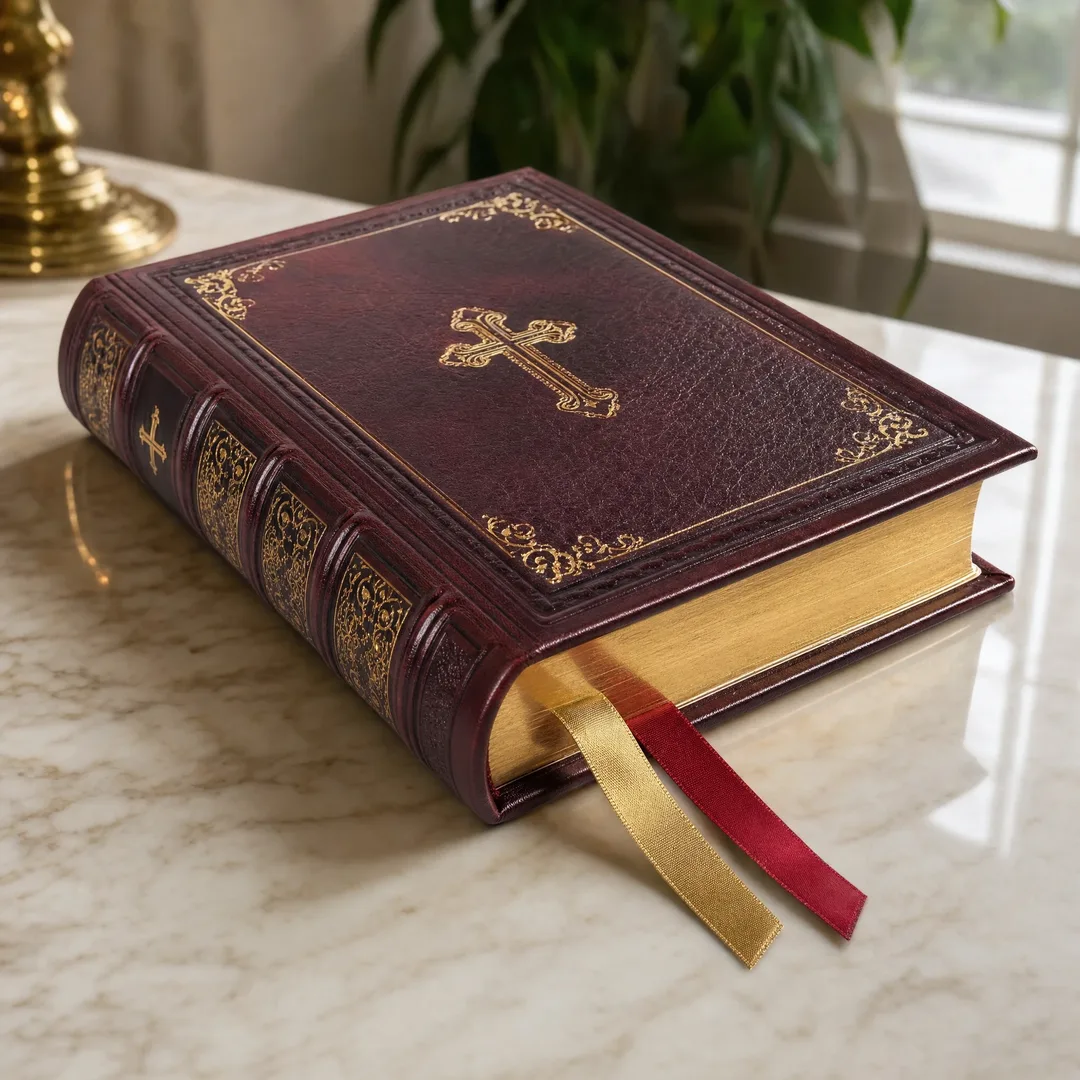
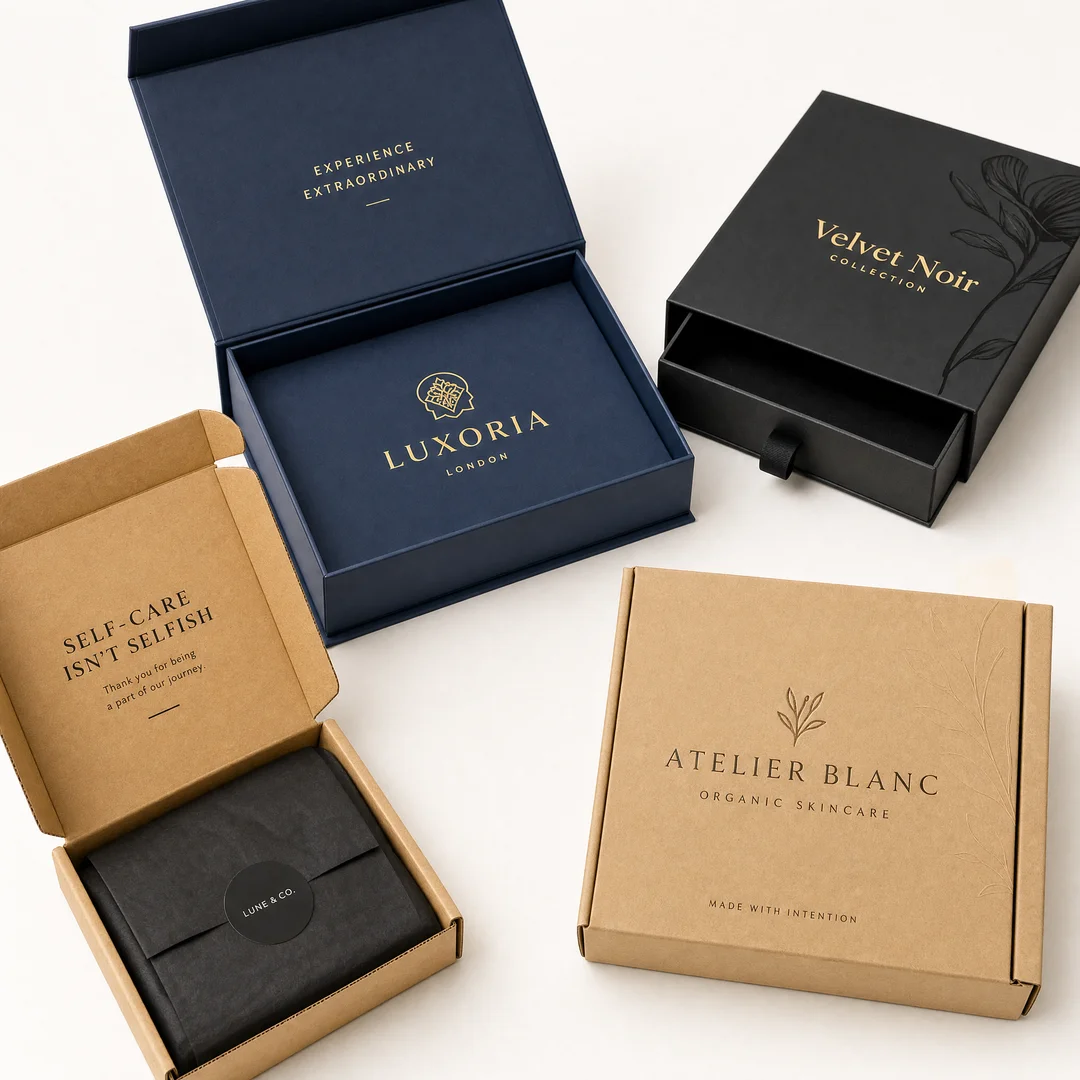
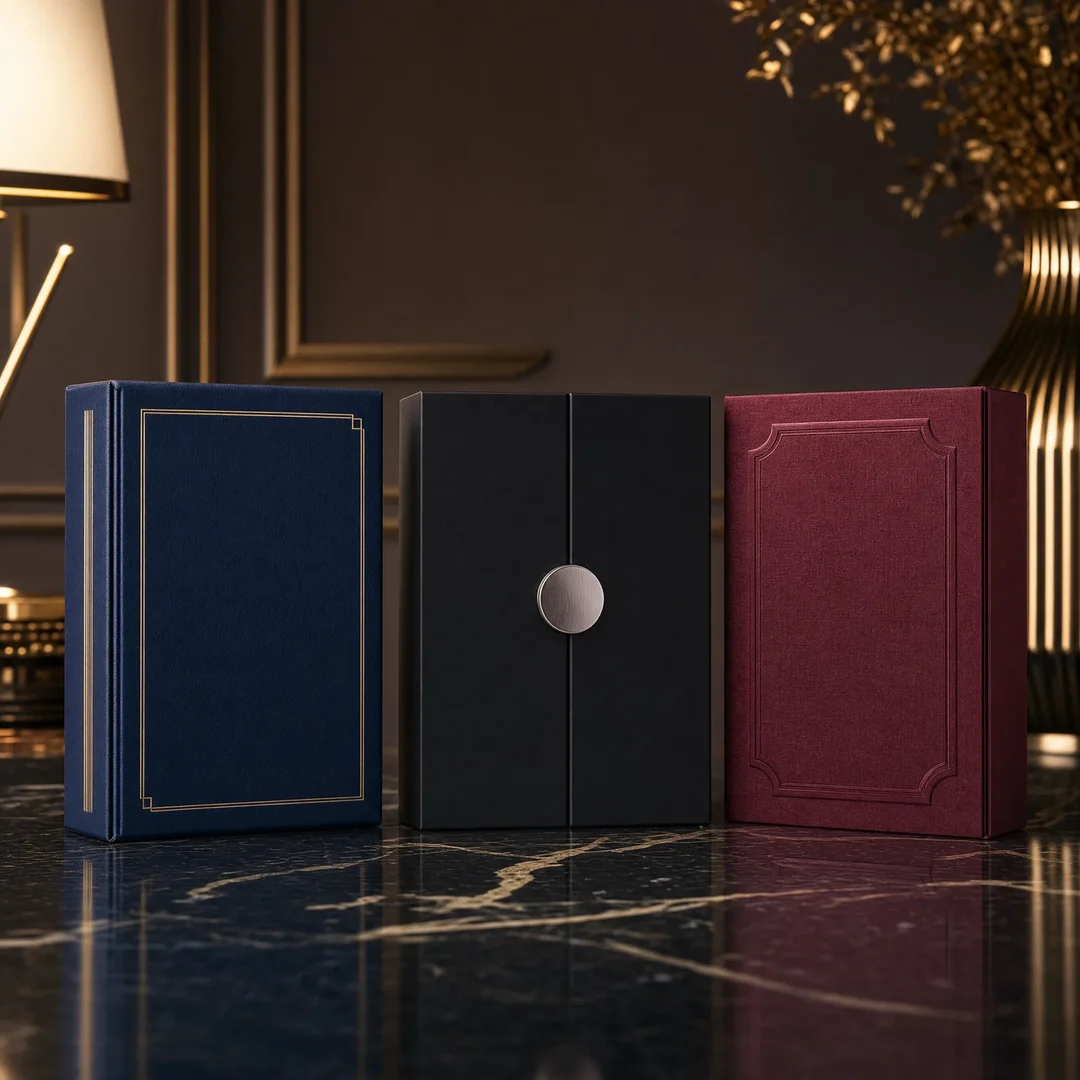
Rigid boxes with magnetic closure — sometimes called luxury magnetic boxes or gift boxes — are the heavy hitters of the packaging world. They are built from thick grey board, typically 1.5 mm to 3 mm, wrapped in printed art paper or specialty covering materials like linen, leatherette, or textured paper. A pair of hidden magnets embedded in the lid and the base wall creates a closure that snaps shut with a satisfying, premium feel. These boxes do not fold flat. They ship fully assembled, which increases shipping volume and cost, but the structural integrity is unmatched. They are the default choice for luxury cosmetics, premium electronics, jewelry, spirits packaging, and any product where the packaging is expected to be kept and reused — because with a rigid magnetic box, people do keep them.
Drawer boxes — also called slide boxes or slipcase boxes — consist of an outer sleeve and an inner tray that slides out horizontally. The pulling motion is deliberate. It creates anticipation in a way that a flip-open lid does not, which is why drawer boxes are popular for premium food products, watch packaging, and limited-edition releases where the reveal is part of the product story. The construction is more complex than a standard rigid box because both the outer shell and the inner drawer need to fit with tight tolerances — typically a 1.5 mm to 2 mm gap between the drawer and the sleeve, enough to slide smoothly but not so loose that the box feels sloppy. A ribbon pull tab is often added to the inner drawer as a practical detail that also reinforces the premium positioning.
Mailer boxes — also called airplane boxes in the Chinese packaging industry — are the workhorses of e-commerce. They are made from corrugated board, typically E-flute or B-flute, and feature a self-locking bottom that requires no glue or tape to assemble. The defining feature is the wing flaps on the sides, which fold inward and lock the lid in place when closed. Mailer boxes ship flat, which keeps shipping costs manageable, and they assemble in seconds at the fulfillment center. The printable surface area is generous — top, bottom, and all four side panels — which makes them a favorite for DTC brands that want every surface of the unboxing experience branded. The trade-off is that corrugated board cannot hold the same print resolution as coated art paper, so fine typography and photographic detail will look softer than they would on a rigid box.
Book-style boxes — also called hinged lid boxes — open like a hardcover book, with a lid attached to the base along one edge by a paper hinge. They are a subset of rigid box construction but the hinge mechanism makes them feel different in the hand. The lid stays attached, so there is no separate piece to drop or lose. Book-style boxes work well for multi-piece product sets, gift collections, and any product where the packaging presentation is sequential — open the cover to reveal the contents arranged inside. The paper hinge is the structural weak point, so it should be reinforced with a cloth or mesh backing on boxes that will be opened and closed repeatedly.
Paperboard: The Material Nobody Sees but Everyone Feels
Paperboard is the skeleton. If the structure is wrong, no amount of foil stamping will fix the way the box sags under its own weight or creases at the corners during shipping. The four material categories that dominate custom packaging printing in China each serve a different purpose, and the line between “feels premium” and “feels cheap” often comes down to 0.5 mm of thickness.
Which paperboard grade is best for custom packaging boxes?
Grey board — also called chipboard or grey chipboard — is a dense, rigid board made from recycled paper pulp. It has a grey-brown color throughout and is used as the structural core of rigid boxes. Grey board is not printed on directly. Instead, it is wrapped with a printed sheet of coated art paper, usually 128 GSM or 157 GSM, which is glued to the grey board surface. The combination gives you the smooth, high-resolution print surface of coated paper with the structural rigidity of thick board. Grey board thickness for packaging typically ranges from 1.0 mm to 3.0 mm. A 1.5 mm board is standard for most rigid boxes. At 2.0 mm, the box feels noticeably more solid. At 3.0 mm, you are in maximum-premium territory — the box has real heft and can support a substantial product weight, but the cost increases and the manufacturing tolerances tighten because thicker board is harder to cut and fold cleanly.
Coated duplex board with grey back — known in the industry as CCNB (Clay Coated News Back) or white-lined chipboard — is a folding carton material with a white, clay-coated printing surface on one side and a grey or brown reverse side. It is the standard material for retail folding cartons: cosmetics boxes, pharmaceutical packaging, food cartons, consumer electronics boxes, and any packaging that needs a good print surface at a moderate cost. CCNB typically comes in thicknesses from 250 GSM to 500 GSM. At 300 GSM to 350 GSM, it folds cleanly and holds its shape for most small-to-medium cartons. At 400 GSM to 500 GSM, the board is stiff enough for larger cartons that need to stand upright on a shelf without buckling.
Solid bleached sulfate (SBS) — also called ivory board in China — is a premium folding carton material made from bleached virgin wood pulp. It is white throughout, which means the cut edges are clean and white rather than grey. This matters for packaging where the board edge is exposed, like in tray-style boxes or cartons with exposed board edges as a design feature. SBS has a smoother, more uniform surface than CCNB, which makes it the preferred substrate for high-detail lithographic printing, heavy ink coverage, and packaging that must reproduce product photography with maximum fidelity. SBS is typically available from 200 GSM to 500 GSM. The cost is roughly 15 to 25 percent higher than equivalent-weight CCNB, but the print quality difference is visible, especially on light-colored designs and white backgrounds.
Corrugated board consists of a fluted inner layer sandwiched between two liner sheets. The flute — the wavy middle layer — is what gives corrugated its compression strength and cushioning properties. E-flute, at about 1.2 mm total thickness, is the standard for retail and e-commerce packaging because it prints reasonably well and folds cleanly while still providing the structural integrity that mailer boxes and shipping cartons need. B-flute, at about 2.5 mm, is used for heavier-duty shipping boxes where stacking strength matters more than print quality. F-flute, at about 0.8 mm, is a thinner option that prints better than E-flute but offers less crush resistance — it is used for some higher-end retail packaging where the look of corrugated is part of the brand aesthetic.
What GSM range should I specify for different packaging purposes?
The working numbers, based on what Chinese packaging factories actually stock and recommend, break down like this. For folding cartons, 300 GSM to 350 GSM is the everyday range — stiff enough to hold shape, cost-effective at volume, and compatible with most die-cutting and gluing equipment. For premium folding cartons that need to feel more rigid, 400 GSM to 500 GSM CCNB or SBS is the step-up. For rigid box wrapping paper, 128 GSM to 157 GSM coated art paper is standard. For the rigid box core, 1.5 mm to 2.0 mm grey board is the sweet spot. For corrugated mailer boxes, E-flute is the default unless the product weight demands B-flute. These are the numbers that show up on factory quotes and production sheets. If you spec something outside these ranges, expect the quote to come back higher and the lead time to extend by several days while the factory sources specialty stock.
Surface Finishing That Changes How Light and Skin Interact with the Box
The surface of a box is the first physical contact a customer has with your brand. Finishing decisions determine whether the box feels warm or cold, reflective or muted, smooth or textured. They also determine how well the box survives shipping, handling, and time on a shelf. A poorly chosen finish can look great on day one and scuffed by day seven.
What finishing techniques make packaging stand out on a shelf?
Lamination — the application of a thin transparent film to the printed surface — is the most common finishing treatment and for good reason. Gloss lamination deepens color saturation, creates a reflective, high-shine surface, and provides a durable protective layer that resists scuffs, fingerprints, and moisture. For packaging that needs to look vibrant and survive handling, gloss lamination is the safe, proven choice. Matte lamination, by contrast, scatters light for a soft, non-reflective surface that looks understated and feels smooth to the touch. It hides fingerprints better than gloss and communicates restraint rather than flash — the packaging equivalent of a matte-finished luxury car versus one with chrome trim. The cost difference between gloss and matte lamination is negligible at commercial volumes. The decision is purely about the visual and tactile brand language.
Soft-touch lamination — sometimes called velvet lamination — takes matte lamination one step further by adding a tactile layer that feels almost like suede. The sensation is immediately noticeable and memorable. It is popular for high-end cosmetics, luxury tech accessories, and premium spirits packaging where the unboxing ritual is a deliberate part of the brand experience. The cost premium is modest — roughly USD 0.05 to USD 0.12 per box depending on the surface area — but the manufacturing window is narrower because soft-touch film is more sensitive to heat and pressure during application, which can create visible marks if the laminating machine is not carefully calibrated.
Foil stamping applies a metallic or colored foil to specific areas of the box using a heated metal die and pressure. Gold and silver foils are the most common, but the range now includes copper, holographic, matte metallic, and pigmented foils in dozens of colors. Foil stamping creates a reflective, dimensional effect that ink alone cannot replicate. The die cost — typically USD 60 to USD 200 depending on the size and complexity of the stamping area — is a one-time setup charge. The per-unit cost of the foil material itself is low, so foil stamping becomes increasingly economical as the print run grows. The most effective use of foil is selective: a logo, a border, a single design element lifted out of a matte background. Full-cover foil stamping exists but is expensive and tends to look gaudy rather than premium.
Spot UV applies a high-gloss varnish to specific areas, creating a contrast between the glossy spot-treated areas and the matte background. The technique is versatile — it can highlight a logo, create a pattern, or add texture to specific graphic elements. Spot UV requires a separate plate and an additional pass through a UV curing station, adding roughly USD 0.04 to USD 0.12 per box depending on coverage. The effect is more subtle than foil stamping but also more versatile, and the combination of matte lamination with spot UV highlights is one of the most cost-effective ways to elevate packaging from standard to premium.
Embossing and debossing press the paperboard between a male and female die to create raised (embossed) or recessed (debossed) areas. The technique adds a three-dimensional, sculptural quality. Debossing is slightly more common on packaging because the recessed impression holds ink or foil well and is less prone to crushing during shipping than a raised emboss. The die cost is similar to foil stamping dies — USD 80 to USD 250 — and combining embossing with foil stamping in a single pass (foil emboss) creates a premium effect that no flat printing technique can match.
When should I use foil stamping versus spot UV?
Foil stamping communicates luxury and opulence. The metallic reflectivity catches light from every angle and reads as “expensive” in a way that ink-based finishes do not. If your brand is competing in a premium tier where packaging is expected to reflect a high price point — jewelry, luxury beauty, premium spirits, exclusive gifts — foil stamping is often the right answer. Spot UV communicates sophistication and design awareness. The glossy-on-matte contrast is eye-catching without being flashy, and the technique works across a broader range of brand positions, from minimalist luxury to modern consumer brands. The decision often comes down to whether you want the packaging to say “look at me” (foil) or “notice the details” (spot UV). Many brands use both — foil for the logo, spot UV for a background pattern or secondary graphic element.
Color: CMYK, Pantone, and the Gap Between Screen and Box
Color is the number-one source of disappointment in packaging production, and it is almost always because the buyer designed in RGB and expected the printed result to match the screen. It does not. Understanding the color pipeline — and where to use CMYK versus Pantone spot colors — prevents the sinking feeling of opening a shipment and finding that the brand blue you approved on a PDF looks purple on the finished box.
Should I print my packaging in CMYK or Pantone spot colors?
CMYK printing uses four ink colors — cyan, magenta, yellow, and black — layered in tiny dots to create the illusion of a full-color image. It is the standard for offset printing because it can reproduce photographic images, gradients, and complex designs with millions of apparent colors. For packaging that includes product photography, detailed illustrations, or multi-color brand graphics, CMYK is the default and usually the only practical choice.
Pantone spot colors are pre-mixed inks that print as a single solid color rather than a dot pattern of four component colors. The advantage is color accuracy and consistency: a Pantone 186 C red is the same red on every box in the run, on every run across months or years, regardless of which press or operator runs the job. CMYK, by contrast, can drift — the cyan plate might print a fraction heavier or lighter, shifting the perceived color slightly. For brand-critical colors — a logo, a specific brand color used across all packaging, a color that must match other printed materials — Pantone spot printing is the insurance policy. It costs more because it requires a dedicated ink unit on the press and a separate plate, typically adding 10 to 20 percent to the printing cost depending on how many spot colors are used. A common strategy is CMYK plus one or two Pantone spot colors: CMYK for the full-color design elements, Pantone for the brand logo and any color that must be exact.
One practical note: Pantone colors are defined in swatch books, not on screens. The physical Pantone formula guide is the only reliable color reference. If you tell a Chinese printer “Pantone 288 C” and they have the swatch book, they will mix the ink to that standard. If you tell them “a dark navy blue” and hope for the best, both of you will be disappointed.
How do I ensure color consistency across multiple production runs?
Color consistency starts with a contract proof — a physical, color-managed print produced by the printer’s prepress department that simulates the final CMYK output. This is the document that both you and the printer agree represents the target. If the production run does not match the contract proof, the printer is responsible for correcting it. Without a contract proof, you have no objective standard to hold the printer to. For Pantone spot colors, a drawdown — a swatch of the actual mixed ink printed on the actual paper stock — serves the same purpose. Request both for your first order, and keep them for reference when you reorder.
For long-term consistency across multiple production runs, have the printer record the ink formulation for Pantone colors and the CMYK density targets. Good printers keep these records as part of the job file. If you change printers, bring the previous printed samples and the Pantone reference to the new printer and have them produce a new contract proof before committing to a production run.
Structural Design, Die-Cutting, and the Path from Flat Sheet to Finished Box
Every custom box starts as a flat sheet. The transformation from flat to three-dimensional happens through die-cutting, creasing, folding, and gluing — a sequence that has to be designed into the artwork file before a single sheet hits the press. The structural design stage is where packaging projects either get launched smoothly or get tangled in weeks of back-and-forth with the factory.
What is a die-cut template and why does it matter for packaging design?
A die-cut template — also called a dieline — is a vector file that defines the exact outline of the flat box shape, including the cut lines (where the board is cut through), crease lines (where the board is scored for folding), and glue tabs (where adhesive is applied to hold the box together). The die itself is a flat board with steel cutting rules and creasing rules embedded in it, custom-made for each unique box design. When the printed sheet passes through the die-cutting press, the die stamps down and cuts the sheet into the box shape while simultaneously scoring the fold lines.
The die-cut template is the single most important file in packaging production. Every millimeter matters: a glue tab that is 2 mm too short will not hold. A crease line that is off by 1 mm will cause the box to fold crooked. The template must also account for the thickness of the paperboard — the crease allowance, typically 1.5x to 2x the board thickness — so that the box folds cleanly without cracking the printed surface. Most Chinese packaging factories can provide standard dieline templates for common box styles, and they will review customer-provided templates before making the die. The review is worth the extra day or two because catching a dieline error before the die is made saves the USD 80 to USD 250 cost of remaking it.
What file formats and specifications does a packaging factory need?
The factory needs two files: a structural dieline in a vector format, typically Adobe Illustrator (.ai) or PDF, and a print artwork file that is correctly positioned on the dieline. The artwork should extend 3 mm to 5 mm past the cut line on all edges to create a bleed — a safety margin so that if the die cuts 0.5 mm off-target, which it sometimes does on long runs as the die wears, there is still printed color reaching the edge of the box instead of an unprinted white sliver. All fonts must be converted to outlines. All images must be 300 DPI at the final print size. All colors must be specified as CMYK or Pantone, not RGB. The file should include a separate layer with the dieline, so the prepress operator can verify that the artwork is correctly positioned relative to the cut and crease lines.
If you are providing the complete dieline yourself, include the following specifications in the file notes: paperboard thickness, crease allowance, glue tab width (typically 12 mm to 15 mm), and any special fold directions. If the factory is providing the dieline based on your box dimensions, provide the finished inner dimensions in millimeters — length × width × depth — and specify whether those dimensions are the inner cavity size or the outer box size. Getting this wrong is one of the most common packaging mistakes: designing a box that perfectly fits the product on screen and discovering on delivery that the product does not fit because the inner dimensions are smaller once the board thickness is accounted for.
MOQ, Volume Pricing, and the Economics of Custom Packaging
Minimum order quantity — MOQ — is where packaging budgets either make sense or fall apart. The number itself depends on the production method, the box complexity, and the factory’s equipment setup. Understanding the cost curve lets you plan orders that hit a viable per-unit price without overcommitting to inventory you cannot store or sell through.
What is the minimum order quantity for custom packaging printing in China?
For digital printing, the MOQ is effectively one unit. Digital presses print directly from the file without plates, so there is no setup cost to amortize. The per-unit cost is higher — roughly USD 3 to USD 8 for a typical rigid box, or USD 1 to USD 3 for a folding carton — but it stays flat regardless of quantity. Digital is the right choice for samples, prototype runs, small-batch limited editions, and any project under roughly 200 to 300 units where the offset setup cost would dominate the total price.
For offset-printed folding cartons on standard CCNB board, the practical MOQ is 500 to 1,000 units. Below that, the plate-making cost and makeready waste push the per-unit price high enough that digital becomes competitive. For offset-printed rigid boxes, the MOQ is typically 300 to 500 units because rigid box production involves more hand-assembly steps, and the setup labor is amortized differently than in fully automated folding carton production.
For corrugated mailer boxes, the MOQ is usually 100 to 300 units. The printing is often done via flexographic printing rather than offset, and the die-cutting and gluing for corrugated boxes are more automated, so smaller runs are more feasible. Some factories specialize in low-MOQ corrugated production and will accept orders as low as 50 units with a setup surcharge.
How does the per-unit cost change as the order volume increases?
The cost curve for custom packaging is steep at the low end and flattens at the high end. The fixed costs — die-making, plate-making, machine setup, and makeready — dominate the price at low volumes. As volume increases, those fixed costs spread thinner, and the per-unit price drops sharply.
Here is a representative cost curve for a standard rigid magnetic closure box, roughly 200 mm × 150 mm × 50 mm, with 157 GSM art paper wrapping on 1.5 mm grey board, CMYK offset printing, and matte lamination: at 300 units, the per-unit cost is roughly USD 3.50 to USD 5.00. At 500 units, it drops to USD 2.80 to USD 4.00. At 1,000 units, it settles into the USD 2.00 to USD 3.00 range. At 3,000 units, it reaches USD 1.50 to USD 2.20. Above 5,000 units, the per-unit cost continues to decrease but at a much slower rate, typically bottoming out around USD 1.20 to USD 1.80 depending on the finishing complexity.
For folding cartons, the numbers are lower across the board. A standard 100 mm × 60 mm × 30 mm CCNB carton with CMYK offset printing and gloss lamination might cost USD 0.25 to USD 0.45 per unit at 1,000 pieces, USD 0.18 to USD 0.30 at 3,000 pieces, and USD 0.10 to USD 0.20 at 10,000 pieces. The same carton with foil stamping adds roughly USD 0.05 to USD 0.12 per unit, plus the one-time die cost of USD 80 to USD 150.
These are ballpark ranges based on current factory pricing in Guangdong and Zhejiang. The specific numbers for your project will depend on the box size, paper stock, printing complexity, finishing count, and the factory’s current workload. Always get a formal quote from at least two factories and compare not just the unit price but the payment terms, lead time, and included services like design review and quality inspection.
Sustainable Packaging Without the Greenwashing
Sustainability in packaging is a real constraint, not a marketing bullet point. The materials you choose, the processes you specify, and the end-of-life disposal path for the box all have measurable environmental impacts. Brands that get this right build loyalty. Brands that claim sustainability without the substance get called out.
Can custom packaging be sustainable and printed in China?
Yes, and the environmental credentials of packaging from Chinese factories have improved significantly in the last five years. The practical steps that make a measurable difference without empty claims: specify FSC-certified paperboard, which verifies that the wood fiber comes from responsibly managed forests with full chain-of-custody tracking through the supply chain. Choose water-based or soy-based inks instead of petroleum-based inks — the print quality is identical, and the environmental benefit is a real reduction in volatile organic compound (VOC) emissions during printing. Skip plastic lamination on boxes where the structural protection is not needed, or specify a biodegradable lamination film where available. Use recycled grey board for rigid box cores — most grey board in China is already made from recycled pulp, so this is usually a default choice, but confirming it with the factory ensures traceability.
For corrugated mailer boxes, recycled content is standard: most corrugated board in China contains 60 to 80 percent recycled fiber. The kraft paper outer liner can be specified as 100 percent recycled or FSC Mix. Avoid plastic windows, plastic inserts, and mixed-material constructions that make the box impossible to recycle in a single-stream system. A fully paper-based box — paperboard structure, paper wrap, paper insert, paper tape closure — is recyclable in almost every municipal system worldwide, and that simplicity is more valuable to environmentally conscious customers than any certification logo.
The cost premium for FSC-certified paperboard in packaging grades is modest — roughly 5 to 10 percent above equivalent non-certified stock. For soy-based inks, there is typically no cost premium at all because they are already widely used as the default in many Chinese printing factories. The biggest cost variable for sustainable packaging is not the materials themselves but the volume: sustainable options are easier to source at higher quantities, so small-batch buyers may face longer lead times or limited material availability.
Sampling, Proofing, and Not Ordering 3,000 Boxes You Have Never Held
The sampling stage is the gap between imagination and reality. A box that looks perfect in a 3D render can feel flimsy when you hold it. A color that matched on your calibrated screen can shift under the factory’s lighting. The only way to know is to get a physical sample in your hands before the production run begins — and to understand the difference between the kinds of samples a factory can provide.
How does the sampling process work for custom packaging?
There are three levels of samples, and each serves a different purpose. A digital proof — a PDF or a photo of the printed sheet — confirms the artwork layout, text accuracy, and color placement for free or at very low cost. It is the first checkpoint and should be reviewed before anything physical is produced. A digital proof will not show you what the paperboard feels like, how the foil catches light, or whether the box structure holds its shape under weight.
A white sample — also called a structural sample or a dummy — is an unprinted version of the box made from the actual paperboard stock, cut and assembled to the exact dimensions of the finished product. It confirms the structural design, the fit, the opening and closing action, and the overall feel. White samples typically cost USD 30 to USD 80 per design and take 3 to 5 working days. They are worth it for any box style you have not produced before.
A pre-production sample — also called a press proof or a production sample — is a small number of fully finished boxes printed on the actual production equipment, using the actual paper stock, inks, foils, and adhesives. It is identical to the final product in every way except quantity. Pre-production samples typically cost USD 100 to USD 300, depending on the box complexity and the number of finishing processes, and take 7 to 14 working days. For first-time orders, for high-value projects, or for packaging where color accuracy and finishing quality are brand-critical, the pre-production sample is not optional. It is the difference between approving a box you have seen and approving a box you hope matches the spec sheet.
One practical workflow that works well for most buyers: request a white sample and a digital proof simultaneously. Review both. Once approved, request a pre-production sample before committing to the full production run. The total sampling timeline is roughly 2 to 3 weeks, and the total cost is typically USD 150 to USD 400. That is a small price to pay compared to the cost of 3,000 boxes with a structural flaw or a color shift that went undetected until delivery.
Shipping: Getting Finished Boxes from Factory Floor to Your Door
Logistics is the part of custom packaging printing in China that first-time buyers consistently underestimate. The shipping method determines not only the timeline and cost but also the condition the boxes arrive in. Boxes are bulky, not dense. They take up container space without weighing much, which means the shipping cost is driven by volume — cubic meters — not by weight. Understanding the trade-offs before you place the order lets you budget accurately and avoid unpleasant surprises when the freight quote arrives.
How much does it cost to ship custom packaging from China?
The answer depends on the quantity, the box style, and the destination. Rigid boxes ship assembled, so they take up significantly more volume than folding cartons that ship flat. A cubic meter of rigid boxes might hold 200 to 400 units depending on the box size, while a cubic meter of flat folding cartons might hold 2,000 to 5,000 units. The shipping cost per unit is therefore much higher for rigid boxes than for folding cartons, and this needs to be factored into the total landed cost calculation before deciding on a box style.
Sea freight is the standard for most packaging orders above roughly 500 units of rigid boxes or 2,000 units of folding cartons. Transit time from major Chinese ports — Shanghai, Ningbo, Shenzhen — to the US West Coast is about 12 to 18 days on the water, plus 5 to 10 days for customs clearance and inland delivery. Door-to-door, expect 25 to 40 days total. To Europe, add another 10 to 15 days. For a typical pallet of rigid boxes — roughly 1.5 to 2 cubic meters — sea freight by LCL (less than container load) costs roughly USD 200 to USD 500 depending on the destination and current freight rates. For a full 20-foot container — about 28 to 30 cubic meters — the cost is roughly USD 1,500 to USD 3,500, which makes container-load shipping dramatically cheaper per unit at high volumes.
Air freight cuts the door-to-door timeline to 7 to 14 days but costs roughly four to eight times more than sea freight. For sample shipments, small production runs under 200 rigid boxes, or time-sensitive launches where the speed advantage justifies the cost, air freight is the right call. For everything else, plan ahead and use sea freight.
Express courier services — DHL, FedEx, UPS — deliver in 3 to 7 days door-to-door and are the most expensive option. They are practical for samples, proofs, and emergency top-up orders but make no economic sense for production quantities.
How do customs and import duties work for packaging imports?
Printed paper packaging and paperboard boxes generally fall under HS code 4819 (cartons, boxes, cases, bags, and other packing containers of paper or paperboard). Import duty rates vary by country. In the United States, paperboard packaging from China is typically subject to the general duty rate plus any applicable Section 301 tariffs, which as of the time of writing is an additional 25 percent on many paper and packaging products. Your customs broker can confirm the current applicable rate for your specific product classification.
In the European Union, the standard duty rate on paperboard packaging from China is typically 0 to 5 percent depending on the specific sub-classification, plus VAT at the destination country’s rate. The UK applies its own UK Global Tariff post-Brexit, with most paper packaging at 0 to 4 percent duty. Always confirm the HS code with your freight forwarder or customs broker before placing the order, and have them provide a landed cost estimate that includes duty, VAT or sales tax, customs brokerage fees, and any destination port charges. A shipment whose factory price looks great can become unprofitable once the full landed cost is calculated.
Frequently Asked Questions
How long does custom packaging production take in China?
For a standard folding carton order with offset printing, the production timeline from file approval to shipment readiness is typically 15 to 25 working days. Rigid boxes take longer — 20 to 35 working days — because of the hand-assembly steps involved in wrapping the printed paper around the grey board core. Complex finishing — foil stamping, embossing, spot UV, soft-touch lamination — adds 3 to 7 working days per additional process. Sampling adds 2 to 3 weeks before production even begins. A realistic total timeline for a first-time custom packaging order, from design finalization to boxes in hand, is 8 to 12 weeks when sea freight is included.
Can I get a custom box shape that is not a standard rectangle?
Yes, but the cost, complexity, and minimum order quantity all increase. Custom-shaped boxes require a bespoke die, which costs more than a standard rectangular die, and the hand-assembly labor is higher because automated folding and gluing equipment is designed for rectilinear shapes. Hexagonal boxes, cylindrical boxes, triangular boxes, and custom die-cut shapes are all producible at Chinese factories, but expect the per-unit cost to be 50 to 100 percent higher than an equivalent rectangular box and the MOQ to be at least 500 to 1,000 units to justify the setup costs.
What is the difference between offset printing and flexographic printing for packaging?
Offset printing uses flat plates and transfers ink indirectly from plate to blanket to substrate. It delivers high resolution, smooth gradients, and accurate color reproduction, making it the standard for premium packaging with photographic images and fine detail. Flexographic printing uses raised flexible plates that transfer ink directly to the substrate. It is faster and cheaper per unit at very high volumes, but the print resolution is lower — fine text below roughly 6 points can become illegible, and gradients can show visible dot patterns. Flexo is the standard for corrugated shipping boxes and high-volume retail packaging where cost efficiency is the priority. For rigid boxes and premium folding cartons, offset is nearly always the right choice.
Do Chinese packaging factories handle the design work, or do I need to provide finished files?
Most medium and large packaging factories in China have in-house design teams that can work from your brand guidelines, logo files, and rough concepts to produce print-ready artwork. However, the design quality varies widely. If packaging is brand-critical, provide finished artwork files prepared by your own designer or agency, using the factory’s dieline template as the layout guide. The factory’s in-house team can then handle the prepress work — adding bleed, checking overprint settings, verifying resolution — without making creative decisions that could deviate from your brand standards.
How do I protect my packaging design from being copied?
Packaging designs are protectable through design patents, copyright, and trademark registration depending on the jurisdiction and the nature of the design element. In practice, enforcement against overseas factories is difficult, but there are practical steps you can take: work with established factories that have a track record serving international brands, include an NDA (non-disclosure agreement) in the contract, and avoid posting detailed packaging photos on public platforms before your product launch. Most reputable Chinese packaging factories that serve international clients understand that their long-term business depends on trust, not on copying one-off designs.
What packaging printing is best for small businesses?
For small businesses and startups, the most practical path is digital-printed folding cartons or corrugated mailer boxes with a low MOQ. Start with a small batch — 100 to 300 units — to validate the design and test the market response. Digital printing keeps the per-unit cost reasonable at low volumes without requiring a large upfront investment in plates and dies. Once the design is proven, scale up to offset printing for better per-unit economics on reorders of 1,000 units or more. Many Chinese packaging factories now offer hybrid digital-offset services specifically for this graduated approach.