Why Your Choice of Printer Makes or Breaks Your Self-Publishing Project
You spent eighteen months writing your manuscript. You hired an editor, commissioned a cover designer, and formatted the interior until every margin sat pixel-perfect. Then you hit the wall every indie author hits: how do you actually print the thing?
I have watched authors burn thousands of dollars on print runs they did not need. I have also watched authors limp along with print-on-demand margins so thin that a single returned box wiped out their profit for the month. The decision is not one-size-fits-all, and the wrong call costs real money.
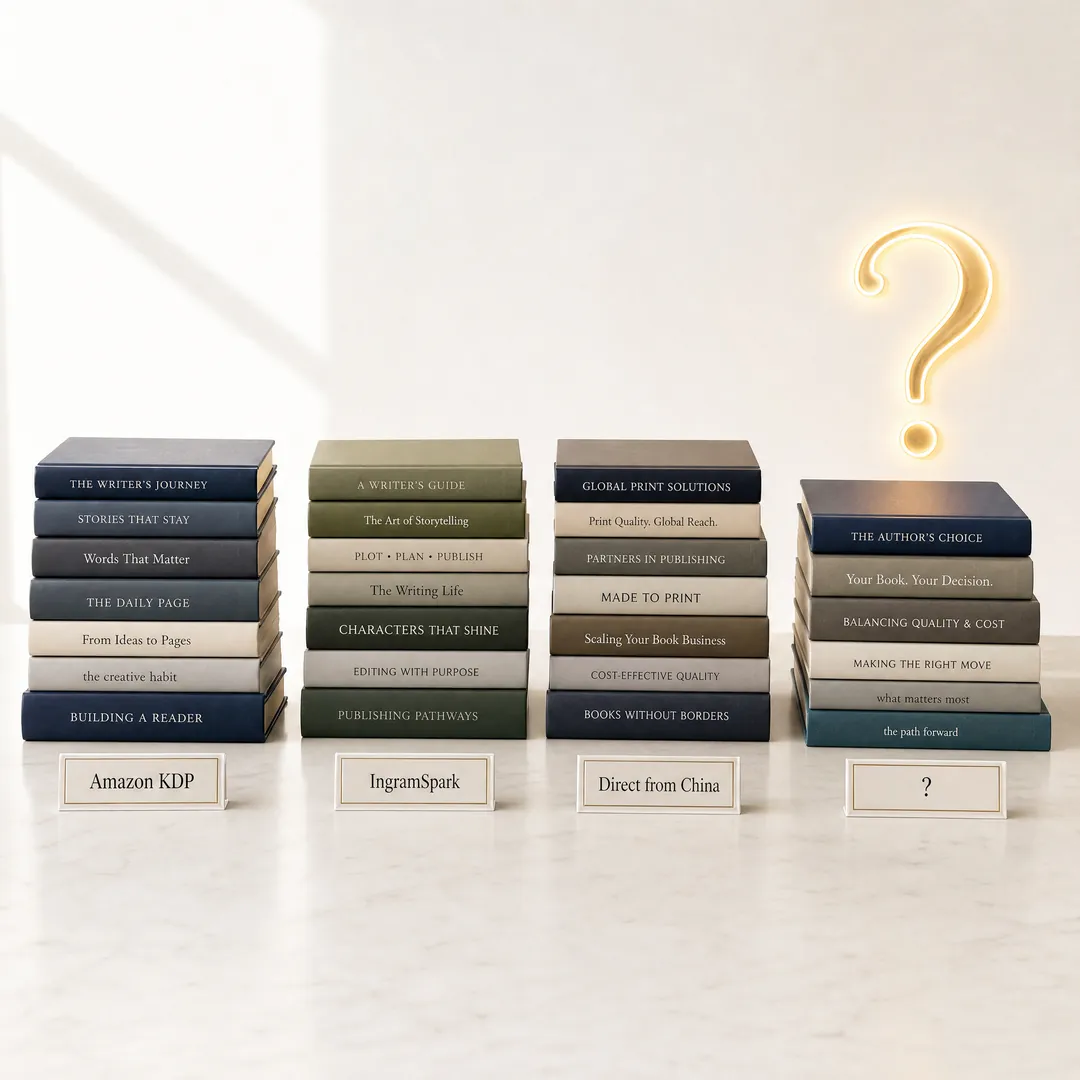
This guide walks through three self publishing book printing paths that cover the full spectrum: Amazon KDP Print for pure marketplace convenience, IngramSpark for bookstore and library distribution, and printing direct from China for authors who want the best per-unit economics. By the end, you will know exactly which one fits your book, your budget, and how you plan to sell.
Option 1: Amazon KDP Print — The Marketplace Default
Amazon KDP Print is where most self-published authors start, and for good reason. It costs nothing to set up. You upload a PDF of your interior and cover, pick your trim size and paper type, set a price, and hit publish. Within 72 hours — often much faster — your paperback shows up on Amazon with Prime shipping eligibility, algorithm placement, and a “Look Inside” preview.
The royalty math works like this: Amazon takes 40% of your list price, then subtracts the printing cost, and you keep the rest. On a 200-page black-and-white paperback priced at $19.99, that usually lands around $5.74 in your pocket per copy. Not spectacular, but not terrible either — especially when you consider Amazon handles everything from payment processing to customer service to shipping.
A June 2025 royalty change is worth flagging. Amazon dropped the royalty rate from 60% to 50% for print books priced below $9.99. If you priced your paperback at $8.99 before, your per-book earnings just took a haircut. This makes KDP even more tilted toward authors who can price above $10.
KDP gives you a free ISBN option, but that ISBN belongs to Amazon. You cannot take it to another platform. If you want your own ISBN — and you should, if you ever plan to go wide — you will need to buy one and assign it yourself.
Author copies are reasonably priced. A 200-page paperback might run you $3–4 per copy plus shipping. The quality is consistent: covers look sharp, binding holds up, and the black-and-white interior is crisp enough for text-heavy books. It is not art-book quality, but for novels, memoirs, and most nonfiction paperbacks, readers will not notice the difference.
Where KDP falls short is everywhere outside Amazon. KDP Print does not distribute to Barnes & Noble, your local indie bookstore, or libraries. If someone asks a bookstore to order your book and that bookstore does not see it in Ingram’s catalog, the answer will be “sorry, we cannot get it.” KDP also does not support hardcover distribution in most markets or give you access to special finishes like matte lamination, spot UV, or foil stamping.
Best for: Authors selling primarily on Amazon who want zero upfront cost, hands-off fulfillment, and a simple workflow.
Option 2: IngramSpark — The Wide-Distribution Workhorse
IngramSpark operates on a fundamentally different model than KDP. It is not a marketplace. It is a distributor that plugs your book into the Ingram catalog — the same catalog that Barnes & Noble, independent bookstores, libraries, and international retailers use to order inventory. That single difference changes everything about the economics and the workflow.
Setup costs $49 per title, though IngramSpark runs free-title promos frequently enough that you rarely need to pay it. You will also need your own ISBN, which IngramSpark does not provide for free. Budget $125 for a single ISBN from Bowker if you are in the US, or grab a block of 100 for $575 if you plan to publish multiple books.
The royalty gap between KDP and IngramSpark is real, and it stings. On that same $19.99, 200-page paperback, your cut through IngramSpark typically drops to around $3.75. Why? Because retailers need their margin. IngramSpark requires a wholesale discount — usually 55% — so bookstores can make money selling your book. KDP skips this because Amazon is the retailer. You are paying for access to a distribution network that reaches over 40,000 retailers worldwide.
Print quality on IngramSpark edges out KDP. The covers feel slightly better, the paper stock is a notch above, and you get more trim-size and binding options. If your book relies on heavy photo inserts or you want a hardcover with a dust jacket, IngramSpark handles it — KDP often cannot.
Author copies cost more than KDP. Expect to pay $5–6 for that same 200-page paperback, and shipping is slower. This makes IngramSpark a poor choice for stocking up on copies to sell at events. The platform is built for distribution to retailers, not for bulk orders to your garage.
Returns are a double-edged sword. Bookstores demand returnability — if they cannot send unsold copies back, they will not order your book. IngramSpark lets you enable returns, which makes your title bookstore-friendly. But if a bookstore returns 50 copies six months later, IngramSpark deducts that from your account. Some authors have been surprised by negative royalty statements. Budget for it.
Best for: Authors who want their book orderable in physical bookstores and libraries, especially those doing speaking engagements, book signings, or pursuing traditional distribution.
Option 3: Printing Direct From China — The Margin Play
For authors who sell direct — at conferences, through their own website, via email list — printing in China rewrites the unit economics. A paperback that costs $4 per copy through KDP author copies or $5.50 through IngramSpark might cost $1.80 to $2.50 per unit from a Chinese printer at scale. That margin gap compounds fast. Sell 500 copies at an event and you pocket an extra $1,000 or more compared to the POD route.
The trade-off is upfront commitment. Most Chinese offset printers have a minimum order quantity (MOQ) of 500 to 1,000 copies for paperbacks and 500 copies for hardcovers. Below that threshold, the setup costs for offset plates wipe out your savings and you are better off with POD. Some companies, like EcoPrinting through their ecobookprinting.com platform, offer more flexible options that bridge the gap between full offset runs and pure POD, making medium-sized print runs more accessible for indie authors who do not want to warehouse 2,000 books.
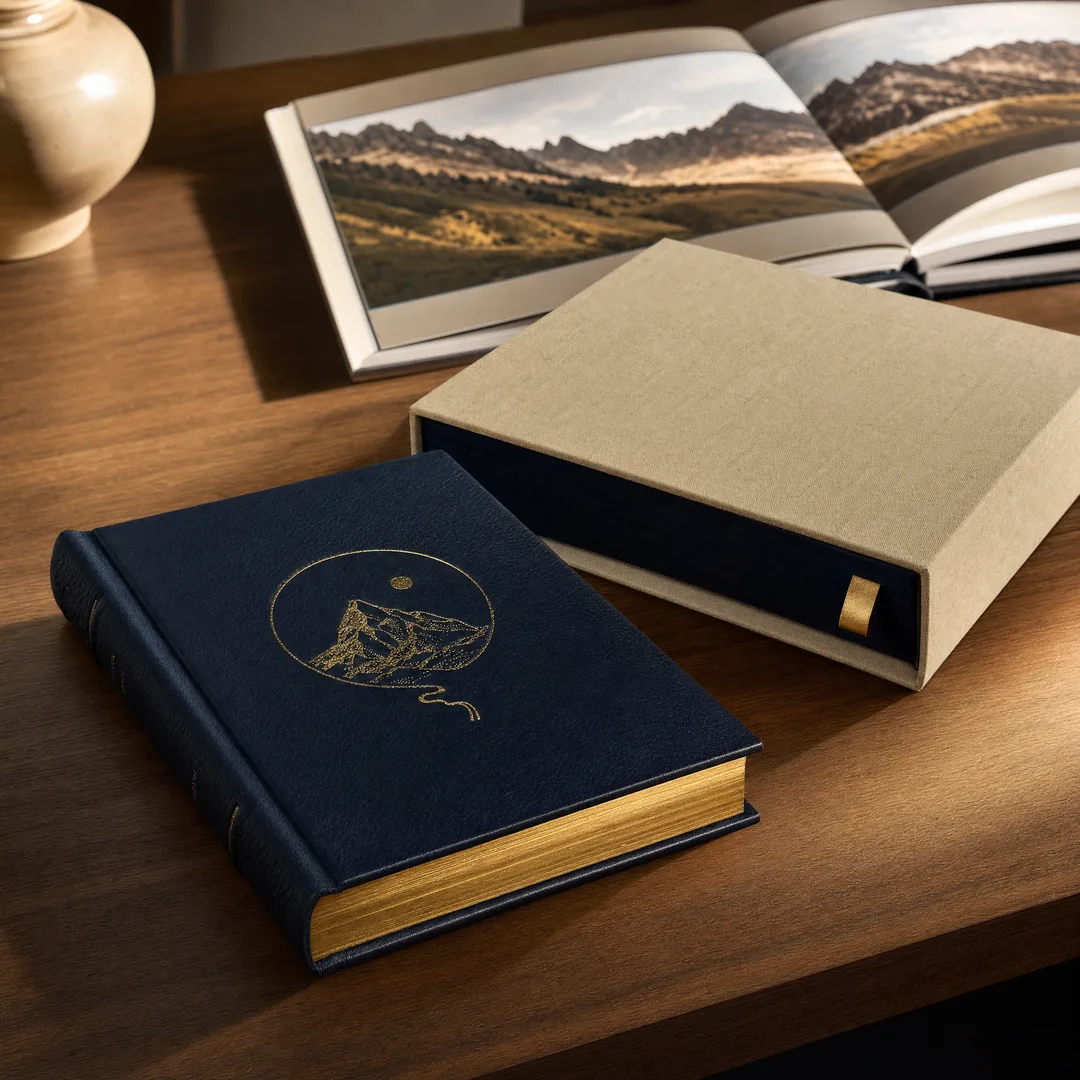
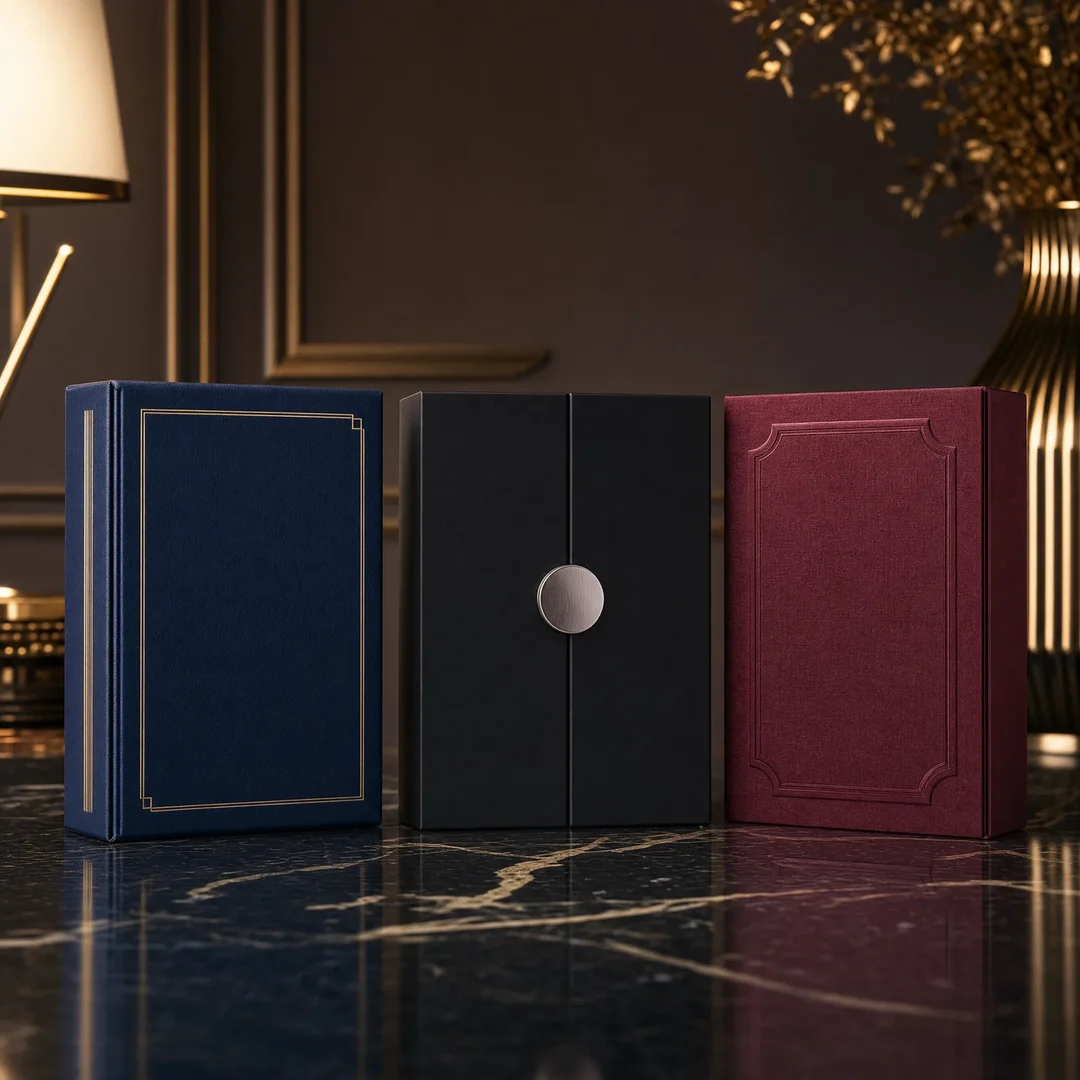
Print quality from reputable Chinese manufacturers has improved dramatically over the past decade. The stigma of “cheap Chinese printing” mostly came from authors who went bargain-hunting on Alibaba with zero quality control. Work with an established company — one that has English-speaking project managers, ships samples before production, and provides color proofs — and the quality rivals anything from a US or UK printer. Hardcovers with cloth binding, foil stamping, ribbon bookmarks, and spot UV are standard offerings, not premium add-ons.
Shipping is the line item that surprises people. Sea freight for 1,000 paperbacks might run $400–600 and take four to six weeks. Air freight halves the transit time but doubles or triples the cost. Either way, factor shipping into your per-unit math before comparing against POD prices. A $2.00 print cost that becomes $2.80 after freight is still excellent, but only if you do not need the books next week.
You will also need to handle fulfillment yourself — or pay a third-party logistics (3PL) company to do it. When a reader orders from your website, someone has to pick, pack, and ship that book. That “someone” is either you at the post office every Tuesday or a fulfillment center that charges per order. Many China-print authors use Amazon FBA (Fulfillment by Amazon) as a hybrid approach: print in China, ship a pallet to Amazon’s warehouse, and let Amazon handle Prime delivery on every sale.
Best for: Authors with a proven sales channel — direct-to-reader, event-heavy, or bulk sales — who want the lowest per-unit cost and are comfortable managing inventory.
Side-by-Side Comparison
Factor
Amazon KDP Print
IngramSpark
Print Direct From China
Setup Cost Free
$49 per title (often waived)
$0 (quote-based production)
Per-Unit Print Cost* $3.40 (sold on Amazon)
$5.24 (sold via retailer)
$1.80–$2.50 (bulk order)
Author Copy Cost* $3–$4
$5–$6
$1.80–$2.50
Typical Royalty Per Book* $5.74
$3.75
$14–$17 (direct sale)
Minimum Order None (print-on-demand)
None (print-on-demand)
500–1,000 copies (offset)
Free ISBN Yes (KDP-imprinted)
No
No
Amazon Sales Native, full algorithm support
Via distribution (lower ranking)
Via FBA or Merchant Fulfilled
Bookstore Distribution No
Yes (40,000+ retailers)
No (you handle it)
Library Distribution No
Yes
No (you handle it)
Hardcover Options Limited markets only
Full support, dust jackets
Full support, all finishes
Special Finishes None
Limited
Foil, embossing, spot UV, cloth
Returns Policy Non-returnable only
Returnable (optional, at your risk)
Handled by you
Payout Speed 60 days
90 days
Immediate (direct sales)
Shipping to You 1–2 weeks (author copies)
2–3 weeks (author copies)
4–6 weeks (sea) / 1–2 weeks (air)
Fulfillment Amazon handles everything
Ingram handles retail orders
You or a 3PL handle it
Best For Amazon-first authors, zero upfront cost
Bookstore/library access, wide distribution
Direct sales, events, highest margins
*Estimates based on a 200-page, 6″×9″ black-and-white paperback at $19.99 retail. Actual costs vary by page count, trim size, paper stock, and order volume.
How to Pick the Right Path for Your Book
Stop thinking about which option is “best.” That framing leads you in circles. Instead, answer three questions honestly, and the right path will surface on its own.
Question 1: Where do your readers buy books? If 90% of your sales come through Amazon — and for most indie authors, they do — start with KDP. The algorithm boost, Prime badge, and frictionless checkout are worth more than the marginally better print quality or wider distribution you would get elsewhere. Add IngramSpark later if you need bookstore access, not before.
Question 2: Do you have a direct sales channel? If you speak at conferences, run workshops, maintain an engaged email list of 5,000 or more subscribers, or have a following that buys directly from you, the math flips. Printing in China and selling direct keeps $14–17 per book instead of $5.74. At 500 copies, that is a $5,000 difference. Whether to go this route is not a quality question — it is a math question. Run the numbers with real print quotes and real shipping costs before deciding.
Question 3: How much inventory risk can you stomach? POD means zero inventory. You sell one, Amazon or Ingram prints one. China-direct means you order 1,000 copies and they arrive on a pallet in your garage. If your book sells, great. If it sits there for two years, you paid for dead stock. Be honest about your sales projections. Most first-time authors overestimate. If you have not sold at least 100 copies through POD first, do not order an offset run.
A hybrid approach works well for authors who outgrow POD. Keep your book on KDP and IngramSpark for organic discovery. Use China-direct print runs for events, bulk orders, and direct-to-reader sales through your own website. The platforms do not conflict — they serve different parts of your sales funnel.
Frequently Asked Questions
Can I use KDP and IngramSpark at the same time? Yes, and many experienced authors do. The key is to disable IngramSpark’s Amazon distribution channel so the two platforms do not compete on the same marketplace. Use KDP for Amazon sales (better ranking and royalties) and IngramSpark for bookstore and library distribution everywhere else.
What if I need fewer than 500 copies but still want better margins than POD? Some Chinese printers offer short-run digital printing with MOQs as low as 50 to 100 copies, though the per-unit cost will sit between POD and offset pricing. EcoPrinting’s ecobookprinting.com platform is worth checking for these mid-volume sweet spots. Always request a sample print before committing to a full run.
How much should I budget for shipping from China? For sea freight on 1,000 standard paperbacks to a US port, budget $400–700. Air freight for the same shipment runs $1,200–2,000. Customs duties on printed books are generally zero or minimal in most Western countries, but confirm with your local customs office. Door-to-door service from a freight forwarder simplifies the process if you have never imported before.
Does printing in China affect my book’s “Made In” status? Most books do not carry a country-of-origin marking requirement, so this is rarely an issue. Your copyright and publisher imprint determine where the book is “from” in a legal and marketing sense, not where the paper met the press.
Which option gives the best print quality? For standard black-and-white paperbacks, all three produce acceptable results that most readers will not distinguish. For color interiors, hardcovers with specialty finishes, or books where physical quality is part of the brand — think coffee-table books, premium journals, illustrated children’s books — printing in China with a reputable manufacturer offers the widest range of options and the best quality-to-cost ratio.
The Bottom Line
Self publishing book printing is not a one-decision problem. It shifts as your book gains traction and your sales channels evolve. Start with KDP because it is free, fast, and puts your book where most readers are. Add IngramSpark when you need bookstore presence. Explore China-direct printing when you have a proven sales channel and the numbers make sense. The authors who lose money are the ones who skip the math and order 1,000 copies before they have sold 50. The ones who profit are the ones who treat printing as a strategic decision, not a checkbox, and match their printer to their actual sales model — not the one they wish they had.
Ready to explore China-direct printing for your book? Visit ecobookprinting.com for a free quote with no minimum obligation.