What types of books can I print in China?
Chinese printing factories can produce virtually any book format you can imagine. The range goes far beyond standard trade paperbacks and hardcovers. Here is what the major facilities handle every day:
For textbooks and educational materials, textbook printing china is a mature, high-volume category. Chinese printers produce millions of school textbooks, workbooks, and academic titles each year for markets across Asia, Africa, and the Middle East. They are equipped for both black-and-white interiors with spot color and full-color educational layouts, with paper stocks ranging from 60 gsm woodfree to 100 gsm coated for image-heavy pages.
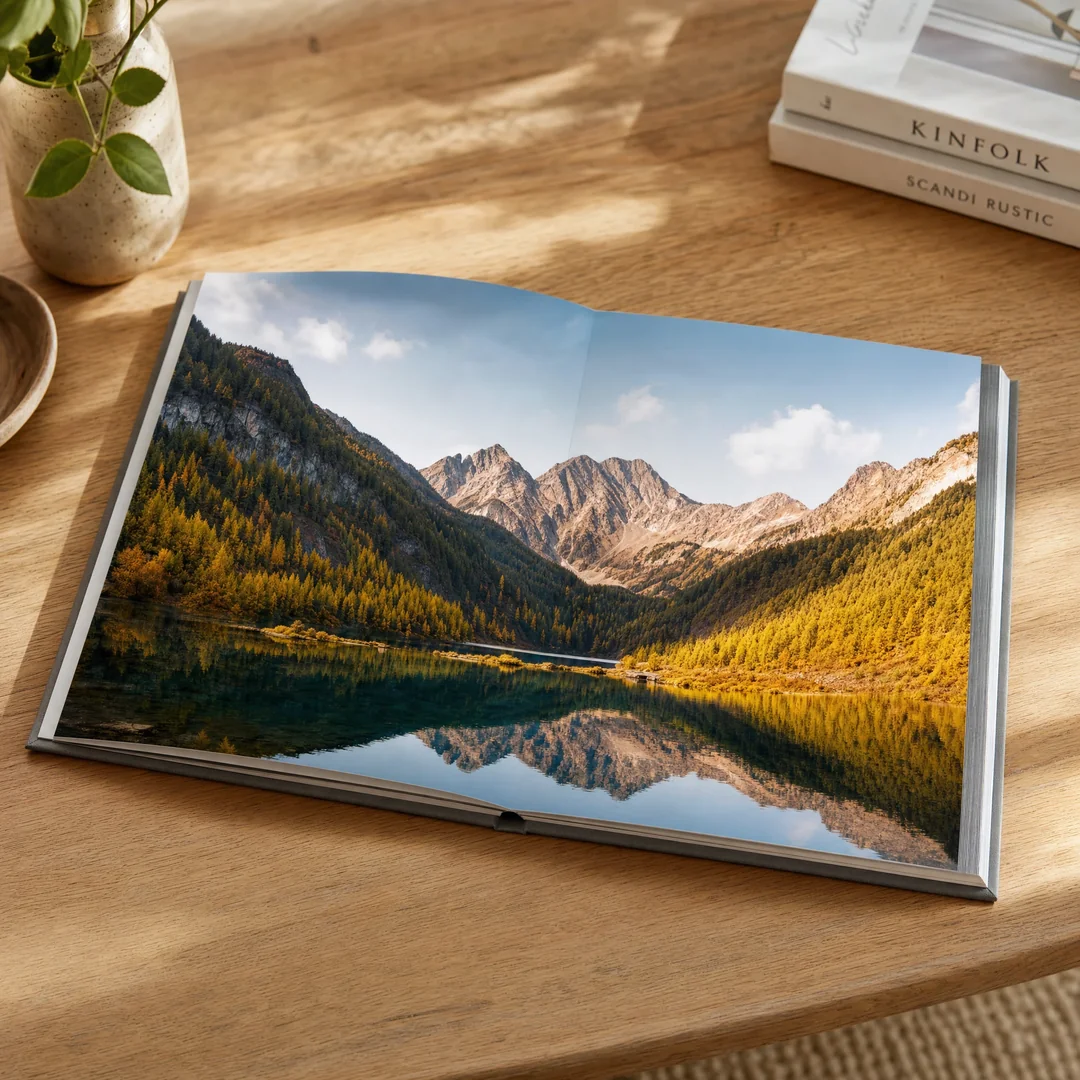
On the visual side, photobook printing china and art book printing china are two categories where Chinese factories genuinely excel. These projects demand high-fidelity color reproduction, and the better facilities run Heidelberg or Komori presses calibrated to G7 color standards. You can specify lay-flat binding for panoramic spreads, which is especially popular for wedding albums and fine art monographs.
Large format book printing china covers anything from A4-sized photography books to oversized portfolios measuring 12×12 inches or larger. Factories in Shenzhen and Dongguan routinely print coffee table books at these dimensions. Speaking of which, coffee table book printing china is one of the most requested services from independent publishers. These books typically feature heavy 157 gsm or 200 gsm coated paper, a case-bound hardcover with dust jacket, and specialized finishes like spot UV or foil stamping on the cover. The unit economics work out well because Chinese binderies handle case binding at scale.
For personal projects, custom photo book printing is widely available. Whether you need 50 copies of a family yearbook or 2,000 copies of a branded corporate photo book, Chinese printers offer both digital short-run and offset long-run options. You can choose from hardcover imagewrap, linen cover with tip-in photo, or a simple softcover perfect-bound format.
How much does it cost to print books in China?
The short answer: cheap book printing china is real, but only when you understand what drives the price. For a standard 200-page, 6×9-inch paperback printed in black and white with a color cover, you can expect unit costs in the range of $1.80 to $3.50 per copy at quantities of 1,000 or more. The same book printed through a US-based offset printer might cost $4.00 to $7.00 per copy. That is a 40% to 60% difference, and it adds up fast.
However, calling it cheap book printing does not tell the full story. The real advantage is value per dollar. A Chinese printer producing at $2.20 per copy is not cutting corners; they are operating in an industrial ecosystem where paper mills, ink suppliers, and binding facilities are clustered within a 50-kilometer radius. The Pearl River Delta alone houses over 30,000 printing-related enterprises. This density eliminates the logistical friction that drives up costs elsewhere.
Here is a realistic price breakdown for a typical paperback order of 1,000 copies:
Paper (interior + cover stock) accounts for roughly 45% of the production cost. Printing plates and press setup make up about 15%. Binding and trimming add another 15%. Cover lamination and any special finishes contribute around 10%. The remaining 15% covers factory overhead and a slim margin. Then, on top of production, you add shipping—which typically runs 30% to 40% of your total landed cost for sea freight to a US West Coast port.
Hardcover books with full-color interiors will push unit costs higher, often into the $4.00 to $8.00 range for similar quantities. The key takeaway is that Chinese printing becomes dramatically cheaper per unit once you cross the 500-copy threshold, which is where offset printing economics kick in.
How do I get a book printing quote from a China printer?
Requesting a book printing quote from a china book printer is straightforward, but the quality of the quote depends entirely on the detail you provide. A vague inquiry like “how much to print a book?” will either be ignored or get you a useless ballpark number. Here is what a professional quote request should include:
First, specify the trim size in millimeters or inches. Common sizes are 6×9 inches (152×229 mm) for trade paperbacks, 8.5×11 inches (216×279 mm) for workbooks, and 8×10 inches (203×254 mm) for photo books. Next, state the exact page count—not the sheet count. A 200-page book is 100 sheets printed on both sides.
Then cover the binding type: perfect bound, saddle stitch, hardcover case bound, wire-o, or spiral. Specify the interior print: black and white or full color, and whether it runs throughout or only in certain sections. Paper choice matters too. For interiors, common options are 80 gsm woodfree uncoated for novels or 128 gsm coated for illustrated books. For covers, 250 gsm to 300 gsm C1S (coated one side) or C2S (coated two sides) with matte or gloss lamination is typical.
Most reputable china book printer companies will respond to a complete specification within 24 to 48 hours. Expect the quote to include line items for pre-press file checking, plate making, paper, printing, binding, packing, and inland freight to the port. A good quote also breaks out shipping options: FOB (you arrange freight), CIF (cost, insurance, and freight to your port), or DDP (delivered duty paid to your door). DDP is strongly recommended for first-time importers because it eliminates surprises. For more details on the full range of services available, check our printing services page .
What is the difference between offset and digital printing in China?
Offset printing china is the backbone of the country’s book manufacturing industry. In offset, aluminum printing plates are created for each color (CMYK), and these plates transfer ink to a rubber blanket, which then presses the image onto paper. The upfront cost is significant—plate making and press setup for a full-color book can run from $300 to $800—but the per-unit cost drops steeply as you add copies. This is why offset becomes the clear winner at 500 copies and above.
Digital printing, by contrast, has zero plate cost. The file goes directly from computer to press, which makes it ideal for short runs of 10 to 300 copies. Chinese digital printing uses machines like the HP Indigo series, which can match offset quality surprisingly well on text and standard imagery. However, digital cannot yet replicate certain offset advantages: true metallic Pantone inks, large-format sheet sizes (digital presses max out around 13×19 inches, while offset presses handle 28×40-inch sheets), or specialized coatings like soft-touch aqueous.
The practical crossover point for most projects falls between 300 and 500 copies. Below 300, digital is usually cheaper. Above 500, offset wins decisively. Between 300 and 500, you should request quotes for both methods and compare. One nuance: if your book uses a specialty paper that is not stocked for digital presses—such as uncoated textured stock or certain recycled papers—offset may be your only viable option regardless of quantity.
What binding options are available for book printing in China?
Book printing and binding go hand in hand, and Chinese binderies offer the full spectrum. The binding choice affects not just aesthetics but also durability, page count limits, and unit cost. Here is what you can specify:
Perfect binding is the industry standard for paperbacks. Stacked signatures are glued at the spine with hot-melt PUR (polyurethane reactive) adhesive, which is far more durable than the EVA glue used in older machines. PUR-bound books can lay flatter and resist cracking, even in cold climates. Perfect binding works best for books between 40 and 400 pages.
Saddle stitch binding uses wire staples through the center fold. It is the cheapest option and works well for booklets, zines, and thin catalogs up to about 64 pages. Beyond that, the spine bulges and pages creep outward when trimmed.
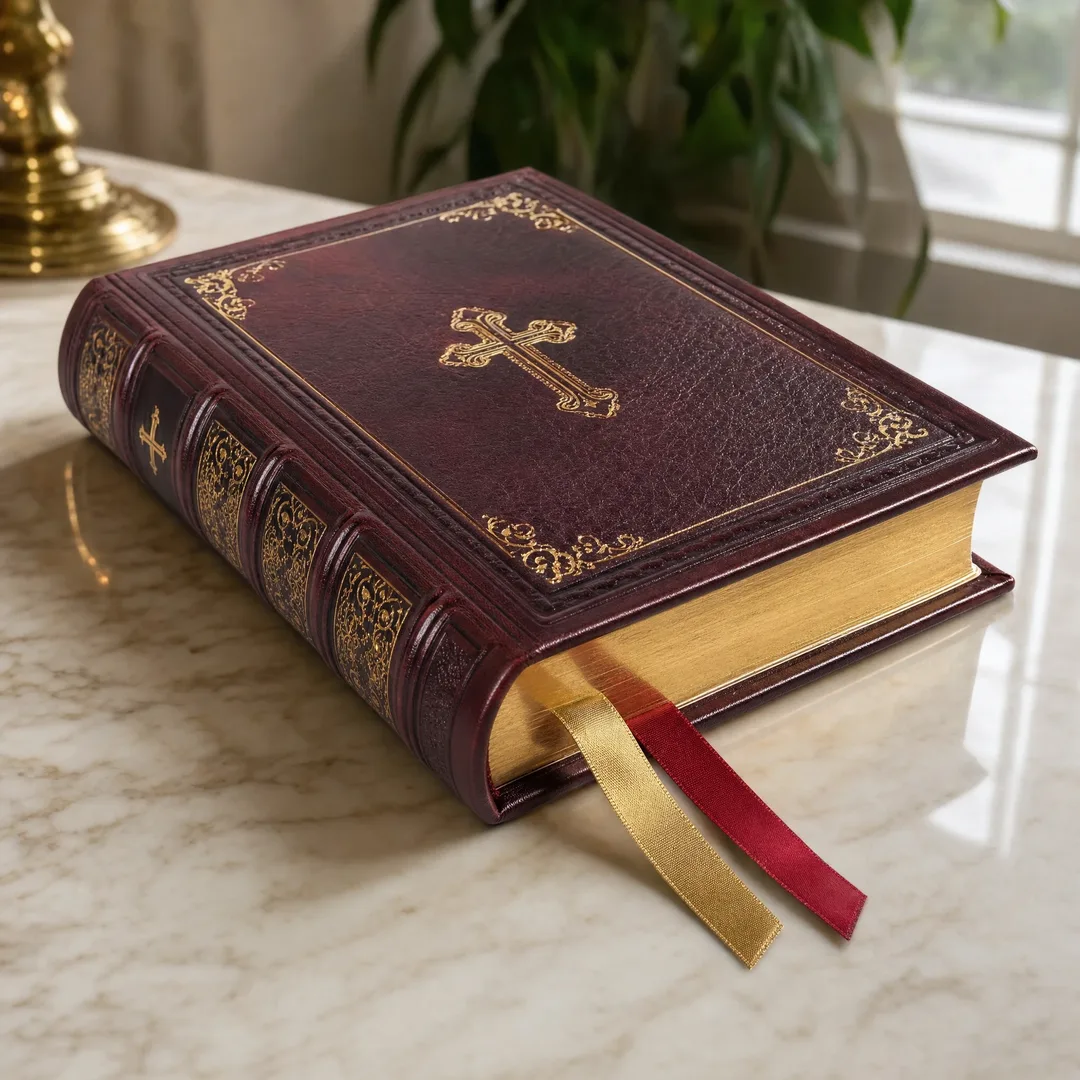
Hardcover case binding is what you need for premium products. Signatures are sewn together with thread, then glued into a rigid case made of grayboard wrapped in cloth, printed paper, or leather. Rounded spine hardcovers have a distinct “shoulder” that gives the book a traditional library feel, while square-backed hardcovers look more modern. Both are available from Chinese binderies.
For custom book printing and binding , you can also specify wire-o binding (popular for cookbooks and journals because pages lay completely flat), spiral coil binding (durable, often used for workbooks and manuals), and board book binding (for children’s titles, with thick 1mm to 2mm pages). Sewn perfect binding combines thread sewing with a glued spine for extra durability, which is a smart upgrade for books expected to see heavy use.
How does shipping and logistics work when printing books in China?
Shipping is the part of the process that catches first-timers off guard. Books are heavy. A standard 6×9-inch, 200-page paperback weighs roughly 300 to 350 grams. An order of 2,000 copies weighs around 600 to 700 kilograms, or about 1,500 pounds. You are not mailing this from the post office.
Sea freight is the standard method for 99% of commercial book orders. Your books are palletized at the factory, trucked to a major port—typically Shenzhen (Yantian or Shekou), Shanghai, or Ningbo—and loaded into a shared container (LCL, less than container load) or a dedicated container (FCL, full container load). Transit time to the US West Coast runs 18 to 25 days. To the US East Coast, expect 30 to 40 days. European ports like Rotterdam or Hamburg take 28 to 35 days.
Here is a critical piece of information that many first-time importers do not know: printed books imported into the United States are classified under Harmonized System (HS) Code 4901.10.00 and are duty-free, meaning 0% tariff. The same duty-free status applies in the European Union and the United Kingdom. You should still budget for customs brokerage fees (typically $100 to $200 per shipment) and potential destination port handling charges.
After the container arrives at the destination port, the final step is truck delivery to your address—your home, warehouse, or a fulfillment center like Amazon FBA. A DDP (Delivered Duty Paid) quote bundles all of this into one price and is the safest choice for your first order. If you are shipping to an Amazon warehouse, make sure your printer knows the FBA carton labeling and pallet requirements before they pack. For more on how we handle logistics, visit our contact page to discuss your specific shipping needs.
What are the minimum order quantities (MOQ) for book printing in China?
MOQ is one of the most common questions, and the answer depends on your printing method and binding type. For offset printing, the industry standard MOQ among Chinese factories is 500 copies. Some printers will accept 300 copies for standard paperback projects, but the unit price climbs noticeably at that level because the fixed setup costs are spread across fewer books.
For hardcover books, the MOQ is typically 500 copies, and some binderies set it at 1,000 for books with complex finishes like foil stamping, embossing, or specialty dust jackets. Board books for children usually have an MOQ of 500 to 1,000 copies due to the specialized die-cutting and mounting processes involved.
Digital printing has much lower MOQs. You can print as few as 10 to 50 copies digitally, and some Chinese printers specializing in short-run digital will accept single-copy orders. However, the per-unit cost for digital is higher. A digitally printed 200-page paperback might cost $6 to $10 per copy, while the same book printed offset at 1,000 copies could drop below $2.50.
One insider tip: if your target quantity is slightly below a factory’s stated MOQ—say, you need 400 copies and they quote MOQ at 500—simply ask. Many factories will accommodate a lower quantity if their production schedule has capacity. You will pay a small premium, but it is often worth negotiating rather than ordering more books than you actually need.
How long does book printing take in China?
Lead time breaks down into three phases. Phase one is pre-press, which covers file checking, proofing, and plate making. This typically takes 5 to 10 business days. If your files arrive print-ready—meaning correct bleed, CMYK color space, and embedded fonts—pre-press moves faster. If corrections are needed, each round of revisions adds 2 to 3 days.
Phase two is actual production: printing, binding, and finishing. For a standard paperback order of 1,000 to 3,000 copies, production takes 15 to 20 business days. Hardcover books add 5 to 7 more days because the case-making and casing-in steps are more labor-intensive. Large orders of 10,000 copies or more may run for 25 to 35 production days.
Phase three is shipping, covered in detail above. Adding everything together, a realistic total timeline from file submission to books arriving at your US address is 8 to 12 weeks for sea freight. Rush production with air freight can cut this to 3 to 4 weeks, but air freight for 1,000 books can cost $3,000 to $7,000—often more than the printing itself. Build buffer time into your schedule. If you have a fixed launch date, work backward from that date and add two weeks of margin.
What file formats and specifications do China book printers require?
Chinese printers overwhelmingly prefer PDF files, specifically PDF/X-1a:2001 or PDF/X-4 standards. These formats embed all fonts and color profiles, which eliminates the number-one cause of pre-press delays: missing fonts or RGB images that shift unexpectedly when converted to CMYK.
Interior pages should be supplied as single-page PDFs (not spreads) with 3mm (0.125 inches) of bleed on all four sides if any images or background colors extend to the page edge. The trim size in your file must match the trim box, not the bleed box. If your book is 6×9 inches, your PDF page size should be 6.25×9.25 inches to include the bleed.
For color interiors, all images and graphics must be in CMYK color space with a total ink coverage of no more than 300% to 320%, depending on the paper type. Black text should be 100% K only, not a rich black mix, to avoid registration issues on high-speed offset presses. Image resolution needs to be 300 DPI at final print size. Anything below 200 DPI will look soft or pixelated on coated paper.
For the cover file, you need a single spread PDF that includes the back cover, spine, and front cover as one continuous layout. The spine width depends on the page count and paper thickness, so do not guess—ask your printer to calculate the exact spine width from the final specifications. A miscalculated spine of even 1mm can make a hardcover look unprofessional.
If you are printing in a language that uses non-Latin characters—Arabic, Hindi, Japanese, or Cyrillic, for example—specify this upfront. Most Chinese printers will ask for outlined text or a flattened PDF to avoid font substitution issues.
How do I choose the right China book printer?
There are thousands of printing companies in China, but the credible pool is much smaller. Start by looking for ISO 9001 certification, which signals that the factory has documented quality management processes. If your project involves children’s books or products, ask about ASTM F963 or EN-71 compliance for safety testing.
Communication is the make-or-break factor. You want a printer whose sales team responds in clear, professional English within one business day. A delayed quote response is a preview of what communication will look like during production when urgent issues arise. Before committing to a large order, test the relationship with a small sample run or request a pre-production sample from a previous similar project.
Visit the factory if you can. A physical visit to the Shenzhen or Dongguan printing hub reveals things no video call can show: the condition of the presses, how organized the binding floor is, and whether quality control is a dedicated department or an afterthought. If travel is not feasible, ask for a video tour of the production floor. Reputable printers will accommodate this. You can also browse our blog for more tips on working with overseas printing partners.
What about quality control and samples?
Quality control in Chinese book printing follows a three-stage process. Stage one is the digital proof, a PDF or soft proof that shows layout, pagination, and color intent. You review and approve this before any plates are made. Stage two is the printed proof, also called a press proof or wet proof. This is a small number of actual printed sheets run on the production press using the final paper and ink. It is the closest thing to seeing the finished book before the full run.
Stage three is in-line inspection during the production run. On higher-end projects, a press-side operator pulls sheets at regular intervals and checks registration, color consistency, and physical defects under a viewing booth calibrated to D50 (5000K) lighting. For binding quality, random copies are pulled and tested for page pull strength (how much force is needed to tear a page from the spine), cover-to-board adhesion on hardcovers, and squareness of trim.
Before the full shipment leaves the factory, you can—and should—request pre-shipment samples. Also called advance copies, these are 2 to 5 finished books air-freighted to you for final approval. They cost $50 to $100 in courier fees, and they are worth every dollar. Catching a binding defect or color shift at this stage lets the factory correct it before the bulk shipment sails. Skipping this step to save time is a gamble that has cost publishers their entire print run.
Can I get custom packaging or add-ons for my books?
Yes, and this is an area where Chinese printers offer more flexibility than most Western counterparts. Beyond the book itself, you can order custom packaging and finishing add-ons from the same facility, which consolidates your supply chain and saves on separate vendor markups.
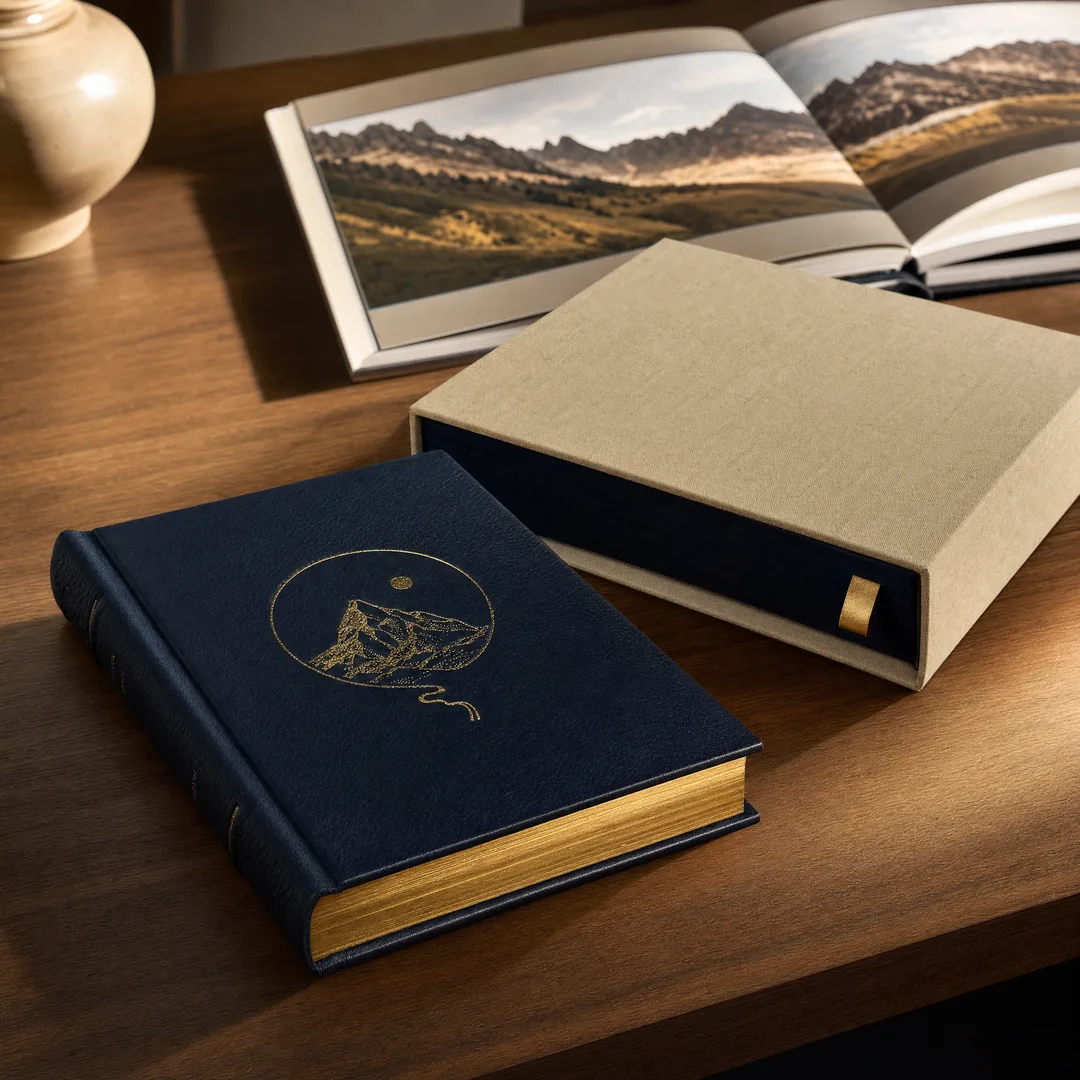
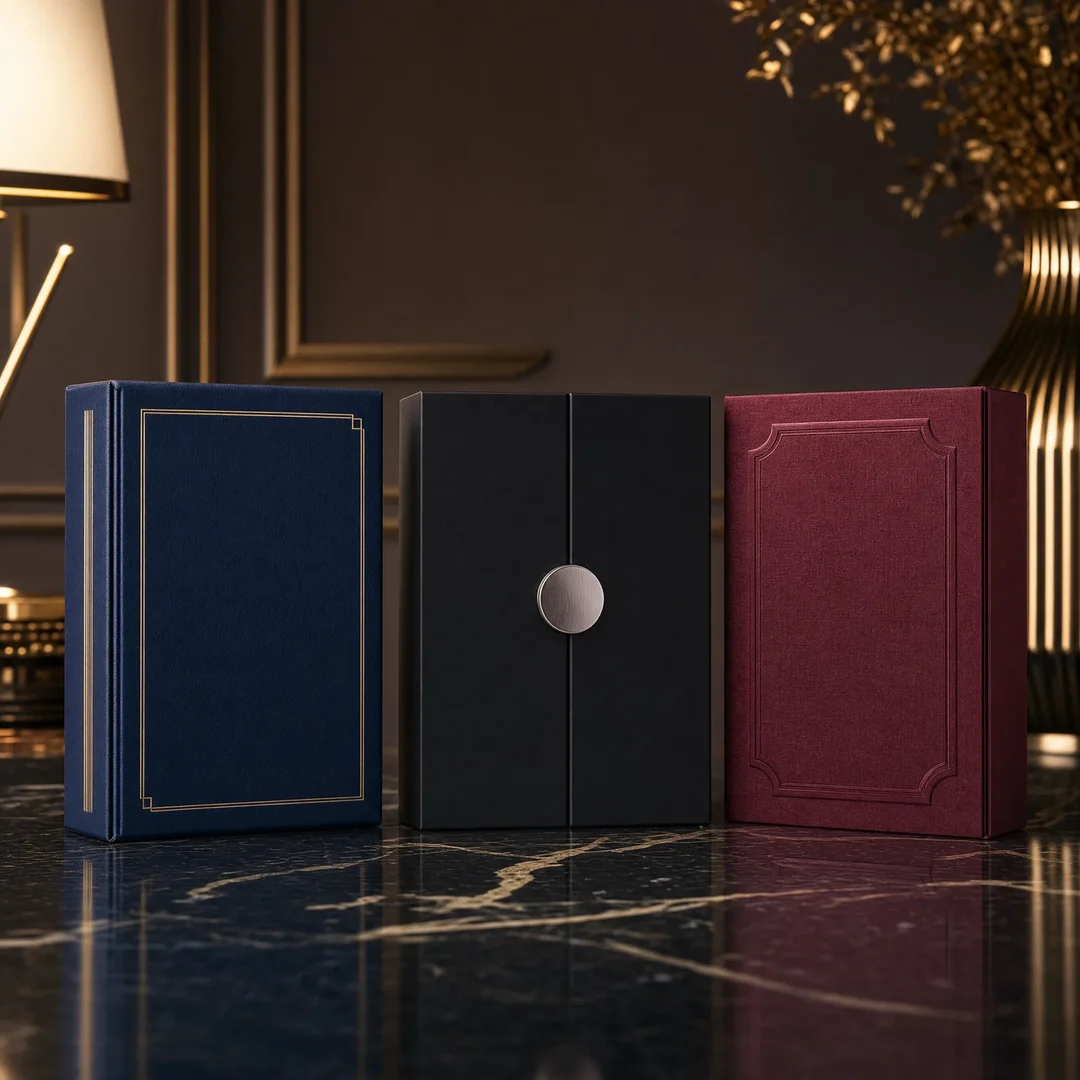
For packaging, options include shrink-wrapping individual copies (minimum cost, adds about $0.05 to $0.10 per book), custom printed belly bands or obi strips ($0.15 to $0.40 each depending on paper and print complexity), and rigid slipcases or clamshell boxes for deluxe editions ($2.00 to $8.00 each). If your book is part of a series, slipcases that hold two or three volumes are also common.
Finishing add-ons include spot UV coating (a glossy varnish applied to specific areas of the cover for contrast against a matte background), foil stamping in gold, silver, copper, or holographic foil, embossing or debossing (raised or recessed patterns pressed into the cover material), and edge painting or gilding on the book block edges. Edge gilding is particularly popular for premium hardcovers and gift editions; Chinese binderies can apply gold, silver, or colored foil edges at a fraction of what it costs domestically.
Endpaper customization is another underrated option. Instead of plain white endsheets, you can print a pattern, map, illustration, or solid color on the endpapers to give your book a polished, intentional feel from the moment someone opens the cover. Most hardcover books ship with white 140 gsm woodfree endpapers by default, so upgrading to printed 157 gsm coated endsheets is a small cost for a big visual impact.
Conclusion: Is Printing Books in China Right for You?
After two decades of globalization in the printing industry, the answer for most publishers is yes—with the right preparation. Chinese book printing delivers genuine cost savings of 40% to 60% on production when your order quantity crosses the 500-copy threshold. The quality of offset printing from the top-tier factories matches or exceeds what you get from US and European printers, because they run the same Heidelberg, Komori, and Kolbus equipment.
That said, printing in China is not a hands-off process. You need to prepare print-ready files, communicate clearly about specifications, factor 8 to 12 weeks of total timeline into your publishing schedule, and budget for shipping costs that can equal 30% to 40% of your production expense. The publishers who succeed are the ones who treat their Chinese printer as a production partner, not a faceless vendor.
If you are ready to explore printing your next book in China, request quotes from at least three printers, compare DDP terms, and always order a pre-production sample before committing to a full print run. For a detailed discussion about your specific project, get in touch with our team —we will walk you through every step.