What Every Notebook Brand Should Know Before Sourcing from China
If you run a stationery label, a corporate merch program, or an e-commerce brand that sells journals, you have probably already heard the pitch: lower unit costs, flexible customization, and factories that can produce almost anything you sketch on a napkin. The reality is more nuanced. China remains the world’s largest hub for custom notebook and journal printing—no other country matches the combination of material access, binding expertise, and production capacity. But getting a batch of notebooks that actually matches your sample, arrives on schedule, and holds up under daily use takes more than picking the cheapest quote on Alibaba. This guide walks through the decisions that determine quality and cost: binding types, inner page layouts, paper grades, cover finishing techniques, accessories, realistic MOQ thresholds, and the quality checks that separate reliable suppliers from the rest.
Binding Types
Hardcover / Case Binding
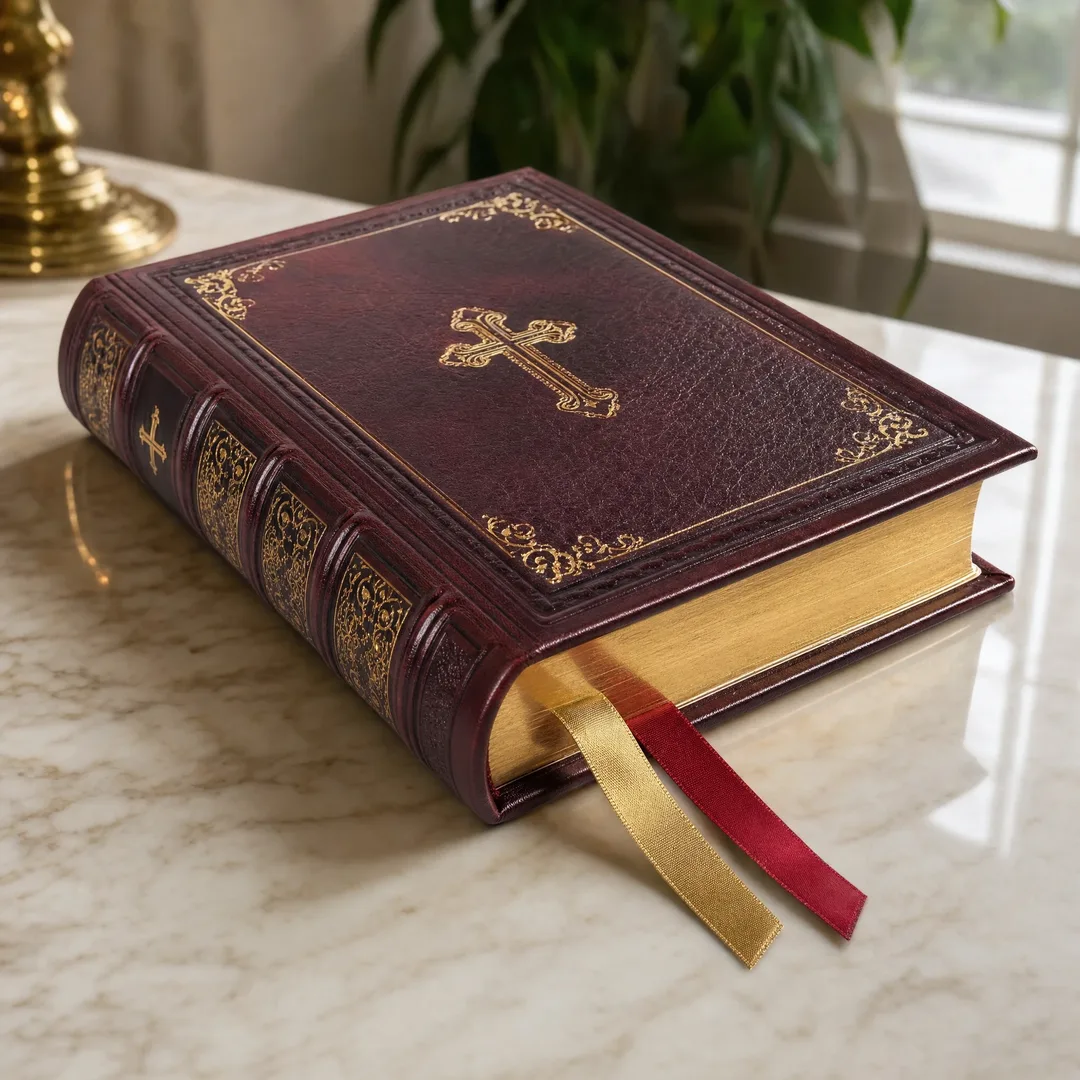
Case binding is what gives a notebook its hard spine and rigid cover. The process glues a printed or cloth-wrapped cover board to the book block, then attaches endpapers to join the cover and interior. Board thickness typically ranges from 1.5mm to 3.0mm—the thicker the board, the heavier and more premium the notebook feels in hand. You can wrap the board in cloth (linen or cotton), printed art paper with lamination, or even PU leather. Hardcover notebooks survive bag-crush, coffee spills, and years of shelf life better than any other binding. For brands selling a “forever journal” at $25 and up, case binding is the baseline. Most Chinese factories need a minimum of 500 to 1,000 units to run case-bound jobs efficiently because of the hand-assembly steps involved in casing in.
Softcover / Perfect Binding
Perfect binding stacks folded signatures, roughens the spine edge, and applies hot glue to hold everything together. The innovation that matters here is PUR (polyurethane reactive) glue. Standard EVA hot-melt works fine for 50-page booklets used once, but PUR glue creates a bond up to 50–60% stronger—pages resist pull-out, and the spine stays flexible in cold weather. If your notebook will be opened flat repeatedly or shipped to climates with temperature swings, insist on PUR. Softcover notebooks look like trade paperbacks: sleek, lightweight, stackable. They cost less to produce and ship than hardcovers. MOQs start around 300–500 units, making them the go-to for promotional runs, conference giveaways, and mid-tier retail.
Spiral & Wire-O Binding
Spiral binding uses continuous plastic coils threaded through punched holes along the spine. Wire-O uses pre-formed double-loop metal wire. While they look similar at a glance, the differences affect both price and durability. Wire-O produces a cleaner, more professional finish—the double loops distribute tension evenly, so pages turn smoothly and stay aligned. Plastic coil is lighter, cheaper, and available in more colors, but it deforms under pressure and does not recover. For 500 copies of a 5.5×8.5-inch notebook with 64 pages, Wire-O costs roughly $1.12 per unit compared to $1.38 for plastic spiral. At 1,000 copies, Wire-O drops to $0.78. Spiral notebooks have the unique advantage of folding completely flat or back-to-back—surgeons, bartenders, and field technicians love them for this reason. MOQ for spiral notebooks starts around 200–500 units at most Chinese factories.
Leather & PU Cover Notebooks
Leather-cover journals sit at the top of the perceived-value ladder. Genuine leather (typically cowhide or buffalo split) develops a patina, smells distinct, and telegraphs “heirloom” to the buyer. PU (polyurethane) leather is synthetic but has improved dramatically—higher-grade PU with microfiber backing mimics the grain and softness of real leather at roughly 30–40% of the cost. Both materials accept debossing and foil stamping beautifully, which is why executive gift notebooks and luxury planners default to leather or PU covers. Genuine leather has higher MOQ due to material minimums (often 500–1,000 units), while PU covers can be produced in runs as low as 200–300.
Inner Page Layouts
Dotted Pages
Dot grid has become the default for bullet journaling for a reason. The faint dots provide just enough structure to draw straight lines and align headers without cluttering the page the way full rules do. Dotted paper works best with 80–100 gsm woodfree offset stock—anything lighter and the dots ghost through to the reverse side; anything heavier and the notebook becomes too bulky for daily carry. If your target audience overlaps with the planner and bullet journal community on Instagram and TikTok, dotted pages are non-negotiable. Most Chinese suppliers offer 5mm dot spacing as standard, with 3.5mm and 7mm available on request.
Lined / Ruled Pages
Lined pages remain the volume leader for school notebooks, office journals, and general-purpose writing. The key decision is line spacing: 6mm suits compact handwriting and is common in Asia and Europe, while 7mm (college-ruled) is the North American standard. Wider 8mm ruling feels more generous and works well for younger students or fountain pen users who write larger. Lined paper pairs naturally with 70–80 gsm offset stock to keep costs down, but premium journals often step up to 100 gsm so that ink from one side does not shadow through to the next.
Blank / Plain Pages
Blank pages are the choice for sketchbooks, art journals, and mixed-media notebooks. Without any printed guide lines, the paper itself becomes the star—texture, thickness, and opacity matter far more than in ruled notebooks. Sketchbooks typically use 120–160 gsm paper, often with a slight tooth (cold-press texture) to grip pencil and charcoal. For general-purpose blank notebooks aimed at writers and note-takers who simply dislike lines, 100 gsm smooth woodfree stock strikes the right balance between page count and paper quality.
Grid / Graph Pages
Grid paper serves engineers, architects, math students, and anyone who draws charts by hand. Standard grid spacing runs 4mm or 5mm, with 4mm being the Japanese and European preference and 5mm common in North America. The grid should be printed in a light blue or gray ink—dark grids compete with handwriting and make pages look cluttered. Graph notebooks often specify slightly heavier paper (90–100 gsm) because users tend to erase and redraw frequently, and lighter stock tears under repeated eraser pressure.
Paper Selection
Woodfree Offset Paper (70–100 gsm)
Woodfree offset paper is the industry workhorse. “Woodfree” means the pulp has been chemically processed to remove lignin—the compound that makes newsprint yellow and brittle over time. This paper is also called “bond paper” or “offset paper” depending on the region. At 80 gsm, it provides adequate opacity for most ballpoint and gel pens. At 100 gsm, it handles fountain pens and highlighters with minimal ghosting. For everyday notebooks that need to balance quality with cost, 80–100 gsm woodfree offset is the default specification at nearly every Chinese notebook factory. A 500-sheet ream of 80 gsm paper weighs roughly 2.5 kg—this matters because paper weight directly drives shipping cost on international orders.
Ivory vs. Pure White Paper
The color of the paper changes the entire mood of a notebook. Pure white (often called “high-white” or “bleached white”) reflects more light, makes printed colors pop, and creates a crisp, modern look. Ivory or cream paper shifts toward warm yellow tones—it reduces eye strain during long writing sessions and projects a vintage, literary feel that pairs beautifully with leather covers and gold foil. Most planners and premium journals choose ivory paper for this reason. The brightness difference is measurable: pure white typically scores 90–100 on the ISO brightness scale, while ivory lands around 70–80. Chinese mills produce both in abundance, so the choice is purely a design decision, not a supply constraint.
Recycled & Specialty Paper
Recycled paper made from post-consumer fiber now commands a meaningful share of the global notebook market, growing at roughly 3% CAGR. It has a slightly softer surface and marginally higher caliper (thickness at the same gsm) compared to virgin fiber. Kraft paper—unbleached, brown, with visible fiber texture—sits in a category of its own. It telegraphs sustainability instantly and pairs well with foil stamping for a rustic-meets-premium look. Stone paper (calcium carbonate bonded with HDPE) is waterproof and tear-resistant—ideal for field notebooks and outdoor journals, though its recyclability is debated. Most established Chinese notebook factories can source FSC-certified, recycled, and kraft stocks, but you should request the certificate for each batch.
Cover Customization Techniques
Debossing & Embossing
Debossing presses a custom metal die into the cover material, leaving a recessed impression that catches light and shadow. Embossing does the reverse—the design rises above the surface. Both techniques require a one-time die fabrication cost (typically $50–$150 depending on size and complexity), and the die can be reused for reprints. Leather and PU covers produce the sharpest debossed results because the material compresses cleanly. Fabric and linen covers yield a softer, more organic impression. Blind debossing—applied to unprinted material with no foil—is the most understated premium finish: it is tactile without being showy.
Foil Stamping (Hot Stamping)
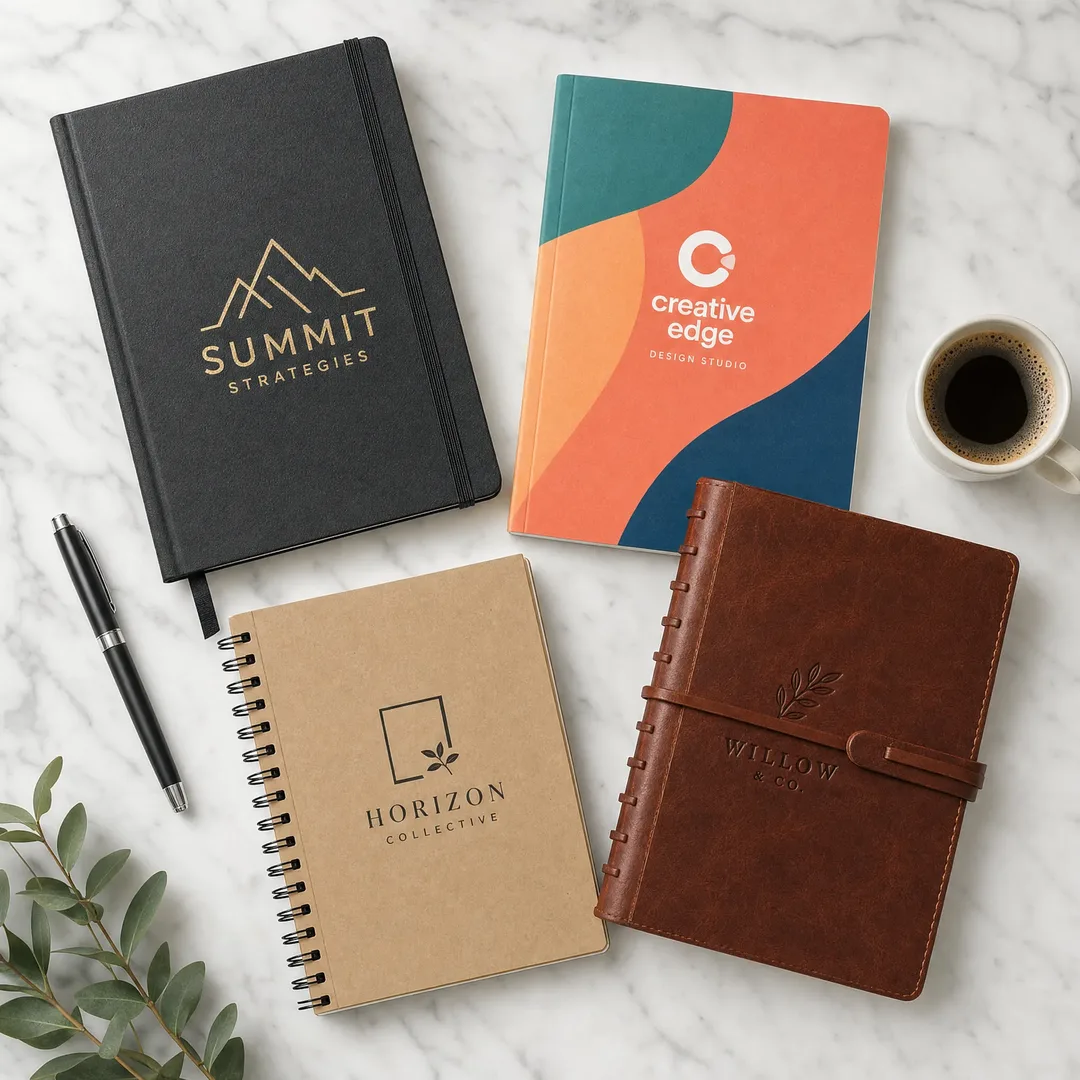
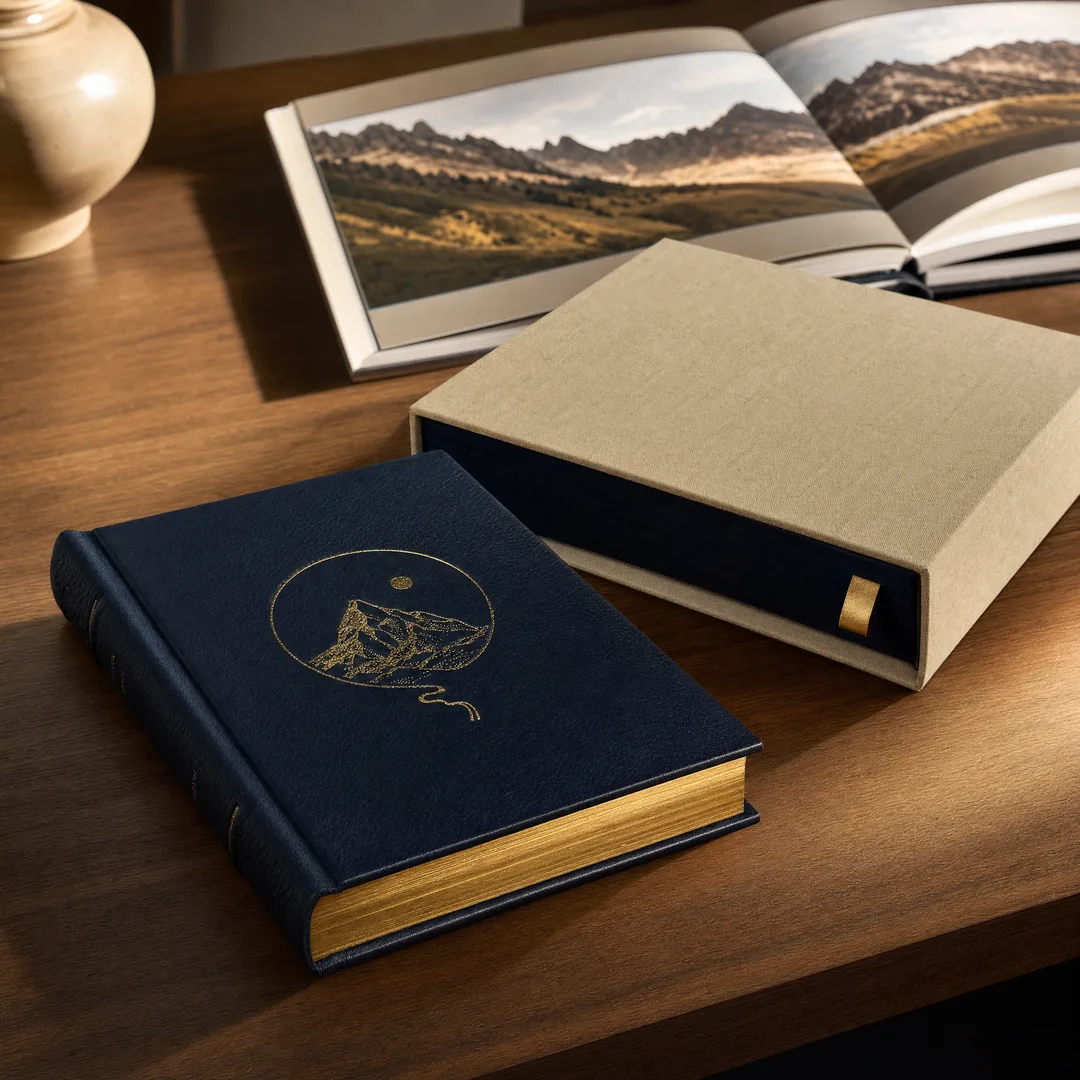
Foil stamping transfers metallic or pigmented foil onto the cover using heat, pressure, and a metal die. Gold foil on black or dark brown leather is the classic combination—it reads as timeless and luxurious. Silver foil on navy, gray, or white covers feels cooler and more contemporary. Rose gold, copper, and holographic foils are gaining traction with younger, design-forward brands. The process requires a custom die and works on leather, PU, cloth, and coated paper. Registration tolerance is typically ±0.5 to ±1.0 mm, so avoid designs that require hairline alignment between foil and print. Foil adds roughly $0.15–$0.50 per cover depending on coverage area and quantity, plus the one-time die cost.
Spot UV Coating
Spot UV applies a clear, high-gloss varnish to selected areas of the cover and cures it instantly under ultraviolet light. The effect works best when the base cover has a matte or soft-touch lamination—the contrast between the velvety background and the glossy raised varnish creates a dramatic “pop.” Spot UV can be applied flat (flush with the surface) or raised (3D effect). It works well on coated paper and laminated covers but soaks into uncoated stock and loses definition. Because Spot UV uses screens rather than metal dies, setup costs are lower than foil stamping or embossing. The finish is durable but can crack if placed directly over a spine fold.
Silk Screen Printing
Screen printing pushes ink through a mesh stencil onto the cover surface. It delivers solid, opaque colors that sit on top of the material—think of the bold single-color logos on promotional notebooks. Screen printing works across virtually all cover materials: leather, PU, fabric, paper, and even wood. It is cost-effective for bulk orders because the per-unit ink cost is negligible once the screen is made. The trade-off is that screen printing is best suited to simple, limited-color designs. Fine details and gradients do not reproduce well. Screen setup fees run $20–$60 per color, making it one of the most accessible customization methods for runs of 500 units or more.
Laser Engraving
Laser engraving burns the design directly into the cover surface using a focused beam. No dies, no screens, no setup fees—just a vector file and a laser machine. This makes it ideal for short runs, personalized names, and variable data. On leather and PU, laser engraving creates a dark burned impression that resembles debossing but with sharper edges. On wood covers, it produces a permanent, high-contrast mark. On cloth, results vary by material density—linen engraves cleanly while looser weaves can char unevenly. The main limitation is color: laser engraving produces one tone (the color of the burned material), without the ability to add metallic or colored effects.
Notebook Accessories
Elastic Closure Band
An elastic band stretched across the cover keeps pages from fanning open in a bag and adds a satisfying “close” to the notebook experience. The band is typically threaded through holes punched in the back cover before the endpapers are glued down. Black is the default color, but custom-colored elastic (matched to brand palette) is widely available from Chinese suppliers and costs only a few cents more per unit. The elastic should be tested for tension retention—low-quality bands stretch out within weeks and stop gripping the cover.
Ribbon Bookmark
A satin ribbon glued into the spine serves as a built-in bookmark. It is one of the least expensive accessories to add—typically $0.03–$0.08 per unit—but it signals attention to detail that buyers notice. Ribbon color options are nearly unlimited; matching the ribbon to an accent color from the cover design is a small move that elevates the unboxing experience. For hardcover notebooks, the ribbon is secured between the spine and the book block during casing in. For softcover, it is glued into the spine after perfect binding.
Pen Loop
A pen loop—usually elastic or matching PU strip—attached to the spine or back cover keeps a pen with the notebook. Elastic loops stretch to accommodate different pen diameters; fixed PU loops look more integrated but fit a narrower range. Pen loops add roughly $0.10–$0.25 per unit. The attachment method matters for durability: adhesive-mounted loops can peel over time, while loops secured under the cover material or between the cover board and endpaper stay put for the life of the notebook.
Pocket Folder
An expandable pocket glued to the inside back cover provides storage for loose notes, business cards, receipts, or stickers. The pocket is usually made from the same cover stock or a matching cardstock and is die-cut before attachment. Gusseted (expandable) pockets cost slightly more than flat pockets but offer far more utility. For hardcover notebooks, the pocket is mounted on the inside of the back cover board before the endpaper is applied. This is a value-add that costs roughly $0.15–$0.40 per unit and consistently ranks high in customer satisfaction surveys for premium journals.
Rounded Corners
Rounding the corners of pages and covers prevents dog-earing, reduces wear, and gives the notebook a softer, more refined profile. The process runs each trimmed book block and cover through a corner-rounding die that punches the sharp corners into a smooth radius—typically 5mm, 8mm, or 10mm. Rounded corners add a small per-unit cost (often included as a standard option at many factories) and make a noticeable difference in how the notebook feels to hold and carry.
MOQ & Cost Breakdown
MOQ by Binding Type
Every factory sets its own minimums, but industry-wide patterns have emerged. Hardcover notebooks typically require 500–1,000 units because of the manual case-in steps and the minimum order quantities imposed by board and cloth suppliers. Softcover with perfect binding starts lower—300–500 units is common. Spiral and Wire-O binding have the lowest thresholds at 200–500 units since the binding machine setup is faster and material minimums are more flexible. PU cover notebooks land around 200–300 units. If a supplier quotes an MOQ of 50 units for hardcover, ask whether they are manufacturing in-house or outsourcing, because numbers that low rarely support factory-direct production with consistent quality.
Cost Per Unit at Different Volumes
Order volume is the single largest lever on unit cost. Small runs of 100–300 notebooks typically land between $3.00 and $6.00 per unit because setup fees (plate-making, die fabrication, machine calibration) are amortized across fewer pieces. Medium runs of 500–1,000 units drop to $1.80–$3.50 per unit. At 3,000 units and above, prices can reach $0.80–$2.50 per unit depending on specs. A 5.5×8.5-inch, 64-page Wire-O notebook at 500 copies costs roughly $1.12 per unit; the same notebook as a softcover with perfect binding and a matte laminated cover might run $1.50–$2.00. Hardcover pushes costs higher—a 160-page A5 hardcover journal with cloth wrap, ribbon bookmark, and elastic closure can range from $3.50 to $6.00 at 1,000 units.
Factors That Drive Price Up
Beyond the binding choice, several variables compound quickly. Doubling the page count from 50 to 100 raises the unit price roughly 40%; going from 100 to 200 pages can increase costs by 80% or more. Premium paper (FSC-certified, recycled, or textured) runs $0.20–$0.50 per page versus $0.10 for standard stock. Foil stamping, embossing, and spot UV each add tooling charges plus per-unit fees. Custom-colored elastic, specialty ribbon, and gusseted pockets each add a few cents to a quarter per unit—small individually, but they stack. Shipping from Chinese ports to the US or Europe typically adds 10–20% to the landed cost, with sea freight being the most economical option for orders over 500 kg. Air freight cuts transit from weeks to days but can double or triple the logistics line item.
Quality Checklist for Chinese Notebook Suppliers
Pre-Production Sampling
Before any mass production begins, request a pre-production sample (PPS) made with the exact materials, inks, and binding method specified in your purchase order. This is not the same as a “stock sample” pulled from the factory shelf. A real PPS uses your artwork files, your chosen paper, your cover material, and your finishing specs. Expect to pay $50–$150 for a pre-production sample, and budget 7–10 days for it to be produced and shipped. Review it under natural light and artificial light, write in it with the pens your customers use, and check that every accessory is attached correctly. Approve nothing until the PPS matches your expectations.
Paper & Material Verification
Ask the supplier to provide a material spec sheet listing the exact paper brand, mill, gsm, brightness rating, and certification (FSC, PEFC, or equivalent) for every stock used in your notebook. If the specification changes mid-production—a different mill, a substitute board, a thinner ribbon—you want to know before the containers ship, not after. Third-party inspection services can take caliper readings, opacity tests, and brightness measurements against your approved standard. GSM drift of more than ±3 gsm is a red flag.
Binding Strength Testing
Binding failures are the most common complaint about notebooks sourced from inexperienced factories. For perfect-bound notebooks, the “page pull test” measures the force required to remove a single page from the spine. PUR-bound notebooks should withstand significantly more force than EVA-bound ones—any supplier using PUR should be able to provide comparative test data. For Wire-O and spiral binding, check that wires open and close cleanly without snagging pages, and that the bound edge lies flat when opened. For case-bound hardcovers, verify that the hinge (the groove where the cover board meets the spine) flexes smoothly without cracking the endpaper or delaminating the cover material.
Print Color Consistency
Color drift between the pre-production sample and the production run is one of the most frequent disputes in custom notebook printing. Specify a color standard upfront: Pantone spot colors for logos and solid elements, and a CMYK profile (such as GRACoL or FOGRA) for full-color artwork. Request that the factory run a “color draw-down” or “press sheet pull” at the start of production and share photographs against your approved sample. If color accuracy is critical—for example, brand colors that must match existing product lines—budget for a third-party inspection during the production run. Catching a color mismatch after 3,000 notebooks are packed and palletized is expensive for everyone.