Why Smart Businesses Print All Their Marketing Materials Under One Roof
If you have ever juggled three different printing suppliers for a single trade show kit — folders from one vendor, table tents from another, and door hangers from a third — you already know the headache. Deadlines slip. Colors do not match. Shipping costs eat your budget alive.
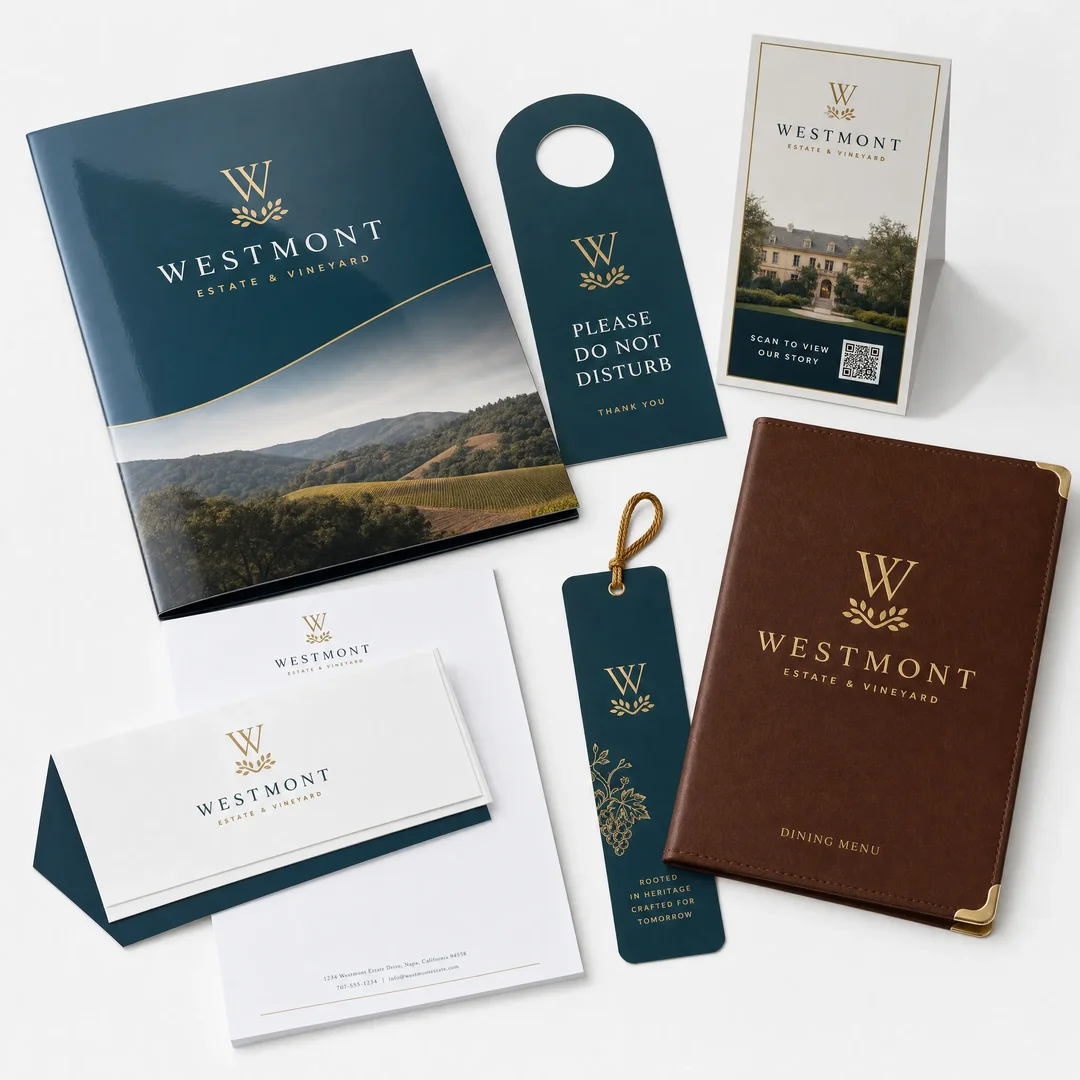
There is a better way. By consolidating your custom folder printing, door hanger printing, table tent printing, menu printing, envelope and letterhead printing, and bookmark printing with a single China-based manufacturer, you cut procurement overhead by half or more while locking in consistent quality across every piece. This guide walks you through the real specs, paper options, finishing techniques, and ordering strategies for each category — so you know exactly what to ask for when you request a quote.
We will go category by category, starting with presentation folders and working our way through six essential business print products. Then we will talk about the sourcing math that makes consolidating orders the smartest move most businesses never think of.
Folder Printing
Standard Sizes and Formats
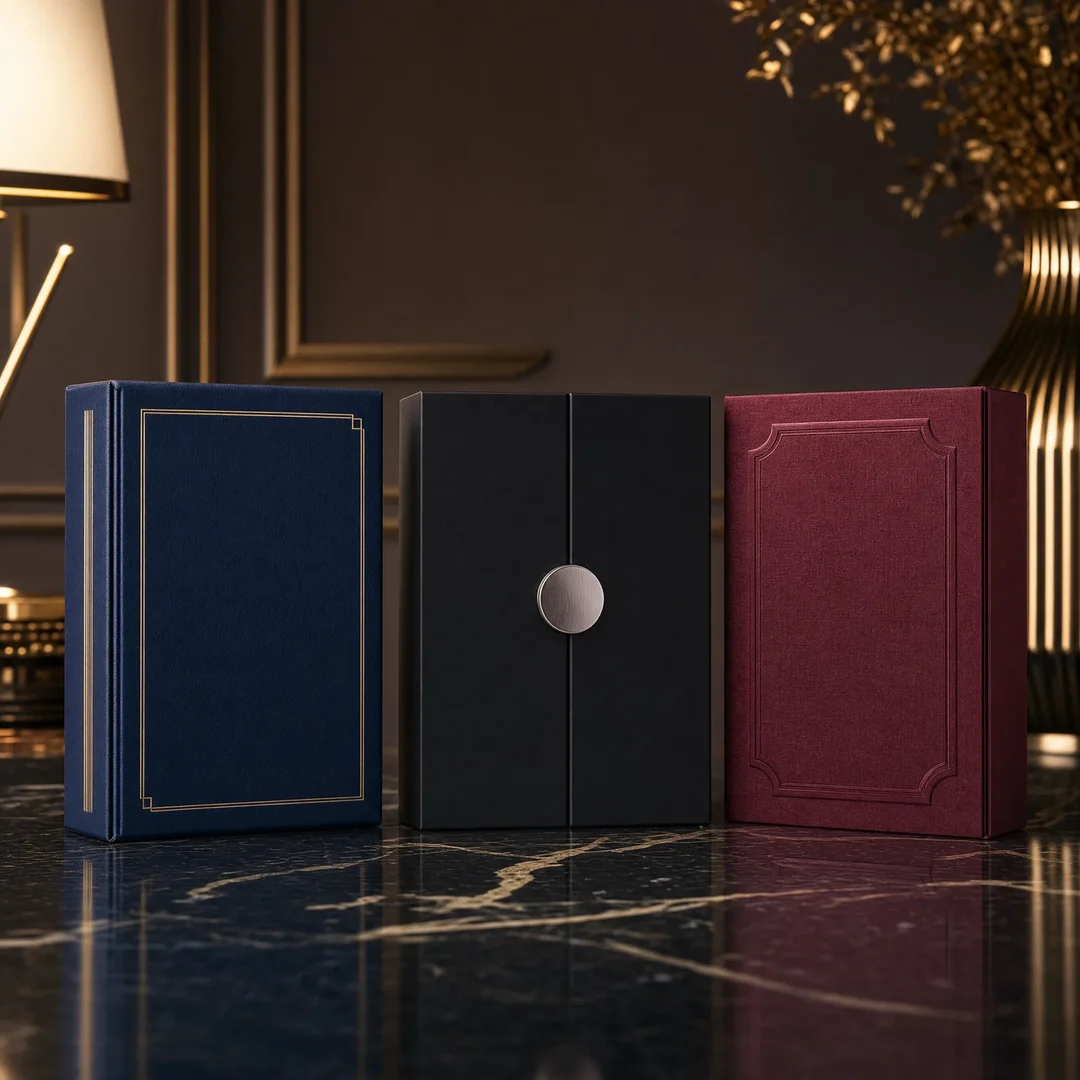
The workhorse of custom folder printing is the 9×12-inch presentation folder with two 4-inch interior pockets. This size comfortably holds letter-size documents — brochures, sales sheets, contracts — without anything peeking out the top. For markets that use ISO paper standards, the A4 presentation folder serves the same purpose. Both formats support business card slits on the pocket, which is a small detail that leaves a surprisingly professional impression when a prospect pulls out your materials.
Beyond the standard two-pocket layout, single-pocket designs work for leaner kits and triple-panel folders for extra real estate. Die-cut pockets — where the pocket edge follows a custom contour rather than a straight line — add visual interest without a major cost increase at production scale.
Paper and Cardstock Choices
Most presentation folders run on 350–400gsm art paper or 14–16pt cardstock. At 350gsm, the folder feels substantial without being difficult to crease. Moving up to 400gsm gives you a noticeably heavier product — better for premium brands. Kraft paper folders have been gaining traction for eco-conscious brands, and the uncoated texture pairs well with minimalist branding.
Coated paper — either C1S (coated one side) or C2S (coated two sides) — is the standard choice when you want vibrant color reproduction. For text-heavy designs, uncoated stock can be easier on the eyes.
Finishing Techniques That Elevate the Product
Glossy lamination adds a shiny protective layer and makes colors pop. Matte lamination looks more understated and hides fingerprints — practical for folders handled repeatedly at events. Spot UV applies a high-gloss coating to specific areas (your logo, a headline) while leaving the rest matte, creating tactile contrast that draws the eye.
Embossing and debossing press a design into or out of the cardstock for a three-dimensional effect. Foil stamping applies metallic foil — gold, silver, copper — to text or logos. Both add perceived value disproportionate to their cost, which is why premium brands rarely skip them.
Order Quantity Guidance
MOQs for custom folder printing typically start around 100–500 units, depending on die-cutting complexity and finishing passes. For a single event, 250 pieces usually covers you with spares. If folders are part of your ongoing sales kit, jump to 1,000 for the unit price break — the per-piece cost at 1,000 units often runs 40–50% lower than at 250.
Door Hanger Printing
Standard Sizes and Shapes
The most common door hanger format is 4.25 × 11 inches — a slender vertical shape with a teardrop or circular die-cut knob hole at the top. The hole typically measures 1.5 inches in diameter and sits roughly half an inch from the top edge. This positioning ensures the hanger sits securely on standard residential and hotel doorknobs without tearing.
A smaller 3.5 × 8.5-inch variant works well for compact messaging — think “Do Not Disturb” signs for hotels or quick promotional notices. Custom shapes are also possible: rounded-top designs, house-shaped cutouts, and asymmetrical contours. The constraint is that the die-cut hole must maintain enough surrounding material to resist tearing.
Paper Stock and Durability
Door hangers need to survive being handled, hung, and occasionally knocked to the floor. Standard stock is 14pt cardstock, rigid enough to stay flat against a door. For longer campaigns or outdoor-adjacent use (hotel pool areas, resort properties), 16pt or 18pt cardstock adds meaningful durability. Some printers offer synthetic waterproof stock — polypropylene-based material that laughs off rain. It costs more, but for outdoor deployment it pays for itself.
Finishing and Functional Details
Rounded corners are standard — sharp 90-degree corners catch on everything and look cheap. A 1/4-inch radius is the usual spec. UV or aqueous coating adds scuff resistance for transit. Full-color printing on both sides is table stakes since you never know which side the recipient will see first. A clean-cut knob hole with no rough edges speaks to quality, and some printers add a perforated tear-off coupon that turns the door hanger into a two-step conversion tool.
Order Quantity Strategy
Door hanger campaigns are distribution-heavy, so quantities tend to start higher. A neighborhood canvassing run might need 5,000 pieces; a hotel chain refresh could run into the hundreds of thousands. MOQs in China typically start at 500–1,000 pieces, but the real price break comes at 5,000+. At that volume, you are looking at roughly $0.08–$0.15 per piece for 14pt full-color double-sided, depending on finishing add-ons.
Table Tent Printing
Sizes and Formats
Table tents come in two broad families: flat cards that stand via a scored center fold (A-frame style), and multi-panel designs that form a triangular prism. The most popular individual panel size is 4 × 6 inches, followed by 5 × 7 inches — which gives you roughly 50% more printable area without taking over the table. These are the sizes you see on restaurant tables promoting happy hour specials, on hotel desks advertising spa packages, and at conference registration tables.
For larger messaging needs, an 8.5 × 11-inch sheet scored into a tri-fold tent works well. The extra real estate supports menus, service descriptions, or event schedules. The center panel acts as the base, with two side panels angled toward the viewer from either direction.
Paper and Construction
14pt to 16pt cardstock is the standard range for table tents. At 14pt, the tent stands reliably on a flat surface. At 16pt, it resists warping even in humid dining environments. The critical construction detail is the scoring — the crease line that dictates where the cardstock folds. A clean, precise score produces a tent that sits flat and looks intentional. A sloppy score produces a tent that wobbles and looks like an afterthought.
Double-sided printing is the default assumption for table tents. If only one side is printed, you have wasted half the product’s potential reach — someone on the other side of the table sees a blank white panel.
Finishing for Longevity
Aqueous coating is the minimum viable finish for table tents. It provides basic scuff and moisture resistance. For food-service environments — restaurants, cafes, bars — matte or glossy lamination is a smarter choice because it makes the surface wipeable. Spilled coffee or condensation from a cold drink will not immediately ruin a laminated tent.
MOQ and Pricing Notes
Table tent MOQs with China printers generally fall in the 250–500 range. The sweet spot for unit economics is around 1,000 pieces — at that volume, per-piece cost drops to roughly $0.12–$0.25 for 14pt double-sided with aqueous coating. Adding lamination bumps the price 15–20%, almost always worth it for food-service use.
Menu Printing
Sizes, Folds, and Formats
Menu printing is one of the most format-diverse categories in commercial print. The simplest option is a flat A4 or A5 single-sheet menu — economical, easy to update, and perfect for cafes and quick-service restaurants. Moving up, bi-fold menus start as an 11 × 17-inch sheet folded to 8.5 × 11 inches, giving you four panels to organize appetizers, mains, drinks, and desserts. Tri-fold menus use an 8.5 × 11-inch or 11 × 17-inch sheet folded twice to create six panels — the most space-efficient format for mid-size restaurants.
For fine dining, multi-page saddle-stitched or perfect-bound menu booklets are the gold standard. These can run 4, 8, or 12 pages and accommodate extensive wine lists, tasting menus, and chef introductions without feeling cramped.
Paper Selection for Menus
250–350gsm art paper covers most menu printing needs. At 250gsm, the menu has enough body to stand up to repeated handling across a dinner service. At 350gsm, it feels genuinely premium — the kind of menu a guest notices before they even read the dishes. For booklet covers, 300–350gsm with a soft-touch lamination creates a velvety tactile experience that cues luxury before the first course arrives.
Uncoated paper suits rustic or farm-to-table concepts where a natural tactile feel aligns with the brand. The tradeoff is that uncoated stock stains more easily — lamination matters more here than for most other print categories.
Durability Upgrades Worth Considering
Lamination is almost mandatory for menus in high-turnover restaurants. Matte lamination resists fingerprints and glare from overhead lighting — both constant battles in dining environments. Glossy lamination makes food photography pop but shows every smudge. A leather-look cover upgrade — where the menu is bound with a textured synthetic leather cover — is a one-time investment that can serve a restaurant for years. The interior pages get swapped out seasonally, while the cover stays.
Order Quantities
Menu MOQs start around 100–200 pieces for standard flat or folded formats. For restaurants with seasonal menu rotations, ordering 300–500 per cycle is typical — enough to survive the wear and tear of daily service with spares. Booklet menus with leather covers have higher MOQs, usually 200–500, because of the binding setup time.
Envelope & Letterhead Printing
Envelope Sizes and Formats
The #10 envelope is the standard for business correspondence in North America — 4.125 × 9.5 inches, designed to hold a letter-size sheet folded in thirds. In markets that run on ISO paper sizes, the DL envelope (110 × 220 mm) serves the same role for A4 sheets folded twice. Both are available with or without a die-cut window for the recipient address, which eliminates the need for separate address labels.
Other useful formats include the A6 envelope (105 × 148 mm) for RSVP cards and C5 (162 × 229 mm) for flat A5 documents. The flap style matters — commercial (wallet) flap is standard for #10, while pointed (V-flap) looks more formal for social stationery.
Paper Stocks for Stationery
Letterhead typically prints on 100–120gsm bond or offset paper. At 100gsm, the sheet feeds reliably through laser printers — important if clients run it through their own machines. At 120gsm, it conveys more authority. The finish is almost always uncoated because coated paper jams most office printers.
Envelopes use 90–100gsm wove or bond — opaque enough that contents are not visible through the paper. #24 wove (roughly 90gsm) is the baseline; upgrading to #28 (about 105gsm) adds opacity and a more premium feel.
Printing and Finishing
Full-color offset printing on envelopes requires careful registration — any misalignment at press speed shows immediately. Digital printing works for short runs under 500 pieces, but offset delivers better consistency at scale. Window envelopes add a die-cutting step but are worth it for businesses that send invoices regularly. A peel-and-seal strip instead of gummed flaps is a quality-of-life upgrade recipients appreciate.
Order Quantities and Pairing
Envelope and letterhead printing is usually ordered as a matched set. MOQs start around 500 sets, but 1,000–2,500 is where the per-unit price flattens. Here is what most first-time buyers miss: ordering envelopes and letterhead together from the same production run ensures the paper shade and print density match perfectly. Separate orders — or worse, different suppliers — nearly guarantee visible variation.
Bookmark Printing
Standard and Premium Sizes
The classic bookmark is 2 × 6 inches — a slim vertical format that fits comfortably between paperback or hardcover pages. The 2 × 8-inch premium format gives extra height for more elaborate designs, author quotes, or series branding. Both sizes are narrow enough for efficient production — many fit on a single press sheet — making bookmarks one of the most cost-effective promotional print products per piece.
Paper and Cardstock
Bookmarks need stiffness to function. 350–400gsm art card is standard. At 350gsm, the bookmark slides between pages without resistance but holds its shape. At 400gsm, it feels more like a keepsake — important for limited-edition or collector series. Double-sided printing is standard; a blank back is a missed branding opportunity.
Finishing: Where Bookmarks Shine
Rounded corners are not optional on bookmarks in 2026 — they are the baseline expectation. A 1/4-inch radius is the common spec, though 1/8-inch gives a subtler curve for minimalist designs. The tassel — a small cord threaded through a punched hole at the top — is the detail that transforms a simple printed card into a product people actually want to keep. Tassels come in dozens of colors and can be matched to brand palettes.
Foil stamping works beautifully on bookmarks because the narrow format concentrates visual attention. A gold foil logo at the top of a 2 × 6-inch bookmark catches light in a way standard ink cannot replicate. Matte lamination is the go-to finish — it resists fingerprints, does not glare under reading light, and feels satisfyingly smooth.
MOQ and Use Cases
Bookmark MOQs from China printers typically start at 500–1,000 pieces. At 2,000 pieces with standard finishes, you are looking at roughly $0.15–$0.30 per piece. Libraries, bookstores, publishers, and church groups are the biggest buyers, but bookmarks also work well as event swag for conferences and author signings — they cost less than tote bags and people actually keep them.
The One-Stop Sourcing Advantage Nobody Talks About
Here is a scenario we see all the time at EcoPrinting: a hotel chain needs 5,000 door hangers, 2,000 table tents, 1,500 menus, and 3,000 presentation folders for a rebrand launch. They send RFQs to four printers because each claims to specialize in a particular category. Four quotes, four production timelines, four shipping invoices, four sets of proofs to approve. The coordination overhead alone eats two weeks of someone’s work calendar.
When you consolidate all six categories with one China-based printer, three things happen. First, total shipping cost drops because everything ships in one consolidated container. Second, color-matching headaches disappear — a single production team on the same press lineup means your brand red is the same red everywhere. Third, you have one point of contact for proofs, revisions, and quality checks instead of four or five. That alone saves more time than most people estimate.
The cost math bears this out. A 1,000-unit folder order on its own might cost $0.80 per piece. The same folders ordered alongside 2,000 door hangers and 1,500 table tents from the same factory drops to roughly $0.50 per piece — a 37% reduction — because shared setup costs, combined shipping, and volume leverage all work in your favor. Spread across six categories, the savings compound fast.
Quality consistency is the less obvious but more important benefit. When your sales kit includes a folder, a booklet, and a bookmark, and all three share the same paper tone, print density, and lamination finish, the cumulative impression on a prospect is far stronger than the sum of the parts. It signals your brand pays attention to details — the kind of attention you want a supplier to bring to your own customers.
Cost Guide & Practical Ordering Tips
Price Ranges by Category (Ballpark Estimates)
These are rough per-piece estimates for orders in the 1,000–5,000 unit range, including standard finishing, printed through a China-based supplier. Actual prices depend on exact specs, paper choice, and current material costs:
Product Category
Estimated Price per Piece (1,000–5,000 units)
Key Cost Driver
Presentation Folders
$0.40–$0.90
Die-cut complexity, lamination type
Door Hangers
$0.08–$0.20
Paper thickness, coating
Table Tents
$0.10–$0.25
Scoring and lamination
Menus (flat/folded)
$0.15–$0.50
Fold type, lamination, page count
Envelopes + Letterhead
$0.05–$0.15 (per set)
Paper weight, window die-cut
Bookmarks
$0.10–$0.30
Tassel, foil stamping
MOQ Strategy That Works
If you are ordering for the first time, start with a combined order hitting at least 1,000 total pieces across categories — even if that means 200 folders, 300 door hangers, and 500 table tents. Most China printers accept a combined-MOQ approach because total press setup drives their economics, not the quantity per SKU. This lets you test quality across multiple products without committing to 500 pieces of each.
For ongoing procurement, batch your reorders quarterly. Running all six categories through the same production cycle every three months keeps brand materials fresh, inventory manageable, and per-piece costs at their floor. Consistent quarterly volume also builds relationship leverage — you become a priority account with faster turnaround and better problem resolution.
Three Things Most Buyers Get Wrong
First, they under-specify paper weight. A folder printed on 300gsm cardstock feels flimsy — no amount of lamination fixes that. Spend the extra few cents to hit 350–400gsm. Your prospects can feel the difference.
Second, they overlook shipping consolidation. Ordering from China means sea freight is almost always the right call for non-urgent runs — it takes 3–5 weeks but costs a fraction of air freight. The savings on a consolidated multi-category shipment typically outweigh the time difference unless you are up against a hard event deadline.
Third, they treat finishing as an afterthought. Lamination, spot UV, foil stamping, and rounded corners are not just decoration — they are functional features that determine how long your printed materials survive in the real world. A door hanger without UV coating scuffs in transit. A menu without lamination stains on day three. Budget for finishing from the start.