How Much Does It Actually Cost to Print a Book?
If you have ever asked a printer for a quote and walked away more confused than when you started, you are not alone. The book printing industry has a reputation for opaque pricing. One company quotes you $2.80 per book. Another comes back at $9.50 for what sounds like the same thing. What gives?
The short answer: book printing cost is not a single number. It is a formula with at least seven moving parts. A 200-page paperback in quantities of 100 costs dramatically more per copy than the same book at 2,000 copies. Change the paper stock from 80# uncoated to 100# gloss, and your price shifts again. Add a hardcover case with foil stamping, and you are in an entirely different bracket.
This guide breaks down exactly what drives book printing cost, shows you real price ranges across different book types and quantities, and gives you practical strategies to get the best possible quote without sacrificing quality. Whether you are a self-published author budgeting for your first print run or a business looking to produce catalogs or training manuals at scale, you will find actionable numbers here.
The 7 Factors That Determine Your Book Printing Cost
Understanding these variables is the difference between getting a fair quote and overpaying by hundreds or even thousands of dollars. Let us walk through each one.
1. Page Count
This is the most obvious driver, but it works in ways most people do not expect. Yes, more pages mean more paper and ink. However, the per-page cost actually decreases as your page count increases. Why? Because the binding and setup costs are fixed regardless of whether your book is 64 pages or 320 pages. That fixed cost gets spread thinner across more pages.
For example, in a 200-copy softcover run, a 64-page book might cost $3.31 per copy, while a 320-page book costs $9.27. The page count roughly quadrupled, but the price only tripled. The takeaway: if you are deciding between 80 and 100 pages to save money, the difference is often smaller than you think.
2. Trim Size
Trim size refers to the final dimensions of your book after it has been cut. Standard sizes like 5.5″ × 8.5″, 6″ × 9″, and 8.5″ × 11″ are the most economical because they fit efficiently onto standard press sheets with minimal paper waste. Custom or oversized dimensions can increase your cost by 10-25% simply because the printer has to use larger sheets or accept more trim waste.
If you are on a tight budget, stick to a standard trim size. The savings add up fast, especially at higher quantities.
3. Binding Type
Binding is where costs diverge dramatically. Here is how the five main options rank from least to most expensive, along with what they are best for:
Binding Type
Cost Level
Best For
Max Pages
Lay-Flat?
Saddle Stitch
$ (Lowest)
Booklets, magazines, catalogs under 64 pages
~64
Semi
Perfect Bound
$$ (Low-Mid)
Novels, memoirs, most trade paperbacks
300+
No
Spiral / Wire-O
$$$ (Mid)
Workbooks, cookbooks, manuals, planners
300+
Yes
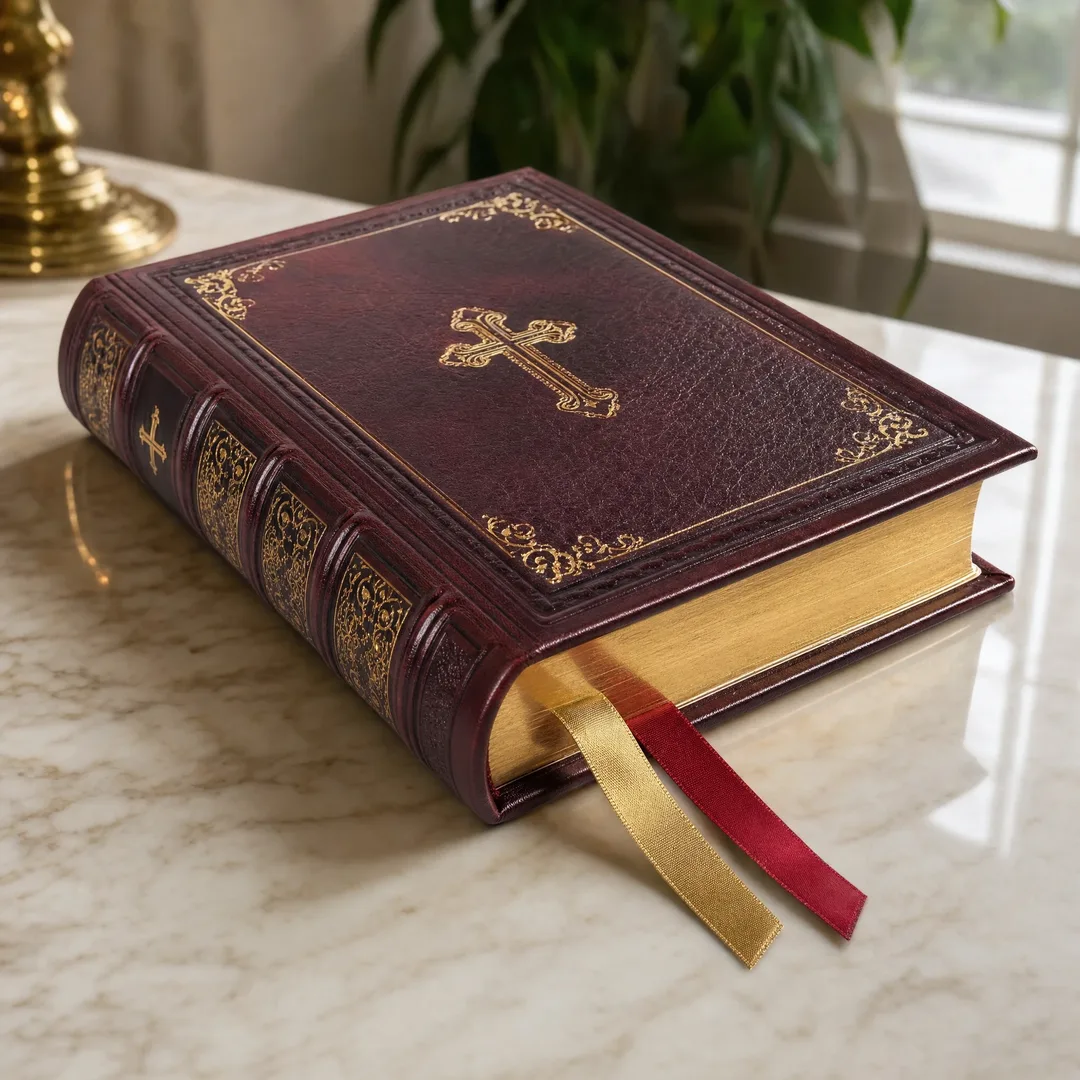
Case Bound (Hardcover)
$$$$ (High)
Premium editions, children’s books, coffee table books
400+
Partly
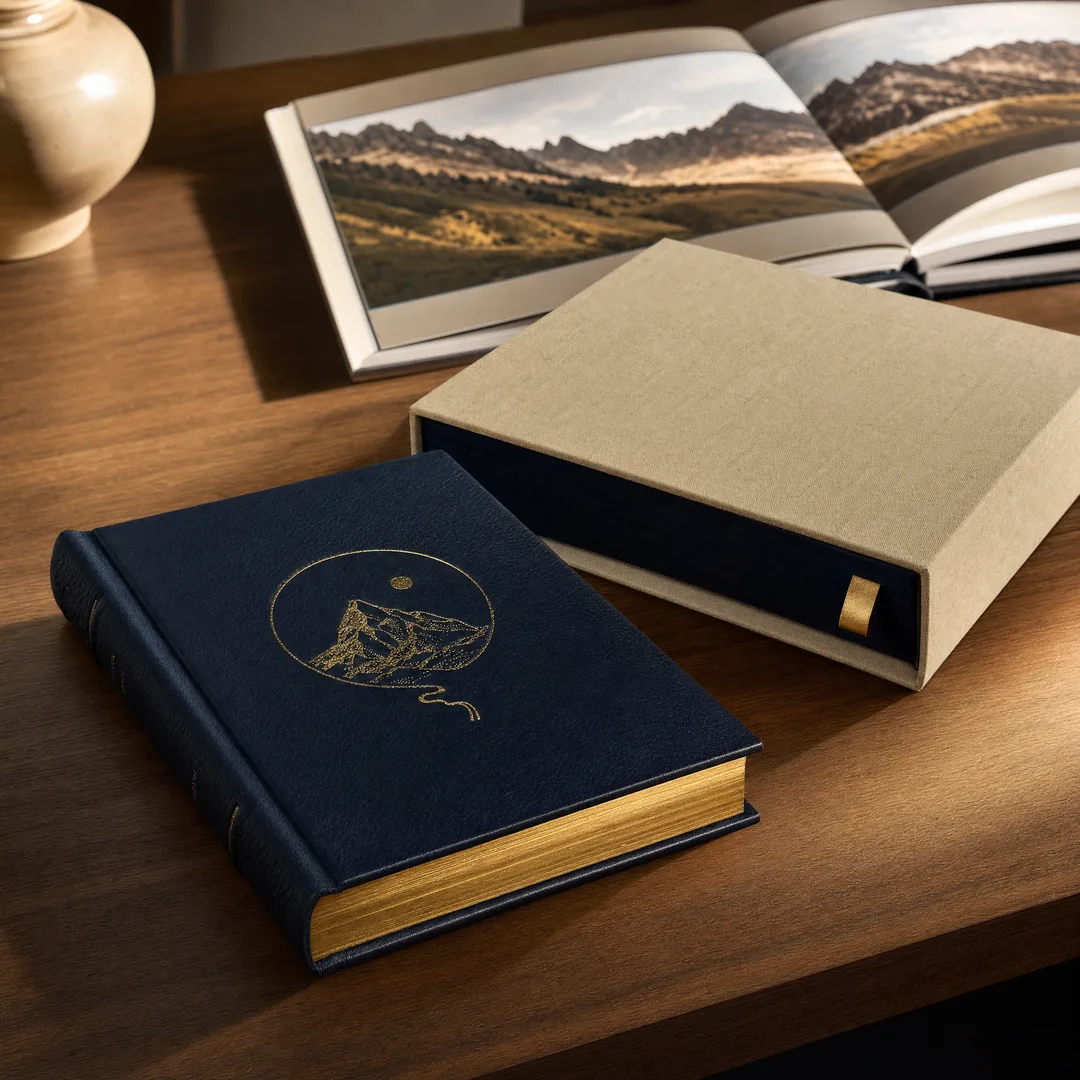
Cloth Hardcover
$$$$$ (Highest)
Luxury editions, collector’s items, special editions
400+
Partly
Saddle stitching is the cheapest because it is literally just staples through the fold. Perfect binding (glued spine) is the workhorse of paperback publishing. Spiral and Wire-O binding add cost because the coil or wire element is a separate component that must be manually inserted. Hardcovers cost the most because they require rigid boards, end sheets, and more labor-intensive assembly.
4. Paper Stock
Paper weight is measured in GSM (grams per square meter) or pound weight. Heavier paper feels more substantial and reduces show-through, but it costs more. Here is a rough guide:
Paper Type
Weight
Typical Use
Cost Impact
Uncoated offset
50-70# (75-105 GSM)
Novels, text-heavy books
$ (Baseline)
Matte/Gloss art paper
100-128 GSM
Full-color interiors, photo books
$$ (Moderate)
Premium coated
157-200 GSM
Art books, high-end catalogs
$$$ (Higher)
Card/Board stock
250-350 GSM
Covers, board books
$$$$ (Highest)
For most trade paperbacks with a black-and-white interior, 50# or 60# uncoated offset paper is the sweet spot: affordable, readable, and perfectly professional. Save the premium paper for projects where the visual impact justifies the expense.
5. Print Quantity
This is the single biggest lever you can pull. Offset printing has significant upfront setup costs: plates must be created, presses must be calibrated, and make-ready sheets are wasted before production quality is achieved. These fixed costs are the same whether you print 100 copies or 10,000. So when you spread them across more copies, your per-unit cost plummets.
Moving from 200 copies to 1,000 copies typically cuts your cost per book by 40-60%. Going from 1,000 to 3,000 might save you another 15-25%. The curve flattens after a certain point, but the initial jump is dramatic. We saw a real-world example where a 160-page softcover went from $5.70 per book at 200 copies down to $1.79 per book at 3,000 copies. That is nearly a 70% reduction.
Of course, printing more copies only saves money if you sell them. The true cost per book is the total printing cost divided by the number of books you actually sell, not the number you print. Be realistic about demand when deciding on your print run.
6. Color vs. Black and White
Color printing is significantly more expensive than black and white because it requires four ink passes (CMYK) instead of one. As a rule of thumb, full-color interiors cost roughly 2-4× more than black-and-white interiors for the same page count and quantity.
Many authors save money by printing the interior in black and white while keeping the cover in full color. This hybrid approach gives you a professional-looking book at a fraction of the cost of full-color throughout. If your book relies heavily on photographs, illustrations, or color-coded charts, then full-color is non-negotiable. Just be prepared for the higher price tag.
7. Cover Finish and Special Treatments
The cover is your book’s first impression, but premium finishes add cost. Here is what to expect:
Finish
Added Cost (Per Book)
Effect
Gloss/Matte Lamination
$0.15 – $0.50
Protection + sheen or soft feel (standard, often included)
Spot UV
$0.30 – $1.00
Glossy highlights on select areas only
Foil Stamping
$0.50 – $2.00
Metallic text or logo (gold, silver, copper)
Embossing/Debossing
$0.50 – $2.00
Raised or recessed design elements
Soft-Touch Lamination
$0.50 – $1.50
Velvety matte texture, premium feel
For a first print run, a standard gloss or matte lamination is usually included in the base price and gives you a professional result. Save the specialty finishes for when you have proven demand and want to differentiate a second edition or premium tier.
Real Price Ranges by Book Type and Quantity
These numbers are based on real-world quotes from offset printers serving the U.S. market, with DDP (Delivered Duty Paid) pricing that includes production, freight, and import duties. Use them as a budgeting baseline, not a guarantee, since every project has unique specifications.
Softcover (Perfect Bound) — 5.5″ × 8.5″
The most common format for novels, memoirs, and trade nonfiction.
Pages
200 Copies
500 Copies
1,000 Copies
2,000 Copies
3,000 Copies
64
$3.31
$1.79
$1.16
$0.95
$0.89
96
$4.22
$2.22
$1.57
$1.32
$1.14
160
$5.70
$3.17
$2.40
$1.89
$1.79
320
$9.27
$5.61
$4.05
$3.51
$3.13
Hardcover (Case Bound) — 5.5″ × 8.5″
The premium option for authors who want shelf presence and durability.
Pages
200 Copies
500 Copies
1,000 Copies
2,000 Copies
3,000 Copies
64
$5.57
$2.93
$2.19
$1.82
$1.73
96
$6.60
$3.52
$2.63
$2.16
$2.05
160
$8.69
$4.67
$3.50
$2.86
$2.68
320
$12.76
$7.36
$5.20
$4.48
$4.19
Saddle Stitch — 8.5″ × 11″
Ideal for booklets, event programs, and thin catalogs.
Pages
200 Copies
500 Copies
1,000 Copies
2,000 Copies
3,000 Copies
8
$2.58
$1.04
$0.69
$0.49
$0.46
16
$2.46
$1.31
$0.83
$0.66
$0.62
32
$3.26
$1.82
$1.20
$0.99
$0.85
Spiral Bound — 8.5″ × 11″
Best for workbooks, cookbooks, training manuals, and planners.
Pages
200 Copies
500 Copies
1,000 Copies
2,000 Copies
3,000 Copies
64
$5.65
$3.38
$2.59
$2.19
$2.14
96
$7.49
$4.44
$3.39
$2.83
$2.75
160
$10.11
$6.27
$4.65
$4.13
$3.98
Prices shown include full-color interiors, standard cover lamination, and DDP shipping to the continental U.S. Actual quotes may vary based on paper specifications, cover treatments, and the region you are shipping to.
POD vs. Offset Printing: Which Saves You More?
This is the decision that trips up most first-time authors. Print-on-demand (POD) and offset printing serve fundamentally different needs, and picking the wrong one can cost you thousands.
Factor
Print-on-Demand (POD)
Offset Printing
Minimum Order
1 copy
Typically 100–500 copies
Per-Unit Cost
$4–$8 (for a 250-page paperback)
$1.80–$5.70 (same specs, 500–3,000 copies)
Setup Cost
$0 (digital, no plates)
$300–$800 (plates, make-ready)
Profit Margin
Thin; POD royalty eats into it
High; you keep more per sale
Quality
Good, but varies by provider
Excellent; consistent across the run
Inventory Risk
None (printed as sold)
You hold stock; storage costs apply
Best For
Testing the market, slow sellers, backlist titles
Proven titles, bulk orders, corporate projects
Here is the rule of thumb we share with clients: if you expect to sell fewer than 300 copies in the first year, POD is almost certainly the smarter financial choice. You avoid upfront cash outlay and storage headaches. If you have a clear distribution channel and expect to move 500+ copies within 12 months, offset printing will leave significantly more money in your pocket. At 1,000 copies, the per-unit cost advantage of offset is so large that POD stops making financial sense for most projects.
Many successful self-publishers use a hybrid approach: they launch with POD to validate demand, then switch to offset for the second print run once they have proven their book sells.
How to Get the Best Book Printing Quote
Getting an accurate quote is about more than just asking for a price. The more precise your specifications, the fewer surprises you will encounter later. Here is a checklist to follow before you reach out to any printer:
1. Know your specs before you ask. At a minimum, have your page count, trim size, binding type, paper preference, and approximate quantity ready. Printers price based on these inputs. If you say “I want to print a book,” the conversation starts with twenty questions. If you say “I need 500 copies of a 6×9 perfect-bound paperback, 200 pages, 60# uncoated interior, full-color gloss cover,” you will get an accurate quote in minutes.
2. Request both EXW and DDP pricing. EXW (Ex Works) is the factory price only. DDP (Delivered Duty Paid) includes shipping, freight, and import duties. The difference can be hundreds or thousands of dollars, and the cheaper factory price means nothing if you are stuck handling international logistics yourself. At EcoPrinting, we always provide DDP pricing so you know your landed cost upfront with no surprises.
3. Compare quotes on equal footing. Printers use different paper stocks, binding methods, and finishes as their defaults. A $3.50 quote from Printer A might use 100 GSM matte art paper with sewn binding, while a $3.00 quote from Printer B might use 80 GSM uncoated paper with basic glue binding. You are not comparing the same book. Ask for specification sheets alongside the price.
4. Ask about hidden fees. Some printers quote a low per-unit price and then add charges for file preparation, proof copies, plate fees, color calibration, or packaging. Ask point-blank: is this the all-in price? What is not included?
5. Order physical proof copies. Digital proofs show you what the file looks like but tell you nothing about how the paper feels, whether the binding is tight, or how the colors actually reproduce. A physical proof costs $50-150 and is the best money you will spend on your project.
6. Build in buffer time. Standard production takes 2-3 weeks after proof approval. Ocean freight to the U.S. adds 5-7 weeks. That means a mid-January order arrives in March. If you have a launch event or a conference deadline, plan backward from that date and add two extra weeks for the unexpected.
7. Consider consolidating print runs. If you have multiple titles or know you will need a reprint within 12 months, bundling orders can unlock deeper volume discounts. The per-unit saving on 3,000 copies split across three titles is still much better than printing 1,000 copies one at a time.
Frequently Asked Questions About Book Printing Cost
What is the cheapest way to print a book?
For very small quantities (under 50 copies), POD is cheapest because there are no setup costs. For quantities of 200+, offset printing with a standard trim size, perfect binding, black-and-white interior, and minimal cover finishing gives you the lowest per-unit cost. Saddle-stitched booklets in bulk are the absolute cheapest format, with per-unit prices dipping below $0.50 at 3,000 copies.
How much does it cost to print 100 copies of a book?
A 200-page, 6×9, perfect-bound paperback with a black-and-white interior and full-color cover typically costs $4-$8 per copy at 100 units, for a total of $400-$800. The per-unit cost is high because you are not benefiting from economies of scale. This is the minimum order threshold for most offset printers. Below 100 copies, you will get better value from POD services.
Why does per-unit cost drop so much at higher quantities?
Because the fixed costs are enormous. Creating printing plates, calibrating the press, and running make-ready sheets costs the same whether you print 100 or 5,000 copies. Those costs get divided across every book, so at 5,000 copies the per-unit share of fixed costs is tiny. This is why a book that costs $5.70 each at 200 copies can cost $1.79 each at 3,000 copies.
Is hardcover worth the extra cost?
It depends on your market. Hardcover books sell for 30-50% more at retail, so you can often maintain your margin even with higher production costs. For children’s books, photography books, and collector’s editions, hardcover is expected. For genre fiction (romance, thriller, sci-fi), paperback is the norm and hardcover can feel out of place. Consider your audience’s expectations first, then do the math on whether the higher retail price covers the added cost.
Should I print in China or locally?
Printing overseas typically offers 30-50% lower unit costs, especially at quantities above 500 copies. However, you trade those savings for longer lead times (6-8 weeks shipping vs. 1-2 weeks domestic) and less hands-on oversight. Many printers, including EcoPrinting, offer DDP pricing that includes freight and duties, so you get the cost advantage without the logistics headache. For time-sensitive projects or runs under 300 copies, domestic printers are usually the better choice because the shipping cost and delay eat up the per-unit savings.
What about shipping costs?
Shipping is one of the most overlooked line items in a book printing budget. A pallet of 1,000 paperbacks weighs about 500-700 lbs. Ocean freight from Asia to a U.S. port costs roughly $300-$600 per pallet, plus customs brokerage and inland trucking. Domestic ground shipping within the U.S. typically runs $0.50-$1.50 per book depending on distance and quantity. Always ask for DDP or all-inclusive pricing that includes freight. A $2.50 per-book quote that balloons to $4.00 after shipping is not actually cheaper than a $3.50 all-in quote.
Ready to Get Your Book Printed? Let Us Give You a Real Number
Book printing cost does not have to be a mystery. You now know the seven factors that drive pricing, the realistic cost ranges for every major format, and the specific questions to ask to get a transparent quote.
At EcoPrinting, we believe in upfront pricing. When you reach out with your project specifications, you will receive a detailed, line-item quote with no hidden fees. We work with standard and premium paper stocks, offer every binding type from saddle stitch to cloth hardcover, and handle everything from digital proofing to final delivery.
Request your free quote today and see exactly what your book will cost to print. Prefer to explore on your own? Visit our book printing services page for detailed spec sheets, paper samples, and binding guides.